

9
9
0
Hadrian
https://en.wikipedia.org/wiki/Hadrian
Hadrian (/ˈheɪdriən/; Latin: Publius Aelius Hadrianus Augustus; 24 January 76 – 10 July 138) was Roman emperor from 117 to 138.[note 1] He was born Publius Aelius Hadrianus in Italica, Hispania Baetica, into a Roman Italo-Hispanic family that settled in Spain from the Italian city of Atri in Picenum. His father was of senatorial rank and was a first cousin of Emperor Trajan. He married Trajan's grand-niece Vibia Sabina early in his career, before Trajan became emperor and possibly at the behest of Trajan's wife Pompeia Plotina. Plotina and Trajan's close friend and adviser Lucius Licinius Sura were well disposed towards Hadrian. When Trajan died, his widow claimed that he had nominated Hadrian as emperor immediately before his death.
Rome's military and Senate approved Hadrian's succession, but four leading senators were unlawfully put to death soon after. They had opposed Hadrian or seemed to threaten his succession, and the senate held him responsible for it and never forgave him. He earned further disapproval among the elite by abandoning Trajan's expansionist policies and territorial gains in Mesopotamia, Assyria, Armenia, and parts of Dacia. Hadrian preferred to invest in the development of stable, defensible borders and the unification of the empire's disparate peoples. He is known for building Hadrian's Wall, which marked the northern limit of Britannia.
Hadrian energetically pursued his own Imperial ideals and personal interests. He visited almost every province of the Empire, accompanied by an Imperial retinue of specialists and administrators. He encouraged military preparedness and discipline, and he fostered, designed, or personally subsidised various civil and religious institutions and building projects. In Rome itself, he rebuilt the Pantheon and constructed the vast Temple of Venus and Roma. In Egypt, he may have rebuilt the Serapeum of Alexandria. He was an ardent admirer of Greece and sought to make Athens the cultural capital of the Empire, so he ordered the construction of many opulent temples there. His intense relationship with Greek youth Antinous and the latter's untimely death led Hadrian to establish a widespread cult late in his reign. He suppressed the Bar Kokhba revolt in Judaea, but his reign was otherwise peaceful.
Hadrian's last years were marred by chronic illness. He saw the Bar Kokhba revolt as the failure of his panhellenic ideal. He executed two more senators for their alleged plots against him, and this provoked further resentment. His marriage to Vibia Sabina had been unhappy and childless; he adopted Antoninus Pius in 138 and nominated him as a successor, on the condition that Antoninus adopt Marcus Aurelius and Lucius Verus as his own heirs. Hadrian died the same year at Baiae, and Antoninus had him deified, despite opposition from the Senate. Edward Gibbon includes him among the Empire's "Five Good Emperors", a "benevolent dictator"; Hadrian's own senate found him remote and authoritarian. He has been described as enigmatic and contradictory, with a capacity for both great personal generosity and extreme cruelty and driven by insatiable curiosity, self-conceit, and ambition.[1] Modern interest was revived largely thanks to Marguerite Yourcenar's novel Mémoires d'Hadrien (1951).
https://en.wikipedia.org/wiki/Hadrian
Hadrian (/ˈheɪdriən/; Latin: Publius Aelius Hadrianus Augustus; 24 January 76 – 10 July 138) was Roman emperor from 117 to 138.[note 1] He was born Publius Aelius Hadrianus in Italica, Hispania Baetica, into a Roman Italo-Hispanic family that settled in Spain from the Italian city of Atri in Picenum. His father was of senatorial rank and was a first cousin of Emperor Trajan. He married Trajan's grand-niece Vibia Sabina early in his career, before Trajan became emperor and possibly at the behest of Trajan's wife Pompeia Plotina. Plotina and Trajan's close friend and adviser Lucius Licinius Sura were well disposed towards Hadrian. When Trajan died, his widow claimed that he had nominated Hadrian as emperor immediately before his death.
Rome's military and Senate approved Hadrian's succession, but four leading senators were unlawfully put to death soon after. They had opposed Hadrian or seemed to threaten his succession, and the senate held him responsible for it and never forgave him. He earned further disapproval among the elite by abandoning Trajan's expansionist policies and territorial gains in Mesopotamia, Assyria, Armenia, and parts of Dacia. Hadrian preferred to invest in the development of stable, defensible borders and the unification of the empire's disparate peoples. He is known for building Hadrian's Wall, which marked the northern limit of Britannia.
Hadrian energetically pursued his own Imperial ideals and personal interests. He visited almost every province of the Empire, accompanied by an Imperial retinue of specialists and administrators. He encouraged military preparedness and discipline, and he fostered, designed, or personally subsidised various civil and religious institutions and building projects. In Rome itself, he rebuilt the Pantheon and constructed the vast Temple of Venus and Roma. In Egypt, he may have rebuilt the Serapeum of Alexandria. He was an ardent admirer of Greece and sought to make Athens the cultural capital of the Empire, so he ordered the construction of many opulent temples there. His intense relationship with Greek youth Antinous and the latter's untimely death led Hadrian to establish a widespread cult late in his reign. He suppressed the Bar Kokhba revolt in Judaea, but his reign was otherwise peaceful.
Hadrian's last years were marred by chronic illness. He saw the Bar Kokhba revolt as the failure of his panhellenic ideal. He executed two more senators for their alleged plots against him, and this provoked further resentment. His marriage to Vibia Sabina had been unhappy and childless; he adopted Antoninus Pius in 138 and nominated him as a successor, on the condition that Antoninus adopt Marcus Aurelius and Lucius Verus as his own heirs. Hadrian died the same year at Baiae, and Antoninus had him deified, despite opposition from the Senate. Edward Gibbon includes him among the Empire's "Five Good Emperors", a "benevolent dictator"; Hadrian's own senate found him remote and authoritarian. He has been described as enigmatic and contradictory, with a capacity for both great personal generosity and extreme cruelty and driven by insatiable curiosity, self-conceit, and ambition.[1] Modern interest was revived largely thanks to Marguerite Yourcenar's novel Mémoires d'Hadrien (1951).
 Birthday
 World History
 Ancient History
 Leadership
Edited 6 y ago
Posted 6 y ago
Responses: 2

9
9
0

Hadrian Documentary - Biography of the life of Emperor Hadrian Part One
Biographical documentary on the Roman Emperor Hadrian. A documentary on the life of the Emperor Hadrian, from his childhood and upbringing to his rise under ...
Thank you, my friend Maj Marty Hogan for letting us know that January 24 is the anniversary of the birth of Roman emperor Hadrian born Publius Aelius Hadrianus Augustus and titled Caesar who is best known for building Hadrian's Wall, which marked the northern limit of Britannia.
Rest in peace Hadrian.
Image:
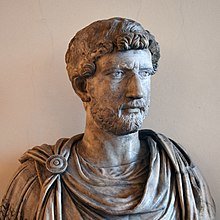
1. Emperor Hadrian in Military Armour
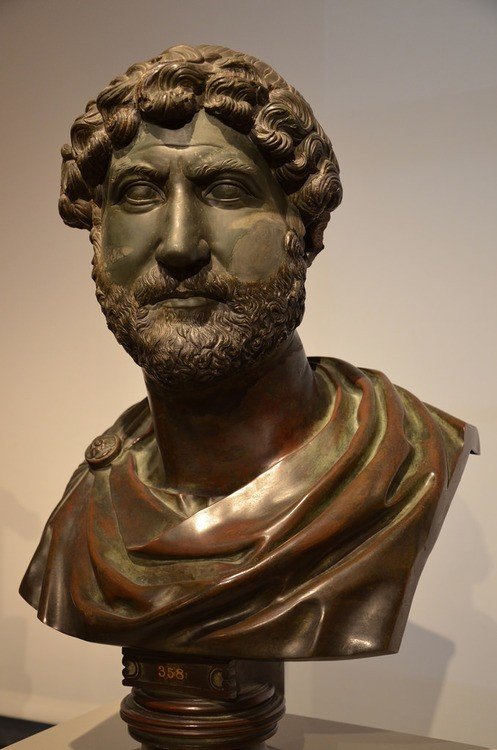
2. Bust of Hadrian in dark green basalt, 120 - 130 AD by Carole Raddato
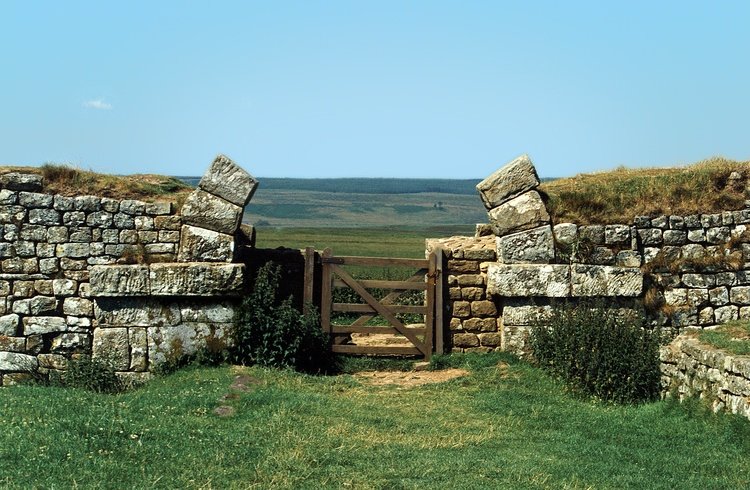
3. An arched gateway of Hadrian's Wall (c. 122 AD) near Milecastle, Northumbira, UK.
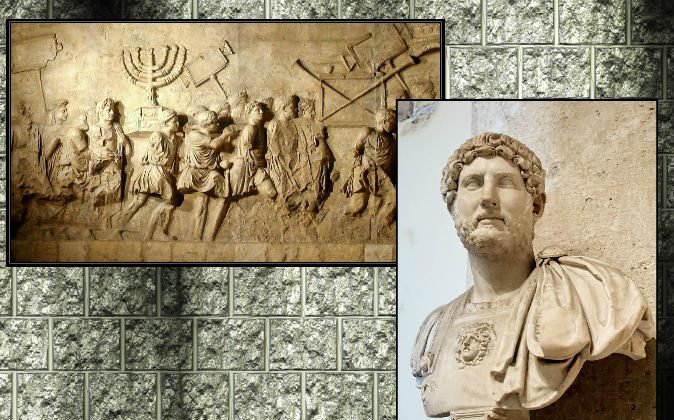
4. Left_Roman Triumphal arc showing Roman soldiers plundering Jewish treasures. Right:_A marble bust of the Emperor Hadrian.
Hadrian Documentary - Biography of the life of Emperor Hadrian Part One
https://www.youtube.com/watch?v=_GfIWPddOpE
Background from [https://www.ancient.eu/hadrian/]
"Hadrian by Joshua J. Mark
published on 02 September 2009
Hadrian was Roman emperor from 117 to 138 CE and he is known as the third of the Five Good Emperors (Nerva, Trajan, Hadrian, Antoninus Pius, and Marcus Aurelius) who ruled justly. Born Publius Aelius Hadrianus, probably in Hispania, Hadrian is best known for his substantial building projects throughout the Roman Empire and, especially, Hadrian’s Wallin northern Britain.
EARLY LIFE
As a young man, Hadrian was well educated in his hometown of Italica Hispania (modern day Seville, Spain) and left for Rome around the age of 14. His first military service was as Tribune under Emperor Nerva. When Nerva died, Trajan ascended to the throne. Emperor Trajan was the first Roman ruler of provincial origin. Later biographers would attempt to place the birth of both Trajan and Hadrian in the city of Rome but both were of Hispanic ethnicity and this commonality has been assumed by some to be the reason for Trajan’s adoption of Hadrian as his successor (though most scholars dispute this). Trajan died on campaign in Cilicia in 117 CE, with Hadrian in command of his rear guard, and is not believed to have named a successor. Trajan’s wife, Plotina (who was fond of Hadrian) signed the papers of succession and it is thought that she, not the emperor, was responsible for Hadrian’s adoption as heir. However that may be, it is known that Trajan respected Hadrian and had considered him as his successor even if he did not officially name him as such. Hadrian’s service to Trajan is well documented through the various important positions he held prior to becoming emperor of Rome.
HADRIAN IS COMMONLY DEPICTED IN MILITARY ATTIRE EVEN THOUGH HIS REGIME IS MARKED BY RELATIVE PEACE.
HADRIAN AS EMPEROR
His popularity as emperor is attested to by the fact that Hadrian was absent from Rome for the better part of his reign. Earlier Roman rulers, such as Nero, were harshly criticized for spending less time away from the city. Professor D. Brendan Nagle writes that Hadrian “spent most of his reign (twelve out of twenty-one years) traveling all over the Empire visiting the provinces, overseeing the administration, and checking the discipline of the army. He was a brilliant administrator who concerned himself with all aspects of government and the administration of justice” (278). His devotion to the army was such that he would sleep and eat among the common soldiers and he is commonly depicted in military attire even though his regime is marked by relative peace.
Hadrian’s building projects are perhaps his most enduring legacy. He established citiesthroughout the Balkan Peninsula, Egypt, Asia Minor, and Greece. His love for Greece and Greek literature was such that he was known as `Graeculus’ (Greekling) in his youth and his philhellenism did not dissipate with age. He visited Greece at least twice (probably more) and participated in the Eleusinian Mysteries, of which he was an initiate. The Arch of Hadrian, constructed by the citizens of Athens in 131/132 CE, honor Hadrian as the founder of the city. Inscriptions on the arch name Theseus (the traditional founder) but add Hadrian owing to the latter’s substantial contributions to Athens (such as the Temple of Zeus). He dedicated a number of sites in Greece to his young lover Antinous, who drowned in the Nile River in 130 CE. Hadrian was deeply attached to Antinous and the young man’s death so greatly affected the emperor that he had him deified (from which the mystery cult in honor of Antinous grew). In Egypt he founded the city of Antinopolis in his memory. In Rome he rebuilt the Pantheon (which had been destroyed by fire) and Trajan’s Forum as well as funding construction of other buildings, baths, and villas. Many of these structures survived intact for centuries, some as late as the 19th century CE, and the Pantheon, still perfectly preserved, may be visited in the present day. Hadrian had a great interest in architecture and seems to have contributed ideas, or even plans, to the architects though scholars no longer believe that he was the lead architect on any single project.
HADRIAN'S WALL
Of all his significant monuments and buildings, Hadrian’s Wall in north Britain is the most famous. Construction of the wall, known in antiquity as Vallum Hadriani, was begun around 122 CE and corresponded to Hadrian’s visit to the province. It marked the northern boundary of the Roman Empire in Britain but the length and breadth of the project (stretching, as it did, from coast to coast) suggests that the more important purpose of the wall was a show of Rome’s power. The wall was originally 9.7 feet wide (3 metres) and 16-20 feet high (six metres) east of the River Irthing, all built of stone, and 20 feet wide (6 metres) by 11.feet high (3.5 metres) west of the river, made up of stone and turf, stretching 73 miles (120 km) across uneven terrain. It was built in six years by the legions stationed in Britain. There were between 14-17 fortifications along the length of the wall and a Vallum (a ditch purposefully constructed of earthworks) which ran parallel to the wall. The Vallum measured 20 feet (6 metres) wide by 10 feet (3 metres) deep flanked by large mounds of tightly packed earth. As Hadrian’s foreign policy was “peace through strength” it is thought that the wall, which was originally plastered and white washed, would have clearly represented the might of the Roman Empire.
JERUSALEM
Although Hadrian was a learned and cultivated man, his policy of peaceful relations and negotiations was not always adhered to. In 130 CE, Hadrian visited Jerusalem, which was still in ruins from the First Roman-Jewish War of 66-73 CE. He rebuilt the city according to his own designs and renamed it Aelia Capitolina Jupiter Capitolinus after himself and the king of the Roman gods. When he built a temple to Jupiter on the ruins of the Temple of Solomon (the so-called Second Temple, considered sacred by the Jews), the populace rose up under the leadership of Simon bar Kokhbah in what has come to be known as bar Kokhbah’s Revolt (132-136 CE). Roman losses in this campaign were enormous but Jewish losses were no less significant. By the time the rebellion was put down, 580,000 Jews had been killed and over 1000 towns and villages destroyed. Hadrian then banished the remaining Jews from the region and renamed it Syria Palaestina after the traditional enemies of the Jewish people, the Philistines. He ordered a public burning of the Torah, executed the Jewish scholars, and prohibited the practice and observance of Judaism.
DEATH & SUCCESSOR
His health now failing, Hadrian returned to Rome and occupied himself by writing poetry and tending to administrative affairs. He named as his successor Antoninus Pius on the stipulation that Antoninus would adopt the young Marcus Aurelius to follow. Hadrian died in 138 CE, presumably of a heart attack, at the age of 62. He was buried first at Puteoli, on the grounds of the former estate of the Rhetorician Cicero (as homage to Hadrian’s love of learning) but when Antoninus Pius completed the great Tomb of Hadrian in Rome the following year, his body was cremated and the ashes interred there with his wife and son. Antoninus Pius had Hadrian deified and temples built in his honor. The historian Gibbon writes that Hadrian’s rule was, “the period in the history of the world during which the condition of the human race was most happy and prosperous…when the vast extent of the Roman Empire was governed by absolute power under the guidance of virtue and wisdom” (61). Although Hadrian was not universally admired during his life, or since his death, his reign is generally considered in keeping with Gibbon’s estimation."
FYI SSgt Terry P. Maj Robert Thornton SFC (Join to see) SGT Steve McFarland MSG Andrew White Maj Bill Smith, Ph.D. SGT (Join to see) SGT (Join to see) CWO3 (Join to see) PO1 William "Chip" Nagel LTC (Join to see)COL Mikel J. Burroughs LTC Jeff Shearer SMSgt Lawrence McCarter Cynthia Croft Sgt Kelli Mays LTC Greg Henning SGT Gregory Lawritson SP5 Mark Kuzinski
Rest in peace Hadrian.
Image:
1. Emperor Hadrian in Military Armour
2. Bust of Hadrian in dark green basalt, 120 - 130 AD by Carole Raddato
3. An arched gateway of Hadrian's Wall (c. 122 AD) near Milecastle, Northumbira, UK.
4. Left_Roman Triumphal arc showing Roman soldiers plundering Jewish treasures. Right:_A marble bust of the Emperor Hadrian.
Hadrian Documentary - Biography of the life of Emperor Hadrian Part One
https://www.youtube.com/watch?v=_GfIWPddOpE
Background from [https://www.ancient.eu/hadrian/]
"Hadrian by Joshua J. Mark
published on 02 September 2009
Hadrian was Roman emperor from 117 to 138 CE and he is known as the third of the Five Good Emperors (Nerva, Trajan, Hadrian, Antoninus Pius, and Marcus Aurelius) who ruled justly. Born Publius Aelius Hadrianus, probably in Hispania, Hadrian is best known for his substantial building projects throughout the Roman Empire and, especially, Hadrian’s Wallin northern Britain.
EARLY LIFE
As a young man, Hadrian was well educated in his hometown of Italica Hispania (modern day Seville, Spain) and left for Rome around the age of 14. His first military service was as Tribune under Emperor Nerva. When Nerva died, Trajan ascended to the throne. Emperor Trajan was the first Roman ruler of provincial origin. Later biographers would attempt to place the birth of both Trajan and Hadrian in the city of Rome but both were of Hispanic ethnicity and this commonality has been assumed by some to be the reason for Trajan’s adoption of Hadrian as his successor (though most scholars dispute this). Trajan died on campaign in Cilicia in 117 CE, with Hadrian in command of his rear guard, and is not believed to have named a successor. Trajan’s wife, Plotina (who was fond of Hadrian) signed the papers of succession and it is thought that she, not the emperor, was responsible for Hadrian’s adoption as heir. However that may be, it is known that Trajan respected Hadrian and had considered him as his successor even if he did not officially name him as such. Hadrian’s service to Trajan is well documented through the various important positions he held prior to becoming emperor of Rome.
HADRIAN IS COMMONLY DEPICTED IN MILITARY ATTIRE EVEN THOUGH HIS REGIME IS MARKED BY RELATIVE PEACE.
HADRIAN AS EMPEROR
His popularity as emperor is attested to by the fact that Hadrian was absent from Rome for the better part of his reign. Earlier Roman rulers, such as Nero, were harshly criticized for spending less time away from the city. Professor D. Brendan Nagle writes that Hadrian “spent most of his reign (twelve out of twenty-one years) traveling all over the Empire visiting the provinces, overseeing the administration, and checking the discipline of the army. He was a brilliant administrator who concerned himself with all aspects of government and the administration of justice” (278). His devotion to the army was such that he would sleep and eat among the common soldiers and he is commonly depicted in military attire even though his regime is marked by relative peace.
Hadrian’s building projects are perhaps his most enduring legacy. He established citiesthroughout the Balkan Peninsula, Egypt, Asia Minor, and Greece. His love for Greece and Greek literature was such that he was known as `Graeculus’ (Greekling) in his youth and his philhellenism did not dissipate with age. He visited Greece at least twice (probably more) and participated in the Eleusinian Mysteries, of which he was an initiate. The Arch of Hadrian, constructed by the citizens of Athens in 131/132 CE, honor Hadrian as the founder of the city. Inscriptions on the arch name Theseus (the traditional founder) but add Hadrian owing to the latter’s substantial contributions to Athens (such as the Temple of Zeus). He dedicated a number of sites in Greece to his young lover Antinous, who drowned in the Nile River in 130 CE. Hadrian was deeply attached to Antinous and the young man’s death so greatly affected the emperor that he had him deified (from which the mystery cult in honor of Antinous grew). In Egypt he founded the city of Antinopolis in his memory. In Rome he rebuilt the Pantheon (which had been destroyed by fire) and Trajan’s Forum as well as funding construction of other buildings, baths, and villas. Many of these structures survived intact for centuries, some as late as the 19th century CE, and the Pantheon, still perfectly preserved, may be visited in the present day. Hadrian had a great interest in architecture and seems to have contributed ideas, or even plans, to the architects though scholars no longer believe that he was the lead architect on any single project.
HADRIAN'S WALL
Of all his significant monuments and buildings, Hadrian’s Wall in north Britain is the most famous. Construction of the wall, known in antiquity as Vallum Hadriani, was begun around 122 CE and corresponded to Hadrian’s visit to the province. It marked the northern boundary of the Roman Empire in Britain but the length and breadth of the project (stretching, as it did, from coast to coast) suggests that the more important purpose of the wall was a show of Rome’s power. The wall was originally 9.7 feet wide (3 metres) and 16-20 feet high (six metres) east of the River Irthing, all built of stone, and 20 feet wide (6 metres) by 11.feet high (3.5 metres) west of the river, made up of stone and turf, stretching 73 miles (120 km) across uneven terrain. It was built in six years by the legions stationed in Britain. There were between 14-17 fortifications along the length of the wall and a Vallum (a ditch purposefully constructed of earthworks) which ran parallel to the wall. The Vallum measured 20 feet (6 metres) wide by 10 feet (3 metres) deep flanked by large mounds of tightly packed earth. As Hadrian’s foreign policy was “peace through strength” it is thought that the wall, which was originally plastered and white washed, would have clearly represented the might of the Roman Empire.
JERUSALEM
Although Hadrian was a learned and cultivated man, his policy of peaceful relations and negotiations was not always adhered to. In 130 CE, Hadrian visited Jerusalem, which was still in ruins from the First Roman-Jewish War of 66-73 CE. He rebuilt the city according to his own designs and renamed it Aelia Capitolina Jupiter Capitolinus after himself and the king of the Roman gods. When he built a temple to Jupiter on the ruins of the Temple of Solomon (the so-called Second Temple, considered sacred by the Jews), the populace rose up under the leadership of Simon bar Kokhbah in what has come to be known as bar Kokhbah’s Revolt (132-136 CE). Roman losses in this campaign were enormous but Jewish losses were no less significant. By the time the rebellion was put down, 580,000 Jews had been killed and over 1000 towns and villages destroyed. Hadrian then banished the remaining Jews from the region and renamed it Syria Palaestina after the traditional enemies of the Jewish people, the Philistines. He ordered a public burning of the Torah, executed the Jewish scholars, and prohibited the practice and observance of Judaism.
DEATH & SUCCESSOR
His health now failing, Hadrian returned to Rome and occupied himself by writing poetry and tending to administrative affairs. He named as his successor Antoninus Pius on the stipulation that Antoninus would adopt the young Marcus Aurelius to follow. Hadrian died in 138 CE, presumably of a heart attack, at the age of 62. He was buried first at Puteoli, on the grounds of the former estate of the Rhetorician Cicero (as homage to Hadrian’s love of learning) but when Antoninus Pius completed the great Tomb of Hadrian in Rome the following year, his body was cremated and the ashes interred there with his wife and son. Antoninus Pius had Hadrian deified and temples built in his honor. The historian Gibbon writes that Hadrian’s rule was, “the period in the history of the world during which the condition of the human race was most happy and prosperous…when the vast extent of the Roman Empire was governed by absolute power under the guidance of virtue and wisdom” (61). Although Hadrian was not universally admired during his life, or since his death, his reign is generally considered in keeping with Gibbon’s estimation."
FYI SSgt Terry P. Maj Robert Thornton SFC (Join to see) SGT Steve McFarland MSG Andrew White Maj Bill Smith, Ph.D. SGT (Join to see) SGT (Join to see) CWO3 (Join to see) PO1 William "Chip" Nagel LTC (Join to see)COL Mikel J. Burroughs LTC Jeff Shearer SMSgt Lawrence McCarter Cynthia Croft Sgt Kelli Mays LTC Greg Henning SGT Gregory Lawritson SP5 Mark Kuzinski
(9)
(0)
LTC Stephen F.
Hadrian Documentary - Biography of the life of Emperor Hadrian Part Two
Biographical documentary on the Roman Emperor Hadrian. A documentary on the life of the Emperor Hadrian, from him becoming Emperor of the Roman Empire in 117...
Hadrian Documentary - Biography of the life of Emperor Hadrian Part Two
Biographical documentary on the Roman Emperor Hadrian. A documentary on the life of the Emperor Hadrian, from him becoming Emperor of the Roman Empire in 117AD to him touring Rome's Provinces and his death in 138AD.
https://www.youtube.com/watch?v=8gIw-hNE8O8
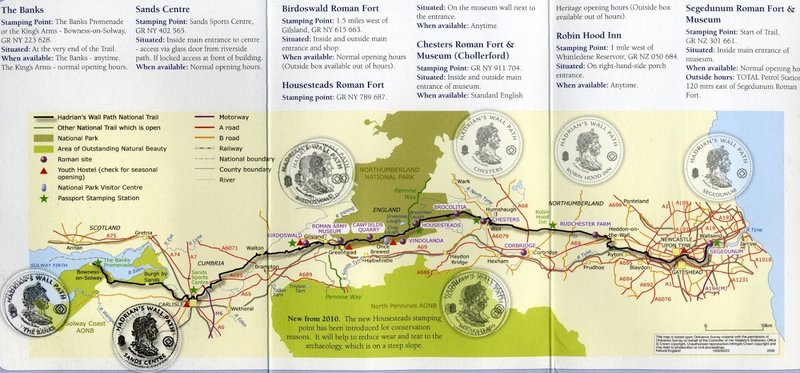
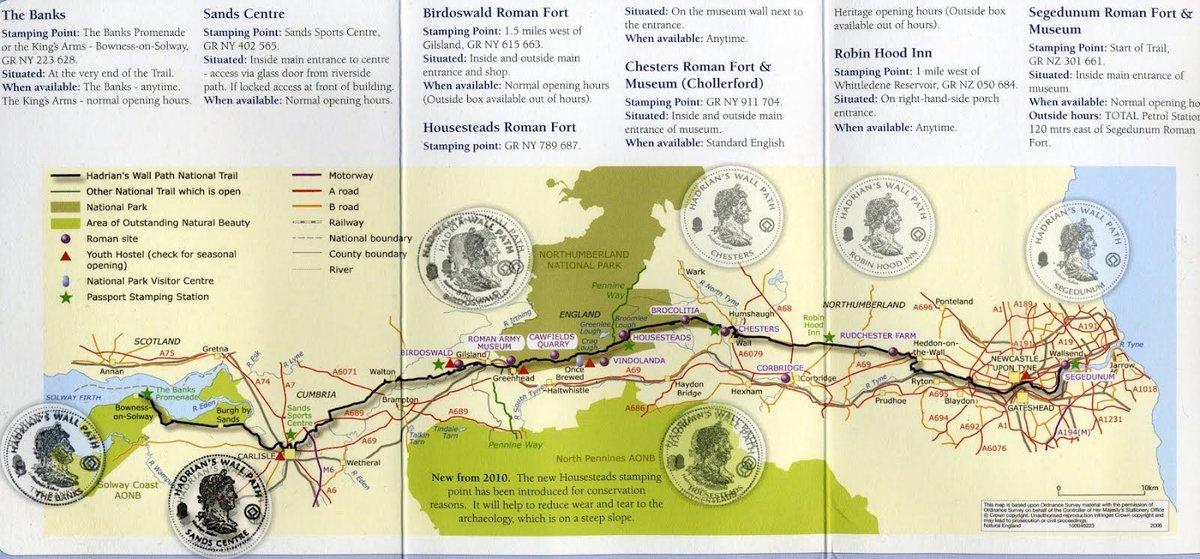
Image: Hadrian's Wall map with descriptions
FYI Col Carl Whicker LTC Bill Koski SPC Nancy GreeneSSG Franklin Briant1stsgt Glenn BrackinJennifer Lee (Doerflinger) HillSP6 Stephen RogersonSSgt Corwin WhickerCPT Paul WhitmerSSG Michael NollTSgt David L.PO1 Robert GeorgeSGT John Melvin1SG John FairclothSSG Robert Mark Odom SP5 Jesse EngelSP5 Jeannie CarleSPC Chris Bayner-Cwik SPC Matthew LambSSG Robert "Rob" Wentworth
Biographical documentary on the Roman Emperor Hadrian. A documentary on the life of the Emperor Hadrian, from him becoming Emperor of the Roman Empire in 117AD to him touring Rome's Provinces and his death in 138AD.
https://www.youtube.com/watch?v=8gIw-hNE8O8
Image: Hadrian's Wall map with descriptions
FYI Col Carl Whicker LTC Bill Koski SPC Nancy GreeneSSG Franklin Briant1stsgt Glenn BrackinJennifer Lee (Doerflinger) HillSP6 Stephen RogersonSSgt Corwin WhickerCPT Paul WhitmerSSG Michael NollTSgt David L.PO1 Robert GeorgeSGT John Melvin1SG John FairclothSSG Robert Mark Odom SP5 Jesse EngelSP5 Jeannie CarleSPC Chris Bayner-Cwik SPC Matthew LambSSG Robert "Rob" Wentworth
(3)
(0)
LTC Stephen F.
FYI Capt Rich BuckleyCW4 G.L. SmithSPC Russ Bolton
SFC Terry Wilcox1sg-dan-capriSGT Robert R.CPT Tommy Curtis Alan K.SGT Denny Espinosa LTC Jesse Edwards CPO Charles Helms SSgt (Join to see) Sgt Deborah Cornatzer MSG (Join to see) Robert Collet SSG Jose M. Hernandezsanchez A1C Ian Williams SSgt Boyd Herrst Col Carl Whicker SPC Margaret Higgins
SFC Terry Wilcox1sg-dan-capriSGT Robert R.CPT Tommy Curtis Alan K.SGT Denny Espinosa LTC Jesse Edwards CPO Charles Helms SSgt (Join to see) Sgt Deborah Cornatzer MSG (Join to see) Robert Collet SSG Jose M. Hernandezsanchez A1C Ian Williams SSgt Boyd Herrst Col Carl Whicker SPC Margaret Higgins
(3)
(0)
3
3
0

Read This Next


 Continue with Facebook
 Continue with Google