

1
1
0



Some research indicates the human brain is not capable of true multitasking, that rapid task-switching is limited, and that the most effective task-switchers are those performing a simple task and a second, more complex task, preferably one that requires different parts of the brain.
The military offers specific high-pressure cases of multitasking/rapid task switching. I'm curious about the thoughts of the RP community.
Do you rapid task-switch?
During your normal life?
Only during moments of extreme pressure?
Do you notice Degraded capability in these moments?
Can you do true multi-tasking (multiple things at once without reduction in performance)
http://www.npr.org/templates/story/story.php?storyId=95256794
https://hbr.org/2015/01/get-more-done-during-your-commute
The military offers specific high-pressure cases of multitasking/rapid task switching. I'm curious about the thoughts of the RP community.
Do you rapid task-switch?
During your normal life?
Only during moments of extreme pressure?
Do you notice Degraded capability in these moments?
Can you do true multi-tasking (multiple things at once without reduction in performance)
http://www.npr.org/templates/story/story.php?storyId=95256794
https://hbr.org/2015/01/get-more-done-during-your-commute
 Performance
 Science
 Efficiency
 Philosophy
Edited 11 y ago
Posted 11 y ago
Responses: 2

4
4
0

I do "rapid task switch," Capt Richard I P.. I think we all do. When I do it, I notice a degradation in my performance, my ability to concentrate on the task at hand (because it's switching so often and so quickly).
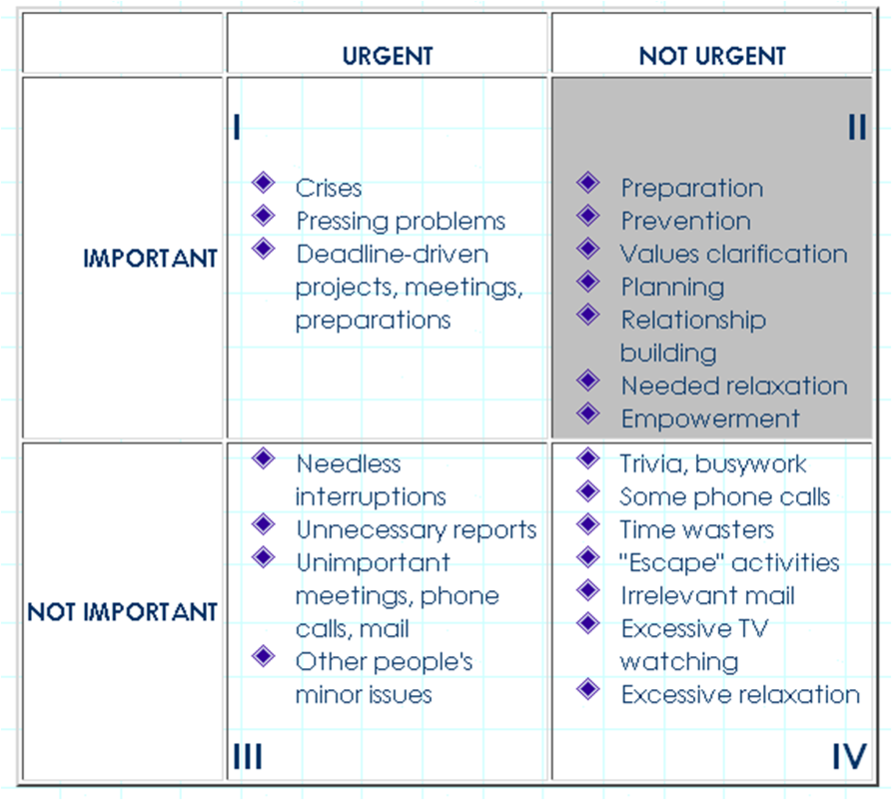
I think this underscores the value and importance of setting priorities and sticking with them. There's a good chart on setting priorities in "The 7 Habits of Highly Effective People." I'll see if I can find it online.
I think this underscores the value and importance of setting priorities and sticking with them. There's a good chart on setting priorities in "The 7 Habits of Highly Effective People." I'll see if I can find it online.
(4)
(0)
1
1
0

Read This Next


 Continue with Facebook
 Continue with Google