
Posted on Dec 31, 2014

F-35 won't be able to shoot its 25mm until 2019 and can't relay video to ground troops, how can it possibly take over the CAS role?

10.3K
31
24
2
2
0
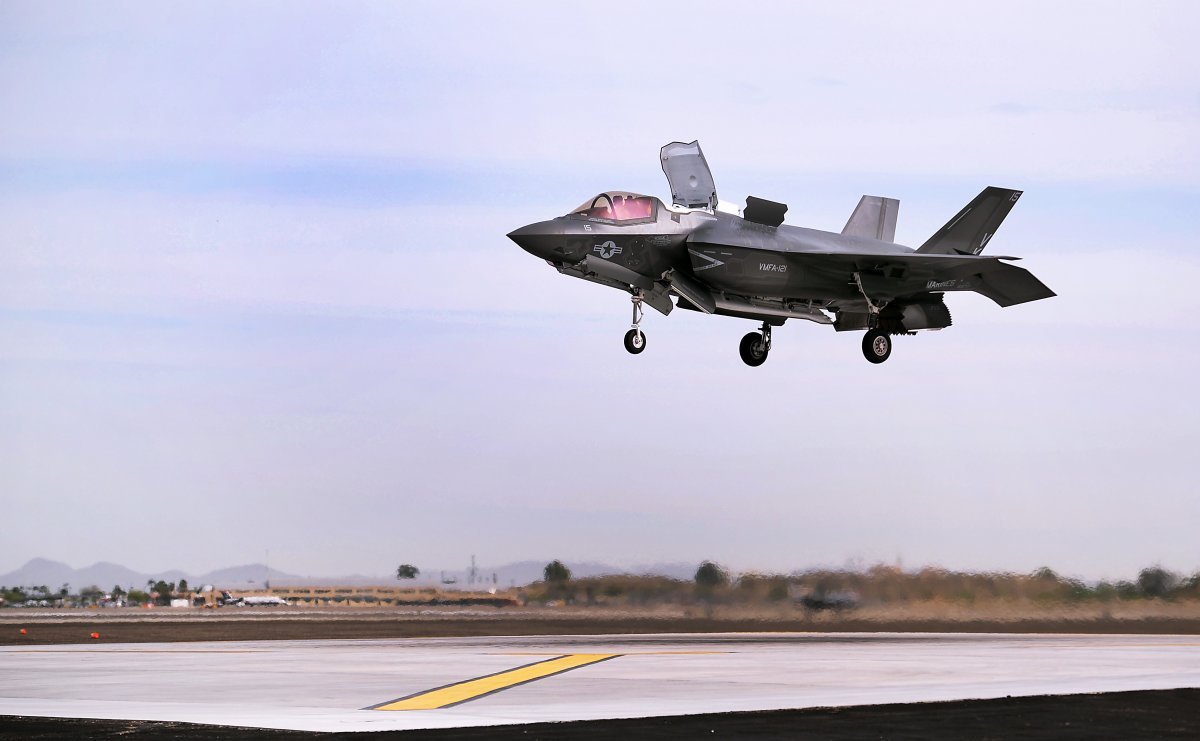
Without a sniper pod or a functional 25mm (and even when the gun is FOC the USA version will only carry 180 rounds for a weapon with a cyclic rate of 3,300 rounds per minute) can this plane actually accomplish the mission it is was designed for? From a ground perspective I am extremely concerned that we are taking a step backward in AGI. What are the thoughts from the aviators and groundpounders on the CAS specifically (there are already documented issues with the dogfight capability but I would like to if possible stick to the CAS fight)?
http://www.businessinsider.com/the-f-35-wont-fire-a-shot-until-2019-2014-12?IR=T
http://www.businessinsider.com/the-f-35-wont-fire-a-shot-until-2019-2014-12?IR=T
Posted in these groups:  F-35
F-35 Close Air Support (CAS)
F-35 Close Air Support (CAS)
Posted 11 y ago
Responses: 13
4
4
0

As someone who's been a part of the F-35 program for the past 5 years (with a one year break) and is at a base where we actually have the jet, here is the gist: the jet is amazing, the support structure (logistics) for the jet isn't. This is what happens when you award a contract but Congress hasn't been 'sold' on the idea yet. So, when the program got the green light in 2010, all we had was a jet--and nothing else. Nonetheless, the jet is frankly amazing--really. Come to Nellis AFB and I will show you in person.
The the OP who asked about the A-G capability of the F-35, all variants, this one is easy--it far surpasses anything else. That faceted glass underneath the nose is more than the equivalent of the Sniper pod, and is slaved to where the pilot looks (or coords that the JTAC sends). In fact, everything on the jet slewed to where the pilot looks, making dropping a JDAM quicker and more accurate than anything else, day or night.
The only thing the A-10 has over the JSF is the 30mm gun vs. a 25mm gun (with not many rounds). However, the trade-off isn't bad when you consider that the JSF can provide CAS in places the Hog would not ever dare to go. I love the Hog--it was my first jet in the USAF many years ago. But, hanging onto an outdated platform that cannot survive against any near peer today is wasted money. It is only an amazing CAS platform when there is no credible ground to air threat.
To COL Gerber, unmanned systems have limits that will take decades to work out. Look at the losses of some high profile assets not long ago, against a foe that isn't too substantive. We drop UAVs all of the time for a reason, and they cannot yet survive in a medium threat level or higher. UAVs going to attack a double digit SAM threat, or providing CAS, is a long time away. I have no doubt that UAVs are the future, but we're only seeing the potential today--prime time is a long time away. We desperately need what the JSF brings NOW.
To the F-35 critics, when was the last time you watched 4th Gen assets fighting in a near-peer fight with today's (available) threats? Not a pretty sight. Why would we *ever* want to send Americans into war with anything less than what we can give them, be that a rifle, a tank, or a mulit-mission fighter?
The the OP who asked about the A-G capability of the F-35, all variants, this one is easy--it far surpasses anything else. That faceted glass underneath the nose is more than the equivalent of the Sniper pod, and is slaved to where the pilot looks (or coords that the JTAC sends). In fact, everything on the jet slewed to where the pilot looks, making dropping a JDAM quicker and more accurate than anything else, day or night.
The only thing the A-10 has over the JSF is the 30mm gun vs. a 25mm gun (with not many rounds). However, the trade-off isn't bad when you consider that the JSF can provide CAS in places the Hog would not ever dare to go. I love the Hog--it was my first jet in the USAF many years ago. But, hanging onto an outdated platform that cannot survive against any near peer today is wasted money. It is only an amazing CAS platform when there is no credible ground to air threat.
To COL Gerber, unmanned systems have limits that will take decades to work out. Look at the losses of some high profile assets not long ago, against a foe that isn't too substantive. We drop UAVs all of the time for a reason, and they cannot yet survive in a medium threat level or higher. UAVs going to attack a double digit SAM threat, or providing CAS, is a long time away. I have no doubt that UAVs are the future, but we're only seeing the potential today--prime time is a long time away. We desperately need what the JSF brings NOW.
To the F-35 critics, when was the last time you watched 4th Gen assets fighting in a near-peer fight with today's (available) threats? Not a pretty sight. Why would we *ever* want to send Americans into war with anything less than what we can give them, be that a rifle, a tank, or a mulit-mission fighter?
(4)
(0)
LTC(P) (Join to see)
Sir, I truly appreciate your insights on this, as I said I am not the expert but some of the things being reported were worrisome. From what you describe it definitely sounds like it is a better plane for the pilot particularly in a near peer threat environment. From a ground perspective though is the plane lacking Thame ability to stream video to ground stations and can it designate with IR? From the guy on the ground perspective those things always made me more comfortable that the pilot and I were both seeing the same things. Also if the 25mm isn't available until 2019 is the only weapon available in the CAS mission now a JDAM? Thank you very much for your help moving this conversation forward with facts instead of potentially biased reporting!
(0)
(0)
COL (Join to see)
Mark, appreciate the update on the improvements to the ground support capabilities. We'll be interested to see them in action - American soldiers - particularly those in contact - remain the greatest fans of air power.
As to your last question - sending Americans into harm's way without the best equipment - no one would argue with your point. Unfortunately history offers many examples where we did just that. The Kasserine Pass, Pusan and the Yalu provide the starkest examples of commitment of the Army after it had been drawn down because "we'll never do that again" and "we need to modernize our air and naval power." Indeed, the brutal operational tempo the ground services experienced in the last decade result from being surprised about how much ground force we would require to fight a war.
So that larger question remains: does the F35 represent a good investment? Or are we in a vicar cycle of having to design even more expensive air craft to counter low cost counter measures? And who ultimately pays the bill? The most recent QDR just mortgaged the Army to pay for modernization projects and some of us remain uneasy. If China rises as the threat some foresee, you are correct. We need the F35. If the future presents us with small, ugly wars, then we may again find ourselves placing too few soldiers with inadequate equipment and training into a bad place.
As to your last question - sending Americans into harm's way without the best equipment - no one would argue with your point. Unfortunately history offers many examples where we did just that. The Kasserine Pass, Pusan and the Yalu provide the starkest examples of commitment of the Army after it had been drawn down because "we'll never do that again" and "we need to modernize our air and naval power." Indeed, the brutal operational tempo the ground services experienced in the last decade result from being surprised about how much ground force we would require to fight a war.
So that larger question remains: does the F35 represent a good investment? Or are we in a vicar cycle of having to design even more expensive air craft to counter low cost counter measures? And who ultimately pays the bill? The most recent QDR just mortgaged the Army to pay for modernization projects and some of us remain uneasy. If China rises as the threat some foresee, you are correct. We need the F35. If the future presents us with small, ugly wars, then we may again find ourselves placing too few soldiers with inadequate equipment and training into a bad place.
(0)
(0)
1
1
0

The Air Force should use the A-10 until the F-35 is ready for CAS. Then they can sell them to the Marine Corp. I'm damn sure they know the value of CAS. If the F-35 does CAS it will not be for long. How many in Command, Congress or the White House will want something that expensive that close to enemy ground forces who might want to take a shot at it? Not many.
(1)
(0)
LTC(P) (Join to see)
Great points and I agree that it makes sense to keep the A-10 until there is something ready to take over the role. There have also been those who have suggested that the CAS role transfer completely over to the Marines and Army, I am not sure that I necessarily agree with that as I think there is some goodness in focusing on your primary mission.
(0)
(0)
1
1
0
No responsible person thinks the A-10 will be effective forever or in all environments. But, until a suitable replacement is ready to take on the CAS mission, the A-10 should stay in service. This is like the college football coach who benches his starting quarterback because he found a prodigy who is in the sixth grade.
VDL is a nice to have, the gun is a need to have, but the IR pointer is a MUST have for CAS. No pointer, no go for CAS, in my opinion.
VDL is a nice to have, the gun is a need to have, but the IR pointer is a MUST have for CAS. No pointer, no go for CAS, in my opinion.
(1)
(0)
TSgt Joshua Copeland
Col John "Coach" Allison, the mighty BUFF is projected to fly till the 2040's. It was first produced in the 1950's. Just because something is old, doesn't mean it cant be upgraded or still isn't the right tool for the job.
(0)
(0)
(0)
(0)
Read This Next


 Continue with Facebook
 Continue with Google