

General Grant or General Lee - Who was more important?

Being from the 'North' (New York) and raised to believe General Grant (good guy) was more important than General Lee (bad guy)...looking at the situation from both sides, I now have a better understanding.
NOTE: When responding with who you feel was more important (this question is vague for a reason), try to give an example and let the audience know what state you were raised in (to establish Civil War education background).
 Military History
 Civil War

-General Lee inspired his men.
-General Lee was daring and aggressive/offensive
-General Lee for the most part delegated his authority well..
General Lee had the admiration of his country most of his time in leadership and faced very little backlash from the press at the height of his campaigns (Fredricksburg, Chancellorsville) and also had some great Generals beneath him (Jackson, Longstreet).
General Grant did many of the same things, but in different ways. However, the reason I would give the tip of the hat to Grant is this:
Only two Generals on the Northern side really understood what it took to win the war. Too many of Grant's successors wanted to take Richmond, etc. Grant and Sherman, however, realized that it would take Total War to successfully win the war. This meant destroying property, instilling fear in the citizenry, and taking the war to areas that had largely avoided conflict (Atlanta).
Grant also largely accomplished his successes on the battlefield while trying to fend off politicians and superiors who wanted to dismiss him from his position, and also dealing with insubordinate underlings. Lee, in contrast, rarely had to deal with either of those two issues.
Grant also realized that his largest advantage was in supplies and men. While many could say that in the final years of the war a lot of Union soldiers were wasted, Grant could afford to take the slaughter, and Lee could not.
This is just a tidbit of my thoughts, this is an issue that could be discussed more in depth easily.


Who was more important? I would have to say Lee. As a southerner, you might expect me to say that, but my reasons are unexpected. Lee was a staunchly loyal, 32-year veteran of the US Army by the time he resigned. He had performed well in the Mexican-American war (alongside GEN Grant) under Winfield Scott, was the commander that defeated John Brown and his abolitionists at Harper's Ferry, and was the superintendant of the USMA. He refused the command of the defense of Washington D.C. because he felt it may require him to attack his home state. He was against secession, saying "I shall never bear arms against the Union, but it may be necessary for me to carry a musket in the defense of my native state, Virginia, in which case I shall not prove recreant to my duty." When Virginia seceded from the Union, he was true to his word.
Lee was originally the commander of Virginian forces, eventually rising to the position of military advisor to Jefferson Davis, and then to General-in-Chief of confederate forces. He was obsessed with building elaborate trench systems (a precursor to WWI trench fighting) and excelled at the defense of Savannah using coastal gun batteries, both natural for a former combat engineer. He was widely thought of, after initial blunders, as a good tactical commander but short on strategic vision.
Why was Lee more important? First, his poor tactics directly contributed to the northern victory, allowing the war to end and the nation to heal and move on. Second, when Grant called for his surrender at Appomattox Court House, some of his officers called for him to reject the surrender and allow them to continue the war in the form of guerrilla warfare, riding in small bands through the mountains and countryside. Lee refused and accepted the surrender. Again, he prevented what could have been a long, costly counter-guerrilla campaign.
I am a southerner, but first, I am an American. Had Lee not been just a little less effective than Grant, who knows what kind of country we would be living in right now? (BTW, Lee was in favor of emancipating the slaves, and even supported the idea of deporting them all back to Africa as a gesture of reconciliation and returning them to their homeland)He was a great man and a great General, but the best thing he could have ever done for the country was lose the war.

I will have to go with General Lee (south) but my all time favorite General was General P.G.T Beauregard.
He
was educated at the United States Military Academy
at West Point, New York. One of his
instructors was Robert Anderson, who later became the
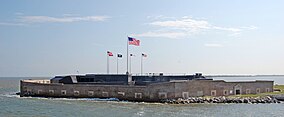
commander of Fort Sumter and surrendered to Beauregard at
the start of the Civil War.
As a lifelong Democrat, Beauregard
worked to end Republican rule during Reconstruction. His
outrage over the perceived excesses of Reconstruction was a principal source
for his indecision about remaining in the United States and his flirtation with
foreign armies, which lasted until 1875. He was active in the Reform Party, an
association of conservative New Orleans businessmen, which spoke in favor of civil rights
and voting for the recently freed slaves, hoping to form alliances between African-Americans and
Democrats to vote out the Radical Republicans in the state legislature.



 Continue with Facebook
 Continue with Google