
Posted on Sep 11, 2014

Lack of minority officers leading Army combat units? How do you respond to this article?

85.8K
562
309
17
15
2

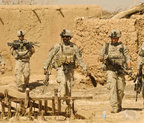
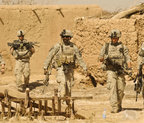
WASHINGTON — Command of the Army's main combat units — its pipeline to top leadership — is virtually devoid of black officers, according to interviews, documents and data obtained by USA TODAY.
The lack of black officers who lead infantry, armor and field artillery battalions and brigades — there are no black colonels at the brigade level this year — threatens the Army's effectiveness, disconnects it from American society and deprives black officers of the principal route to top Army posts, according to officers and military sociologists. Fewer than 10 percent of the active-duty Army's officers are black compared with 18 percent of its enlisted men, according to the Army.
The problem is most acute in its main combat units: infantry, armor and artillery. In 2014, there was not a single black colonel among those 25 brigades, the Army's main fighting unit of about 4,000 soldiers. Brigades consist of three to four battalions of 800 to 1,000 soldiers led by lieutenant colonels. Just one of those 78 battalions is scheduled to be led by a black officer in 2015.
Leading combat units is an essential ticket to the Army's brass ring. Gen. Raymond Odierno, the Army's chief of staff, commanded artillery units; his predecessor, Gen. Martin Dempsey, led armored units, and is now the chairman of the Joint Chiefs of Staff.
"The issue exists. The leadership is aware of it," says Brig. Gen. Ronald Lewis, the Army's chief of public affairs. Lewis is a helicopter pilot who has commanded at the battalion and brigade levels and is African-American. "The leadership does have an action plan in place. And it's complicated."
Among the complications: expanding the pool of minority candidates qualified to be officers, and helping them choose the right military jobs they'll need to climb the ranks, Lewis says.
To be sure, there are black officers who have attained four stars. Gen. Lloyd Austin, an infantry officer, leads Central Command, arguably the military's most critical combatant command as it oversees military operations in the Middle East. Another four-star officer, Gen. Vincent Brooks, leads U.S. Army Pacific, and Gen. Dennis Via runs Army Materiel Command, its logistics operation.
The concern, however, is for Army's seed bed for four-star officers — the combat commands from which two-thirds of its generals are grown. They're unlikely to produce a diverse officer corps if candidates remain mostly white.
"It certainly is a problem for several reasons," says Col. Irving Smith, director of sociology at the U.S. Military Academy at West Point. Smith is also an African-American infantry officer who has served in Afghanistan. "First we are a public institution. And as a public institution we certainly have more of a responsibility to our nation than a private company to reflect it. In order to maintain their trust and confidence, the people of America need to know that the Army is not only effective but representative of them."
Black officers at the top ranks of the brass show young minority officers what they can achieve. Their presence also signals to allies in emerging democracies like Afghanistan that inclusive leadership is important. Diverse leadership, research shows, is better able to solve complex problems such as those the Army confronted in Iraq and Afghanistan, Smith said.
"It comes down to effectiveness," Smith said. "Diversity and equal opportunity are important, but most people don't point out that it makes the Army more effective."
The Problem
The Army's — and the Pentagon's — main ground fighting force remains the Army's infantry, armor and artillery units, although aviation and engineering units are also considered combat arms. Many of their names have become familiar to the American public after more than a decade of war: The 101st Airborne Division; the 82nd Airborne Division; the 10th Mountain Division.
They share a proud history of tough fights and multiple deployments to Iraq and Afghanistan. They also share a lack of black leaders. In all, eight of 10 of the Army's fighting divisions do not have a black battalion commander in their combat units.
(For now, they also lack women. The military plans to open combat roles to women in 2016.)
USA TODAY obtained the Army's list of battalion and brigade commanders. Several officers familiar with the personnel on them identified the black officers, which the Army refused to do. The paper considered officers in infantry, armor and field artillery — the three main combat-arms branches.
The results: In 2014, there is not a single black commander among its 25 brigades; there were three black commanders in its 80 battalion openings.
In 2015, there will be two black commanders of combat brigades; and one black commander among 78 battalions openings.
"It's command. If you don't command at the (lieutenant colonel) level, you're not going to command at (the colonel level)," says Army Col. Ron Clark, an African-American infantry officer who has commanded platoon, company, battalion and brigade level. "If you don't command at the (colonel) level, you're not going to be a general officer."
Capt. Grancis Santana, 33, knows about the long odds he faces as an artillery officer hoping to become a colonel.
He found few black officers in his specialty — about two of 20 when he was a lieutenant, and about three of 30 when he made captain.
"It's not a good feeling when you're one of the few," Santana said. "There was no discrimination; there are just not a lot of people like you."
A key reason is the paucity of black officers graduated by the U.S. Military Academy at West Point, its ROTC programs and Officer Candidate School.
For instance, the newly minted officer classes of 2012 and 2013 in combat arms remained mostly white, according to data released by the Army. Of the 238 West Point graduates commissioned to be infantry officers in 2012, 199 were white; seven were black. At Officer Candidate School, which accepts qualified enlisted soldiers and graduates with four-year degrees, 66 received commissions as infantry officers — 55 were white, none was black. The figures remained nearly unchanged for 2013.
The downsizing of the Army is having a disproportional effect on African-American officers. From the pool of officers screened, almost 10 percent of eligible black majors are being dismissed from the Army compared with 5.6 percent of eligible white majors, USA TODAY reported in early August. The Army is cutting 550 majors and about 1,000 captains as the Army seeks to reduce its force to 490,000 soldiers by the end of 2015.
The Causes
Two forces seem to reinforce the lack of black officers in combat command. For decades, young black men have tended to choose other fields, including logistics. With fewer role models and mentors in combat specialties, those fields have been seen as less welcoming to African-American officers.
Irving Smith remembers his parents being "heartbroken" that he chose infantry.
"African Americans have historically used the armed forces as a means of social mobility," says Smith, who joined the infantry, has risen to the rank of colonel and now is professor and director of sociology at the U.S. Military Academy at West Point. "That is certainly true for African Americans who have used the armed forces as a bridging opportunity (to new careers)."
Parents, pastors and coaches of young black men and women considering the Army often don't encourage them to join the combat specialties.
"Why would you go in the infantry?" Smith says of a common question. "Why would you want to run around in the woods and jump out of airplanes, things that have no connection to private businesses? Do transportation. Do logistics. That will provide you with transferable skills."
Developing marketable skills has been a key motivation for many African Americans, said David Segal, a military sociologist at the University of Maryland. That has often meant driving a truck, not a tank.
"There has been a trend among African Americans who do come into the military to gravitate to career fields that have transfer value — that pretty much excludes the combat arms," Segal said.
Clark, who now works at the Pentagon, wasn't encouraged initially to join the infantry. His father enlisted in 1964 and had an Army career in food service.
"He grew up in a small town in southern Louisiana in the middle of Jim Crow South," Clark says. "He was tired of having someone telling him where to sit on a bus, which water fountain to drink from and which bathroom he could use."
At age 11, the younger Clark remembers climbing on a tank when the family was stationed in Grafenwoehr, Germany. The U.S. invasion of Grenada in 1983 sealed the deal for him: He wanted to be infantryman.
"I wanted to be an Airborne Ranger in a tree," Clark says, "and my dad was not having it. He said, 'Nope, you are not going following my footsteps. I want you to go to college.'"
The compromise, after his father had him speak with an African-American brigade executive officer named Larry Ellis, was to enroll at West Point. Ellis went on to become a four-star general, and Clark graduated from the academy in 1988.
Clark and Irving remain exceptional cases.
The downsizing of the Army is having a disproportional effect on African-American officers. From the pool of officers screened, almost 10 percent of eligible black majors are being dismissed from the Army compared with 5.6 percent of eligible white majors, USA TODAY reported in early August. The Army is cutting 550 majors and about 1,000 captains as the Army seeks to reduce its force to 490,000 soldiers by the end of 2015.
The Army's Response
The problem has attracted attention at the Army's highest ranks. In March, Army Secretary John McHugh and Odierno, the chief of staff, issued a directive aimed at diversifying the leadership of its combat units.
USA TODAY obtained a copy of the memo, which notes that the Army historically has drawn the majority of its generals from combat fields, specifically "Infantry, Armor and Field Artillery." For at least two decades, however, young minority officers have selected those fields in the numbers necessary to produce enough generals.
"African Americans have the most limited preference in combat arms, followed by Hispanic and Asian Pacific officers," the memo states. While black officers make up 12 percent of Army officers in all competitive specialties, they make up just 7 percent of the Army's infantry, armor and artillery officers. For junior officers, that figure is lower, 6 percent.
Minority groups need a "critical mass" of about 15 percent to feel they have a voice, Smith says.
The Army's plan calls for enhanced recruiting and mentoring for minority officers, particularly in combat fields, tracking their progress and encouraging mentorship.
Mentors needn't be of the same race, Clark and Lewis say. Lewis noted that several of his closest mentors were white officers, including retired general Richard Cody, who retired as Army vice chief of staff. Cody advised him to spend time at the Army's National Training Center, in the California desert. It paid off, Lewis says.
"Everyone does not have to look like you," Lewis says. "You have to be able to receive mentorship, leadership. And you have to follow some of that. You may have to spend some time at a really hard place for a bit."
Byron Bagby, a retired African-American two-star artillery officer, applauds the Army for acknowledging the problem and taking steps to address it. He cautions progress will be slow. Bagby retired in 2011 from a top post with NATO in the Netherlands.
"We're not going to solve this tomorrow, or a year from now," Bagby says.
Smith has another suggestion for the Army. Ask an in-house expert: him.
The brass could also stop by his office for a chat, he says.
"I've never had anybody from the Department of the Army come to me. I'm a sociologist. I've studied these issues for six years."
The lack of black officers who lead infantry, armor and field artillery battalions and brigades — there are no black colonels at the brigade level this year — threatens the Army's effectiveness, disconnects it from American society and deprives black officers of the principal route to top Army posts, according to officers and military sociologists. Fewer than 10 percent of the active-duty Army's officers are black compared with 18 percent of its enlisted men, according to the Army.
The problem is most acute in its main combat units: infantry, armor and artillery. In 2014, there was not a single black colonel among those 25 brigades, the Army's main fighting unit of about 4,000 soldiers. Brigades consist of three to four battalions of 800 to 1,000 soldiers led by lieutenant colonels. Just one of those 78 battalions is scheduled to be led by a black officer in 2015.
Leading combat units is an essential ticket to the Army's brass ring. Gen. Raymond Odierno, the Army's chief of staff, commanded artillery units; his predecessor, Gen. Martin Dempsey, led armored units, and is now the chairman of the Joint Chiefs of Staff.
"The issue exists. The leadership is aware of it," says Brig. Gen. Ronald Lewis, the Army's chief of public affairs. Lewis is a helicopter pilot who has commanded at the battalion and brigade levels and is African-American. "The leadership does have an action plan in place. And it's complicated."
Among the complications: expanding the pool of minority candidates qualified to be officers, and helping them choose the right military jobs they'll need to climb the ranks, Lewis says.
To be sure, there are black officers who have attained four stars. Gen. Lloyd Austin, an infantry officer, leads Central Command, arguably the military's most critical combatant command as it oversees military operations in the Middle East. Another four-star officer, Gen. Vincent Brooks, leads U.S. Army Pacific, and Gen. Dennis Via runs Army Materiel Command, its logistics operation.
The concern, however, is for Army's seed bed for four-star officers — the combat commands from which two-thirds of its generals are grown. They're unlikely to produce a diverse officer corps if candidates remain mostly white.
"It certainly is a problem for several reasons," says Col. Irving Smith, director of sociology at the U.S. Military Academy at West Point. Smith is also an African-American infantry officer who has served in Afghanistan. "First we are a public institution. And as a public institution we certainly have more of a responsibility to our nation than a private company to reflect it. In order to maintain their trust and confidence, the people of America need to know that the Army is not only effective but representative of them."
Black officers at the top ranks of the brass show young minority officers what they can achieve. Their presence also signals to allies in emerging democracies like Afghanistan that inclusive leadership is important. Diverse leadership, research shows, is better able to solve complex problems such as those the Army confronted in Iraq and Afghanistan, Smith said.
"It comes down to effectiveness," Smith said. "Diversity and equal opportunity are important, but most people don't point out that it makes the Army more effective."
The Problem
The Army's — and the Pentagon's — main ground fighting force remains the Army's infantry, armor and artillery units, although aviation and engineering units are also considered combat arms. Many of their names have become familiar to the American public after more than a decade of war: The 101st Airborne Division; the 82nd Airborne Division; the 10th Mountain Division.
They share a proud history of tough fights and multiple deployments to Iraq and Afghanistan. They also share a lack of black leaders. In all, eight of 10 of the Army's fighting divisions do not have a black battalion commander in their combat units.
(For now, they also lack women. The military plans to open combat roles to women in 2016.)
USA TODAY obtained the Army's list of battalion and brigade commanders. Several officers familiar with the personnel on them identified the black officers, which the Army refused to do. The paper considered officers in infantry, armor and field artillery — the three main combat-arms branches.
The results: In 2014, there is not a single black commander among its 25 brigades; there were three black commanders in its 80 battalion openings.
In 2015, there will be two black commanders of combat brigades; and one black commander among 78 battalions openings.
"It's command. If you don't command at the (lieutenant colonel) level, you're not going to command at (the colonel level)," says Army Col. Ron Clark, an African-American infantry officer who has commanded platoon, company, battalion and brigade level. "If you don't command at the (colonel) level, you're not going to be a general officer."
Capt. Grancis Santana, 33, knows about the long odds he faces as an artillery officer hoping to become a colonel.
He found few black officers in his specialty — about two of 20 when he was a lieutenant, and about three of 30 when he made captain.
"It's not a good feeling when you're one of the few," Santana said. "There was no discrimination; there are just not a lot of people like you."
A key reason is the paucity of black officers graduated by the U.S. Military Academy at West Point, its ROTC programs and Officer Candidate School.
For instance, the newly minted officer classes of 2012 and 2013 in combat arms remained mostly white, according to data released by the Army. Of the 238 West Point graduates commissioned to be infantry officers in 2012, 199 were white; seven were black. At Officer Candidate School, which accepts qualified enlisted soldiers and graduates with four-year degrees, 66 received commissions as infantry officers — 55 were white, none was black. The figures remained nearly unchanged for 2013.
The downsizing of the Army is having a disproportional effect on African-American officers. From the pool of officers screened, almost 10 percent of eligible black majors are being dismissed from the Army compared with 5.6 percent of eligible white majors, USA TODAY reported in early August. The Army is cutting 550 majors and about 1,000 captains as the Army seeks to reduce its force to 490,000 soldiers by the end of 2015.
The Causes
Two forces seem to reinforce the lack of black officers in combat command. For decades, young black men have tended to choose other fields, including logistics. With fewer role models and mentors in combat specialties, those fields have been seen as less welcoming to African-American officers.
Irving Smith remembers his parents being "heartbroken" that he chose infantry.
"African Americans have historically used the armed forces as a means of social mobility," says Smith, who joined the infantry, has risen to the rank of colonel and now is professor and director of sociology at the U.S. Military Academy at West Point. "That is certainly true for African Americans who have used the armed forces as a bridging opportunity (to new careers)."
Parents, pastors and coaches of young black men and women considering the Army often don't encourage them to join the combat specialties.
"Why would you go in the infantry?" Smith says of a common question. "Why would you want to run around in the woods and jump out of airplanes, things that have no connection to private businesses? Do transportation. Do logistics. That will provide you with transferable skills."
Developing marketable skills has been a key motivation for many African Americans, said David Segal, a military sociologist at the University of Maryland. That has often meant driving a truck, not a tank.
"There has been a trend among African Americans who do come into the military to gravitate to career fields that have transfer value — that pretty much excludes the combat arms," Segal said.
Clark, who now works at the Pentagon, wasn't encouraged initially to join the infantry. His father enlisted in 1964 and had an Army career in food service.
"He grew up in a small town in southern Louisiana in the middle of Jim Crow South," Clark says. "He was tired of having someone telling him where to sit on a bus, which water fountain to drink from and which bathroom he could use."
At age 11, the younger Clark remembers climbing on a tank when the family was stationed in Grafenwoehr, Germany. The U.S. invasion of Grenada in 1983 sealed the deal for him: He wanted to be infantryman.
"I wanted to be an Airborne Ranger in a tree," Clark says, "and my dad was not having it. He said, 'Nope, you are not going following my footsteps. I want you to go to college.'"
The compromise, after his father had him speak with an African-American brigade executive officer named Larry Ellis, was to enroll at West Point. Ellis went on to become a four-star general, and Clark graduated from the academy in 1988.
Clark and Irving remain exceptional cases.
The downsizing of the Army is having a disproportional effect on African-American officers. From the pool of officers screened, almost 10 percent of eligible black majors are being dismissed from the Army compared with 5.6 percent of eligible white majors, USA TODAY reported in early August. The Army is cutting 550 majors and about 1,000 captains as the Army seeks to reduce its force to 490,000 soldiers by the end of 2015.
The Army's Response
The problem has attracted attention at the Army's highest ranks. In March, Army Secretary John McHugh and Odierno, the chief of staff, issued a directive aimed at diversifying the leadership of its combat units.
USA TODAY obtained a copy of the memo, which notes that the Army historically has drawn the majority of its generals from combat fields, specifically "Infantry, Armor and Field Artillery." For at least two decades, however, young minority officers have selected those fields in the numbers necessary to produce enough generals.
"African Americans have the most limited preference in combat arms, followed by Hispanic and Asian Pacific officers," the memo states. While black officers make up 12 percent of Army officers in all competitive specialties, they make up just 7 percent of the Army's infantry, armor and artillery officers. For junior officers, that figure is lower, 6 percent.
Minority groups need a "critical mass" of about 15 percent to feel they have a voice, Smith says.
The Army's plan calls for enhanced recruiting and mentoring for minority officers, particularly in combat fields, tracking their progress and encouraging mentorship.
Mentors needn't be of the same race, Clark and Lewis say. Lewis noted that several of his closest mentors were white officers, including retired general Richard Cody, who retired as Army vice chief of staff. Cody advised him to spend time at the Army's National Training Center, in the California desert. It paid off, Lewis says.
"Everyone does not have to look like you," Lewis says. "You have to be able to receive mentorship, leadership. And you have to follow some of that. You may have to spend some time at a really hard place for a bit."
Byron Bagby, a retired African-American two-star artillery officer, applauds the Army for acknowledging the problem and taking steps to address it. He cautions progress will be slow. Bagby retired in 2011 from a top post with NATO in the Netherlands.
"We're not going to solve this tomorrow, or a year from now," Bagby says.
Smith has another suggestion for the Army. Ask an in-house expert: him.
The brass could also stop by his office for a chat, he says.
"I've never had anybody from the Department of the Army come to me. I'm a sociologist. I've studied these issues for six years."
 Officers
 Diversity
Posted >1 y ago
Responses: 104
1
1
0

Thought provoking article SFC A.M. Drake. I served with CPT (Join to see) in the 1-17 FAR and deployed with him to Afghanistan. He is smart as hell, was one of the best officers in the BN, and I'd like to hear more from him on this topic. Minority groups are definitley under-represented in the combat arms. I think the article and CPT (Join to see) are correct in that minority groups tend to favor "transferable skills" when entering the Army. It reminds me of an annecdote from the documentary Korrengal. One of the few African-American NCOs was talking about how it felt to be a minority in the company. He said something along the lines of "Most black men don't wan't to jump out of airplanes and get shot at," but that everyone would have his back in a firefight and vise versa (paraphrasing). I really do think it starts with an individuals motivation for joining in the first place. Is it to develop transferable skills marketable in the business world, or do you want to "jump out of airplanes and get shot at?" I was looking at some academic studies about this very topic last week while helping my girlfriend study for her masters degree in social work. Minorities primarily join the military to get educational opportunities and transferable skills. Logistics units and support roles have more of these opportunities than combat arms. So how do you get more minorites into the upper ranks of the combat arms branches? I guess you need to motivate them to join in order to "jump out of airplanes and shoot people."
(1)
(0)
SFC A.M. Drake
Good analogy sir, Now here is a question. Back during the Civil War, African American fought bravely as Infrantrymen, Scouts, etc. Let's go back further to the dawning of America with George Washington where persons of color fought to defend the new nation, but GW listened to his council that stated we should not arm them because they are slaves or indentured servants they may come back to hurt us, thus GW signed a law that prohibited those brave Americans from carrying weapons, thus most left america and joined the French so that they could gain freedom. (I saw this on American History channel) interesting. My point is when did this idea/change came about for African Americans to where we are now? World War II, Korean War, Vietnam? I'm sure someone wiser than I have the answer?
(0)
(0)
1
1
0

When people say 'there is a lack of ABC group in a XYZ position' in anything, what they are really saying is 'I made up an imaginary figure in my head that I deem acceptable, and because reality doesn't match up to my imaginary number, I think there needs to be change'.
-And that gets people killed. Because then there are quotas. And quotas mean substandard leaders. Now there is a big push for women in high military positions. Not because it's believed that they can do the job better (or at all), but because there is a quota to fill....Hell, they get in with a technicality with the lower standards to join, why not put them in a position where they make decisions that get people killed? Welcome to the New Military. The DoD are the policy makers, and they are the same cowards that are quick to appease the Politically Correct Liberals and Democrats....It hasn't worked out in the civilian world, why not try it where it matters, where life and death are on the line?
-It's the same in the business world. Many times, Quality people don't get hired because companies need to reach quotas. So what happens is that companies hire token candidates. Who essentially are a drain. My father used to complain about that when he had a high position at a Global Company. The laws forced his hand to hire substandard employees. And he had to put up with their bullsh*t because they knew he couldn't fire them, they'd just sue by calling the race card.
.....honestly, I'd hate to be a token employee, or military leader. I couldn't live with knowing that the only reason I got somewhere is because of my skin color, or gender. I'd feel pretty pathetic. But not everyone thinks like me I've noticed.
-And that gets people killed. Because then there are quotas. And quotas mean substandard leaders. Now there is a big push for women in high military positions. Not because it's believed that they can do the job better (or at all), but because there is a quota to fill....Hell, they get in with a technicality with the lower standards to join, why not put them in a position where they make decisions that get people killed? Welcome to the New Military. The DoD are the policy makers, and they are the same cowards that are quick to appease the Politically Correct Liberals and Democrats....It hasn't worked out in the civilian world, why not try it where it matters, where life and death are on the line?
-It's the same in the business world. Many times, Quality people don't get hired because companies need to reach quotas. So what happens is that companies hire token candidates. Who essentially are a drain. My father used to complain about that when he had a high position at a Global Company. The laws forced his hand to hire substandard employees. And he had to put up with their bullsh*t because they knew he couldn't fire them, they'd just sue by calling the race card.
.....honestly, I'd hate to be a token employee, or military leader. I couldn't live with knowing that the only reason I got somewhere is because of my skin color, or gender. I'd feel pretty pathetic. But not everyone thinks like me I've noticed.
(1)
(0)
1
1
0
1
1
0

This has no bearing on warfigiting, any effective military units' functionality must be based solely on training, skills, and knowledge. Anyone who considers ethnicity, gender, or personal lifestyles in the equation has no business in the business of war.
(1)
(0)
1
1
0
I am against any of those articles that creates negative ideas about our military. We have and are the greatest organization in the world. Everyone that wears the uniform is my brother and my sisters in arms where i am willing to fight with and die for regardless of where they are from.
(1)
(0)
1
1
0

Just as CPT Wolfer ... ..al l minority officers I know choose other branches besides combat. my reasoning was what is there to do after the military with combat experience? Because we can't do this job forever. Longevity benefits from picking other branches besides combat there are not only useful to the military but the civilian world as Well. It's a difference of making close to a 6 figure job in Logistics, intelligence, and Etc. verse s choosing combat arms and getting lucky and possibly working for government entities outside of law enforcement. My own father who was combat arms for 22 active years told me if you plan on staying in the military take a branch or mos as enlisted that will benefit you when you get out and combat arms isn't high on the list
(1)
(0)
1LT(P) (Join to see)
As I can see your offended that I use common sense and not the mentality of what everybody else do. I've been a enlisted 11B and to talk about myself being Africa American is respect to where my ancestors come from which by the way yours didn't come from here as well but anyway. Back to what I was saying combat arms is every soldier in the military....so just cause you have it as a identifier doesn't make you combat ready cause I'm still better than most and my career reflect that so good luck in being prideful to what you want but I go with what's best for me and my family not what an experienced corporal think
(0)
(1)
1LT(P) (Join to see)
Cpl Robert Masi
It goes back to the reason Army is always the brain of the operation at the time of war. We are not called jar heads because we think 1st before execution of the plan.
It goes back to the reason Army is always the brain of the operation at the time of war. We are not called jar heads because we think 1st before execution of the plan.
(0)
(1)
Cpl Robert Masi
I'll address your points as you wrote them.
1. What you are talking about isn't common sense at all. You are trying to put your decisions on a pedestal as if you are right about your decisions. And you have no idea because you don't know the future. And to judge others by your decisions of safety, as kind of asinine. By your string of logic, everyone is stuck in their station in life. Everything is predetermined by the path they take. And that isn't true at all. Success is favored by the bold, not the meek.
2. Clearly you don't follow much Genetic Anthropology. Science proves we all come from Africa. But when the water dried up, or the animals migrated, tribes of people equally moved for survival purposes. Some didn't, and what you see in Africa now, are the ones that decided to stay, because of fear of the unknown. Although I'm proud of what my genetic heritage has accomplished as far as being bold enough to continue outward for prosperity purposes, I don't spend my time regaling about how my people adapted to all new environments, instead of staying put despite the lack of resources. So I have no sympathy for starving kids in Africa. They chose their lot in life, and so did their predecessors.
3. Combat arms is not every soldier. And I would challenge you to address any soldier or Marine with actual combat experience, and all will laugh at you. You are saying "I'm in the National Guard in Logistics, so I'm pretty much a grunt"...that in itself is a laugh. And I wonder if you can keep a straight face as you type it.
4. You don't have to take my word for it. But I'm actually in the real world. Large companies come to me to find them top candidates for any variety of positions they want filled, and it's my job to send them people I feel are qualified, and they decide from my choices I give them. Without knowing your resume, I can tell by your snobby attitude and character, you'd be a stain on my record. You'd probably get fired if you had to deal with high stress environments where you have to work as a team member instead of a superior. There is a certain cool mind that comes with combat experienced individuals, and frankly, you can talk about how amazing you are all you want, but unless you live through it, you won't have it. Plus, there is the instant willingness to adapt that goes along with combat vets that you can't compare too.
5. The term Jar head hasn't applied to the Marines for a long time. We keep is as an affectionate term. The difference between the Army and the Marines now, is the balls to head straight into hell. Marines are and always will be known as the balls of the of all the branches. Of course we all have our specialty groups, we all have different goals as a whole.
Hell, the National Guard is down on the Totem Pole, with the Coast Guard. A study in the DoD (reported by USA Today) shows that the National Guard are 1/3 more likely to be killed in Iraq than a regular Army Soldier.....those are the stats. And that's 33.33% more likely to be killed in case you couldn't figure it out.
But you are pretty tough against unarmed American civilians, I'll give you that.
You joined for the free college and the easy lifestyle, I understand. But don't try to church up your efforts and glamorize yourself when you didn't even join the Army. You are in the National Guard. They send you to do humanitarian nonsense when a hurricane hits.
1. What you are talking about isn't common sense at all. You are trying to put your decisions on a pedestal as if you are right about your decisions. And you have no idea because you don't know the future. And to judge others by your decisions of safety, as kind of asinine. By your string of logic, everyone is stuck in their station in life. Everything is predetermined by the path they take. And that isn't true at all. Success is favored by the bold, not the meek.
2. Clearly you don't follow much Genetic Anthropology. Science proves we all come from Africa. But when the water dried up, or the animals migrated, tribes of people equally moved for survival purposes. Some didn't, and what you see in Africa now, are the ones that decided to stay, because of fear of the unknown. Although I'm proud of what my genetic heritage has accomplished as far as being bold enough to continue outward for prosperity purposes, I don't spend my time regaling about how my people adapted to all new environments, instead of staying put despite the lack of resources. So I have no sympathy for starving kids in Africa. They chose their lot in life, and so did their predecessors.
3. Combat arms is not every soldier. And I would challenge you to address any soldier or Marine with actual combat experience, and all will laugh at you. You are saying "I'm in the National Guard in Logistics, so I'm pretty much a grunt"...that in itself is a laugh. And I wonder if you can keep a straight face as you type it.
4. You don't have to take my word for it. But I'm actually in the real world. Large companies come to me to find them top candidates for any variety of positions they want filled, and it's my job to send them people I feel are qualified, and they decide from my choices I give them. Without knowing your resume, I can tell by your snobby attitude and character, you'd be a stain on my record. You'd probably get fired if you had to deal with high stress environments where you have to work as a team member instead of a superior. There is a certain cool mind that comes with combat experienced individuals, and frankly, you can talk about how amazing you are all you want, but unless you live through it, you won't have it. Plus, there is the instant willingness to adapt that goes along with combat vets that you can't compare too.
5. The term Jar head hasn't applied to the Marines for a long time. We keep is as an affectionate term. The difference between the Army and the Marines now, is the balls to head straight into hell. Marines are and always will be known as the balls of the of all the branches. Of course we all have our specialty groups, we all have different goals as a whole.
Hell, the National Guard is down on the Totem Pole, with the Coast Guard. A study in the DoD (reported by USA Today) shows that the National Guard are 1/3 more likely to be killed in Iraq than a regular Army Soldier.....those are the stats. And that's 33.33% more likely to be killed in case you couldn't figure it out.
But you are pretty tough against unarmed American civilians, I'll give you that.
You joined for the free college and the easy lifestyle, I understand. But don't try to church up your efforts and glamorize yourself when you didn't even join the Army. You are in the National Guard. They send you to do humanitarian nonsense when a hurricane hits.
(0)
(1)
1LT(P) (Join to see)
My experience of why I joined has
nothing to do with college. To add I had academic and sport scholarships. I was denied coming in the military do to my background. Had a responsibility to take care of at a early age. So your lack of knowing who I am defeats the purpose of anything your talking about. I'm 14 years in this game and know very well the politics that are played. 9 years active duty and the rest active Guard.
I appreciate your input but has nothing to do with my experience or purpose of my career. Hopefully you do well in the Marines I guess it's a reason why we get so many prior jar heads I'm chatting with one.
nothing to do with college. To add I had academic and sport scholarships. I was denied coming in the military do to my background. Had a responsibility to take care of at a early age. So your lack of knowing who I am defeats the purpose of anything your talking about. I'm 14 years in this game and know very well the politics that are played. 9 years active duty and the rest active Guard.
I appreciate your input but has nothing to do with my experience or purpose of my career. Hopefully you do well in the Marines I guess it's a reason why we get so many prior jar heads I'm chatting with one.
(0)
(0)
1
1
0

Here is a nice article for you all to read...
(1)
(0)
MSG Michiel Moland
MSG Michael Carmel,
Thank you for your service, many times I wish I did not have to call a Combat medic, for most glad they where there.
You need to read more about Military history.
Thank you for your service, many times I wish I did not have to call a Combat medic, for most glad they where there.
You need to read more about Military history.
(0)
(0)
MSG (Join to see)
MSG Michiel Moland, You are welcome.
where is my military history education lacking? what was missed in the SMA history lessons?
What does that have to do with my post?
where is my military history education lacking? what was missed in the SMA history lessons?
What does that have to do with my post?
(0)
(0)
1
1
0

Another viewpoint. A cogent article, whether you agree with its conclusions or not, assuming you can ignore its spelling errors. The comments are ... the comments. And highlight why discussions are better here than elsewhere.
Edit: Doh! I forgot the link!! http://ricks.foreignpolicy.com/posts/2014/09/18/dont_blame_my_army_for_the_lack_of_black_officers_in_combat_commands
Edit: Doh! I forgot the link!! http://ricks.foreignpolicy.com/posts/2014/09/18/dont_blame_my_army_for_the_lack_of_black_officers_in_combat_commands
(1)
(0)
SFC A.M. Drake
I concur sir, well said. I even had a couple of SM or Veterans assumed that I had wrote the article and were pretty upset, however the first paragraph in the article says it all. As usual sir you're right on point.
(0)
(0)
1
1
0
I recall back in 2006 when I enlisted, my recruiter only offered signal to me. Gave me the old "college money ploy" and it worked. I'm sure it had everything to do with the location of the nearest armory and not some strange type of discrimination.
Fast forward to 2013: during cadet accessions males were giving the "privilege" to choose two combat branches out of our first three. Naturally I chose to stick to my roots and place signal first followed by armor, then infantry as my next choice.
I was selected for infantry and I can honestly say I'm ok with that. It is an honor to serve in any capacity as an support or combat officer.
Fast forward to 2013: during cadet accessions males were giving the "privilege" to choose two combat branches out of our first three. Naturally I chose to stick to my roots and place signal first followed by armor, then infantry as my next choice.
I was selected for infantry and I can honestly say I'm ok with that. It is an honor to serve in any capacity as an support or combat officer.
(1)
(0)
1
1
0
Social Diversity is not, or at least, should not be an issue herein. The effectiveness of the Force is an issue, and it has nothing to do with ethnicity. In the thirty years I spent in the service, I met excellent officers of all ethnicities and genders, I met an equal number who had extreme difficulty walking and chewing gum.
The problem being discussed is endemic of the crisis in Pk-12 Education, fewer persons from areas with large ethnically diverse populations are able to qualify for the Service Academies and Reserve Officer Training Corps Programs, while simultaneously reduced revenues have stifled the in-service Officer Candidate Training Programs.
The result is predictable, a return to the 1800's ethnically, where only well-to-do individuals from good schools are the predominant source for Officer Training Programs.
The problem being discussed is endemic of the crisis in Pk-12 Education, fewer persons from areas with large ethnically diverse populations are able to qualify for the Service Academies and Reserve Officer Training Corps Programs, while simultaneously reduced revenues have stifled the in-service Officer Candidate Training Programs.
The result is predictable, a return to the 1800's ethnically, where only well-to-do individuals from good schools are the predominant source for Officer Training Programs.
(1)
(0)
Read This Next


 Continue with Facebook
 Continue with Google