

Q&A with Dr. Barbara Van Dahlen to discuss how together, we will prevent suicide for Service members and Veterans. Submit questions below!

Dr. Barbara Van Dahlen-
Dr. Van Dahlen, a licensed clinical psychologist, was appointed to lead the PREVENTS Task Force in July 2019. She is the Founder of Give an Hour, a national nonprofit that provides free mental health care to those in need including service members, Veterans and their families. In 2012, she was named to TIME magazine's list of the 100 most influential people in the world.
Dr. Van Dahlen is an expert on the psychological impact of war and a thought leader in mobilizing constituencies to create large system change. She is widely recognized for her work in changing the culture associated with mental health. A licensed clinical psychologist who practiced in the Washington, D.C. area for over 20 years, she received her Ph.D. in clinical psychology from the University of Maryland in 1991.
PREVENTS Background-
Executive Order 13861: Signed on March 5, 2019, the President's Roadmap to Empower Veterans and End a National Tragedy of Suicide (PREVENTS) is a call to action to amplify and accelerate the progress in addressing the Veteran suicide epidemic in our Nation. While there have been other efforts to address suicide prevention, this is a cabinet-level, inter-agency effort charged with developing the first federally coordinated national public health strategy to address suicide.
The goal of PREVENTS is to prevent suicide — among not just Veterans but all Americans. By adopting a holistic public health approach, PREVENTS is acting on the knowledge that suicide prevention is everyone’s business, and that by working together, locally and nationally, we can prevent suicide.
PREVENTS is building on the critical successes of suicide prevention pioneers and agencies working with Service members and Veterans. The PREVENTS Task Force is partnering with stakeholders from multiple sectors, including nonprofits, state and local organizations, Fortune 500 companies, and government leaders, to implement best practices to improve health and prevent suicide.
PREVENTS recently launched REACH, the Nation’s largest public health campaign with the central message that suicide is preventable. The REACH campaign recognizes that to prevent suicide, we must reach beyond what we have done before– including the way we think about, talk about, and address emotional pain and suffering. The REACH campaign is for everyone because we all have risk and protective factors that we need to recognize and understand.
 Suicide
 Mental Health
 PTSD
PTSD Department of Veterans Affairs (VA)
 Health

How can we lift the stigma of asking for help?

Kevin Hines a survivor of suicide from jumping off the Golden Gate Bridge said it best when he explained if someone stopped to ask him if he was okay while he stood there crying he wouldn't have jumped (paraphrasing). Instead someone asked him to take their picture. Having dialogue like this is a great start to opening up conversation and getting everyone comfortable asking the question.
Rich
Preventing suicide requires that everyone be part of the solution. Historically, people have been uncomfortable talking about our mental health concerns. But we can change this. We used to be uncomfortable talking about physical health concerns like cancer – but now we celebrate someone’s recovery from cancer – and we join our family and friends in their fight to beat cancer. We can do the same with helping friends and loved ones who are struggling with emotional pain and suffering.
We can start by reaching out to each other on a regular basis. If we have concerns about someone we care about, its helpful to ask “how are you, really?” and then really listen to the answer. We don’t need to have all of the answers – just offering to be part of the solution is tremendously helpful. Just letting someone know you are with them for this fight can save a life. People who feel suicidal often feel ashamed of these feelings – they may feel week. Letting someone know you are there and that you understand that they are in pain can make a huge difference.
In terms of mistakes that people make – sometimes we don’t notice or understand indicators that someone is suffering. This isn’t a mistake as most people don’t receive education about indicators of emotional health and well-being – but we can all be more mindful of these indicators. Efforts like REACH are working to increase awareness and provide education to all Americans. Sometimes people think that someone talking about suicide is just “blowing off steam” or that they will “get over it”. Sometimes well intentioned friends will say things like “this will pass” or “it could be worse”. We should always take someone’s statements about suicide seriously. It is important to ask directly “I hear what you are saying – are you thinking about hurting yourself?” We need to remember that asking the question won’t put the idea into someone’s head – this is a myth we are working to dispel. And if someone is seriously thinking about hurting themselves, you can call the Suicide Prevention Lifeline at [login to see] (press 1 if you are a Veteran or Service member). The people on the Lifeline will be helpful to anyone calling – and can offer assistance to someone who is trying to help a friend or loved one.

Waiting for you to answer my 3 questions posted last week..

Preventing PTSD Related Suicides Across The United States- Grey Team
Building and implementing solutions for U.S. military veterans to help reduce and eliminate PTSD related suicides. Donate today and become a driving force.

If you believe someone you know might be experiencing suicidal thoughts, it is critical, that you get help for him or her. Neither you nor the person who is struggling should face this alone. There is help 24 hours a day from Veterans Crisis Line provides free and confidential support and can be reached at [login to see] (press 1). You can also call 911, go to the nearest emergency room, or go directly to your nearest VA medical center. It doesn't matter what their discharge status is or if they’re enrolled in VA health care. You can find more information and resources here: https://www.va.gov/health-care/health-needs-conditions/mental-health/suicide-prevention/

Veteran suicide prevention | Veterans Affairs
Find out how to access Veteran suicide prevention support from VA, including our 24/7 Veterans Crisis Line. If you’re a Veteran in a mental health crisis and you’re thinking about hurting yourself—or you know a Veteran who’s considering this—act now. You’re not alone, and you can get help.

As you may know, the transition process now starts at least a year prior to separation or retirement. During the Transition Assistance Program (TAP), Service members receive information and training to help them make educated choices regarding their transition. It also gives them a safe space to ask questions, receive additional assistance from a TAP counselor, and more. Federal employment is one of the paths presented during that process, and our VA and Department of Labor partners work closely with us to ensure Service members are aware of their options prior to and following separation.
Knowing the first year of transition is critical for Service members and Veterans moving from the military to civilian life, President Trump signed Executive Order 13822, "Supporting our Veterans During Their Transition from Uniformed Service to Civilian Life," on January 9, 2018. The order works to address transition-related challenges, provide seamless, high-quality mental health care, and reduce suicide rates among the Service member and Veteran population. It directs the VA, Department of Defense, and DHS to work together to ensure newly discharged Service members and Veterans have access to any needed mental health care and other services for at least one year following their discharge from military service. To achieve this, we co-chair a Joint Action Plan Implementation Team to oversee progress on key tasks to identify and address potential gaps. You can see more at https://www.defense.gov/Explore/News/Article/Article/1947732/executive-order-aims-to-help-transitioning-troops/.

Executive Order Aims to Help Transitioning Troops
An executive order signed by President Donald J. Trump has already been helpful to transitioning service members, the director of the Defense Suicide Prevention Office said.

Please, kindly, press the number One (1) for: Active Duty troops; and, for Veterans.

This crisis has gone on far too long when we always like to say, WE DO NOT LEAVE ANYONE ON THE BATTLEFIELD, and that is a lie. What is Life other than a battlefield, and we have ABANDONED OUR BROTHERS AND SISTERS ON THE BATTLEFIELDS IF LIFE! How can I say this you might ask, and I can say this boldly because if it were not true, then "all the stops" to engage this population would have been put on the table, not as an academic question, but as the very real emergency that it is! There is not a day that goes by that I am not aware of the statistical losses to the very soul of our country! That there are those in this country who put their bodies, hearts, minds, and very souls on the front lines of chaos and death, in truth as well as theory, for everyone else in order that all could have the chance of a life without war, yet in their time of need we do not do EVERY SINGLE POSSIBLE THING WE CAN, and spare NO EXPENSE DOING SO, no matter what their age, is inexcusable! I am not suggesting we charge into their homes and drag them to treatment, but the fact that I cannot, as a self-guided art therapy option that is free to veterans, get enough contact information from the VA or VSOs to do so on my own, is ridiculous! Since Sep of 2019, we, statistically by this study, have lost between 6120 and 7920 veterans to suicide alone this coming Sep. How can anyone claim to care and be trying if we are not at the very least, knocking on those veterans doors, and showing them we still care and that they ARE NOT abandoned and forgotten?!?
Rich
The REACH campaign launched this year as Recommendation 1 of the PREVENTS Roadmap: “Create and implement a national public health campaign focused on suicide prevention for Veterans and all Americans.” The REACH campaign encourages all Americans to do exactly what you describe– REACH out to everyone, because anyone may be at risk for suicide. There are so many ways we can all REACH, whether it is sending a quick text to a friend you haven’t talked to in a while, or including “how are you, really?” when you check in with others. We should all be taking a few moments each day to check in with friends, family members, and colleagues– especially those who we know may be going through a challenging time. A simple message can go a long way in letting someone know you care. When you REACH to someone who is hurting, you provide hope. We each don’t have to have all of the answers, but if we each get involved where and how we can, together we will prevent suicide. I think it has been difficult for people – and organizations – to know what to do to help. But we are working to change that. To your point – we want people to take action and we are providing information so they know what to do.
The REACH campaign will be successful when there is a strong awareness of risk factors and the adoption of help-seeking behaviors among all communities, and Veterans in particular, and when we have a culture of openness, support, and belonging surrounding the topic of suicide and mental health more broadly. In order to achieve success, PREVENTS is using Recommendation 4 of the Roadmap: “Develop effective partnerships across government agencies and nongovernment entities and organizations to increase capacity and impact of programs and research to empower Veterans and prevent suicide” to partner with organizations such as VSOs. When we all REACH, we will prevent suicide. Thank you for your passion and commitment to this issue.


https://www.victoryforveterans.org/post/saturday-evening-warriors-for-life-wfl-with-the-colonel-how-can-we-help-more
https://www.rallypoint.com/shared-links/drop-in-tonight-for-warriors-for-life-wfl-bravery-and-courage
https://www.rallypoint.com/shared-links/healing-through-faith-tonight-with-warriors-for-life-wfl-do-you-need-help
https://www.rallypoint.com/shared-links/tonight-warriors-for-life-wfl-is-it-live-or-is-it-memorex
https://www.rallypoint.com/shared-links/tonight-warriors-for-life-wfl-the-psychological-benefits-of-philosophy
https://www.rallypoint.com/shared-links/who-are-you-join-the-colonel-tonight-for-warriors-for-life-wfl-and-let-s-find-out--2
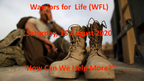
Saturday Evening Warriors for Life (WFL) with the "Colonel" - "How Can We Help More?"
Join the "Colonel" founder of Warriors for Life (WFL) as we explored and discuss more ways we can help veterans, first responders, service members, and caretakers through the WFL Program that struggle or suffer woth PTSD, TBI, MST, and other Invisible Disabilities? Bring your "Thinking Caps" with you this Satruday even


 Continue with Facebook
 Continue with Google
We must be supportive of Service members who need help. We must allow ample time for the Service member to gain access to help. We should speak as leaders about the importance of mental health. An effort to reduce stigma in the DoD is the Real Warriors Campaign, which is aimed at reducing the stigma of seeking mental health care by sharing the stories of Service members who successfully sought care and improved their mental health as a result. The campaign educates Service members, Veterans, and their family members about signs and symptoms of stress and strategies for building resilience. It reaches up to 4.5 million individuals each day through its social media channels. Almost 50 individuals per week reach out for help through the campaign's live chat, phone calls, and "seek help" webpages. At the policy level, the DoD completed reviews of mental health policies and procedures in order to identify stigmatizing language that could be influencing views on mental health issues and help-seeking behaviors. These reviews provided guidance on developing policies and procedures with language that is more supportive of mental health care and less stigmatizing toward mental health difficulties experienced by Service members.
Additionally, DoD has launched several pilot initiatives striving to reduce stigma and strengthen access and delivery of care. For example, DoD is piloting a barrier reduction training designed to address the most prevalent help-seeking concerns of Service members (e.g., career and security clearance loss concerns, loss of privacy and confidentiality), and encourage Service members to seek help early on, before life challenges become overwhelming.