

37
37
0
Individuals who dedicate their lives to any public service organization/department, will not feel satisfied until they have seen the good, the bad and the ugly parts of their perform duties. A firefighter will feel unfulfilled until he/she has put out a fire, a cop will feel the same, till he/she makes her first arrest. Many soldiers feel incomplete without having experienced first-hand what it is like to serve overseas. NTC, only does so much as mock scenarios go and it is great training, but a deployment fully immersed in nothing but soldiers getting in the field and getting their feet wet in all-hazard training. With all the hullabaloo, about slick sleeves and veterans, why not have a continuous cycle of personnel on overseas duty stations, minimum 6 mos. at a time for reservists and National Guard soldiers. With the campaigns winding down and the Army becoming smaller, these soldiers will have less and less opportunities to serve. I am aware that state and federal budgeting is a conflict and our country's trillion dollar debt crisis is definitely an impediment but if it were possible? Should it be done?
 Deployment
 Army Reserve
 Training Soldiers
 Army National Guard
Posted 10 y ago
Responses: 120

21
21
0

I wouldn't say required to deploy, but I would say they should ALL BE DEPLOYABLE. Anytime, anywhere. Those you cannot maintain deployable status may step aside and allow those who can deploy fill the spot.
(21)
(0)
SSG Gene Carroll SR.
I think it's not a bad ideal, Because of what's happening all around this world and dose give the active duty some relief.
(0)
(0)
CSM Thomas McGarry
Well stated Sir! One has to remember that someone has to stay in the rear with the gear so mot everyone will have the opportunity to be deployed.
(0)
(0)
17
17
0

I understand the sentiment, but it just does not make sense logistically. With an end strength of 450K active duty and about the same number of guard and reserve soldiers, not to mention a flux of about 40K recruits each year, there is just not the requirement to have this kind of deployment.
Besides the numbers, there is the practical reason that not every MOS has a specific reason to deploy. I'm not sure that deploying just to deploy is the answer either
Besides the numbers, there is the practical reason that not every MOS has a specific reason to deploy. I'm not sure that deploying just to deploy is the answer either
(17)
(0)
1SG (Join to see)
I don't know the exact numbers sir, but I estimate at least 1/3 of the current force has not deployed as the effort has tapered off over the last 2 years. Barring another major operation against ISIL or similar groups in the near future, attrition of those who have deployments will continue to increase while at the same time new soldiers will also grow.
Using deployment as a primary consideration for promotion does not serve the best interest of the forces.
I deployed to the first gulf war having been trained during The Cold War mindset. There were a few very senior soldiers who were in 'Nam, Panama, and Grenada but the vast majority of my fellow soldiers did not have any deployments.
I should note that I am talking about combat deployments that the general population might be called for and not spec ops deployments
Using deployment as a primary consideration for promotion does not serve the best interest of the forces.
I deployed to the first gulf war having been trained during The Cold War mindset. There were a few very senior soldiers who were in 'Nam, Panama, and Grenada but the vast majority of my fellow soldiers did not have any deployments.
I should note that I am talking about combat deployments that the general population might be called for and not spec ops deployments
(2)
(0)
LTC Stephen Conway
I know what you mean, SFC Squires. We lose our edge as we promote, transfer, retire or get out. I have not been in a combat zone in almost 6 years. it is a perishable skill if the knowledge we use no longer the same or not used at all. Hopefully, our new soldiers will get the experience in training and exercises that do its best to keep the edge up. I feel our peace dividend will not last long because the USA is in its fiscial austerity and refit mode and sequestration and changes to retirement talk will make our forces less professional and less dedicated and they will not stay in for the sake of saving $2 billion a year when some of our weapons platforms that are questionable cost about $300 million each and may not be needed this soon or as many when our soldiers are a better bang for the buck or using existing platforms are just fine. I am talking about the F-35 jsf vs keeping the A-10 WARTHOG.
(1)
(0)
Suspended Profile
CW4 (Join to see) Chief, I deployed with a lot of sh*tbags. They were sh*bags before they deployed, they were sh*tbags during deployment, and they were sh*bags after deployment. I know you said “average” but deployment isn’t a magical professional development program.

This requirement is unrealistic unless you want the US to be in a perpetual state of war. Believe it or not, our military has gone through several sustained periods of not being actively engaged in combat.
(14)
(0)
LTC Kevin B.
SSG (Servicemember) - That listing actually doesn't surprise me at all. I know that we have all kinds of operations going on regularly around the globe. In fact, I don't even debate that point. My point was that we simply don't have the deployment capacity to ensure that every soldier deploys.
(0)
(0)
11
11
0
I would prefer if we never had reason to deploy again, but that is not what the real world looks like. Remember, the Army does not serve to just hang out in forward areas. We serve to deter aggression, defend our country and our allies, and if necessary wage war and defeat enemies. The Reserve and Guard should not be called up willy-nilly to scratch some kind of itch. While it is operational in nature, it is a RESERVE force that should be employed when necessary, not as a matter of routine.
Some may go a full 20 year career and never see a deployment. Others have had 3, 4, 5, or more deployments. Given time and the way the world is, you will get your chance in time, SGT (Join to see).
Some may go a full 20 year career and never see a deployment. Others have had 3, 4, 5, or more deployments. Given time and the way the world is, you will get your chance in time, SGT (Join to see).
(11)
(0)
1SG (Join to see)
COL Ted Mc - they tend to follow solid recommendations. Where I see stuff go south in our food chain is when a "great idea" turns into "how do we replicate this success everywhere?"
That's how you get moments of brilliance like "girl's schools" all over Afghanistan or those moronic solar-powered streetlights.
Those of us on the ground get ordered to find places to execute specific projects, as opposed to recommending initiatives that further an aim and working the staff to get approval and funding.
The funding tends to be the big zoo where staff try to reuse existing ideas that were approved instead of doing the legwork necessary to execute something new and different.
It was and often is the bane of my existence.
That's how you get moments of brilliance like "girl's schools" all over Afghanistan or those moronic solar-powered streetlights.
Those of us on the ground get ordered to find places to execute specific projects, as opposed to recommending initiatives that further an aim and working the staff to get approval and funding.
The funding tends to be the big zoo where staff try to reuse existing ideas that were approved instead of doing the legwork necessary to execute something new and different.
It was and often is the bane of my existence.
(0)
(0)
COL Ted Mc
1SG (Join to see) - First; The "liberals" always come up with "good ideas that should work". This is met by the "conservatives" coming up with "old ideas that used to work in totally different circumstances".
Both approaches to planning and "solutions" tend to screw up regularly.
I'm a pragmatist. If it works in practice but doesn't work in theory it's a good idea and if it works in theory but doesn't work in practice then it's a bad idea.
Both approaches to planning and "solutions" tend to screw up regularly.
I'm a pragmatist. If it works in practice but doesn't work in theory it's a good idea and if it works in theory but doesn't work in practice then it's a bad idea.
(0)
(0)
1SG (Join to see)
COL Ted Mc - I'm an analyst. If it works in practice, how can I refine it and make it more effective? How can I better exploit this initiative to garner greater effect? That is where I really make my money.
(0)
(0)
COL Ted Mc
1SG (Join to see) - First; I think that the basic mind-set difference is the difference between wanting to "improve the way that something that works works" and wanting to "change something that works into something that should work".
The first allows for a fall back position while the second doesn't.
The first allows for a fall back position while the second doesn't.
(0)
(0)
9
9
0

In an era where combat operations are slowing down from what they were between 2003 and 2013, there just are not enough requirements to deploy every Soldier in order to get a deployment under their belt for the experience. I spent the first 16 years of my career with only a MFO peacekeeping mission under my belt and missed when my old unit deployed to Panama for Operation Just Cause and watched as my unit in Germany trained all the units headed out for Desert Shield/Storm. So I understand that you feel incomplete. What I will tell you is that you need to be ready to deploy at any time and do what you can to make sure that your unit is ready to go. Several years ago, I went into my civilian job near O'Hare airport and one of the secretaries said that a plane flew into one of the World Trade Centers. As I left O'Hare several hours later, I figured that my life had changed. 3 months later, we were deploying the first Army Reserve PSYOP company to Afghanistan. So you never know what will happen and it is your duty as stated in the Soldier's creed to stand ready to deploy, engage, and defeat our enemies. Stay ready!
(9)
(0)
9
9
0

I agree with your cop/firefighter comparison. Being in the military in garrison is like being a bench rider in the NFL. Deployment is the whole point. This Garrison stuff is for the birds ;)
(9)
(0)
SSgt Liam Babington
Depends on the MOS! But if he or she has that need....find a MOS where you can be deployed
(0)
(0)
SFC Kenneth Hunnell
SFC Michael Hasbun, if I was a firefighter and never had to put out a fire, I would be happy. That does not diminish the fact that I was a fire fighter
(0)
(0)
8
8
0
SGT (Join to see) - Spec; Required to deploy? No.
Be prepared to deploy? Yes.
Required to deploy if so ordered? Yes.
Listened to if they whined about how they didn't think that they would have to go to war if they joined the Army? [Guess?]
One of the problems with your "continuous cycle" theory is the "It's almost always the Newbie or the Short Timer who gets killed first" rule. Having a "continuous cycle" of Newbies and Short Timers is going to mean that your casualty rates are higher.
There is also the logistical issue of whether to "cycle" individuals or units. "Cycling" individuals disrupts unit cohesion and effectiveness. "Cycling" units simply bumps the disruption up a level.
However, your concept does bear exploration and would probably make an excellent submission to either the "NCO Journal" or "Small Wars".
Be prepared to deploy? Yes.
Required to deploy if so ordered? Yes.
Listened to if they whined about how they didn't think that they would have to go to war if they joined the Army? [Guess?]
One of the problems with your "continuous cycle" theory is the "It's almost always the Newbie or the Short Timer who gets killed first" rule. Having a "continuous cycle" of Newbies and Short Timers is going to mean that your casualty rates are higher.
There is also the logistical issue of whether to "cycle" individuals or units. "Cycling" individuals disrupts unit cohesion and effectiveness. "Cycling" units simply bumps the disruption up a level.
However, your concept does bear exploration and would probably make an excellent submission to either the "NCO Journal" or "Small Wars".
(8)
(0)
LTC Stephen Conway
COL Ted Mc- very true Sir, I was reading in my CGSOC lesson last night about Napoleon and his Grand Armee losing its edge by professional soldiers leaving and conscripts coming in. Finesse replaced by sheer numbers and the effectiveness of his army slowed down and he started to lose battles, in part, because the armies were over-used and exhausted.
(0)
(0)
COL Ted Mc
LTC Stephen Conway - Major; Those who don't have any real military experience seldom realize that the troops are NEITHER expendable nor easily replaceable.
To quote an old friend of mine "War is an auction and troops are the currency you bid with. The highest bidder ALWAYS wins. Unfortunately for military planners, there are Pounds, Dollars, Marks, Rubles, Pesos, Yen, Francs, and a host of other currencies, each with their own value and with values that change from day to day, so that a winning bid today may well be a losing one tomorrow.".
During WWII, the US military's own studies showed that troops could only remain "in combat" for 180 days before becoming (essentially and statistically) "spent". The Iraq/Afghanistan situation was one where there were (essentially) no "rear lines" and so the troops were "in combat" for the entire time that they were "in country".
Six months is right at the limit of statistical effectiveness.
Unfortunately you also have to consider the casualty calculation rule that says that it is amongst the "newbies" and "short timers" that you can expect elevated levels of casualties (along with decreased levels of effectiveness).
In WWII the troops COULD be taken out of "combat" but still retained close enough to the line of battle that they didn't lose the awareness of the fact that they were going to be going back into battle AND where they still remembered WHY they were being trained. Sending a soldier back to Dubuque for six months after a deployment and then expecting that they will be as effective when they get called up a second time shows why Marijuana should be legalized (to prevent the mass incarceration of the vast majority of military "planners" because of the fact that they are driving to work stoned).
To quote an old friend of mine "War is an auction and troops are the currency you bid with. The highest bidder ALWAYS wins. Unfortunately for military planners, there are Pounds, Dollars, Marks, Rubles, Pesos, Yen, Francs, and a host of other currencies, each with their own value and with values that change from day to day, so that a winning bid today may well be a losing one tomorrow.".
During WWII, the US military's own studies showed that troops could only remain "in combat" for 180 days before becoming (essentially and statistically) "spent". The Iraq/Afghanistan situation was one where there were (essentially) no "rear lines" and so the troops were "in combat" for the entire time that they were "in country".
Six months is right at the limit of statistical effectiveness.
Unfortunately you also have to consider the casualty calculation rule that says that it is amongst the "newbies" and "short timers" that you can expect elevated levels of casualties (along with decreased levels of effectiveness).
In WWII the troops COULD be taken out of "combat" but still retained close enough to the line of battle that they didn't lose the awareness of the fact that they were going to be going back into battle AND where they still remembered WHY they were being trained. Sending a soldier back to Dubuque for six months after a deployment and then expecting that they will be as effective when they get called up a second time shows why Marijuana should be legalized (to prevent the mass incarceration of the vast majority of military "planners" because of the fact that they are driving to work stoned).
(2)
(0)
LTC John Wilson
LTC Stephen Conway -
His earlier strategy was to have columns of troops just march over outnumbered enemy positions and it worked for a time. After he took enormous casualties, the new conscripts could not handle this type of strategy and many broke and ran rather than die. He had a good thing going, but didn't realize that human resources, especially veterans are hard to replace. Enjoy the CGSOC.
His earlier strategy was to have columns of troops just march over outnumbered enemy positions and it worked for a time. After he took enormous casualties, the new conscripts could not handle this type of strategy and many broke and ran rather than die. He had a good thing going, but didn't realize that human resources, especially veterans are hard to replace. Enjoy the CGSOC.
(0)
(0)
COL Ted Mc
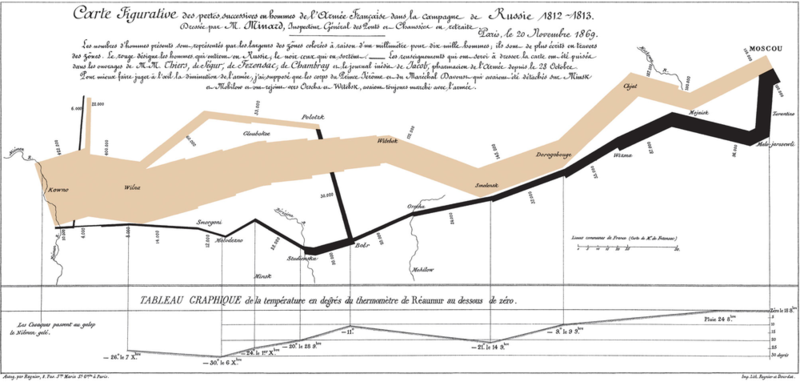
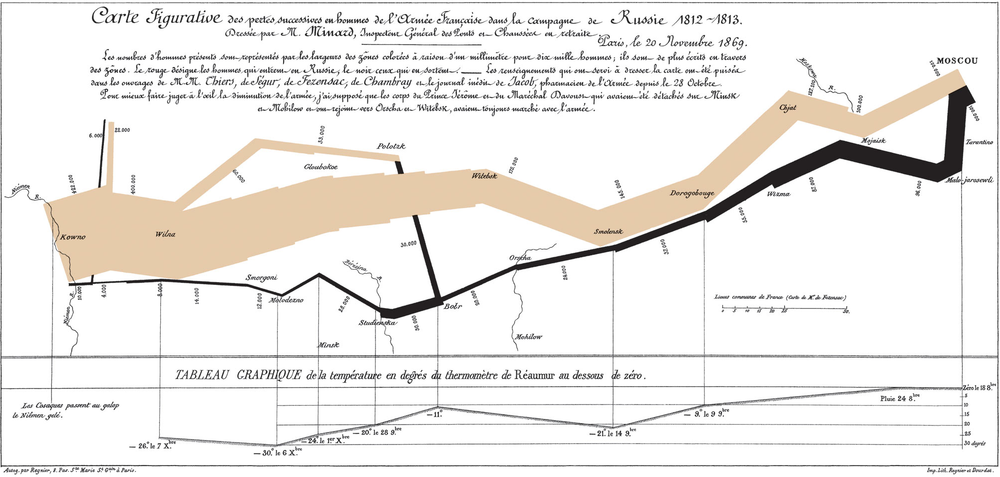
LTC John Wilson - Colonel; Considering that the effective range of the muskets being used in Napoleon's day was 50 yards (being generous) and the acceptable rate of fire was one round every 20 seconds and that the command "Aim" wasn't even used (the command was "Level"), a column could expect to take ONE "effective" volley between the time that they came into effective range and the time they marched the 150 feet needed to "close with" the defenders, Napoleon's TACTICS weren't in the least bit unsound (wasteful possibly, but unsound - not a bit).
What the Infantry had to worry about was the Artillery and the Cavalry.
Of course, there wasn't any where near the number of guns available as there were muskets and the rate of fire for the Artillery was about the same as it was for the Infantry BUT the Artillery could engage at about 1,500 yards (assuming that they got lucky enough to run into an opponent who gave them that chance), but (after the first couple of grazes the troops could actually step out of the way of an oncoming round shot - so column advances weren't all that silly in that case.
Of course, where a column advancing was surprised and got taken in the flank by Cavalry before they could form square - then things got REALLY dicey. After that the Cavalry might just as well go back to the closest inn and have a beer.
The French never quite managed it, but the British could actually maneuver a square (admittedly very slowly and riskily). However the Brits never quite caught on to the French "l'ordre mixte" so the honors are about equal.
As far as Napoleon's STRATEGY was concerned, it was to exploit mobility and (essentially) "interior lines" to the maximum. It worked very nicely as long as he had "interior lines" to exploit and as long as his armies were capable of mobility. Unfortunately for him, the French "Grande Armée" simply didn't have either of those once they set off for Moscow.
It was the loss of the "Grande Armée" that gutted the French military and not the battle tactics as the chart above shows. (The brown arrow is the trip TO Moscow, and the black arrow is the trip FROM Moscow.)
What the Infantry had to worry about was the Artillery and the Cavalry.
Of course, there wasn't any where near the number of guns available as there were muskets and the rate of fire for the Artillery was about the same as it was for the Infantry BUT the Artillery could engage at about 1,500 yards (assuming that they got lucky enough to run into an opponent who gave them that chance), but (after the first couple of grazes the troops could actually step out of the way of an oncoming round shot - so column advances weren't all that silly in that case.
Of course, where a column advancing was surprised and got taken in the flank by Cavalry before they could form square - then things got REALLY dicey. After that the Cavalry might just as well go back to the closest inn and have a beer.
The French never quite managed it, but the British could actually maneuver a square (admittedly very slowly and riskily). However the Brits never quite caught on to the French "l'ordre mixte" so the honors are about equal.
As far as Napoleon's STRATEGY was concerned, it was to exploit mobility and (essentially) "interior lines" to the maximum. It worked very nicely as long as he had "interior lines" to exploit and as long as his armies were capable of mobility. Unfortunately for him, the French "Grande Armée" simply didn't have either of those once they set off for Moscow.
It was the loss of the "Grande Armée" that gutted the French military and not the battle tactics as the chart above shows. (The brown arrow is the trip TO Moscow, and the black arrow is the trip FROM Moscow.)
(0)
(0)
7
7
0

Bottom Line up Front: No. Service members serve at the needs of the military. Not all of the MOS are needed in the combat zone and some more or less than others. The combat arms MOS in general and the Special Ops and Civil Affairs community specifically seem to carry the heavy freight in this regard. That is why you see Soldiers like MSG Josh Wheeler, a Delta Force Operator the was recently killed in Iraq that had been deployed 14 times.
I do find it interesting though that some Soldiers can spend an entire career of 20 - 30 years in the Army, but never get deployed at least once, but hey it happens. Some people volunteer all the time, but are not the right need or fit at the particular time, while others will do anything they can to avoid deployment but then for most part have to go anyway.
Now that the opportunity to deploy has been greatly scaled back the Army has decided in it's infinite wisdom to remove the deployment bonus points for promotion "because it's not fair" to those that did not get deployed for whatever reason. While being deployed does not necessarily make one a better Soldier, it does show a level of experience and dedication to one's country that I personally do not feel should be overlooked nor discounted and most certainly cannot be gained by taking a course. Just ask a know nothing brand new recruit who they are most likely to listen to about how to react to contact, a slick sleeve or a Soldier wearing a combat patch.
I do find it interesting though that some Soldiers can spend an entire career of 20 - 30 years in the Army, but never get deployed at least once, but hey it happens. Some people volunteer all the time, but are not the right need or fit at the particular time, while others will do anything they can to avoid deployment but then for most part have to go anyway.
Now that the opportunity to deploy has been greatly scaled back the Army has decided in it's infinite wisdom to remove the deployment bonus points for promotion "because it's not fair" to those that did not get deployed for whatever reason. While being deployed does not necessarily make one a better Soldier, it does show a level of experience and dedication to one's country that I personally do not feel should be overlooked nor discounted and most certainly cannot be gained by taking a course. Just ask a know nothing brand new recruit who they are most likely to listen to about how to react to contact, a slick sleeve or a Soldier wearing a combat patch.
(7)
(0)
CSM William Payne
You tried sir, that's all you can do. My boss in 2006, a Brigadier General, was pulled shortly before our ship to Iraq for a Norwegian Admiral in a joint billet at MNSTC-I under then LTG Martin Dempsey. Not a happy camper. He did manage to work his way into Afghanistan as a Major General two years later though.
(1)
(0)
7
7
0

Back in the middle of the GWOT, I thought they should (job dependent). Now it is very impractical to accomplish this. To many asses for the seats on deployments now a days.
(7)
(0)
6
6
0

I recommend every soldier deploy, but I don't think it should be required. There are plenty of us who would gladly take the position of someone who doesn't want to go.
(6)
(0)
Read This Next


 Continue with Facebook
 Continue with Google