
Posted on Jul 31, 2015

U.S. intelligence assessments conclude that the Islamic State has not been weakened by U.S.-led bombing campaign. Time for a new approach?

9.72K
155
61
8
8
0
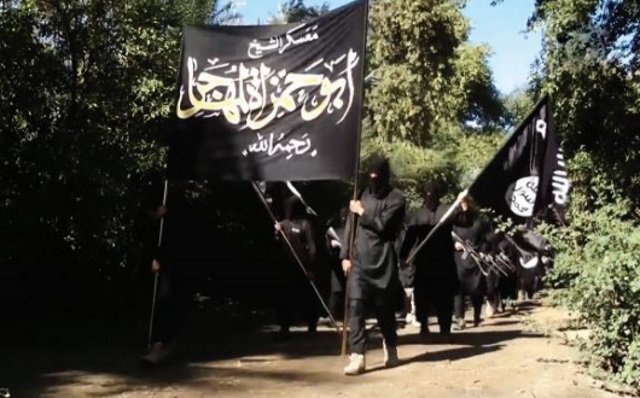
After billions of dollars spent and more than 10,000 extremist fighters killed, the Islamic State group is fundamentally no weaker than it was when the U.S.-led bombing campaign began a year ago, American intelligence agencies have concluded.
The military campaign has prevented Iraq's collapse and put the Islamic State under increasing pressure in northern Syria, particularly squeezing its self-proclaimed capital in Raqqa. But intelligence analysts see the overall situation as a strategic stalemate: The Islamic State remains a well-funded extremist army able to replenish its ranks with foreign jihadis as quickly as the U.S. can eliminate them. Meanwhile, the group has expanded to other countries, including Libya, Egypt's Sinai Peninsula and Afghanistan.
The assessments by the CIA, the Defense Intelligence Agency and others appear to contradict the optimistic line taken by the Obama administration's special envoy, retired Gen. John Allen, who told a forum in Aspen, Colorado, last week that "ISIS is losing" in Iraq and Syria. The intelligence was described by officials who would not be named because they were not authorized to discuss it publicly.
"We've seen no meaningful degradation in their numbers," a defense official said, citing intelligence estimates that put the group's total strength at between 20,000 and 30,000, the same estimate as last August when the airstrikes began.
The Islamic State's staying power also raises questions about the administration's approach to the threat that the group poses to the U.S. and its allies. Although officials do not believe it is planning complex attacks on the West from its territory, the group's call to Western Muslims to kill at home has become a serious problem, FBI Director James Comey and other officials say.
Yet under the Obama administration's campaign of bombing and training, which prohibits American troops from accompanying fighters into combat or directing air strikes from the ground, it could take a decade to drive the Islamic State from its safe havens, analysts say. The administration is adamant that it will commit no U.S. ground troops to the fight despite calls from some in Congress to do so.
The U.S.-led coalition and its Syrian and Kurdish allies on the ground have made some inroads. The Islamic State has lost 9.4 percent of its territory in the first six months of 2015, according to an analysis by the conflict monitoring group IHS. And the military campaign has arrested the sense of momentum and inevitability created by the group's stunning advances last year, leaving the combination of Sunni religious extremists and former Saddam Hussein loyalists unable to grow its forces or continue its surge.
"In Raqqa, they are being slowly strangled," said an activist who fled Raqqa earlier this year and spoke on condition of anonymity to protect relatives and friends who remain there. "There is no longer a feeling that Raqqa is a safe haven for the group."
A Delta Force raid in Syria that killed Islamic State financier Abu Sayyaf in May also has resulted in a well of intelligence about the group's structure and finances, U.S. officials say. His wife, held in Iraq, has been cooperating with interrogators.
Syrian Kurdish fighters and their allies have wrested most of the northern Syria border from the Islamic State group. In June, the U.S.-backed alliance captured the border town of Tal Abyad, which for more than a year had been the militants' most vital direct supply route from Turkey. The Kurds also took the town of Ein Issa, a hub for IS movements and supply lines only 35 miles north of Raqqa.
As a result, the militants have had to take a more circuitous smuggling path through a stretch of about 60 miles they still control along the Turkish border. A plan announced this week for a U.S.-Turkish "safe zone" envisages driving the Islamic State group out of those areas as well, using Syrian rebels backed by airstrikes.
In Raqqa, U.S. coalition bombs pound the group's positions and target its leaders with increasing regularity. The militants' movements have been hampered by strikes against bridges, and some fighters are sending their families away to safer ground.
In early July, a wave of strikes in 24 hours destroyed 18 overpasses and a number of roads used by the group in and around Raqqa.
Reflecting IS unease, the group has taken exceptional measures against residents of Raqqa the past two weeks, activists say. It has moved to shut down private Internet access for residents, arrested suspected spies and set up security cameras in the streets. Patrols by its "morals police" have decreased because fighters are needed on the front lines, the activists say.
But American intelligence officials and other experts say that in the big picture, the Islamic State is hanging tough.
"The pressure on Raqqa is significant, and it's an important thing to watch, but looking at the overall picture, ISIS is mostly in the same place," said Harleen Gambhir, a counterterrorism analyst at Institute for the Study of War, a Washington think tank. "Overall ISIS still retains the ability to plan and execute phased conventional military campaigns and terrorist attacks."
In Iraq, the Islamic State's seizure of the strategically important provincial capital of Ramadi has so far stood. Although U.S. officials have said it is crucial that the government in Baghdad win back disaffected Sunnis, there is little sign of that happening. American-led efforts to train Syrian rebels to fight the Islamic State have produced a grand total of 60 vetted fighters.
The group has adjusted its tactics to thwart a U.S. bombing campaign that tries to avoid civilian casualties, officials say. Fighters no longer move around in easily targeted armored columns; they embed themselves among women and children, and they communicate through couriers to thwart eavesdropping and geolocation, the defense official said.
Oil continues to be a major revenue source. By one estimate, the Islamic State is clearing $500 million per year from oil sales, said Daniel Glaser, assistant secretary for terrorist financing at the Treasury Department. That's on top of as much as $1 billion in cash the group seized from banks in its territory.
Although the U.S. has been bombing oil infrastructure, the militants have been adept at rebuilding oil refining, drilling and trading capacity, the defense official said.
"ISIL has plenty of money," Glaser said last week, more than enough to meet a payroll he estimated at a high of $360 million a year.
Glaser said the U.S. was gradually squeezing the group's finances through sanctions, military strikes and other means, but he acknowledged it would take time.
Ahmad al-Ahmad, a Syrian journalist in Hama province who heads an opposition media outfit called Syrian Press Center, said he did not expect recent setbacks to seriously alter the group's fortunes.
"IS moves with a very intelligent strategy which its fighters call the lizard strategy," he said. "They emerge in one place, then they disappear and pop up in another place."
http://www.militarytimes.com/story/military/2015/07/31/despite-bombing-no-weaker-than-year-ago/30924535/
The military campaign has prevented Iraq's collapse and put the Islamic State under increasing pressure in northern Syria, particularly squeezing its self-proclaimed capital in Raqqa. But intelligence analysts see the overall situation as a strategic stalemate: The Islamic State remains a well-funded extremist army able to replenish its ranks with foreign jihadis as quickly as the U.S. can eliminate them. Meanwhile, the group has expanded to other countries, including Libya, Egypt's Sinai Peninsula and Afghanistan.
The assessments by the CIA, the Defense Intelligence Agency and others appear to contradict the optimistic line taken by the Obama administration's special envoy, retired Gen. John Allen, who told a forum in Aspen, Colorado, last week that "ISIS is losing" in Iraq and Syria. The intelligence was described by officials who would not be named because they were not authorized to discuss it publicly.
"We've seen no meaningful degradation in their numbers," a defense official said, citing intelligence estimates that put the group's total strength at between 20,000 and 30,000, the same estimate as last August when the airstrikes began.
The Islamic State's staying power also raises questions about the administration's approach to the threat that the group poses to the U.S. and its allies. Although officials do not believe it is planning complex attacks on the West from its territory, the group's call to Western Muslims to kill at home has become a serious problem, FBI Director James Comey and other officials say.
Yet under the Obama administration's campaign of bombing and training, which prohibits American troops from accompanying fighters into combat or directing air strikes from the ground, it could take a decade to drive the Islamic State from its safe havens, analysts say. The administration is adamant that it will commit no U.S. ground troops to the fight despite calls from some in Congress to do so.
The U.S.-led coalition and its Syrian and Kurdish allies on the ground have made some inroads. The Islamic State has lost 9.4 percent of its territory in the first six months of 2015, according to an analysis by the conflict monitoring group IHS. And the military campaign has arrested the sense of momentum and inevitability created by the group's stunning advances last year, leaving the combination of Sunni religious extremists and former Saddam Hussein loyalists unable to grow its forces or continue its surge.
"In Raqqa, they are being slowly strangled," said an activist who fled Raqqa earlier this year and spoke on condition of anonymity to protect relatives and friends who remain there. "There is no longer a feeling that Raqqa is a safe haven for the group."
A Delta Force raid in Syria that killed Islamic State financier Abu Sayyaf in May also has resulted in a well of intelligence about the group's structure and finances, U.S. officials say. His wife, held in Iraq, has been cooperating with interrogators.
Syrian Kurdish fighters and their allies have wrested most of the northern Syria border from the Islamic State group. In June, the U.S.-backed alliance captured the border town of Tal Abyad, which for more than a year had been the militants' most vital direct supply route from Turkey. The Kurds also took the town of Ein Issa, a hub for IS movements and supply lines only 35 miles north of Raqqa.
As a result, the militants have had to take a more circuitous smuggling path through a stretch of about 60 miles they still control along the Turkish border. A plan announced this week for a U.S.-Turkish "safe zone" envisages driving the Islamic State group out of those areas as well, using Syrian rebels backed by airstrikes.
In Raqqa, U.S. coalition bombs pound the group's positions and target its leaders with increasing regularity. The militants' movements have been hampered by strikes against bridges, and some fighters are sending their families away to safer ground.
In early July, a wave of strikes in 24 hours destroyed 18 overpasses and a number of roads used by the group in and around Raqqa.
Reflecting IS unease, the group has taken exceptional measures against residents of Raqqa the past two weeks, activists say. It has moved to shut down private Internet access for residents, arrested suspected spies and set up security cameras in the streets. Patrols by its "morals police" have decreased because fighters are needed on the front lines, the activists say.
But American intelligence officials and other experts say that in the big picture, the Islamic State is hanging tough.
"The pressure on Raqqa is significant, and it's an important thing to watch, but looking at the overall picture, ISIS is mostly in the same place," said Harleen Gambhir, a counterterrorism analyst at Institute for the Study of War, a Washington think tank. "Overall ISIS still retains the ability to plan and execute phased conventional military campaigns and terrorist attacks."
In Iraq, the Islamic State's seizure of the strategically important provincial capital of Ramadi has so far stood. Although U.S. officials have said it is crucial that the government in Baghdad win back disaffected Sunnis, there is little sign of that happening. American-led efforts to train Syrian rebels to fight the Islamic State have produced a grand total of 60 vetted fighters.
The group has adjusted its tactics to thwart a U.S. bombing campaign that tries to avoid civilian casualties, officials say. Fighters no longer move around in easily targeted armored columns; they embed themselves among women and children, and they communicate through couriers to thwart eavesdropping and geolocation, the defense official said.
Oil continues to be a major revenue source. By one estimate, the Islamic State is clearing $500 million per year from oil sales, said Daniel Glaser, assistant secretary for terrorist financing at the Treasury Department. That's on top of as much as $1 billion in cash the group seized from banks in its territory.
Although the U.S. has been bombing oil infrastructure, the militants have been adept at rebuilding oil refining, drilling and trading capacity, the defense official said.
"ISIL has plenty of money," Glaser said last week, more than enough to meet a payroll he estimated at a high of $360 million a year.
Glaser said the U.S. was gradually squeezing the group's finances through sanctions, military strikes and other means, but he acknowledged it would take time.
Ahmad al-Ahmad, a Syrian journalist in Hama province who heads an opposition media outfit called Syrian Press Center, said he did not expect recent setbacks to seriously alter the group's fortunes.
"IS moves with a very intelligent strategy which its fighters call the lizard strategy," he said. "They emerge in one place, then they disappear and pop up in another place."
http://www.militarytimes.com/story/military/2015/07/31/despite-bombing-no-weaker-than-year-ago/30924535/
 ISIS
ISIS Iraq
Iraq War on Terror
Edited 10 y ago
Posted >1 y ago
Responses: 24
2
2
0

Think about the way we fought WWII....and WON. The rules were different. The goal was to kill the enemy. We killed the enemy, and their logistics and supply lines. We bombed their ball bearing factories. Those were not run by military, those were run by enemy civilians. It was clearly a target, and they also hit it with the inaccurate steel bombs. Yes, they got the factory, and they got the neighborhood around it. Look at the city of Dresden, Germany that got firebombed. The greatest generation...maybe we need to get the same focus. Looks like we like their focus, but most US civilians do not understand what it took to win.
(2)
(0)
2
2
0
2
2
0

If we quit meddling in other counties affairs and trying to make the like us (a different type of governmental corruption) they would not hate is as much.
We are not the world police force.
Every time we hit a place they say that we hit a hospital. It's lies we know that but they don't.
Leave the region except for Israel.
Use our own oil and stop giving terrorist countries money. Never figured that one out.
We are not the world police force.
Every time we hit a place they say that we hit a hospital. It's lies we know that but they don't.
Leave the region except for Israel.
Use our own oil and stop giving terrorist countries money. Never figured that one out.
(2)
(0)
COL Ted Mc
SGT Joe Sabedra - Sergeant; if someone can go into a country and produce a government of the locals, by the locals, for the locals which manages to be both efficient and fiscally sound while still maintaining the traditional levels of graft and corruption, they will earn the undying gratitude of the locals.
Unfortunately most such efforts end up being a government of the locals, by a bunch of outsiders (who pretend to be locals), for the outsiders (and their friends) which is neither efficient nor fiscally sound and which increases the level of graft and corruption without any corresponding increase in benefits for anyone except the outsiders (and their friends).
Unfortunately most such efforts end up being a government of the locals, by a bunch of outsiders (who pretend to be locals), for the outsiders (and their friends) which is neither efficient nor fiscally sound and which increases the level of graft and corruption without any corresponding increase in benefits for anyone except the outsiders (and their friends).
(1)
(0)
2
2
0

SFC Gary Burress
Expecting to make a difference in war with just air strikes is like expecting to get the big intelligence picture with just one discipline!
(3)
(0)
GySgt Lloyd LaGrange
I agree with GUNNY Ekblad, Not surprised in the least that bombing has NOT been effective enough.
The approach with a bombing campaign alone is nothing new. This approach was tried in many other conflict's. The only way AMERICA will be effective, is to put boots on the ground. I understand that NOBODY want's this, but to effectively put a halt to ISIS's advance's, you have to cut off there FUNDING in which to wage War, Terror and any other inhuman activity's they are involved in & meet them face to face like ONLY Ground forces can do. If boot's are TO BE put on the ground, OUR troops CANNOT be forced to abide by a set of BS rules of engagement like they are currently being HAMPERED with in the AFGAN War. AN ENEMY IS AN ENEMY, plain and simple. When MARINES were Island hopping in the West Pac, ANYONE who stood for JAPAN WAS an ENEMY, we sure as hell didn't think twice or They were Dead !! ISIS does not abide by these US made rules of engagement, so why in the hell send OUR TROOPS into a so called "POKER GAME" with a fixed deck stacked against us from the ONSET.
The approach with a bombing campaign alone is nothing new. This approach was tried in many other conflict's. The only way AMERICA will be effective, is to put boots on the ground. I understand that NOBODY want's this, but to effectively put a halt to ISIS's advance's, you have to cut off there FUNDING in which to wage War, Terror and any other inhuman activity's they are involved in & meet them face to face like ONLY Ground forces can do. If boot's are TO BE put on the ground, OUR troops CANNOT be forced to abide by a set of BS rules of engagement like they are currently being HAMPERED with in the AFGAN War. AN ENEMY IS AN ENEMY, plain and simple. When MARINES were Island hopping in the West Pac, ANYONE who stood for JAPAN WAS an ENEMY, we sure as hell didn't think twice or They were Dead !! ISIS does not abide by these US made rules of engagement, so why in the hell send OUR TROOPS into a so called "POKER GAME" with a fixed deck stacked against us from the ONSET.
(1)
(0)
Read This Next


 Continue with Facebook
 Continue with Google