
Posted on Apr 29, 2015

What are the proper places and times for veterans to wear the uniform?

58K
295
89
11
11
0

What is the proper list of events to which a veteran may where may wear his or her uniform. In some cases, it is clear, I can wear my uniform to a Veteran's Day event. But in other cases it is not so clear. May I wear my uniform to most any civilian semi-formal or formal event, or are the regulations more restrictive than that?
Posted in these groups:  Dress Uniform
 Retired
Dress Uniform Retired
Posted >1 y ago
Responses: 29
3
3
0

Is it Appropriate to wear it on Veterans Day ? I can probably still fit my greens from the 80’s in my pic
(3)
(0)
3
3
0

Greetings MAJ!
It is my understanding that you may (restricted events not with standing) wear your uniform to any semi-formal/formal (with the exception of political events) event so long as you are the Retired emblem (patch for the green A blouse, medal emblem for the new blues).
As a matter of fact, recently I was asked to wear my uniform to my God-son's wedding.
Respectfully,
HPW
It is my understanding that you may (restricted events not with standing) wear your uniform to any semi-formal/formal (with the exception of political events) event so long as you are the Retired emblem (patch for the green A blouse, medal emblem for the new blues).
As a matter of fact, recently I was asked to wear my uniform to my God-son's wedding.
Respectfully,
HPW
(3)
(0)
LCDR (Join to see)
Wore mine for my wedding also. That's the only time I have worn it since I retired in 1985.
(0)
(0)
SP5 Peter Keane
Retirement Service Identification Badge is what the Colonel is referring to in his post.
(1)
(0)
1SG Joseph Yorski, MHS
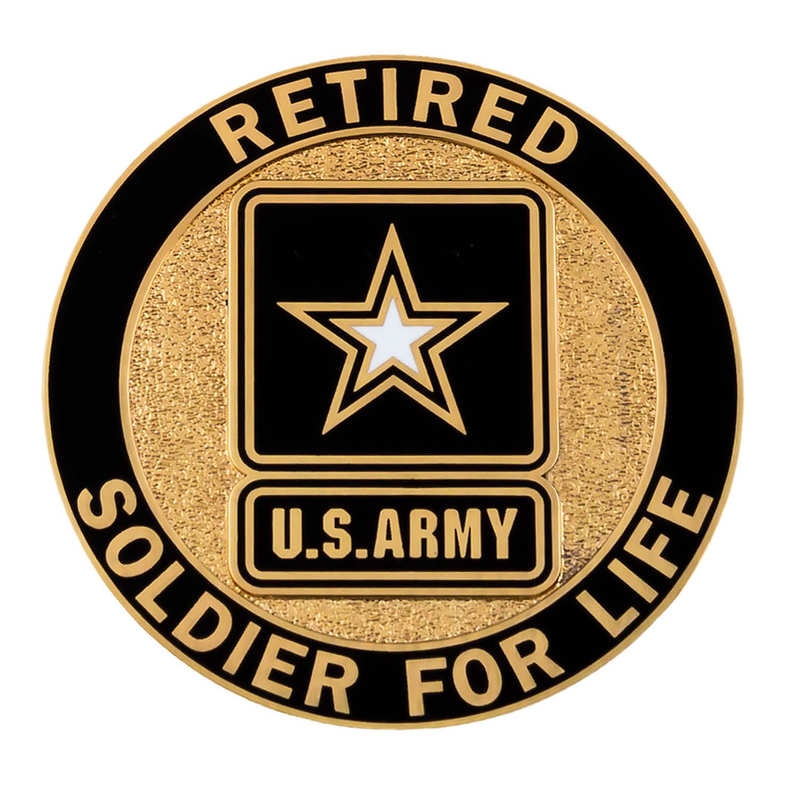
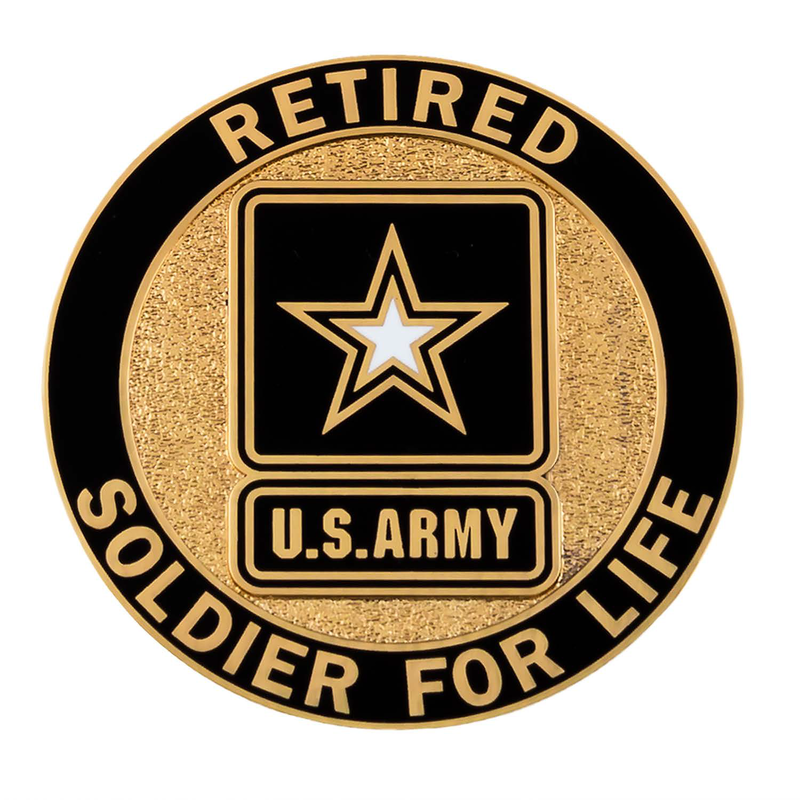
Here's what we wear now on the left breast pocket of the ASU after retirement. The old one is also still authorized(red, white & blue eagle design) but this one looks better in my opinion. A mini version of this is also the official pin theat you get in your retirmeent flag kit, along with flag, Army retiree window stickers a CD and tri-signed letter from the Army leadership.
(0)
(0)
2
2
0

For a veteran that is out free and clear and wearing a uniform with everything he/she earned, as inappropriate the time and place might be there isn’t a mechanism of enforcement to prevent it.
(2)
(0)
PFC Anthony Bruce
Exactly as long as you are only wearing what you earned the is really nothing anything anyone can do to you. You might (read that as will) look like a moron if your not wearing it to a function of some sort but you are completely legal since citizens can wear anything they want now as "free speech" as long as their not trying to get money.
(0)
(0)
2
2
0

2
2
0

2
2
0

I'm not sure about the Army, but the Navy Uniform regulations actually cover this.
In your specific example, it would be appropriate for retired/veteran Navy Chiefs and Officers to wear their Dress Blue uniforms to semi-formal/formal events, whereas E-6 & below could also wear them or have the option of wearing the tuxedo-style "Dinner Dress" uniform.
In your specific example, it would be appropriate for retired/veteran Navy Chiefs and Officers to wear their Dress Blue uniforms to semi-formal/formal events, whereas E-6 & below could also wear them or have the option of wearing the tuxedo-style "Dinner Dress" uniform.
(2)
(0)
MAJ Matthew Arnold
Since I am retired army AR 670-1 is my "bible" on the subject. So, I am curious about the other services and differences in their services regulations. What are some of the most glaring differences on veterans uniform wear between, the USA and the USMC, USN, USAF, & USCG?
(0)
(0)
PO1 John Miller
MAJ Matthew Arnold , probably the biggest "thing" I've seen in Navy veterans wearing their uniforms is maybe they haven't consulted the latest copy of the US Navy Uniform Regulations and something is is a bit off (no Stolen Valor, just off). Or they don't necessarily meet current height/weight standards. But then again, who's going to tell a veteran that they need to lose weight? Certainly not this retiree/veteran!
(1)
(0)
LCDR (Join to see)
Most Navy Retireds will wear the uniform (service dress) as it was when they wore it on active duty. I did (the one time I wore mine to get married). Of course I could still fit into it then, 22 years ago. I retired 32 years ago and know there's NO WAY to squeeze into it now.
(1)
(0)
1
1
0
Here is what is in AR 670-1. From what I have cut and pasted, it is appropriate to wear the designated uniform if the event is of a military nature. If you are going to a civilian semi-formal event that someohow ties to the military, then yes it is appropriate.
23–1. Occasions of ceremony
a. As used in this regulation, the phrase “occasions of ceremony” means occasions essentially of a military character, at which the uniform is more appropriate than civilian clothing. These functions include, but are not limited to: military balls, military parades, weddings, and military funerals; memorial services, meetings, conferences, or similar functions of associations formed for military purposes, of which the membership is composed largely or entirely of current or honorably discharged veterans of the Armed Forces of the United States. Authority to wear the uniform includes wear while traveling to and from the ceremony or function, provided the travel in uniform can be completed on the day of the ceremony or function and must follow guidance included in paragraph 3–7c.
b. All persons wearing the Army uniform will wear awards, decorations, and insignia in the same manner as prescribed in this regulation for active duty Soldiers. For civilian attire, individuals may wear only those awards, decorations, or insignia authorized by this regulation for wear on civilian clothing, in the same manner and approxi- mate location as the equivalent military uniform.
23–3. Retired personnel
a. Personnel who will be advanced to a higher grade upon retirement have the option of wearing the insignia of that grade thereafter.
b. Retired personnel on active duty will wear their uniform and insignia in the same manner as prescribed for personnel in the AA of corresponding grade and branch.
c. Retired personnel not on active duty may wear either the uniform reflecting their grade and branch on the date of their retirement, or the uniform prescribed for personnel in the AA of corresponding grade and branch, when appropriate, but may not mix the two uniforms. Personnel will wear the grade as shown on the retired grade of rank line on their retirement order.
d. Retired personnel not on active duty are not authorized to wear the Army uniform when they are instructors or responsible for military discipline at an educational institution, unless the educational institution is conducting courses of instruction approved by the Armed Forces.
e. In addition to the occasions for wear listed above, retired personnel are authorized to wear the uniform only on the following occasions:
(1) While attending military funerals, memorial services, weddings, inaugurals, and other occasions of ceremony.
(2) Attending parades on national or State holidays, or other patriotic parades or ceremonies in which any active or reserve U.S. military unit is taking part. Uniforms for these occasions are restricted to service and dress uniforms; the combat uniform and physical fitness uniforms will not be worn. Wearing the Army uniform at any other time, or for any other purpose than stated above, is prohibited.
23–6. Medals on civilian clothes
Retired personnel and former members of the Army (as described above) may wear all categories of medals described in this regulation on appropriate civilian clothing. This includes clothes designed for veteran and patriotic organizations on Veteran’s Day, Memorial Day, and Armed Forces Day, as well as at formal occasions of ceremony and social functions of a military nature. Personnel may wear either full-sized or miniature medals.
23–1. Occasions of ceremony
a. As used in this regulation, the phrase “occasions of ceremony” means occasions essentially of a military character, at which the uniform is more appropriate than civilian clothing. These functions include, but are not limited to: military balls, military parades, weddings, and military funerals; memorial services, meetings, conferences, or similar functions of associations formed for military purposes, of which the membership is composed largely or entirely of current or honorably discharged veterans of the Armed Forces of the United States. Authority to wear the uniform includes wear while traveling to and from the ceremony or function, provided the travel in uniform can be completed on the day of the ceremony or function and must follow guidance included in paragraph 3–7c.
b. All persons wearing the Army uniform will wear awards, decorations, and insignia in the same manner as prescribed in this regulation for active duty Soldiers. For civilian attire, individuals may wear only those awards, decorations, or insignia authorized by this regulation for wear on civilian clothing, in the same manner and approxi- mate location as the equivalent military uniform.
23–3. Retired personnel
a. Personnel who will be advanced to a higher grade upon retirement have the option of wearing the insignia of that grade thereafter.
b. Retired personnel on active duty will wear their uniform and insignia in the same manner as prescribed for personnel in the AA of corresponding grade and branch.
c. Retired personnel not on active duty may wear either the uniform reflecting their grade and branch on the date of their retirement, or the uniform prescribed for personnel in the AA of corresponding grade and branch, when appropriate, but may not mix the two uniforms. Personnel will wear the grade as shown on the retired grade of rank line on their retirement order.
d. Retired personnel not on active duty are not authorized to wear the Army uniform when they are instructors or responsible for military discipline at an educational institution, unless the educational institution is conducting courses of instruction approved by the Armed Forces.
e. In addition to the occasions for wear listed above, retired personnel are authorized to wear the uniform only on the following occasions:
(1) While attending military funerals, memorial services, weddings, inaugurals, and other occasions of ceremony.
(2) Attending parades on national or State holidays, or other patriotic parades or ceremonies in which any active or reserve U.S. military unit is taking part. Uniforms for these occasions are restricted to service and dress uniforms; the combat uniform and physical fitness uniforms will not be worn. Wearing the Army uniform at any other time, or for any other purpose than stated above, is prohibited.
23–6. Medals on civilian clothes
Retired personnel and former members of the Army (as described above) may wear all categories of medals described in this regulation on appropriate civilian clothing. This includes clothes designed for veteran and patriotic organizations on Veteran’s Day, Memorial Day, and Armed Forces Day, as well as at formal occasions of ceremony and social functions of a military nature. Personnel may wear either full-sized or miniature medals.
(1)
(0)
1
1
0

As a veteran you can wear you uniform at military events, parades, funerals, and weddings but other than that you should leave it in the closet or the dresser drawer.
(1)
(0)
0
0
0

0
0
0
Just a reminder, all veterans are authorized to salute, in uniform or not, when the National Anthem is played.
(0)
(0)
Read This Next


 Continue with Facebook
 Continue with Google