
Posted on Jan 18, 2015

What is the ONE thing EVERY young Officer must know?

82.7K
641
337
34
34
0

There's been quite a few discussions about how clueless young Lieutenants (and Ensigns) are when they hit the Operating Forces (and we often are). Here it is: your chance to publicly and permanently record the one topic you think is the most critical for us to know when we step in at your unit. With some luck, maybe those young officers will read it here and have the epiphany they need privately and everyone will be better off for it.
So hit it: let all the experience of the RP community be brought to bear: immediately after commissioning what's the ONE thing every O-1 must know ?
(Just so no one gets hurt feelings, lets say you're telling this guy here-but before his promotion and deployment in the photo-I cant find any pics from commissioning.)
So hit it: let all the experience of the RP community be brought to bear: immediately after commissioning what's the ONE thing every O-1 must know ?
(Just so no one gets hurt feelings, lets say you're telling this guy here-but before his promotion and deployment in the photo-I cant find any pics from commissioning.)
 Platoon Commander
 Officer
 Leadership Development
 Junior Officers
Edited 11 y ago
Posted 11 y ago
Responses: 182
1
1
0

Trust and respect your SNCOs, and earn their trust and respect by knowing your job and placing your unit above yourself.
(1)
(0)
1
1
0

Capt Richard I P. – This is an outstanding topic. Nearly impossible to list one singular essential. Here is my short list:
1 – Read, learn, know your job. Ask questions of your commander and your senior NCOs so you learn/know your lane and can eliminate roadblocks for your NCOs.
2 – Your soldiers, Marines, Airmen, Seamen will do what you INSPECT not what you EXPECT.
3 – No Excuse Leadership and Duffer’s Drift are two essential and easy reads to help you gain perspective.
4 – Learning academics is fine. You MUST seek opportunities to lead and do. Do not be afraid to make mistakes. Just don’t make the same mistake twice.
5 – Upon arrival, visit ALL your soldiers where they live. (Ask your senior NCO to join you.) Do it after the duty day or during a working lunch. You should know any challenges they are facing (substandard housing, challenges at the home front) by a visit. (I discovered more than one crappy landlord taking advantage of my soldiers and took action to get their home sprayed for pests, or other problems they did not know how to solve.)
6 – Build your working knowledge by learning tasks from your NCOs when not in front of your soldiers. (How can you gauge levels of excellence on soldier tasks if you have not done them yourself?) Example - Learn to set Headspace and Timing from your book, do it, then have one of your NCOs assess you. You can then spot-check your soldiers. Book knowledge is not enough.
7 – Eat last. Ensure all of your soldiers are fed, even the ones at the OP.
8 – Set the example in ALL you do. Wear your uniform correctly, be early for all formations, and say “I” instead of “The Commander says” even if it is something you are not fond of. “Saying the Commander says” is not only disloyal but underscores your own weakness. Your soldiers are watching your every move.
More than my two cents.
1 – Read, learn, know your job. Ask questions of your commander and your senior NCOs so you learn/know your lane and can eliminate roadblocks for your NCOs.
2 – Your soldiers, Marines, Airmen, Seamen will do what you INSPECT not what you EXPECT.
3 – No Excuse Leadership and Duffer’s Drift are two essential and easy reads to help you gain perspective.
4 – Learning academics is fine. You MUST seek opportunities to lead and do. Do not be afraid to make mistakes. Just don’t make the same mistake twice.
5 – Upon arrival, visit ALL your soldiers where they live. (Ask your senior NCO to join you.) Do it after the duty day or during a working lunch. You should know any challenges they are facing (substandard housing, challenges at the home front) by a visit. (I discovered more than one crappy landlord taking advantage of my soldiers and took action to get their home sprayed for pests, or other problems they did not know how to solve.)
6 – Build your working knowledge by learning tasks from your NCOs when not in front of your soldiers. (How can you gauge levels of excellence on soldier tasks if you have not done them yourself?) Example - Learn to set Headspace and Timing from your book, do it, then have one of your NCOs assess you. You can then spot-check your soldiers. Book knowledge is not enough.
7 – Eat last. Ensure all of your soldiers are fed, even the ones at the OP.
8 – Set the example in ALL you do. Wear your uniform correctly, be early for all formations, and say “I” instead of “The Commander says” even if it is something you are not fond of. “Saying the Commander says” is not only disloyal but underscores your own weakness. Your soldiers are watching your every move.
More than my two cents.
(1)
(0)
Capt Richard I P.
CPT David Bernheim Good points, I like the plug for duffers' drift. I'd give you a hard time for inciting TL;DR syndrome, but you already acknowledged the length.
(0)
(0)
Capt Richard I P.
CPT David Bernheim only the very very mildest of hard times. I do appreciate all the input I think its a great use of the forum.
(1)
(0)
1
1
0

This, too, shall pass. I chant that to myself on bad days.
J/K. The real advice I would give is to not confuse rank with competence. Look for the guru, the subject matter expert, the unit dinosaur. Find him/her and learn all you can from them. The most practical knowledge comes from the people upon whom everyone else relies.
J/K. The real advice I would give is to not confuse rank with competence. Look for the guru, the subject matter expert, the unit dinosaur. Find him/her and learn all you can from them. The most practical knowledge comes from the people upon whom everyone else relies.
(1)
(0)
1
1
0
1
1
0

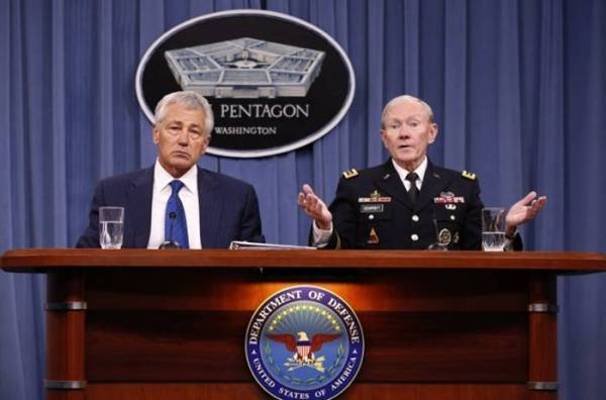
That Jr. Officers to Joint Chiefs never rank their "DADs". see? he concurs.
(1)
(0)
1
1
0
1
1
0
I'd say it's to be extremely mindful of how important their words, actions, and deeds are when they report to their initial assignment. Everyone is watching and evaluating, not just the CO.
(1)
(0)
1
1
0

Listen, listen, listen. You may be an officer, but you very likely do not know what you do not know. Ask questions, leave the ego at home, lead by example, don't let your shit become their shit. If your enlisted trust you, they will follow you through hell.
(1)
(0)
Capt Richard I P.
PO2 Kevin LaCroix Good input. I initially read it without the commas and it made me think of that viral youtube kid "listen listen, Linda, listen!" The points are well made, it just made me chuckle.
(0)
(0)
1
1
0

From what I have seen....very quickly learn the political ropes at your command. Only then will you acquire the knowledge to advance.
(1)
(0)
1
1
0

That you don't know what you don't know yet...listen to your peers and to your senior NCOs.
(1)
(0)
Read This Next


 Continue with Facebook
 Continue with Google