
Posted on Aug 31, 2021

What Traits Have You Learned in The Service That You Want to Instill in Your Children or Loved Ones? Login & Share to Win!

50.9K
3.06K
522
51
51
0

Thanks to all who participated! This sweepstakes event has ended and all prizes have been awarded. Please continue to share your stories and follow the RallySweeps page for the next event! https://rly.pt/RLYSWP
 RallySweeps
 Family
 Children
 Military Family
 Military Life
Posted >1 y ago
Responses: 454
1
1
0


My RP Comrades,
You may enjoy this magazine and newspaper article on leadership that was published in four parts recently in the Beaufort, SC ISLAND NEWS newspaper. An older version of the article is in BLADES OF THUNDER (Book One) and has been published in over 20 magazines and newspapers and two books in the USA, Germany, and England. Many readers have called this article the best short course in leadership ever written.
Hopefully all the leaders you have worked with have had a similiar philosophy of leadership.
Best wishes,
Larry
cell [login to see] , Email: [login to see]
Military & Civilian Leadership – A guide for military, civil service, political, and industry leaders
(Part 1 of 4)
Part 1 Published on August 18, 2021 in Contributors/Larry Dandridge/Military by newsbyte
https://yourislandnews.com/military-civilian-leadership-a-guide-for-military-civil-service-political-and-industry-leaders/
To date, I have written 20 articles on veterans’ benefits, four articles on end-of-life planning and hospice, and 12 articles on what citizens should know about law enforcement for The Island News. This article is the first of a series of four articles on leadership.
This leadership article is based on an award-winning speech that I gave at the Armed Forces Staff College in 1984. The article describes what is and what is not good leadership. It is based on a lifetime of research and the leadership used by the best leaders and managers the author has observed and worked with in the government and industry.
This series of newspaper and magazine articles on leadership have been updated frequently and published in various other forms in more than 23 magazines and newspapers and three books in the U.S., Germany, Canada, and England over the past 35 years.
Older versions of this leadership information have been used, under various titles, by dozens of government, patriotic, and military organizations and schools, including: The U.S. Military Academy, the Department of Homeland Security, the German War College, the Military Order of World Wars, the National Guard Association, the U.S. Coast Guard Academy, the U.S. Army’s Berlin Brigade, the U.S. Army Europe, the Association of the U.S. Army, and almost every U.S. Army School, including the Engineer, Aviation, Field Artillery, Air Defense Artillery, Military Police, Chemical (NBC), and Adjutant General.
This philosophy of leadership has also been used by many civilian companies and organizations including Blue Cross Blue Shield, Cobro Corporation, QinetiQ North America Inc., Westar Aerospace and Defense Group, McAdams Technologies Inc., CLC Hospice LLC, and TVV Publishing LLC.
Leadership: A Personal Point of View
Treating men and women equally without regard to race, color, creed, religion, age, custom, sexual preference, or political party is leadership. Honoring our country’s military men and women, prisoners of war (POWs) and missing in action (MIAs), veterans, and their families is leadership. Visiting your wounded and sick frequently is leadership.
Knowing and living by the Constitution, the Code of Conduct, the Geneva Convention, the Ten Commandments, the laws of our land, and the basic human rights of all mankind is leadership. Duty, honor, and country is leadership.
Leadership is taking the point position when your flight, unit, or business is expecting contact with the enemy or competition with other businesses. (Don’t interpret this to mean the point or flight lead position is where the military commander should be all of the time.) Leadership is flying a crippled bomber to the ground when one of your wounded crew members cannot bail out.
Leadership is keeping your young soldiers, Marines, airmen, sailors, and coast guardsmen (and employees) alive. Leadership is never leaving your wounded behind. Leadership is writing a dead trooper’s or sailor’s family or employee’s family a personal letter immediately after the battle or accident.
No compromise of the integrity of one’s word, deed, or signature is leadership. Setting high standards and seeing that they are met is leadership. Intelligence, dedication, creativity, and selflessness are leadership. Stamina, vigor, and commitment are leadership.
Spontaneous, contagious enthusiasm is leadership. Initiative, self-improvement, research and professionalism are leadership. Reading and studying the subjects and intelligence important to your job and family are leadership.
Leadership is rewarding a soldier, sailor, airman, Marine, coast guardsman, merchant mariner, or civilian employee with the appropriate recognition immediately after exceptional service. Leadership is commanding, advising, mentoring, and managing. Leadership is establishing and meeting, by priority, specific objectives. Leadership is managing by exception, using job enlargement, and seeking job enrichment.
Leadership knows that leading is more than just “follow me”, but also, and, maybe more importantly, “follow my orders and directions”.
Believing in God, family, and country, in that order is leadership. Being humanistic is leadership.
Trusting well trained Marines, soldiers, sailors, airmen, coast guardsmen and employees’ ideas and decisions is leadership. Knowing what and where the mission is at, when the troops (and civilian workers) and material are to be there, and how many troops and systems are needed to win is leadership. Blocking out periods of private time to accomplish creative work and recharge is leadership.
Compromising for the good of the whole with sister departments and partner leaders on budgeting, planning, organizing, coordinating, directing, and executing is leadership.
Leadership is not glorifying war. Leadership is not doing “anything” just to get promoted or elected. Leadership is not winning the battle at all costs, nor is it losing a war to avoid causalities. Leadership is not found in the security of a well-fortified command bunker, nor is it found in a plush officers’ field mess or golf course.
Leadership is assertive, but not aggressive. Leadership is not ruthless nor mindless discipline, but it is the ability to do the right thing at the right time, by putting the whole before the parts. Leadership is not a good efficiency report or employee appraisal, nor is it paper (false) readiness or value. Leadership is not a court martial for every mistake nor is it leniency for serious violations. Leadership is fair, predictable, and consistent.
(Part 2 of 4)
Published on August 25, 2021 in Contributors/Larry Dandridge/Military by newsbyte
https://yourislandnews.com/military-civilian-leadership-a-guide-for-military-civil-service-political-and-industry-leaders-2/
Giving a superior sound and tactful professional advice, even when you know he or she does not want to hear it is leadership. After you have given your best advice, following all legal, moral, and ethical orders, even when you do not agree with them is leadership.
Leading when you can; following when you should; and getting the hell out of the way, when you have nothing to offer is leadership. Learning the language, culture, and customs of a host or partner country (and customer country and your employees) is leadership.
A general or admiral who knows the friendly and enemy situation, knows the immediate action (unjam and clear) for his or her rifle, and knows his or her enlisted aides’ first names and family situations is leadership.
A private or seaman (or civilian employee) who knows that he or she is in the chain of command and may have to take over when senior in rank is leadership. Knowing that a water truck in the desert is worth more combat power that an extra armored cavalry regiment is leadership.
Leadership is not being right all the time, and it is certainly not being wrong most of the time. Leadership is not reluctant to get dirty, hot, cold, or physically tired with his troops (and employees).
Leadership is not forgetting that the past is our heritage, the present is our challenge, and the future is our responsibility. Leadership knows that combat or tariffs without conscience is not leadership.
Leadership is saying no to drugs, not smoking, and not drinking alcohol in excess. Staying in top physical condition is leadership.
Displaying knowledge, managing resources efficiently, and planning beyond the immediate requirements of assigned duties is leadership.
Creating an organization of mutual respect is leadership. Building an organization and environment where it is not necessary to tell military men and women or employees what to do is leadership.
Leadership fixes problems – not blame. Leadership is delegating authority, commanding confidence and respect, and accepting full responsibility for your actions.
Leadership is ingenuity, sociability, tact, and tenacity. Leadership is cross training. Leadership is adaptability, appearance, cooperation, and decisiveness.
Good leadership is guiding. Leadership is legendary. Leadership is foresight. Leadership is absorbent, abstinent, and, unfortunately, at times it is abominable.
Leadership is baccalaureate, balanced, basic, and too frequently backward and barbaric. Leadership has saved lives, killed, stopped wars, and started wars. Leadership has walked softly and carried a big stick, but it has also been loud and nonviolent.
Good leaders know why concentration of combat power is important. A true leader knows about defense-in-depth and the advantages our forces have at night, and how to use them.
A wise leader knows that young military men and women spend most of their time worrying about and planning tactics, while older more experienced troops and employees spend the majority of their time worrying about and planning logistics.
Leadership can be good or bad, centralized or decentralized, warm or cold, offensive or defensive, macro or micro, or expensive or free.
Leadership can be Catholic or Protestant, Jewish or Muslim, Hindu or Mormon, or Atheist or Agnostic.
Good leaders prevent over mobility of junior leaders and troops, by keeping them in their jobs long enough to learn their jobs and their common and collective tasks, and to work as team members. Establishing and promoting individual skill certification, team certification, and vendor certification programs is leadership.
Leadership provides their troops (and employees/contractors) with plenty of clean water and hot food. Leadership keeps their troops as comfortable and safe as possible. Leadership keeps their troops clean, supplied, informed, and vaccinated against disease. Leadership keeps military and civilian employees from becoming depressed, harassed, and suicidal.
Good military and civilian leaders hope and pray for the best but plan for the worst. Leaders know about the need to wage “total war” to win. Good military and civilian leaders know the special advantage the defender has in cities, mountains, tunnels, and jungles. Good leaders know to not keep Marine and Soldier weapons locked up and away from them, but rather train troops to live with a clean, safe, and serviceable weapon that they are an expert in.
Leadership is embodied in Martin Luther King Jr., Army Colonel Joshua Lawrence Chamberlain, President Abraham Lincoln, Marine Sgt. John Basilone, Pope John Paul II, Marine aviator Gregory “Pappy” Boyington, Jesus, Moses the Prophet, Roy P. Benavidez, Prime Minister Winston Churchill, Navy Seal Michael Mansoor, Mohammed the Prophet, and many other well-known figures. Leaders also know that hundreds of thousands of the unknowns like Bubba Segrest, Dan Hickman, and Sam DeLoach are excellent leaders.
Leadership is not lying to, bullying, or attacking anyone who does not agree with you. Leadership does not abusively and unresponsively use social media to attack, threaten, or insult others. Using a lie or half-truth over and over again is not leadership.
Good leaders know the United States must always have a foreign policy that is constant in purpose and flexible in means. They also know to continue to support its allies, like Canada, Mexico, Great Britain, Australia, Germany, NATO, South Korea, and Israel, but America must end these huge blunders like sending huge armies to Vietnam, Iraq, and Afghanistan, especially when Special Forces, Special Operations, the Central Intelligence Agency (CIA), and State Department efforts are more likely to provide long run favorable results.
Good leaders also know that every hate filled group in the Middle East is seeking to focus their venom on us and the rest of the Western World, but as Rudyard Kipling warned (paraphrasing) – “A tombstone awaits westerners with the epitaph carved on it that says, ‘A fool lies here who tries to hustle the East (and South West Asia)!’”
To be continued next week.
(Part 3 of 4)
Published on September 1, 2021 in Contributors/Larry Dandridge/Military by newsbyte
https://yourislandnews.com/military-civilian-leadership-a-guide-for-military-civil-service-political-and-industry-leaders-3/
Commitment to the team and a participatory form of leading that draws on every military member’s and employee’s knowledge and skills, at every level is leadership. Encouraging and quickly rewarding suggestions and complaints is leadership. Having an “open door” and “open mind” policy is leadership.
Empowering troops, civil service employees, civilian employees, and support contractors with the training, tools, publications, responsibility, authority, and accountability to get the tough jobs done is leadership. Making troops and employees multi-process, multi-weapon, and multi-functional experts is good leadership.
Practicing servant leadership is good leadership. Servant leaders set aside their egos and seek to place the needs of others first, to accomplish the mission, and improve the safety, security, happiness, readiness, competitiveness, opportunities, and growth of the organization and employees.
Leaders know that “the bitterness of low quality remains long after the sweetness of low price.” Leaders allow talented military men and women and civilian employees long leashes for experimenting. Leaders find ways to satisfy the essential need of troops and civilians to be both part of a team and be recognized as individuals.
Good leadership is guiding. Leadership is legendary. Leadership is foresight. Leadership is absorbent, abstinent, and, unfortunately, at times it is abominable. Leadership is balanced, basic, and too frequently backward and barbaric. Leadership has saved lives, killed, and stopped and started wars. Leadership has walked softly and carried a big stick, but it has also been loud and nonviolent.
Saying what you do in clear and concise Standard Operating Procedures (SOPs), Plans, Process Maps, and Orders is leadership – and doing what you say (following the SOP) is leadership. Breaking down communication barriers between staffs, line units, support organizations, political parties, allies, and sister units is leadership.
Leadership is acquiring knowledge and skill in the procurement, maintenance, transportation, distribution, and uninterrupted flow of supplies, facilities, and personnel. Leadership is knowing who, what, when, where, how, and why.
Leadership is listening to the voice of your customers. Leadership is coaching everyone to understand their job is a part of a process. Leadership knows, that people can observe a process, even those who are strangers to the process, with fresh eyes and see things like waste, hazards, places to improve, that closely involved workers may not see.
Leadership (especially for logisticians) is getting a black belt certification in Lean Six Sigma (L6S) techniques and other world class methods like:
• DMAIC (The L6S problem solving methodology known as Defining-Measuring-Analyzing-Improving-Controlling);
• Brain Storming and Affinity or Similarity diagramming (Team problem identification and solving by organizing a large number of ideas into their natural relationships);
• Five-why (Asking deep probing questioning to find root causes and develop counter measures to mistake proof processes);
• Process mapping (Identifying the flow and detailed steps of work processes);
• Cause and Effect (fishbone) and Pareto diagramming (Identifying causes and effects of problems and categorizing those causes into manageable and logical groups and priorities);
• Lean (Removing all waste of time and activity);
• Process mapping (Detailed flow charting, particularly useful in the service industries, where work processes involve unseen steps);
• Kaizen (Rapid improvement process);
• Reducing the eight types of waste (Waiting, overproduction, rework, motion, transportation, processing, inventory, and intellect);
• Balancing and leveling workload (Same level of work over time and same amount of work for each employee);
• Distance to customers and suppliers is evil;
• A place for everything and everything in its place (standardization);
• Five-Ss of layout design (Sorting out what is not needed, storing what is needed, shining/cleaning the area, standardizing the layout, and sustaining the effort);
• SIPOC Mapping (Defining the boundaries of your process by identifying suppliers-inputs-process-outputs-customers);
• Bench marking (Comparing your organization to other internal and external front-runner organizations and adopting those organizations good ideas); and
• Striving for perfection by continuously improving every process and performance.
Leadership is knowing that you can seldom wait until you have all of the answers. Leadership is repeatedly doing simple things that demonstrate sincerity. Leadership is listening to the voice of your internal customers (troops and employees) and external customers (the folks who buy or benefit from your products and services).
Honesty, enthusiasm, loyalty, courage, and wisdom is leadership. Taking care of your Marines, Soldiers, Sailors, Airmen, Coast Guardsmen, employees, and their dependents is leadership. Being a good boss, comrade and friend, father or mother, son or daughter, sister or brother, and husband or wife is leadership. Being a trustworthy ally and predictable trade partner is leadership. Knowing that the profession of arms is much more than just a job is leadership.
Leadership is being an unquestionable friend and protector of the environment. Leadership is basing decisions on facts. Leadership is promoting and rewarding continuous improvement and value. Leadership is being a champion of safety, fire prevention, and quality. Leadership is staying focused on internal customers, external customers, the enemy, and competitors.
Especially for logisticians, performing preventive maintenance, knowing what cellular techniques involve, being skilled in set-up reduction, and understanding rocks-in-the river problem solving and inventory management is leadership. Ensuring that resupply is at worst “in-time,” and is at best “just-in-time” is leadership.
Leadership is preventing harassment and a hostile work environment.
Leadership is enthusiasm, optimism, helping, training, encouraging, understanding, motivating, disciplining, crying, laughing, standing firm, giving way, counseling, correcting, giving a second chance, and trying again and again.
Leaders are tall, short, thin, heavy, male, female, black, brown, white, yellow, old, young, gay, transgender, and naturalized and un-naturalized. Leaders are from the city and from the farm. Leadership is working hard to close the gap between a soldier’s and civilian employee’s potential and their performance.
(Part 4 of 4)
Published on September 8, 2021 in Contributors/Larry Dandridge/Military by newsbyte
https://yourislandnews.com/military-civilian-leadership-a-guide-for-military-civil-service-political-and-industry-leaders-4/
Looking you in the eye, kicking you in the backside, covering your six (flank), and taking your Marine’s or soldier’s (or employee’s) place on the most dangerous mission is leadership. Knowing there is a place for everything and everything in its place is leadership.
Admitting mistakes and learning from them is leadership. Going through the food line last is leadership. Leaving the pickup zone (PZ) last on the last helicopter is leadership.
Going up the hill first and pulling your troops up behind you is leadership. Packing your own roll and digging your own hole is leadership. Making every troop and employee an expert in common tasks is leadership. Making certain every Marine, Soldier, Sailor, Airmen, and Coast Guardsman has the ability and training to, if needed, fight as an Infantryman is leadership.
Leadership is caring, compassion, understanding, and leading by example. Leadership is treating all prisoners and detainees in accordance with the Geneva Convention and other appropriate protections. Leadership knows that legal and ethical treatment of enemy prisoners is absolutely essential to having any kind of chance of getting the same humane treatment, from our enemies, for our military members who become Prisoners of War (POWs). Leadership is command and control and collaboration and creativity.
Simple, easy-to-understand orders come from the best leaders. Leaders make sure the enemy gives his life for his cause. Leadership ensures his or her troops always have the tactical advantage, best training, best equipment, and the highest morale, and plenty of water, rest, and hot food. The tides, the channels, the seasons, the winds, the hazards, the weather, the enemy (or for industry – the competition), the terrain, and the best forecast are all known by good leaders.
Leadership is not promoting or supporting racism, injustice, and extremist groups like Neo Nazis, white supremacists, and anti-Semitics. Leadership is not bragging to and threatening troops and employees. Leadership is not disrespecting our allies and their leaders. Leadership is not catering to and complementing our worst enemies, like Russia and North Korea.
Leadership drives the fear of employees, customers, vendors, and others making complaints and suggestions out of the workplace. Good leaders teach employees to “skip think” by looking past the initial negative feelings about complaints and instead learns to see each complaint as a gold mine of good ideas.
Breaking large problems down into small problems is leadership. Making quality and standards visible is leadership. Designing services and products on the needs and expectations of customers is leadership. Listening to the voice of your customers is leadership. Knowing that people work in the system and the leader’s job is to work on improving the system is leadership.
Leadership is teaching managers and employees team meeting skills including:
• Agreeing in advance on an objective;
• Developing an agenda;
• Setting time limits for discussion and brainstorming;
• Listening more and resolving conflicts politely; and
• Critiquing their meetings.
Leadership knows it is most important for each manager and employee to know what his or her job is, which frequently does not resemble his or her job title. New leaders know that one of the first questions they should ask is, “Where are your process maps for your work processes?” Good leaders know the great value of giving team and individual awards, as soon as possible after exceptional performance.
Leadership comes from experience, but experience comes from making some mistakes. A leader changes the odds and knows the risks. Leaders develop and reward teamwork. Leadership knows that the one most important word is “we” and the least most important word is “I”. Leadership knows there is no end to change, except failure. Leadership knows that if you treat every customer (and trooper) like your last or first, you would never have to worry about repeat business or recruitment.
Leaders often make good grades in school, have numerous years of formal education, and many important degrees. Less often however, they also have been known to fail math, English, Spanish, and other equally important subjects. Leaders work hard at ensuring the workload is distributed equally among all troops and workers.
Leadership comes from family, friends, teachers, coaches, peers, Non-Commissioned Officers (NCOs), warrant officers, commissioned officers, and chaplains. Simple, easy-to-understand orders come from good leaders. Complex tasks are changed into short and accurate plans through leadership.
Leadership can be learned and taught, but it cannot be forgotten nor bought. Leadership can be seen, tasted, smelled, felt, and heard, and it can come from a blind person with no hands who cannot hear, speak, or walk.
Good leaders look at everything (errors, infections, mistakes, accidents, employee turnover, waste, HAZMAT spills, losses, violence, complaints, harassment, fires, floods, crime, illiteracy, etc.) as controllable and preventable. Good leaders see the need for never-ending and continuous improvement.
So, what are you going to do? Lead, follow, or get out of the way!
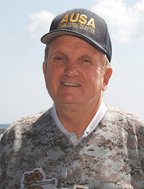
ABOUT THE AUTHOR. Larry Dandridge is a Vietnam War era wounded warrior, a combat and 100% disabled veteran, an ex-Enlisted Infantryman, an Ex-Warrant Officer Attack Helicopter Pilot, and a retired Lt. Colonel. He is also a certified Lean Six Sigma Black Belt, a certified Business Process Re-engineering Expert, and a CA College Certified Instructor in business, industrial operations, aeronautics, and military science. He has held leadership positions in industry and the government in the aeras of operations, program management, quality, safety, security, proposal writing, procurement, and marketing. The founder of three successful small businesses, he has held leadership positions in industry from Team Leader to CEO. Larry is also a past Veterans Service Officer, and a current volunteer Patient Adviser, CEO Advisory Council Member, and Patient and Family Advisory Committee Member at the RHJ VA Medical Center. He is also the Fisher House Charleston volunteer Good Will Ambassador and the VP for Veteran and Retiree Affairs for the Coastal Carolina Army Association of the US Army (AUSA) Chapter. Larry is the author of the award-winning BLADES OF THUNDER (Book One) and a contributing free-lance writer with the Island News. You can email him at: [login to see] .
You may enjoy this magazine and newspaper article on leadership that was published in four parts recently in the Beaufort, SC ISLAND NEWS newspaper. An older version of the article is in BLADES OF THUNDER (Book One) and has been published in over 20 magazines and newspapers and two books in the USA, Germany, and England. Many readers have called this article the best short course in leadership ever written.
Hopefully all the leaders you have worked with have had a similiar philosophy of leadership.
Best wishes,
Larry
cell [login to see] , Email: [login to see]
Military & Civilian Leadership – A guide for military, civil service, political, and industry leaders
(Part 1 of 4)
Part 1 Published on August 18, 2021 in Contributors/Larry Dandridge/Military by newsbyte
https://yourislandnews.com/military-civilian-leadership-a-guide-for-military-civil-service-political-and-industry-leaders/
To date, I have written 20 articles on veterans’ benefits, four articles on end-of-life planning and hospice, and 12 articles on what citizens should know about law enforcement for The Island News. This article is the first of a series of four articles on leadership.
This leadership article is based on an award-winning speech that I gave at the Armed Forces Staff College in 1984. The article describes what is and what is not good leadership. It is based on a lifetime of research and the leadership used by the best leaders and managers the author has observed and worked with in the government and industry.
This series of newspaper and magazine articles on leadership have been updated frequently and published in various other forms in more than 23 magazines and newspapers and three books in the U.S., Germany, Canada, and England over the past 35 years.
Older versions of this leadership information have been used, under various titles, by dozens of government, patriotic, and military organizations and schools, including: The U.S. Military Academy, the Department of Homeland Security, the German War College, the Military Order of World Wars, the National Guard Association, the U.S. Coast Guard Academy, the U.S. Army’s Berlin Brigade, the U.S. Army Europe, the Association of the U.S. Army, and almost every U.S. Army School, including the Engineer, Aviation, Field Artillery, Air Defense Artillery, Military Police, Chemical (NBC), and Adjutant General.
This philosophy of leadership has also been used by many civilian companies and organizations including Blue Cross Blue Shield, Cobro Corporation, QinetiQ North America Inc., Westar Aerospace and Defense Group, McAdams Technologies Inc., CLC Hospice LLC, and TVV Publishing LLC.
Leadership: A Personal Point of View
Treating men and women equally without regard to race, color, creed, religion, age, custom, sexual preference, or political party is leadership. Honoring our country’s military men and women, prisoners of war (POWs) and missing in action (MIAs), veterans, and their families is leadership. Visiting your wounded and sick frequently is leadership.
Knowing and living by the Constitution, the Code of Conduct, the Geneva Convention, the Ten Commandments, the laws of our land, and the basic human rights of all mankind is leadership. Duty, honor, and country is leadership.
Leadership is taking the point position when your flight, unit, or business is expecting contact with the enemy or competition with other businesses. (Don’t interpret this to mean the point or flight lead position is where the military commander should be all of the time.) Leadership is flying a crippled bomber to the ground when one of your wounded crew members cannot bail out.
Leadership is keeping your young soldiers, Marines, airmen, sailors, and coast guardsmen (and employees) alive. Leadership is never leaving your wounded behind. Leadership is writing a dead trooper’s or sailor’s family or employee’s family a personal letter immediately after the battle or accident.
No compromise of the integrity of one’s word, deed, or signature is leadership. Setting high standards and seeing that they are met is leadership. Intelligence, dedication, creativity, and selflessness are leadership. Stamina, vigor, and commitment are leadership.
Spontaneous, contagious enthusiasm is leadership. Initiative, self-improvement, research and professionalism are leadership. Reading and studying the subjects and intelligence important to your job and family are leadership.
Leadership is rewarding a soldier, sailor, airman, Marine, coast guardsman, merchant mariner, or civilian employee with the appropriate recognition immediately after exceptional service. Leadership is commanding, advising, mentoring, and managing. Leadership is establishing and meeting, by priority, specific objectives. Leadership is managing by exception, using job enlargement, and seeking job enrichment.
Leadership knows that leading is more than just “follow me”, but also, and, maybe more importantly, “follow my orders and directions”.
Believing in God, family, and country, in that order is leadership. Being humanistic is leadership.
Trusting well trained Marines, soldiers, sailors, airmen, coast guardsmen and employees’ ideas and decisions is leadership. Knowing what and where the mission is at, when the troops (and civilian workers) and material are to be there, and how many troops and systems are needed to win is leadership. Blocking out periods of private time to accomplish creative work and recharge is leadership.
Compromising for the good of the whole with sister departments and partner leaders on budgeting, planning, organizing, coordinating, directing, and executing is leadership.
Leadership is not glorifying war. Leadership is not doing “anything” just to get promoted or elected. Leadership is not winning the battle at all costs, nor is it losing a war to avoid causalities. Leadership is not found in the security of a well-fortified command bunker, nor is it found in a plush officers’ field mess or golf course.
Leadership is assertive, but not aggressive. Leadership is not ruthless nor mindless discipline, but it is the ability to do the right thing at the right time, by putting the whole before the parts. Leadership is not a good efficiency report or employee appraisal, nor is it paper (false) readiness or value. Leadership is not a court martial for every mistake nor is it leniency for serious violations. Leadership is fair, predictable, and consistent.
(Part 2 of 4)
Published on August 25, 2021 in Contributors/Larry Dandridge/Military by newsbyte
https://yourislandnews.com/military-civilian-leadership-a-guide-for-military-civil-service-political-and-industry-leaders-2/
Giving a superior sound and tactful professional advice, even when you know he or she does not want to hear it is leadership. After you have given your best advice, following all legal, moral, and ethical orders, even when you do not agree with them is leadership.
Leading when you can; following when you should; and getting the hell out of the way, when you have nothing to offer is leadership. Learning the language, culture, and customs of a host or partner country (and customer country and your employees) is leadership.
A general or admiral who knows the friendly and enemy situation, knows the immediate action (unjam and clear) for his or her rifle, and knows his or her enlisted aides’ first names and family situations is leadership.
A private or seaman (or civilian employee) who knows that he or she is in the chain of command and may have to take over when senior in rank is leadership. Knowing that a water truck in the desert is worth more combat power that an extra armored cavalry regiment is leadership.
Leadership is not being right all the time, and it is certainly not being wrong most of the time. Leadership is not reluctant to get dirty, hot, cold, or physically tired with his troops (and employees).
Leadership is not forgetting that the past is our heritage, the present is our challenge, and the future is our responsibility. Leadership knows that combat or tariffs without conscience is not leadership.
Leadership is saying no to drugs, not smoking, and not drinking alcohol in excess. Staying in top physical condition is leadership.
Displaying knowledge, managing resources efficiently, and planning beyond the immediate requirements of assigned duties is leadership.
Creating an organization of mutual respect is leadership. Building an organization and environment where it is not necessary to tell military men and women or employees what to do is leadership.
Leadership fixes problems – not blame. Leadership is delegating authority, commanding confidence and respect, and accepting full responsibility for your actions.
Leadership is ingenuity, sociability, tact, and tenacity. Leadership is cross training. Leadership is adaptability, appearance, cooperation, and decisiveness.
Good leadership is guiding. Leadership is legendary. Leadership is foresight. Leadership is absorbent, abstinent, and, unfortunately, at times it is abominable.
Leadership is baccalaureate, balanced, basic, and too frequently backward and barbaric. Leadership has saved lives, killed, stopped wars, and started wars. Leadership has walked softly and carried a big stick, but it has also been loud and nonviolent.
Good leaders know why concentration of combat power is important. A true leader knows about defense-in-depth and the advantages our forces have at night, and how to use them.
A wise leader knows that young military men and women spend most of their time worrying about and planning tactics, while older more experienced troops and employees spend the majority of their time worrying about and planning logistics.
Leadership can be good or bad, centralized or decentralized, warm or cold, offensive or defensive, macro or micro, or expensive or free.
Leadership can be Catholic or Protestant, Jewish or Muslim, Hindu or Mormon, or Atheist or Agnostic.
Good leaders prevent over mobility of junior leaders and troops, by keeping them in their jobs long enough to learn their jobs and their common and collective tasks, and to work as team members. Establishing and promoting individual skill certification, team certification, and vendor certification programs is leadership.
Leadership provides their troops (and employees/contractors) with plenty of clean water and hot food. Leadership keeps their troops as comfortable and safe as possible. Leadership keeps their troops clean, supplied, informed, and vaccinated against disease. Leadership keeps military and civilian employees from becoming depressed, harassed, and suicidal.
Good military and civilian leaders hope and pray for the best but plan for the worst. Leaders know about the need to wage “total war” to win. Good military and civilian leaders know the special advantage the defender has in cities, mountains, tunnels, and jungles. Good leaders know to not keep Marine and Soldier weapons locked up and away from them, but rather train troops to live with a clean, safe, and serviceable weapon that they are an expert in.
Leadership is embodied in Martin Luther King Jr., Army Colonel Joshua Lawrence Chamberlain, President Abraham Lincoln, Marine Sgt. John Basilone, Pope John Paul II, Marine aviator Gregory “Pappy” Boyington, Jesus, Moses the Prophet, Roy P. Benavidez, Prime Minister Winston Churchill, Navy Seal Michael Mansoor, Mohammed the Prophet, and many other well-known figures. Leaders also know that hundreds of thousands of the unknowns like Bubba Segrest, Dan Hickman, and Sam DeLoach are excellent leaders.
Leadership is not lying to, bullying, or attacking anyone who does not agree with you. Leadership does not abusively and unresponsively use social media to attack, threaten, or insult others. Using a lie or half-truth over and over again is not leadership.
Good leaders know the United States must always have a foreign policy that is constant in purpose and flexible in means. They also know to continue to support its allies, like Canada, Mexico, Great Britain, Australia, Germany, NATO, South Korea, and Israel, but America must end these huge blunders like sending huge armies to Vietnam, Iraq, and Afghanistan, especially when Special Forces, Special Operations, the Central Intelligence Agency (CIA), and State Department efforts are more likely to provide long run favorable results.
Good leaders also know that every hate filled group in the Middle East is seeking to focus their venom on us and the rest of the Western World, but as Rudyard Kipling warned (paraphrasing) – “A tombstone awaits westerners with the epitaph carved on it that says, ‘A fool lies here who tries to hustle the East (and South West Asia)!’”
To be continued next week.
(Part 3 of 4)
Published on September 1, 2021 in Contributors/Larry Dandridge/Military by newsbyte
https://yourislandnews.com/military-civilian-leadership-a-guide-for-military-civil-service-political-and-industry-leaders-3/
Commitment to the team and a participatory form of leading that draws on every military member’s and employee’s knowledge and skills, at every level is leadership. Encouraging and quickly rewarding suggestions and complaints is leadership. Having an “open door” and “open mind” policy is leadership.
Empowering troops, civil service employees, civilian employees, and support contractors with the training, tools, publications, responsibility, authority, and accountability to get the tough jobs done is leadership. Making troops and employees multi-process, multi-weapon, and multi-functional experts is good leadership.
Practicing servant leadership is good leadership. Servant leaders set aside their egos and seek to place the needs of others first, to accomplish the mission, and improve the safety, security, happiness, readiness, competitiveness, opportunities, and growth of the organization and employees.
Leaders know that “the bitterness of low quality remains long after the sweetness of low price.” Leaders allow talented military men and women and civilian employees long leashes for experimenting. Leaders find ways to satisfy the essential need of troops and civilians to be both part of a team and be recognized as individuals.
Good leadership is guiding. Leadership is legendary. Leadership is foresight. Leadership is absorbent, abstinent, and, unfortunately, at times it is abominable. Leadership is balanced, basic, and too frequently backward and barbaric. Leadership has saved lives, killed, and stopped and started wars. Leadership has walked softly and carried a big stick, but it has also been loud and nonviolent.
Saying what you do in clear and concise Standard Operating Procedures (SOPs), Plans, Process Maps, and Orders is leadership – and doing what you say (following the SOP) is leadership. Breaking down communication barriers between staffs, line units, support organizations, political parties, allies, and sister units is leadership.
Leadership is acquiring knowledge and skill in the procurement, maintenance, transportation, distribution, and uninterrupted flow of supplies, facilities, and personnel. Leadership is knowing who, what, when, where, how, and why.
Leadership is listening to the voice of your customers. Leadership is coaching everyone to understand their job is a part of a process. Leadership knows, that people can observe a process, even those who are strangers to the process, with fresh eyes and see things like waste, hazards, places to improve, that closely involved workers may not see.
Leadership (especially for logisticians) is getting a black belt certification in Lean Six Sigma (L6S) techniques and other world class methods like:
• DMAIC (The L6S problem solving methodology known as Defining-Measuring-Analyzing-Improving-Controlling);
• Brain Storming and Affinity or Similarity diagramming (Team problem identification and solving by organizing a large number of ideas into their natural relationships);
• Five-why (Asking deep probing questioning to find root causes and develop counter measures to mistake proof processes);
• Process mapping (Identifying the flow and detailed steps of work processes);
• Cause and Effect (fishbone) and Pareto diagramming (Identifying causes and effects of problems and categorizing those causes into manageable and logical groups and priorities);
• Lean (Removing all waste of time and activity);
• Process mapping (Detailed flow charting, particularly useful in the service industries, where work processes involve unseen steps);
• Kaizen (Rapid improvement process);
• Reducing the eight types of waste (Waiting, overproduction, rework, motion, transportation, processing, inventory, and intellect);
• Balancing and leveling workload (Same level of work over time and same amount of work for each employee);
• Distance to customers and suppliers is evil;
• A place for everything and everything in its place (standardization);
• Five-Ss of layout design (Sorting out what is not needed, storing what is needed, shining/cleaning the area, standardizing the layout, and sustaining the effort);
• SIPOC Mapping (Defining the boundaries of your process by identifying suppliers-inputs-process-outputs-customers);
• Bench marking (Comparing your organization to other internal and external front-runner organizations and adopting those organizations good ideas); and
• Striving for perfection by continuously improving every process and performance.
Leadership is knowing that you can seldom wait until you have all of the answers. Leadership is repeatedly doing simple things that demonstrate sincerity. Leadership is listening to the voice of your internal customers (troops and employees) and external customers (the folks who buy or benefit from your products and services).
Honesty, enthusiasm, loyalty, courage, and wisdom is leadership. Taking care of your Marines, Soldiers, Sailors, Airmen, Coast Guardsmen, employees, and their dependents is leadership. Being a good boss, comrade and friend, father or mother, son or daughter, sister or brother, and husband or wife is leadership. Being a trustworthy ally and predictable trade partner is leadership. Knowing that the profession of arms is much more than just a job is leadership.
Leadership is being an unquestionable friend and protector of the environment. Leadership is basing decisions on facts. Leadership is promoting and rewarding continuous improvement and value. Leadership is being a champion of safety, fire prevention, and quality. Leadership is staying focused on internal customers, external customers, the enemy, and competitors.
Especially for logisticians, performing preventive maintenance, knowing what cellular techniques involve, being skilled in set-up reduction, and understanding rocks-in-the river problem solving and inventory management is leadership. Ensuring that resupply is at worst “in-time,” and is at best “just-in-time” is leadership.
Leadership is preventing harassment and a hostile work environment.
Leadership is enthusiasm, optimism, helping, training, encouraging, understanding, motivating, disciplining, crying, laughing, standing firm, giving way, counseling, correcting, giving a second chance, and trying again and again.
Leaders are tall, short, thin, heavy, male, female, black, brown, white, yellow, old, young, gay, transgender, and naturalized and un-naturalized. Leaders are from the city and from the farm. Leadership is working hard to close the gap between a soldier’s and civilian employee’s potential and their performance.
(Part 4 of 4)
Published on September 8, 2021 in Contributors/Larry Dandridge/Military by newsbyte
https://yourislandnews.com/military-civilian-leadership-a-guide-for-military-civil-service-political-and-industry-leaders-4/
Looking you in the eye, kicking you in the backside, covering your six (flank), and taking your Marine’s or soldier’s (or employee’s) place on the most dangerous mission is leadership. Knowing there is a place for everything and everything in its place is leadership.
Admitting mistakes and learning from them is leadership. Going through the food line last is leadership. Leaving the pickup zone (PZ) last on the last helicopter is leadership.
Going up the hill first and pulling your troops up behind you is leadership. Packing your own roll and digging your own hole is leadership. Making every troop and employee an expert in common tasks is leadership. Making certain every Marine, Soldier, Sailor, Airmen, and Coast Guardsman has the ability and training to, if needed, fight as an Infantryman is leadership.
Leadership is caring, compassion, understanding, and leading by example. Leadership is treating all prisoners and detainees in accordance with the Geneva Convention and other appropriate protections. Leadership knows that legal and ethical treatment of enemy prisoners is absolutely essential to having any kind of chance of getting the same humane treatment, from our enemies, for our military members who become Prisoners of War (POWs). Leadership is command and control and collaboration and creativity.
Simple, easy-to-understand orders come from the best leaders. Leaders make sure the enemy gives his life for his cause. Leadership ensures his or her troops always have the tactical advantage, best training, best equipment, and the highest morale, and plenty of water, rest, and hot food. The tides, the channels, the seasons, the winds, the hazards, the weather, the enemy (or for industry – the competition), the terrain, and the best forecast are all known by good leaders.
Leadership is not promoting or supporting racism, injustice, and extremist groups like Neo Nazis, white supremacists, and anti-Semitics. Leadership is not bragging to and threatening troops and employees. Leadership is not disrespecting our allies and their leaders. Leadership is not catering to and complementing our worst enemies, like Russia and North Korea.
Leadership drives the fear of employees, customers, vendors, and others making complaints and suggestions out of the workplace. Good leaders teach employees to “skip think” by looking past the initial negative feelings about complaints and instead learns to see each complaint as a gold mine of good ideas.
Breaking large problems down into small problems is leadership. Making quality and standards visible is leadership. Designing services and products on the needs and expectations of customers is leadership. Listening to the voice of your customers is leadership. Knowing that people work in the system and the leader’s job is to work on improving the system is leadership.
Leadership is teaching managers and employees team meeting skills including:
• Agreeing in advance on an objective;
• Developing an agenda;
• Setting time limits for discussion and brainstorming;
• Listening more and resolving conflicts politely; and
• Critiquing their meetings.
Leadership knows it is most important for each manager and employee to know what his or her job is, which frequently does not resemble his or her job title. New leaders know that one of the first questions they should ask is, “Where are your process maps for your work processes?” Good leaders know the great value of giving team and individual awards, as soon as possible after exceptional performance.
Leadership comes from experience, but experience comes from making some mistakes. A leader changes the odds and knows the risks. Leaders develop and reward teamwork. Leadership knows that the one most important word is “we” and the least most important word is “I”. Leadership knows there is no end to change, except failure. Leadership knows that if you treat every customer (and trooper) like your last or first, you would never have to worry about repeat business or recruitment.
Leaders often make good grades in school, have numerous years of formal education, and many important degrees. Less often however, they also have been known to fail math, English, Spanish, and other equally important subjects. Leaders work hard at ensuring the workload is distributed equally among all troops and workers.
Leadership comes from family, friends, teachers, coaches, peers, Non-Commissioned Officers (NCOs), warrant officers, commissioned officers, and chaplains. Simple, easy-to-understand orders come from good leaders. Complex tasks are changed into short and accurate plans through leadership.
Leadership can be learned and taught, but it cannot be forgotten nor bought. Leadership can be seen, tasted, smelled, felt, and heard, and it can come from a blind person with no hands who cannot hear, speak, or walk.
Good leaders look at everything (errors, infections, mistakes, accidents, employee turnover, waste, HAZMAT spills, losses, violence, complaints, harassment, fires, floods, crime, illiteracy, etc.) as controllable and preventable. Good leaders see the need for never-ending and continuous improvement.
So, what are you going to do? Lead, follow, or get out of the way!
ABOUT THE AUTHOR. Larry Dandridge is a Vietnam War era wounded warrior, a combat and 100% disabled veteran, an ex-Enlisted Infantryman, an Ex-Warrant Officer Attack Helicopter Pilot, and a retired Lt. Colonel. He is also a certified Lean Six Sigma Black Belt, a certified Business Process Re-engineering Expert, and a CA College Certified Instructor in business, industrial operations, aeronautics, and military science. He has held leadership positions in industry and the government in the aeras of operations, program management, quality, safety, security, proposal writing, procurement, and marketing. The founder of three successful small businesses, he has held leadership positions in industry from Team Leader to CEO. Larry is also a past Veterans Service Officer, and a current volunteer Patient Adviser, CEO Advisory Council Member, and Patient and Family Advisory Committee Member at the RHJ VA Medical Center. He is also the Fisher House Charleston volunteer Good Will Ambassador and the VP for Veteran and Retiree Affairs for the Coastal Carolina Army Association of the US Army (AUSA) Chapter. Larry is the author of the award-winning BLADES OF THUNDER (Book One) and a contributing free-lance writer with the Island News. You can email him at: [login to see] .
Military & Civilian Leadership – A guide for military, civil service, political, and industry...
To date, I have written 20 articles on veterans’ benefits, four articles on end-of-life planning and hospice, and 12 articles on what citizens should know about law enforcement for The Island News.
(1)
(0)
1
1
0

Bringing order to myself, I tried to get my kids to understand that, but my stepson just could not get it. maybe I could have pushed a little harder I still don't think it would have done any good.
(1)
(0)
1
1
0
1
1
0

1
1
0

Thanks to my father, I had most of the good traits, the Army was teaching. I did become better at fitness discipline.
(1)
(0)
1
1
0

Trust nothing at face value; demand full disclosure. If told u'r getting ur way, make sure that all details are as u expect. I tried to defer active duty in order to ensure family matters were tended to. Instead of offering hardship discharge, I wz told I wz getting my way but wz given RE4 & honorable discharge based on attitude--no disclosure as to consequence of this type discharged.
If u'r asked if u've read something, expect detailed explanation. At separation hearing, wz asked if I'd read Jeanne Dixon's book "Prophecy." I asked why I wz asked & wz merely told there wz a chapter in it about President Kennedy's trip to Dallas. Wzn't told they wondered if I believed I wz psychic.
My superiors' failure to disclose caused them to discriminate against me in 2 ways: 1) gender--apparently, only men are offered hardship discharge when family crisis arises; culture--not psychic but, coz of Native American heritage, sensitive (latent paranormal ability--extra-sensory perception).
If u'r asked if u've read something, expect detailed explanation. At separation hearing, wz asked if I'd read Jeanne Dixon's book "Prophecy." I asked why I wz asked & wz merely told there wz a chapter in it about President Kennedy's trip to Dallas. Wzn't told they wondered if I believed I wz psychic.
My superiors' failure to disclose caused them to discriminate against me in 2 ways: 1) gender--apparently, only men are offered hardship discharge when family crisis arises; culture--not psychic but, coz of Native American heritage, sensitive (latent paranormal ability--extra-sensory perception).
(1)
(0)
1
1
0

1
1
0

The best thing I learned was "be on time or be early" Nobody likes a "late " comer.
(1)
(0)
1
1
0

1
1
0

Honesty and integrity are the two things I believe I built my entire career upon. When my Soldiers saw my each day they new exactly what to expect. My Son and Daughter must have listened and learned as well. So far both of them have had great success in their life pursuits.
(1)
(0)
Read This Next


 Continue with Facebook
 Continue with Google