
Posted on Sep 6, 2015

Why Does the Army Treat its Reservists and National Guard Soldiers Like Second Class Citizens?

113K
526
168
78
78
0
I've spent 37 years in the Army, in both the active and reserve components. Most of my career has been in the reserves. Regardless, I've consistently seen different "rules" and regs applied not to mention the never ending attitude on deployments that reservists and guardsmen are inferior to active component Soldiers.The active component gets promoted faster, has priority at required schools and typically treats reservists/guardsmen like second class Soldiers on deployments. I can give dozens of examples if needed but I'll save it for now. Bottom line is the Reserves/Guard constitute the bulk of the Army - the Army needs the Reserve/Guard and can't do without them so treat them as equals and not second class Soldiers. Give them the same opportunities for promotion and schools. And especially to the active component, quit assuming we are "inferior" Soldiers during deployments. We often outperform active duty Soldiers plus we bring a multitude of other skills to the table - we are cops, engineers, CEO's, nurses and so on. Let's make everything equitable.
Just to clarify, not all AC elements are like this, nor are all RC/NG elements "top shelf." This issue is a problem that has been around since when I joined the Army in 1978 - I'm sure it goes back even further. This post is about fixing attitudes, ending stereotypes and providing equal educational opportunities to RC/NG Soldiers that AC Soldiers enjoy.
Just to clarify, not all AC elements are like this, nor are all RC/NG elements "top shelf." This issue is a problem that has been around since when I joined the Army in 1978 - I'm sure it goes back even further. This post is about fixing attitudes, ending stereotypes and providing equal educational opportunities to RC/NG Soldiers that AC Soldiers enjoy.
Posted in these groups:  Army Reserve
 Army National Guard
Army Reserve Army National Guard
Edited 10 y ago
Posted >1 y ago
Responses: 71
3
3
0

A couple of reasons for this. One is the us against them mentality that pervades the military. We have it in the Guard too. It's good for camaraderie and esprit de corps, but has it's downsides as well. But we see it at all levels. "B Co is sure ate up, glad I'm no part of that crap show." Next month when you're at B Co because of a promotion, "B Co, second to none!" I believe that a lot of the crap talking that I've heard about the Guard and Reserves belongs in that category, and I just don't take it very seriously.
One other reason that I believe that the Guard and Reserve components don't like talking about is that quality varies from unit to unit, and I believe though I don't have any basis other than gut feeling that it's worse than the AD. I believe that if the RC wants to be taken seriously, we need to ensure that all our units act and work as professionals. Not just drinking clubs and good ole boy buddy buddy clubs.
The company that I'm in now, I'd go anywhere with. I can't say that for every unit I've see.
I allow that active duty has their dud units, but I would expect that it's not so bad because soldiers PCS and leadership changes. While commanders and first sergeants move through units like they would on AD, the AGR staff can stay forever, as well as e-7s and below. Sometimes this is good. Oft times it's not.
One other reason that I believe that the Guard and Reserve components don't like talking about is that quality varies from unit to unit, and I believe though I don't have any basis other than gut feeling that it's worse than the AD. I believe that if the RC wants to be taken seriously, we need to ensure that all our units act and work as professionals. Not just drinking clubs and good ole boy buddy buddy clubs.
The company that I'm in now, I'd go anywhere with. I can't say that for every unit I've see.
I allow that active duty has their dud units, but I would expect that it's not so bad because soldiers PCS and leadership changes. While commanders and first sergeants move through units like they would on AD, the AGR staff can stay forever, as well as e-7s and below. Sometimes this is good. Oft times it's not.
(3)
(0)
3
3
0

As a reserve officer of 22 years, I am still adjusting to SSD requirements. I understand that there is more training the needs to be done than can be accomplished in 'one weekend a month.' But I would rather see a streamlining and efficiency study done in the reserve system., than obligate Soldiers when off duty.
(3)
(0)
2
2
0

Every element is important. Remember there have been more reserved and Guard boots on ground in the middle east since 9/11 than active. A good way to look at the difference between the Soldiers is that most Guard and reservist join for the college benefits and after thier commitments are both civilian and military professional were most active personnel are lucky to even go to classes on thier 4 years commitment and are now 4 years behind thier pear's when they have to look for work.
(2)
(0)
2
2
0

Look at the RC/NG billeting, equipment etc and you will see that the Army system encourages separate treatment. Some of the billeting and training environments are required but not all. Training for mobilization should just be considered as a training cycle for the reserves, instead many time the reserves receive substandard training and are not treated with same respect as AC personnel. I have seen this through a 28 year career as an AC, NG, and AR Soldier. It is not necessarily the individual Soldiers but the Army system that promotes this different treatment.
(2)
(0)
2
2
0

I was called up in 2005, sent to Ft. Jackson along with 88 fellow reservist to supplement the staff. Most of us were assigned to Bravo company and worked the ranges. Our Active duty 1st SGT went out of his way to make sure we were treated with respect. After about a month, at lunch he told me he wished he had more of us, we would do what ever it took to complete the training even if some of us spent a few bucks out of our own pockets, some of this AC guys were more worried about when it was time to go home than complete the training mission.
(2)
(0)
2
2
0

When I went back on active duty, I was an E6. And a lot of the people I worked with were pissed off that I was not demoted.
(2)
(0)
2
2
0
2
2
0

Simple,
A significant number of military leaders value physical abilities above all others, while the NG/RC Soldiers are vastly superior to AC Soldiers in many aspects, (Engineering officer with most of my NCO's as construction foremen way more skills than any AC construction unit because they aren't legally allowed to construct significant projects) We are uniformly sub-par when it comes to PT, so the shortsighted Jock's and bullies who typically tend to be loud-spoken rule out the common sense Soldiers.
Almost all senior leader's O5+ are either on board with the reserve component or are quiet on the subject.
A significant number of military leaders value physical abilities above all others, while the NG/RC Soldiers are vastly superior to AC Soldiers in many aspects, (Engineering officer with most of my NCO's as construction foremen way more skills than any AC construction unit because they aren't legally allowed to construct significant projects) We are uniformly sub-par when it comes to PT, so the shortsighted Jock's and bullies who typically tend to be loud-spoken rule out the common sense Soldiers.
Almost all senior leader's O5+ are either on board with the reserve component or are quiet on the subject.
(2)
(0)
2
2
0
I may not have been in as long as some, going on 8 yrs in the reserves, mobilized for 5 of them now. In that time while working with the active component, I heard plenty of reserve jabs and jokes, as expected, but a strong work ethic, keeping up your physical fitness, and staying on top of your education/schools doesn't go unnoticed. Respect can always be earned. You hear things all the time-"Reservists are lazy. They don't know what they're doing. They don't do PT. Their uniforms look messy." The list could go on. The best thing you can do is prove those individuals wrong. Stay proficient in your MOS. Don't become complacent with where you are. Stay motivated. Be the solution to the problem, not the catalyst.
(2)
(0)
2
2
0

I did 2 years 11 months and 26 days in the NG, doesnt even compare to my active experience. There are some great NG Soldiers out there, but for the most part I have never seen a NG unit with the same capability as what I have seen on active. But my experience is pretty much limited as I have only been in units with no NG equivelant. As far as schools are concerned, I dont think NG should have priority or equal order of merit as the Active Soldiers may be relying on that school to be fully mission capable in a unit that needs that capability to remain an asset to the DOD. (airborne school for an 82nd paratrooper on GRF is kindova big deal).
(2)
(0)
CSM Michael Chavaree
Your status has nothing to do with a 7 minute mile... The 2nd place finishers for the Best Ranger Competition were from the NG...
(2)
(0)
CSM Michael Chavaree
And I still dont think you guys are "second class citizens", we are all on the same team
(2)
(0)
CW4 Russ Hamilton (Ret)
CSM Michael Chavaree - No Reserve unit is meant to be "at the readiness level 24/7/365 that the Active component must maintain" - they are Reserves. On my deployments I've gone through a month to 3 months of training before being deployed, then our "clock" begins (9 months, 1 year, etc). The great thing about reserve and NG troops is we bring much more to the fight - we have additional skills from our civilian jobs that the AC does not have. As for specialty schools such as airborne or air assault, I've seen two RC Soldiers go in my 34 years in the RC. We clearly have no priority to go to such schools. As for SFC Clark Adams' statement about RC medical personnel being better I have to agree. Regardless, I still maintain the AC has preconceived notions about RC/NG Soldiers, which is a shame.
(1)
(0)
SFC Clark Adams
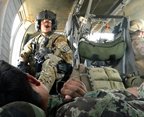
CSM Michael Chavaree - Here you go Top!
GOOD NEWS. ENHANCED FLIGHT MEDIC TRAINING BEGINS
After over a decade of urgent calls for upgraded training of Army flight medics, it has begun. This article provides some details of what is involved. As noted, Army statistics have long shown that wounded troops rescued by National Guard MEDEVAC crews have a 66% higher chance of survival than if they were rescued by Regular Army MEDEVAC crews. This difference is directly attributable to the level of training attained by the crews and prior trauma experience. Most National Guard flight medics are paramedics in their civilian life, so they have more extensive training as well as daily contact with trauma victims. Even civilian paramedics, however, need additional training to handle military war casualties.
The other area of good news is that flight medics also will be trained for en route critical care of stabilized patients. What most people don’t realize is that a huge percentage of MEDEVAC flights entail the transfer of wounded troops from one level medical treatment facility (MTF) to another. These patients often are hooked up to various types of medical/life sustaining equipment which the typical flight medic is not trained on or certified to use. As a result there is a substantial risk to many patients during the transfer flight that their condition may seriously deteriorate. The Army attempted to address this with the assignment of en route critical care nurses, but as was reported by Col. Robert Mabry in his after action report in 2011 – those nurses had not been properly trained (indeed, many were unaware that they would be assigned to helicopter rather than ground transfer duties) and suffered from weak leadership in the field.
These much delayed positive changes should be acknowledged and applauded. However, I was informed by someone close to the MEDEVAC program that no special program was in place to assure that Regular Army MEDEVAC flight medics scheduled to deploy to Afghanistan in the next year would be enrolled in the enhanced training program before deployment. It is interesting that the early enrollees appear to be among the National Guard crews already providing the higher level of care and achieving the higher survival rates for their patients. Wouldn’t have made sense initially to maximize the number of Regular Army flights medics getting this training – especially those going to the combat zone? [If someone can provide updated information about enrollment policies and timelines, I would appreciate it.]
Note the comment from Army Master Sgt. Kym Ricketts, chief medical non-commissioned officer with the Army National Guard, “It’s advanced, pre-hospital medical care.” The term pre-hospital care is relatively unknown but includes all the medical care provided to the wounded from the time of injury to the time the patient is in the hands of medical staff at a medical treatment facility. MEDEVAC is but one portion of the spectrum of pre-hospital care for the wounded. As discussed in How the Army is slow to meet MEDEVAC Challenges in the 21st Century this also covers Tactical Combat Casualty Care training and doctrine, as well as pre-hospital care trauma registries that track the wounded and their care discussed in US Army Report: 2011 After action report blasts MEDEVAC shortcomings.
The article follows:
ARMY NATIONAL GUARD MEDICS AMONG FIRST TO ATTEND REVAMPED FLIGHT MEDIC PROGRAM
National Guard Bureau
Story by Sgt. 1st Class Jon Soucy
http://www.dvidshub.net/news/88451/army-national-guard-medics-among-first-attend-revamped-flight-medic-program#.T7PsTVIZckZ
Date: 05.15.2012
Posted: 05.15.2012 14:07
News ID: 88451
GOOD NEWS. ENHANCED FLIGHT MEDIC TRAINING BEGINS
After over a decade of urgent calls for upgraded training of Army flight medics, it has begun. This article provides some details of what is involved. As noted, Army statistics have long shown that wounded troops rescued by National Guard MEDEVAC crews have a 66% higher chance of survival than if they were rescued by Regular Army MEDEVAC crews. This difference is directly attributable to the level of training attained by the crews and prior trauma experience. Most National Guard flight medics are paramedics in their civilian life, so they have more extensive training as well as daily contact with trauma victims. Even civilian paramedics, however, need additional training to handle military war casualties.
The other area of good news is that flight medics also will be trained for en route critical care of stabilized patients. What most people don’t realize is that a huge percentage of MEDEVAC flights entail the transfer of wounded troops from one level medical treatment facility (MTF) to another. These patients often are hooked up to various types of medical/life sustaining equipment which the typical flight medic is not trained on or certified to use. As a result there is a substantial risk to many patients during the transfer flight that their condition may seriously deteriorate. The Army attempted to address this with the assignment of en route critical care nurses, but as was reported by Col. Robert Mabry in his after action report in 2011 – those nurses had not been properly trained (indeed, many were unaware that they would be assigned to helicopter rather than ground transfer duties) and suffered from weak leadership in the field.
These much delayed positive changes should be acknowledged and applauded. However, I was informed by someone close to the MEDEVAC program that no special program was in place to assure that Regular Army MEDEVAC flight medics scheduled to deploy to Afghanistan in the next year would be enrolled in the enhanced training program before deployment. It is interesting that the early enrollees appear to be among the National Guard crews already providing the higher level of care and achieving the higher survival rates for their patients. Wouldn’t have made sense initially to maximize the number of Regular Army flights medics getting this training – especially those going to the combat zone? [If someone can provide updated information about enrollment policies and timelines, I would appreciate it.]
Note the comment from Army Master Sgt. Kym Ricketts, chief medical non-commissioned officer with the Army National Guard, “It’s advanced, pre-hospital medical care.” The term pre-hospital care is relatively unknown but includes all the medical care provided to the wounded from the time of injury to the time the patient is in the hands of medical staff at a medical treatment facility. MEDEVAC is but one portion of the spectrum of pre-hospital care for the wounded. As discussed in How the Army is slow to meet MEDEVAC Challenges in the 21st Century this also covers Tactical Combat Casualty Care training and doctrine, as well as pre-hospital care trauma registries that track the wounded and their care discussed in US Army Report: 2011 After action report blasts MEDEVAC shortcomings.
The article follows:
ARMY NATIONAL GUARD MEDICS AMONG FIRST TO ATTEND REVAMPED FLIGHT MEDIC PROGRAM
National Guard Bureau
Story by Sgt. 1st Class Jon Soucy
http://www.dvidshub.net/news/88451/army-national-guard-medics-among-first-attend-revamped-flight-medic-program#.T7PsTVIZckZ
Date: 05.15.2012
Posted: 05.15.2012 14:07
News ID: 88451
Army National Guard medics among first to attend revamped flight medic program
Medics from the Army National Guard are among those taking part in a pilot program designed to revamp the training that flight medics throughout the Army will receive.
(0)
(0)
Read This Next


 Continue with Facebook
 Continue with Google