
Posted on Aug 17, 2021

Why doesn't the United States Military consider adding electric or hybrid vehicles to their fleet of installation vehicles?

4.1K
79
45
6
6
0
As I understand it, long distance driving and infrastructure are a barrier to many civilian consumers, but on-installation vehicles don't travel outside of their immediate vicinity and electric charging stations could be built in the motor pools.
 Vehicle
 Military Industry
 Technology
Edited >1 y ago
Posted >1 y ago
Responses: 23
2
2
0

I have seen several installations using compressed natural gas vehicles in an effort to reduce emissions. I've also seen installations move to electric carts for base employees zipping about working on things. There will most likely be an initiative at some point to move towards electric vehicles for wider use but the existing fleet is still functional and electric vehicles are still relatively expensive. Most bases keeps installation vehicles for a very long time. Look at the gov auction sites and you will see extremely old vehicles except for ones that were damaged
(2)
(0)
2
2
0

Because they're expensive to maintain and create a lot of hazardous waste in the form of batteries.
(2)
(0)
Some posts do have them but they are not functional with most units. If a unit was expeditionary then it wouldn't make sense. Some post do use this with their garrison units that support the post or their TMP vehicles that belong to post. A major issue is that you it would take a large investment. The average cost of a fully installed level 3 EV charging station is around $50,000. Every Battalion has their own motor pool. Plus if you needed to charge multiple vehicles at a time due to a BN mission you would have more vehicle down time. It just isn't quite there yet to support a unit. The vehicles that you would use this for would be few and far between.
(2)
(0)
2
2
0

CPT Angela Wilder
A reduced reliance on fossil fuels, which is said to potentially reduce conflicts, reverse global warming, and prevent future harm to the environment. It is cheaper too, but I don't know how much. There may be other benefits that I have not mentioned.
(1)
(0)
CWO4 Terrence Clark
CPT Angela Wilder EVs must be charged. Wind and solar doesn't have the capacity. In any case, wind and solar require dirty industries to build, in addition to their land use and wildlife dangers. Mentioning nuclear power is a pearl clutcher. Leaving fossil fuel plants. EVs require large amounts of lithium. Lithium is mined in South America, Australia and China. Processed in China. All those are dirty industries. Plus, leaves us to China's whim. EVs use much cobalt. Cobalt is a byproduct of dirty industries and amount produced is dependent up expansion and contraction of those markets. All the plastic and rubber parts of EVs are petroleum based. The metal parts must be mined. Aluminum alone uses enormous amounts of electricity to smelt. Wind and solar cannot generate that.
Teslas are really cool. I want one. Likely when our Camry gives up the ghost. Which is greener? They both require the same amount of energy to move their curb weight. Energy has to be generated somehow.
Teslas are really cool. I want one. Likely when our Camry gives up the ghost. Which is greener? They both require the same amount of energy to move their curb weight. Energy has to be generated somehow.
(0)
(0)
MSgt Frank Askins
Climate change has been going on since the universe was created. The history of earth is only one example of the changes and the signs are clear... The coming and going of things like the ice age, rising and ebbing tides, continent movements, etc., should be enough to convince people that no matter what you think about the carbon effect on the climate, the climate will change as Mother Nature sees fit! It's logical that when the earth goes through melting ice caps, the oceans will rise, just as they receded when the ice age came. Nothing humans can do will stop these events. Instead of worrying about cows passing gas, why aren't we concerned when a volcano explodes and pollutes the air over vast areas? Anybody think they can figure a way to stop volcanos? I think all the people screaming about the sky falling are forgetting the "science" of turbulent times in Earth's history...and future!
(0)
(0)
2
2
0

Oshkosh Delivers USA's 1st Electric Fire Truck
Last year and last month, I wrote about Volvo Penta and Rosenbauer developing an electric fire truck. They're not the only team in town working to electrify firefighters, though. More recently, Oshkosh Corporation has announced
(2)
(0)
1
1
0

CPT Angela Wilder
Vulnerability is also an issue when refueling. I was a fuel and ammo platoon leader. We had refueling missions. I'm am now thinking we could have mobile recharging vehicles or something like that.
(0)
(0)
1
1
0
CPT Angela Wilder
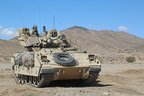
"The Maneuver Capabilities Development and Integration Directorate is moving forward with the development of future electrification requirements for the Army's ground force, according to a service news release.
MCDID's Maneuver Requirements Division has the lead in developing the requirements document for Tactical and Combat Vehicle Electrification, part of an effort to reduce the Army's reliance on fossil fuels, the release states."
https://www.military.com/daily-news/2020/09/22/army-takes-first-step-toward-equipping-tactical-combat-vehicles-electric-engines.html?fbclid=IwAR30ZiVnLhEB4GYK89eAGBrHCdhBNlYoCZ6lIyHh2MJQr65h-vb_vxAKgSA
MCDID's Maneuver Requirements Division has the lead in developing the requirements document for Tactical and Combat Vehicle Electrification, part of an effort to reduce the Army's reliance on fossil fuels, the release states."
https://www.military.com/daily-news/2020/09/22/army-takes-first-step-toward-equipping-tactical-combat-vehicles-electric-engines.html?fbclid=IwAR30ZiVnLhEB4GYK89eAGBrHCdhBNlYoCZ6lIyHh2MJQr65h-vb_vxAKgSA
Army Takes First Step Toward Equipping Tactical, Combat Vehicles with Electric Engines
Fort Benning officials are planning for a virtual Electrification Industry Day on Oct. 20.
(0)
(0)
CPT Angela Wilder
On the other hand.
"The Army must carefully weigh the trade-offs of traditional internal combustion engines (ICE) against evolving EV technology. While the service is eager to cast off the disadvantages of ICE, such as shipping vast quantities of fuel to the battlefield, it doesn’t believe larger armored vehicles, particularly tanks, will go electric any time soon."
"The Army must carefully weigh the trade-offs of traditional internal combustion engines (ICE) against evolving EV technology. While the service is eager to cast off the disadvantages of ICE, such as shipping vast quantities of fuel to the battlefield, it doesn’t believe larger armored vehicles, particularly tanks, will go electric any time soon."
(0)
(0)
1
1
0

Is the suggestion program still around. I know a MSgt that made some $$ making suggestions like motion detectors in the hallways of billeting.
(1)
(0)
Suspended Profile
Fort Rucker has something to that effect. I found a old article.
https://www.government-fleet.com/65729/fort-rucker-to-add-17-electric-vehicles-to-fleet
Another advantage, I assume, is that there are probably savings associated with the limited speed. I imagine a vehicle like that has a less robust engine and other components that are associated with highway speeds.
https://www.government-fleet.com/65729/fort-rucker-to-add-17-electric-vehicles-to-fleet
Another advantage, I assume, is that there are probably savings associated with the limited speed. I imagine a vehicle like that has a less robust engine and other components that are associated with highway speeds.
CPT Angela Wilder
Thanks for posting a link to the Fort Rucker article! Very interesting! I’m hoping that newer electric vehicles can travel faster and further in 2021. The article was published in 2009. The again, do on post vehicles need to go that fast?
“ Prior to the arrival of the new vehicles, small charging stations will be constructed in various parking lots to recharge the new cars and trucks, which run approximately 40 miles between charges and can travel at about 35 miles per hour.”
“ Prior to the arrival of the new vehicles, small charging stations will be constructed in various parking lots to recharge the new cars and trucks, which run approximately 40 miles between charges and can travel at about 35 miles per hour.”
(0)
(0)
1
1
0
There is a little more to it than just putting in a charging station in the motor pool. Unless things have changed, the military also works on their vehicles instead of taking them to a local mechanic. Once you have a fleet of electric vehicles, you will also need a crew of mechanics trained to work on those vehicles. Another thought is the cost of repairs, battery replacements, etc.! Don't fret too much...I'm sure Buy'd In, AOC, Sanders, and Milley are already working on turning the military pool into a plug and play station instead of a gas station!
(1)
(0)
Read This Next


 Continue with Facebook
 Continue with Google