

Posted on Feb 23, 2022

Meet the 6 Veterans who raised the United States flag during the battle of Iwo Jima

25.8K
165
28
78
78
0

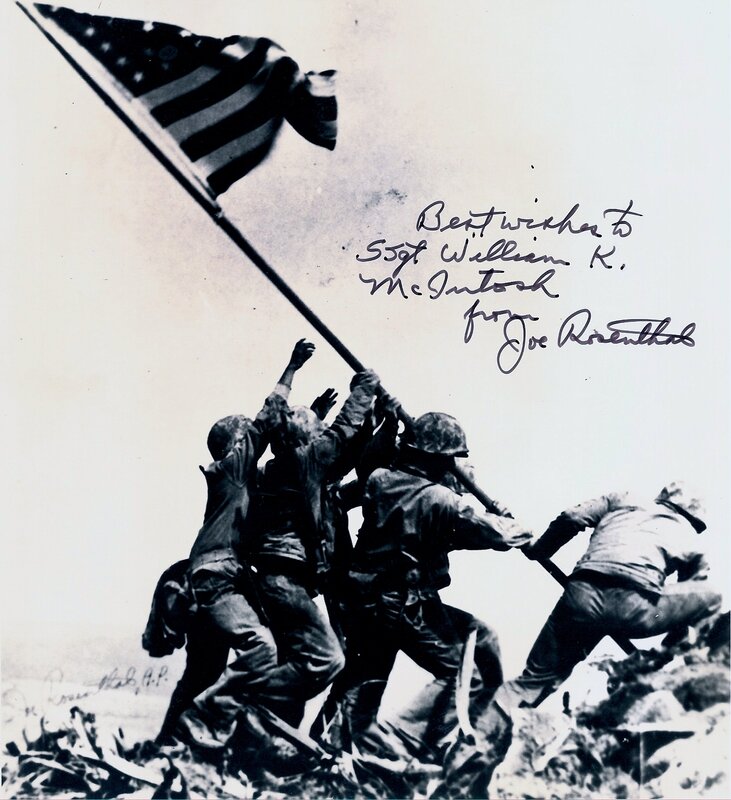
It’s a photograph seared into most Americans’ memories and depicted in the life-sized Marine Corps War Memorial on the National Mall in Washington, D.C.: six battle-weary Marines, joined almost as one, hoist a U.S. flag over Iwo Jima on Feb. 23, 1945, marking the capture of critically important territory in the Pacific Theater of World War II.
But who were the service members determined to place Old Glory atop Mt. Suribachi, caught in the Pulitzer Prize-winning image by Associated Press photographer Joseph Rosenthal?
Correctly identifying all the men present at what was the second flag-raising during the Battle of Iwo Jima has actually taken about 70 years. (Officially, the hard-fought operation to secure the island, which began Feb. 19, 1945, lasted just 36 days.)
The Marine Corps first revisited the record in June 2016, following queries by a pair of amateur historians that began in 2013. The Marines commissioned a review panel to look at the evidence, and a correction was issued on June 23, 2016, updating the name of one of the men present. But the record was still wrong, and so on further review, the Marines issued another correction on Oct. 17, 2019.
Here’s a short sketch of the men in the second flag-raising image, which became the most iconic photo of the war:
Cpl. Harold P. Keller (1921-1979). Iowa-born Harold “Pie” Keller was identified in 2019 as the sixth man at Mt. Suribachi. According to the obituary on the memorial website, FindaGrave.com, Keller was born near Brooklyn, Iowa, and attended Brooklyn High School. He served in the Marine Corps from 1942-1945, marrying Ruby O’Halloran in 1944 while still on duty. After the war, he returned to Brooklyn, serving for 30 years as a member of the fire department and becoming the fire chief. He had two sons, Ken of Iowa City, Iowa, and Wayne of Grand Forks, North Dakota; and a daughter, Kay Maurer of Clarence, Iowa. (Details: https://www.findagrave.com/memorial/17178561/harold-paul-keller.)
Cpl. Harlon Block (1924-1945). Born in Yorktown, Texas, Block grew up in Weslaco, Texas, according to a 2015 news release issued by Texas Rep. Filemon Vela, a Democrat. A star football player, Block led the Weslaco Panthers to a conference championship and was named All South Texas End. He and a group of his teammates accelerated their studies and graduated early to enlist in the Marines Corps in 1943. He was eventually assigned to Company E, Second Battalion, 28th Marines, Fifth Marine Division. “One day into the battle, Corporal Block and the 28th Marines began their assault on Mount Suribachi, a 550-foot-high extinct volcano,” Vela said. “After a three-day onslaught, the unit reached the top and defeated the last remaining Japanese defenders.” Block was killed in action on March 1 on Iwo Jima island. (Details: https://vela.house.gov/2015/2/press-release-congressman-vela-honors-south-texas-native-corporal-harlon.)
Pvt. First Class Ira Hamilton Hayes (1923-1955). Born in Sacaton, Arizona, to World War I Veteran, Hayes was an Akimel O’odham, Pima, Indian, according to the Library of Congress and a 2019 blog published by the U.S. Department of Veterans Affairs (VA). Prior to enlisting in the Marine Corps in 1942, Hayes was a carpenter on the Gila River Indian Reservation. After earning his “silver wings” as a paratrooper and being nicknamed “Chief Falling Cloud,” he was assigned to Company B, 3rd Parachute Battalion, Divisional Special Troops, 3rd Marine Division, the VA blog notes. Hayes was a highly decorated Marine, the library record shows, receiving among other honors the Presidential Unit Citation with one star for Iwo Jima; the Asiatic-Pacific Campaign Medal with four stars, for Vella Lavella, Bougainville, the consolidation of the Northern Solomons and Iwo Jima; and the American Campaign Medal and the World War II Victory Medal. He is buried at Arlington National Cemetery. (Details: https://id.loc.gov/authorities/names/n87849282.html and https://blogs.va.gov/VAntage/68545/ira-hayes-immortal-flag-raiser-iwo-jima.)
Pvt. First Class Harold Henry Schultz (1925-1995). The participation of Detroit-born Harold Shultz at the flag-raising was acknowledged by the Marines in its 2016 correction. Shultz entered the Marine Corps in 1943 and left in 1945, after being seriously injured in Japan. He received the Purple Heart, according to a May 5, 2016, story by Popular Mechanics reporter Matthew Hansen. Hansen was writing the account of how he, in 2014, had broken the news about the misidentification of the Marine in the AP photo, while working as a columnist for the Omaha World-Herald. He could find very little information about Schultz, however. “I have thus far unearthed only the barest of information about our missing flag-raiser,” Hansen writes in the magazine piece. “He married only late in life, never had children, and appears to have lost touch with most if not all of his extended family in Michigan, where he was born.” Schultz is second from left in the photo, Hansen continues, but never told his stepdaughter or anyone else that he’s pictured in the “most-reproduced photo in American history.” (Details: https://www.popularmechanics.com/military/a20738/whos-really-in-that-iconic-photo-of-iwo-jima.)
Pvt. First Class Franklin Runyon Sousley (1925-1945). Born in Hilltop, Kentucky, Sousley attended Fleming County High School, according to “Iwo Jima Hero,” a story authored by Alli Bramel for the Kentucky Historical Society website. After high school graduation in 1943, he had relocated to Dayton, Ohio, to take a job with General Motors’ Frigidaire Division. He was drafted and entered the U.S. Marine Corps in 1944, eventually assigned as an automatic rifleman to Company E, 2nd Battalion, 28th Marines of the 5th Marine Division, Bramel writes. He was killed at Kitano Point on Iwo Jima about a month after raising the flag. Bramel’s article notes that Sousley received several posthumous awards for his actions at Iwo Jima, including a Purple Heart, Presidential Unit Citation with one star, Asiatic-Pacific Campaign Medal with one star and World War II Victory Medal. (Details: https://explorekyhistory.ky.gov/items/show/931.)
Sgt. Michael Strank (1919-1945). According to the obituary on FindaGrave.com, Strank was born in Jarabenia in then-Czechoslovakia. He was called Mychal Strenk until his family immigrated to the United States in 1920, part of a wave of newcomers arriving at Ellis Island, according to obituary authors Kit and Morgan Benson. The family settled in Franklin Borough, Pennsylvania, where his father worked as a coal miner. The Bensons write that Strank had a photographic memory, which helped him quickly learn English. After high school graduation in 1937, they note, he entered the Civilian Conservation Corps, a Great Depression-era work relief program. Two years later, he enlisted in the Marine Corps and, in 1942, after being promoted to sergeant, joined the 1st Marine Raiders, fighting at Pavuvu and Bougainville in the 3rd Marine Division. The obituary goes on to say that he later joined in E Company, 2nd Battalion, 28th Marine Regiment, eventually landing on Iwo Jima with the 70,000-strong invasion force. One week after the flag-raising, Strank was killed by enemy artillery during fighting elsewhere on the island. He is buried at Arlington National Cemetery. (Details: https://www.findagrave.com/memorial/2115/michael-strank.)
In August 2016, the Marines also had to correct the record of the first flag-raising at Iwo Jima earlier in the day, captured in a less famous photograph by Sgt. Louis Lowery of Leatherneck magazine. Marine Corps records identified the following service members in that flag-raising event:
1st Lt. Harold G. Schrier
Plt. Sgt. Ernest I. Thomas, Jr.
Sgt. Henry O. Hansen
Cpl. Charles W. Lindberg
Pharmacist Mate 2nd Class John H. Bradley
Pvt. Philip L. Ward
Details: “Marine Corps updates its official records of first flag raising over Iwo Jima,” Marines news release, Aug. 24, 2016: https://rly.pt/33KGSB9
Learn more
“Correction to the Identity of Marines in Photograph of the Flag Raising on Mount Suribachi, Iwo Jima,” Marines news release, Oct. 17, 2019: https://rly.pt/3sfXmL4
“USMC statement on Iwo Jima flag raisers,” Marines news release, June 23, 2016, https://www.marines.mil/News/News-Display/Article/810457/usmc-statement-on-iwo-jima-flagraisers
“History of the Marine Corps War Memorial,” https://www.nps.gov/gwmp/learn/historyculture/usmcwarmemorial.htm
Bryan McGraw, “The Iwo Jima Flag Raisers: Chaos, Controversy and World War II U.S. Marine Corps Personnel Records,” National Archives presentation, 2016: https://rly.pt/3LVxYSl
But who were the service members determined to place Old Glory atop Mt. Suribachi, caught in the Pulitzer Prize-winning image by Associated Press photographer Joseph Rosenthal?
Correctly identifying all the men present at what was the second flag-raising during the Battle of Iwo Jima has actually taken about 70 years. (Officially, the hard-fought operation to secure the island, which began Feb. 19, 1945, lasted just 36 days.)
The Marine Corps first revisited the record in June 2016, following queries by a pair of amateur historians that began in 2013. The Marines commissioned a review panel to look at the evidence, and a correction was issued on June 23, 2016, updating the name of one of the men present. But the record was still wrong, and so on further review, the Marines issued another correction on Oct. 17, 2019.
Here’s a short sketch of the men in the second flag-raising image, which became the most iconic photo of the war:
Cpl. Harold P. Keller (1921-1979). Iowa-born Harold “Pie” Keller was identified in 2019 as the sixth man at Mt. Suribachi. According to the obituary on the memorial website, FindaGrave.com, Keller was born near Brooklyn, Iowa, and attended Brooklyn High School. He served in the Marine Corps from 1942-1945, marrying Ruby O’Halloran in 1944 while still on duty. After the war, he returned to Brooklyn, serving for 30 years as a member of the fire department and becoming the fire chief. He had two sons, Ken of Iowa City, Iowa, and Wayne of Grand Forks, North Dakota; and a daughter, Kay Maurer of Clarence, Iowa. (Details: https://www.findagrave.com/memorial/17178561/harold-paul-keller.)
Cpl. Harlon Block (1924-1945). Born in Yorktown, Texas, Block grew up in Weslaco, Texas, according to a 2015 news release issued by Texas Rep. Filemon Vela, a Democrat. A star football player, Block led the Weslaco Panthers to a conference championship and was named All South Texas End. He and a group of his teammates accelerated their studies and graduated early to enlist in the Marines Corps in 1943. He was eventually assigned to Company E, Second Battalion, 28th Marines, Fifth Marine Division. “One day into the battle, Corporal Block and the 28th Marines began their assault on Mount Suribachi, a 550-foot-high extinct volcano,” Vela said. “After a three-day onslaught, the unit reached the top and defeated the last remaining Japanese defenders.” Block was killed in action on March 1 on Iwo Jima island. (Details: https://vela.house.gov/2015/2/press-release-congressman-vela-honors-south-texas-native-corporal-harlon.)
Pvt. First Class Ira Hamilton Hayes (1923-1955). Born in Sacaton, Arizona, to World War I Veteran, Hayes was an Akimel O’odham, Pima, Indian, according to the Library of Congress and a 2019 blog published by the U.S. Department of Veterans Affairs (VA). Prior to enlisting in the Marine Corps in 1942, Hayes was a carpenter on the Gila River Indian Reservation. After earning his “silver wings” as a paratrooper and being nicknamed “Chief Falling Cloud,” he was assigned to Company B, 3rd Parachute Battalion, Divisional Special Troops, 3rd Marine Division, the VA blog notes. Hayes was a highly decorated Marine, the library record shows, receiving among other honors the Presidential Unit Citation with one star for Iwo Jima; the Asiatic-Pacific Campaign Medal with four stars, for Vella Lavella, Bougainville, the consolidation of the Northern Solomons and Iwo Jima; and the American Campaign Medal and the World War II Victory Medal. He is buried at Arlington National Cemetery. (Details: https://id.loc.gov/authorities/names/n87849282.html and https://blogs.va.gov/VAntage/68545/ira-hayes-immortal-flag-raiser-iwo-jima.)
Pvt. First Class Harold Henry Schultz (1925-1995). The participation of Detroit-born Harold Shultz at the flag-raising was acknowledged by the Marines in its 2016 correction. Shultz entered the Marine Corps in 1943 and left in 1945, after being seriously injured in Japan. He received the Purple Heart, according to a May 5, 2016, story by Popular Mechanics reporter Matthew Hansen. Hansen was writing the account of how he, in 2014, had broken the news about the misidentification of the Marine in the AP photo, while working as a columnist for the Omaha World-Herald. He could find very little information about Schultz, however. “I have thus far unearthed only the barest of information about our missing flag-raiser,” Hansen writes in the magazine piece. “He married only late in life, never had children, and appears to have lost touch with most if not all of his extended family in Michigan, where he was born.” Schultz is second from left in the photo, Hansen continues, but never told his stepdaughter or anyone else that he’s pictured in the “most-reproduced photo in American history.” (Details: https://www.popularmechanics.com/military/a20738/whos-really-in-that-iconic-photo-of-iwo-jima.)
Pvt. First Class Franklin Runyon Sousley (1925-1945). Born in Hilltop, Kentucky, Sousley attended Fleming County High School, according to “Iwo Jima Hero,” a story authored by Alli Bramel for the Kentucky Historical Society website. After high school graduation in 1943, he had relocated to Dayton, Ohio, to take a job with General Motors’ Frigidaire Division. He was drafted and entered the U.S. Marine Corps in 1944, eventually assigned as an automatic rifleman to Company E, 2nd Battalion, 28th Marines of the 5th Marine Division, Bramel writes. He was killed at Kitano Point on Iwo Jima about a month after raising the flag. Bramel’s article notes that Sousley received several posthumous awards for his actions at Iwo Jima, including a Purple Heart, Presidential Unit Citation with one star, Asiatic-Pacific Campaign Medal with one star and World War II Victory Medal. (Details: https://explorekyhistory.ky.gov/items/show/931.)
Sgt. Michael Strank (1919-1945). According to the obituary on FindaGrave.com, Strank was born in Jarabenia in then-Czechoslovakia. He was called Mychal Strenk until his family immigrated to the United States in 1920, part of a wave of newcomers arriving at Ellis Island, according to obituary authors Kit and Morgan Benson. The family settled in Franklin Borough, Pennsylvania, where his father worked as a coal miner. The Bensons write that Strank had a photographic memory, which helped him quickly learn English. After high school graduation in 1937, they note, he entered the Civilian Conservation Corps, a Great Depression-era work relief program. Two years later, he enlisted in the Marine Corps and, in 1942, after being promoted to sergeant, joined the 1st Marine Raiders, fighting at Pavuvu and Bougainville in the 3rd Marine Division. The obituary goes on to say that he later joined in E Company, 2nd Battalion, 28th Marine Regiment, eventually landing on Iwo Jima with the 70,000-strong invasion force. One week after the flag-raising, Strank was killed by enemy artillery during fighting elsewhere on the island. He is buried at Arlington National Cemetery. (Details: https://www.findagrave.com/memorial/2115/michael-strank.)
In August 2016, the Marines also had to correct the record of the first flag-raising at Iwo Jima earlier in the day, captured in a less famous photograph by Sgt. Louis Lowery of Leatherneck magazine. Marine Corps records identified the following service members in that flag-raising event:
1st Lt. Harold G. Schrier
Plt. Sgt. Ernest I. Thomas, Jr.
Sgt. Henry O. Hansen
Cpl. Charles W. Lindberg
Pharmacist Mate 2nd Class John H. Bradley
Pvt. Philip L. Ward
Details: “Marine Corps updates its official records of first flag raising over Iwo Jima,” Marines news release, Aug. 24, 2016: https://rly.pt/33KGSB9
Learn more
“Correction to the Identity of Marines in Photograph of the Flag Raising on Mount Suribachi, Iwo Jima,” Marines news release, Oct. 17, 2019: https://rly.pt/3sfXmL4
“USMC statement on Iwo Jima flag raisers,” Marines news release, June 23, 2016, https://www.marines.mil/News/News-Display/Article/810457/usmc-statement-on-iwo-jima-flagraisers
“History of the Marine Corps War Memorial,” https://www.nps.gov/gwmp/learn/historyculture/usmcwarmemorial.htm
Bryan McGraw, “The Iwo Jima Flag Raisers: Chaos, Controversy and World War II U.S. Marine Corps Personnel Records,” National Archives presentation, 2016: https://rly.pt/3LVxYSl
 Japan
Japan Military History
 American History
 WWII World War Two
Posted 4 y ago
Responses: 18
22
22
0

Excellent article. PFC Hayes is celebrated by his home town of Sacaton with a monument, park and school bearing his name. Just up the road from us. Out of state folks still interested in driving up to visit.
(22)
(0)
13
13
0

10
10
0

"Uncommon valor, a common virtue"
Now THOSE were some "hard corps" Marines. (With all due respect to those who serve today!)
Now THOSE were some "hard corps" Marines. (With all due respect to those who serve today!)
(10)
(0)
Cpl Vic Burk
1stSgt Dan Boone If I could serve my time in the Corps anytime in history it would have been during WWII and I would have wanted to be at the battle of Iwo Jima and Battle of Okinawa.
(4)
(0)
1stSgt Dan Boone
In a previous job after retirement from active duty, I had the privilege of meeting an Iwo Marine. It was, to say the least, a humbling experience. He was on the island throughout the entire campaign. He was 70-odd years old at the time, still had a fire in his eyes, and still loved the Corps.
(3)
(0)
MGySgt Rich Zahn
I was in 2/3 on West-Pac, we picked up Iwo & Peleliu vets in Guam and took them back to the islands. All young troops & Cpls back in 45, they were billeted up in the 02 level. After chow they'd sneak down and play cards with us and bum smokes. One asked me for one, said his wife won't let him smoke. I asked, 'you landed on Iwo' and he replied 'yes', I handed him a pack, 'here you go'!
(5)
(0)
8
8
0

6
6
0

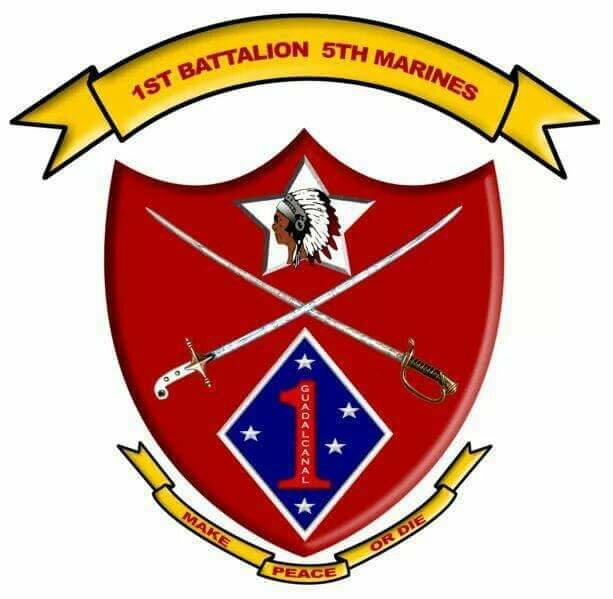
In 1987 while serving with 1st Battalion 5th Marines I reenlisted atop of Mt Suribachi Iwo Jima. There is no more Hallowed ground for Marines than Mt Suribachi. Semper Fidelis Brothers Make Peace or Die
(6)
(0)
6
6
0

While the names of the Marines in the photo are important, at the time the photo was published, and now, it is symbolic of all Marines involved in that war and others. God, Country, and Corps.
(6)
(0)
2
2
0

2
2
0

Here's the problem I have with the 'newly' identified Marines.. Harlon Block was originally misidentified as being another Marine, Sgt. Henry Hansen. Pfc Hayes walked all the way to Texas from Arizona to tell Block's mother he was in the photo. She had been adamant that her son was in the photo.
If Hayes did that, doesn't anyone else think he'd also set the record straight about other the two other men as well? And don't you think they would have said something too?
Something just isn't right with this.
If Hayes did that, doesn't anyone else think he'd also set the record straight about other the two other men as well? And don't you think they would have said something too?
Something just isn't right with this.
(2)
(0)
(0)
(0)
Suspended Profile
You are correct Sir, they did know each other. Harold Schultz is my second cousin and they did speak up. There were numerous investigations but Truman ordered it closed and classified. Rene Gagnon had heard the rumors about the fame surrounding the photo and that Truman wanted these raisers brought stateside for a Bond drive. When Fleet came to him asking who raised the flag he mentioned his friend Doc Bradley, Ira Hayes a few of his friends and himself. Every one of those Marines who were up there witnessed both raisings then those who survived it all, they all spoke up after seeing the newspapers and the names listed. They testified in the investigations but since there was a lot of prejudice against minorities at the time some used it as an excuse to discredit Ira Hayes, but the majority did back up Hayes.
BTW James Bradley's book is BS James Bradley knew his father was only a part of the first raising that is why he did not publish that book until after his father's death. He took advantage of the fame surrounding his father and his role but was not truthful in the aspect of which flag and he certainly was not truthful about the bond drive. When the public found out the truth did you notice that James Bradley did not react as shocked about it as the rest of the world? He acted like oops the gig is up and my book is busted! Until Ira Hayes' death he told the truth to anyone who would listen.
Remember this, there were two officers up there all that day, two flame thrower crews and around 4 or 5 rifle squads who witnessed it all. Officers write after action reports and all of those who participated would have been documented isn't that correct? That information from what I have been told has not been revealed to the public. I met Harold when he came to visit my father after his return from Vietnam in 1969. I was in High School at the time and listened to them talking about the whole affair. I live in Fort Worth Texas and there used to be a lot of Iwo Jima survivors living here who would meet up once a month at this donut shop near my home. I believe it is down to 5 now including Woody Williams when he comes to town for the air show. He has been telling the truth about the flag raising long before it became public knowledge.
How do I know all this? I met a lot of the survivors and listened.
BTW James Bradley's book is BS James Bradley knew his father was only a part of the first raising that is why he did not publish that book until after his father's death. He took advantage of the fame surrounding his father and his role but was not truthful in the aspect of which flag and he certainly was not truthful about the bond drive. When the public found out the truth did you notice that James Bradley did not react as shocked about it as the rest of the world? He acted like oops the gig is up and my book is busted! Until Ira Hayes' death he told the truth to anyone who would listen.
Remember this, there were two officers up there all that day, two flame thrower crews and around 4 or 5 rifle squads who witnessed it all. Officers write after action reports and all of those who participated would have been documented isn't that correct? That information from what I have been told has not been revealed to the public. I met Harold when he came to visit my father after his return from Vietnam in 1969. I was in High School at the time and listened to them talking about the whole affair. I live in Fort Worth Texas and there used to be a lot of Iwo Jima survivors living here who would meet up once a month at this donut shop near my home. I believe it is down to 5 now including Woody Williams when he comes to town for the air show. He has been telling the truth about the flag raising long before it became public knowledge.
How do I know all this? I met a lot of the survivors and listened.
LTC Trent Klug
Rory Schultz Thanks.
Two of my relatives are Iwo survivors. They never spoke of their experiences on the island.
Two of my relatives are Iwo survivors. They never spoke of their experiences on the island.
(0)
(0)
Suspended Profile
Are they still alive?
1
1
0

After my separation from the military I went to work for a company that was privately owned. The owner asked me and another vet to go help a friend pack up to move on company time. So we went the house to find out it was a 90 something old retired marine who fought in the first landing of Iwo Jima. It was an honor to help and listen to what stories he was able share with us that day.
(1)
(0)
1
1
0

Read This Next


 Continue with Facebook
 Continue with Google