

Posted on Mar 23, 2020

Our New Veteran Landscape - The Increasing Women Veteran Population

16.3K
99
12
63
63
0

Women are currently the fastest growing sub-population of today’s greater veteran community. To put it in perspective, while the overall percentage of veterans in the United States is declining, the percentage of women within that number is growing. We need to ensure we are prepared as a community for the changes that will be happening in the next few years.
To really be able to address this in our local, state and federal communities, we need to better understand what this new veteran landscape looks like. Bottom line, women veterans outpace our peers in just about any demographic measured. We outpace both non-veteran women, and often outpace our male veteran peers.
After separating or retiring from the service, women veterans experience trends unlike veterans of other service eras. We tend to earn money than non-veteran women, work in higher levels of management and earn more college degrees. In this respect, our statistics are surprisingly high.
But these high statistics don’t stop there, compared to male veterans and non-veteran women, we also lead in almost every negative demographic.
After service, women veterans overwhelmingly diverge into 2 extremely disparate groups, those that are successful, and those that face challenges unlike any other veteran population in our nation’s history. It’s becoming increasingly important to tell this story of what the women veteran population today really looks like, so we can be better be prepared for the next few decades, and before the issues become harder and harder to address.
The current negative statistics related to women veterans don’t get enough attention. One of the primary reasons is because most of the women veterans we see are the women veterans that are really present today’s society. These are the women veterans that actively participate in their veteran and non-veteran communities. These are the women you see active in Rally Point, for example. They also tend to over index as compared to male veterans for initiatives such as The Mission Continues. Here, we are very visible.
However, there are many other women veterans we don’t see. And this makes it more difficult to understand the challenges we currently face. We have an increased chance of becoming homeless compared to male veterans. I remember first hearing the term “couch surfing”. These are the women that are technically homeless, because they move from friend to friend, but aren’t technically considered part of the homeless population.
When it comes to suicide, the likelihood of women veterans to commit suicide is growing at a rate double that of male veterans. Furthermore, in relation to non-veteran women, we are 5-6 times more likely to commit suicide, and 12 times more likely for women aged 18-29.
Compared to non-veteran women we are almost twice as likely to be divorced, and we are three times more likely to be a victim of intimate partner violence.
Finally, 1 in 5 women report having been a victim of Military Sexual Trauma. Based on the most recent DoD report, this statistic appears to be climbing.
Here’s the most critical point - most women veterans experience often face not one, but multiple negative trends creating an exponential impact. This then exacerbate into an almost stew like situation, making it increasingly harder to address. To be effective at addressing these situations, we need to get in front of the root cause, and focus on prevention rather than response.
Support from the RallyPoint community critical. While we can provide initiatives and programs, it will also take each and every member of our community to start seeing women veterans as both successful and as challenged. By increasing awareness and acknowledging the current state, we will be better prepared for the next steps. Whether it’s reaching out one-on-one in your local community or via RallyPoint, or supporting a larger initiative, we all will play a role in developing the future of the veteran community.
To really be able to address this in our local, state and federal communities, we need to better understand what this new veteran landscape looks like. Bottom line, women veterans outpace our peers in just about any demographic measured. We outpace both non-veteran women, and often outpace our male veteran peers.
After separating or retiring from the service, women veterans experience trends unlike veterans of other service eras. We tend to earn money than non-veteran women, work in higher levels of management and earn more college degrees. In this respect, our statistics are surprisingly high.
But these high statistics don’t stop there, compared to male veterans and non-veteran women, we also lead in almost every negative demographic.
After service, women veterans overwhelmingly diverge into 2 extremely disparate groups, those that are successful, and those that face challenges unlike any other veteran population in our nation’s history. It’s becoming increasingly important to tell this story of what the women veteran population today really looks like, so we can be better be prepared for the next few decades, and before the issues become harder and harder to address.
The current negative statistics related to women veterans don’t get enough attention. One of the primary reasons is because most of the women veterans we see are the women veterans that are really present today’s society. These are the women veterans that actively participate in their veteran and non-veteran communities. These are the women you see active in Rally Point, for example. They also tend to over index as compared to male veterans for initiatives such as The Mission Continues. Here, we are very visible.
However, there are many other women veterans we don’t see. And this makes it more difficult to understand the challenges we currently face. We have an increased chance of becoming homeless compared to male veterans. I remember first hearing the term “couch surfing”. These are the women that are technically homeless, because they move from friend to friend, but aren’t technically considered part of the homeless population.
When it comes to suicide, the likelihood of women veterans to commit suicide is growing at a rate double that of male veterans. Furthermore, in relation to non-veteran women, we are 5-6 times more likely to commit suicide, and 12 times more likely for women aged 18-29.
Compared to non-veteran women we are almost twice as likely to be divorced, and we are three times more likely to be a victim of intimate partner violence.
Finally, 1 in 5 women report having been a victim of Military Sexual Trauma. Based on the most recent DoD report, this statistic appears to be climbing.
Here’s the most critical point - most women veterans experience often face not one, but multiple negative trends creating an exponential impact. This then exacerbate into an almost stew like situation, making it increasingly harder to address. To be effective at addressing these situations, we need to get in front of the root cause, and focus on prevention rather than response.
Support from the RallyPoint community critical. While we can provide initiatives and programs, it will also take each and every member of our community to start seeing women veterans as both successful and as challenged. By increasing awareness and acknowledging the current state, we will be better prepared for the next steps. Whether it’s reaching out one-on-one in your local community or via RallyPoint, or supporting a larger initiative, we all will play a role in developing the future of the veteran community.
 Lean In
 Military Family
 Women in the Military
Posted 6 y ago
Responses: 6
11
11
0

1LT Peter Duston
Glad to read. Proud of my daughter who serves with the Maine Army National Guard as a flight paramedic with three Air Medals.
(1)
(0)

5
5
0

Lt Col (Join to see) Hey, my wife gas been an Air Force Veteran since 1984. Proud that she has put up with me for 36+ years. She is also a veteran of the hardest job in the Air Force Air Force Wife, Mother, Superhero! My daughter is a former USAF Major, and a Veteran who is currently pursuing her PHD in Psychology. Can you tell how proud I am of both of them?
(5)
(0)
3
3
0

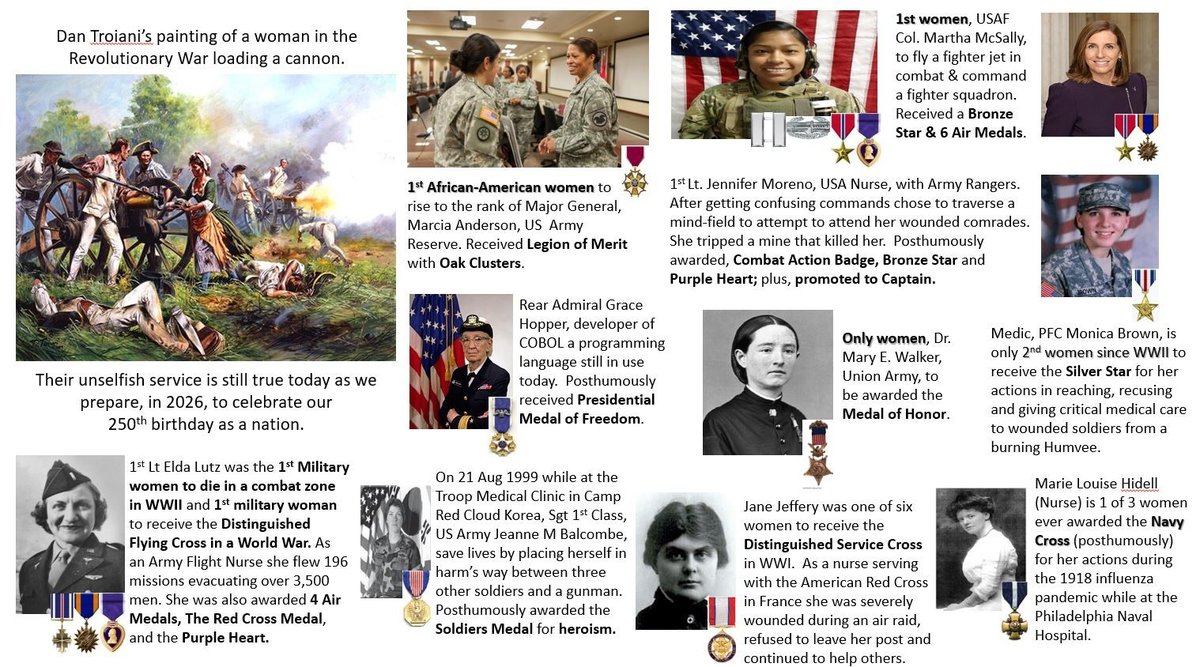
Lt Col (Join to see) You can always expect the US Navy (at least this Navy Chief) to support our women currently serving and that have served (aka warrior all). I always try to learn a little bit each day about the brave souls, different from me of all persuasions, who have and who continue to serve with honor along side their diverse counterparts.
Link: https://www.linkedin.com/pulse/female-veterans-women-courage-honor-spirit-need-nathan-szejniuk?trk=portfolio_article-card_title
That is also why I am proud to be part of the tip of the spear of this new healthcare initiative - https://warriorcentrichealth.com/news/u-s-air-force-calls-up-warrior-centric-health-to-optimize-care-in-military-facilities/.
Link: https://www.linkedin.com/pulse/female-veterans-women-courage-honor-spirit-need-nathan-szejniuk?trk=portfolio_article-card_title
That is also why I am proud to be part of the tip of the spear of this new healthcare initiative - https://warriorcentrichealth.com/news/u-s-air-force-calls-up-warrior-centric-health-to-optimize-care-in-military-facilities/.

Female Veterans - Women of Courage, of Honor, of Spirit and of Need!
We will soon celebrate Women's Health Week (12 - 18 May 2019.) As a man I play an important role in advocating for the health of our women veterans.
(3)
(0)
Lt Col (Join to see)
Thank you so much CPO Nate S.! I love this community and the incredible support.
(1)
(0)
Lt Col (Join to see)

Here's a great one!
https://www.nationalaviation.org/our-enshrinees/cochran-jacqueline/
https://www.nationalaviation.org/our-enshrinees/cochran-jacqueline/
Cochran, Jacqueline - National Aviation Hall of Fame
Jackie Cochran rose from a poverty-stricken childhood to become one of history’s most accomplished female aviators. Beginning work in a cotton mill at the age of six, Cochran labored at a series of jobs before answering her call to the air. She learned to fly in 1932 while working as a cosmetics saleswoman. Her future... Read More
(1)
(0)
0
0
0


Read This Next


 Continue with Facebook
 Continue with Google