


81
81
0
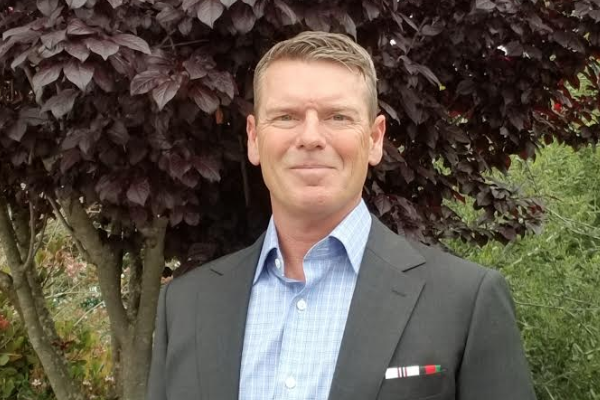
Nine days after 9/11, I enlisted in the California Army National Guard. That’s when my own battle started.
When I saw the planes hit the towers on TV, my priorities just changed. At the time, I was 32 years old, living in Nipoma, California, and working as a landscape contractor. As I mowed lawns during the next couple of days, those planes stayed in the back of my mind. I knew there was a bigger purpose for me.
In 2009, I voluntarily deployed to Afghanistan with the 2nd Battalion of the 121st Infantry Regiment of the Georgia Army National Guard. Two weeks into the 13-month deployment, eight soldiers from my unit were killed. We felt like sitting ducks.
By the time I left the Army in 2011, I was drinking heavily and addicted to pills.
I have heard others say that the hardest part of being in the military is leaving. That was definitely true for me. It was a such a fast-paced tempo, it was hard to slow down once I got off deployment.
I got sober after an arrest led to a stint in a post-traumatic stress (PTS) facility. I focused on my health and entered endurance competitions, such as day-long obstacle course races. I thought I was fine. But, in a motorcycle accident in 2017, I broke multiple bones and a sustained a traumatic brain injury. Issues related to PTS – panic attacks, severe depression – returned.
I remembered a fellow veteran who’d talked glowingly about the SHARE Military Initiative at Shepherd Center in Atlanta, and I knew it was finally time for me to reach out.
I joined the program in the summer of 2018 and was instantly struck by its support and structure. While at SHARE, I focused on changing my habits of over-generalizing and thinking about everything in black and white. SHARE presented me with strategies to improve my vision and memory skills. As the weeks went by, I could see improvements in my memory, pain level, mobility and thinking skills. The dynamic approach of the program kept me moving purposefully and quickly boosted my self-worth. My goals of going back to college and being more helpful at home finally seemed within reach.
Once I got out of my comfort zone, I found hidden talents, new passions and made lifelong friends. I tried things I never would have tried on my own, such as indoor rock climbing, drumming in an all-vet band and swimming with sharks at the Georgia Aquarium. Having other veterans by my side as I confronted my fears provided comfort, while also building my confidence. I enjoyed the opportunity to learn yoga, improve my cooking skills, work on scheduling and time management, play drums and improve my communication skills.
My time at SHARE was truly an epic voyage in self-discovery.
Since I graduated from SHARE in December 2018, I have enrolled in college with plans to get a psychology degree and help veterans as a peer counselor or therapist. My PTS symptoms have lessened, and I feel so much better than I did. I still keep in touch the other vets I met at SHARE and follow up with SHARE staff. I can’t imagine that ever changing. They saw me through all the way, and for that, I will be forever grateful.
To learn more about the SHARE program, visit here: https://rly.pt/SHARE
When I saw the planes hit the towers on TV, my priorities just changed. At the time, I was 32 years old, living in Nipoma, California, and working as a landscape contractor. As I mowed lawns during the next couple of days, those planes stayed in the back of my mind. I knew there was a bigger purpose for me.
In 2009, I voluntarily deployed to Afghanistan with the 2nd Battalion of the 121st Infantry Regiment of the Georgia Army National Guard. Two weeks into the 13-month deployment, eight soldiers from my unit were killed. We felt like sitting ducks.
By the time I left the Army in 2011, I was drinking heavily and addicted to pills.
I have heard others say that the hardest part of being in the military is leaving. That was definitely true for me. It was a such a fast-paced tempo, it was hard to slow down once I got off deployment.
I got sober after an arrest led to a stint in a post-traumatic stress (PTS) facility. I focused on my health and entered endurance competitions, such as day-long obstacle course races. I thought I was fine. But, in a motorcycle accident in 2017, I broke multiple bones and a sustained a traumatic brain injury. Issues related to PTS – panic attacks, severe depression – returned.
I remembered a fellow veteran who’d talked glowingly about the SHARE Military Initiative at Shepherd Center in Atlanta, and I knew it was finally time for me to reach out.
I joined the program in the summer of 2018 and was instantly struck by its support and structure. While at SHARE, I focused on changing my habits of over-generalizing and thinking about everything in black and white. SHARE presented me with strategies to improve my vision and memory skills. As the weeks went by, I could see improvements in my memory, pain level, mobility and thinking skills. The dynamic approach of the program kept me moving purposefully and quickly boosted my self-worth. My goals of going back to college and being more helpful at home finally seemed within reach.
Once I got out of my comfort zone, I found hidden talents, new passions and made lifelong friends. I tried things I never would have tried on my own, such as indoor rock climbing, drumming in an all-vet band and swimming with sharks at the Georgia Aquarium. Having other veterans by my side as I confronted my fears provided comfort, while also building my confidence. I enjoyed the opportunity to learn yoga, improve my cooking skills, work on scheduling and time management, play drums and improve my communication skills.
My time at SHARE was truly an epic voyage in self-discovery.
Since I graduated from SHARE in December 2018, I have enrolled in college with plans to get a psychology degree and help veterans as a peer counselor or therapist. My PTS symptoms have lessened, and I feel so much better than I did. I still keep in touch the other vets I met at SHARE and follow up with SHARE staff. I can’t imagine that ever changing. They saw me through all the way, and for that, I will be forever grateful.
To learn more about the SHARE program, visit here: https://rly.pt/SHARE
Posted in these groups:  PTSD
PTSD Shepherd Center
 Mental Health
 Operation Enduring Freedom (OEF) - Afghanistan
 TBI
TBI
PTSD Shepherd Center Mental Health Operation Enduring Freedom (OEF) - Afghanistan TBI
Edited >1 y ago
Posted >1 y ago
Responses: 27

0
0
0

0
0
0
I have been working on a sailing inclusion for the Salton Sea for ten years. And still no money from the federal or state side. I get pushed away from my three minutes at http://saltonseaauthority.org meeting because I want to do this veteran project. A Woman then filibuster my time as she said veterans do not matter. Unfortunately, After doing 27 years military and fifty per cent disability from the service; I still get treated intros way. I guess I must be reminded on how the military ruined my life and non veterans are making more money
Total cost for the four sailboats-one trailer-portable dock-C crane and electric boat is $100,000 which was given to the wall instead of the 150,000 veterans forced to live around the Salton Sea.
Total cost for the four sailboats-one trailer-portable dock-C crane and electric boat is $100,000 which was given to the wall instead of the 150,000 veterans forced to live around the Salton Sea.

Approval of Proposition 68 by California voters on June 5th grants $200 Million toward projects that will accelerate progress at the Salton Sea. For more information click on the link below:
(0)
(0)
0
0
0

I served during the cold war in West Germany where we spent 9 months of the year in the field in combat-ready status it was the sign of the times between the United States and Russia long before the wall came down there was a real threat of war. however, our job was to slow down any attackers so a proper response could take shape. my years in uniform was a personal achievement that I always talk about also on togetherweserved web site.
(0)
(0)
0
0
0

I understand T.B.I. brain injury is openly discussed, now.
It is the mild, moderate and severe neurological impairments is the disability for me, that and general spine sprain/strain, spinal process fx’s, and C-4 C-5 contusion of the spinal cord.
The anaphylactic shock heart failure and stage II kidney failure of allergic reaction to a procedure for alcoholism I didn’t need didn’t help.
I never did alcohol or drugs.
It was incompetent health care, willfully disregarding what I was admitted for, or deliberate contempt for enlisted personnel.
I have also had efforts to write it all off and destroy any credibility I would have by writing me up T-2 psychiatric, that led to more abuse.
I was never mentally ill, all trace or trait ruled out during my Social Security Administration SSDI application.
Nevertheless, that record only caught up after more harm was done.
It is my experience the military and the VA prefer a mental disorder because there is no accountability, or is about avoiding accountability for incompetence for the care for actual injuries and all the rehab that you can achieve.
It seems only a “poster boy” gets competent care, by bringing in private sector specialists.
Fortunately, the Director of the Western Regional Center, San Jose, CA Spine Injury Project and Head Injury Project made me his no-fee private patient he used for teaching purposes. He was teaching how to do a rating report when he died.
He was the expert.
He has a national prize in his name now.
Fortunately for me, the Social Security Administration accepted the draft rating report and his signed letter stating I am disabled.
The Social Security Administration determined my date of disability was 31 January, 1975 while on active military service.
The Letterman Army Hospital MD Orthopedist signed me out to a Surgeon General of the Army private sector Orthopedist.
I never returned to duty.
I like that you got the help you needed.
It hits me hard you say you had traumatic head injury, as-if it was a only trigger for your problems, not the actual disability.
I put this comment here, because I feel maybe someone will listen.
43-years, no benefits.
No denial, the regional representative said she went over to the Oakland office to see about all the applications with documentation she had brought over.
..pointed to the shredder, she returned to the, then, new multimillion dollar San Francisco Downtown Center to tell us that she quit.
It isn’t the only time.
This is more typical, that getting the help you need.
I have 8-cartons copies of medical records, a copy of the bound two volume set the Social Security Administration used, and I have copies of the most succinct documentation gathered together in one place for ease of review.
I cannot speak of the circumstances, warned by an Intelligence Officer assigned.
I was hoping I could tell SECDEF Mattis, because of his broad portfolio.
Now, it is a civilian.
It is the mild, moderate and severe neurological impairments is the disability for me, that and general spine sprain/strain, spinal process fx’s, and C-4 C-5 contusion of the spinal cord.
The anaphylactic shock heart failure and stage II kidney failure of allergic reaction to a procedure for alcoholism I didn’t need didn’t help.
I never did alcohol or drugs.
It was incompetent health care, willfully disregarding what I was admitted for, or deliberate contempt for enlisted personnel.
I have also had efforts to write it all off and destroy any credibility I would have by writing me up T-2 psychiatric, that led to more abuse.
I was never mentally ill, all trace or trait ruled out during my Social Security Administration SSDI application.
Nevertheless, that record only caught up after more harm was done.
It is my experience the military and the VA prefer a mental disorder because there is no accountability, or is about avoiding accountability for incompetence for the care for actual injuries and all the rehab that you can achieve.
It seems only a “poster boy” gets competent care, by bringing in private sector specialists.
Fortunately, the Director of the Western Regional Center, San Jose, CA Spine Injury Project and Head Injury Project made me his no-fee private patient he used for teaching purposes. He was teaching how to do a rating report when he died.
He was the expert.
He has a national prize in his name now.
Fortunately for me, the Social Security Administration accepted the draft rating report and his signed letter stating I am disabled.
The Social Security Administration determined my date of disability was 31 January, 1975 while on active military service.
The Letterman Army Hospital MD Orthopedist signed me out to a Surgeon General of the Army private sector Orthopedist.
I never returned to duty.
I like that you got the help you needed.
It hits me hard you say you had traumatic head injury, as-if it was a only trigger for your problems, not the actual disability.
I put this comment here, because I feel maybe someone will listen.
43-years, no benefits.
No denial, the regional representative said she went over to the Oakland office to see about all the applications with documentation she had brought over.
..pointed to the shredder, she returned to the, then, new multimillion dollar San Francisco Downtown Center to tell us that she quit.
It isn’t the only time.
This is more typical, that getting the help you need.
I have 8-cartons copies of medical records, a copy of the bound two volume set the Social Security Administration used, and I have copies of the most succinct documentation gathered together in one place for ease of review.
I cannot speak of the circumstances, warned by an Intelligence Officer assigned.
I was hoping I could tell SECDEF Mattis, because of his broad portfolio.
Now, it is a civilian.
(0)
(0)
0
0
0
My question is: Does the VA have any resources using TMS? Transcrainial Magnetic Stimulation? I've heard it can help with PTSD? Did the VA offer that type of therapy to you? Glad you made it back from where you were.
(0)
(0)
SGT Seth Napel
The VA has never offered any services like that to me
I think I might ask about it next time I go. This is the 1st I've heard of this treatment.
I think I might ask about it next time I go. This is the 1st I've heard of this treatment.
(0)
(0)
SCPO Todd Sheckley
My VA in Columbia MO just got TMS not too long ago. I have not tried it (mainly b/c my VA hospital is 189 miles away), but hear very good things about it.
(0)
(0)
0
0
0
0
0
0
Read This Next


 Continue with Facebook
 Continue with Google