

Posted on Jan 26, 2023

What can the DOD do to overcome its recruitment challenges?

137K
435
160
132
132
0
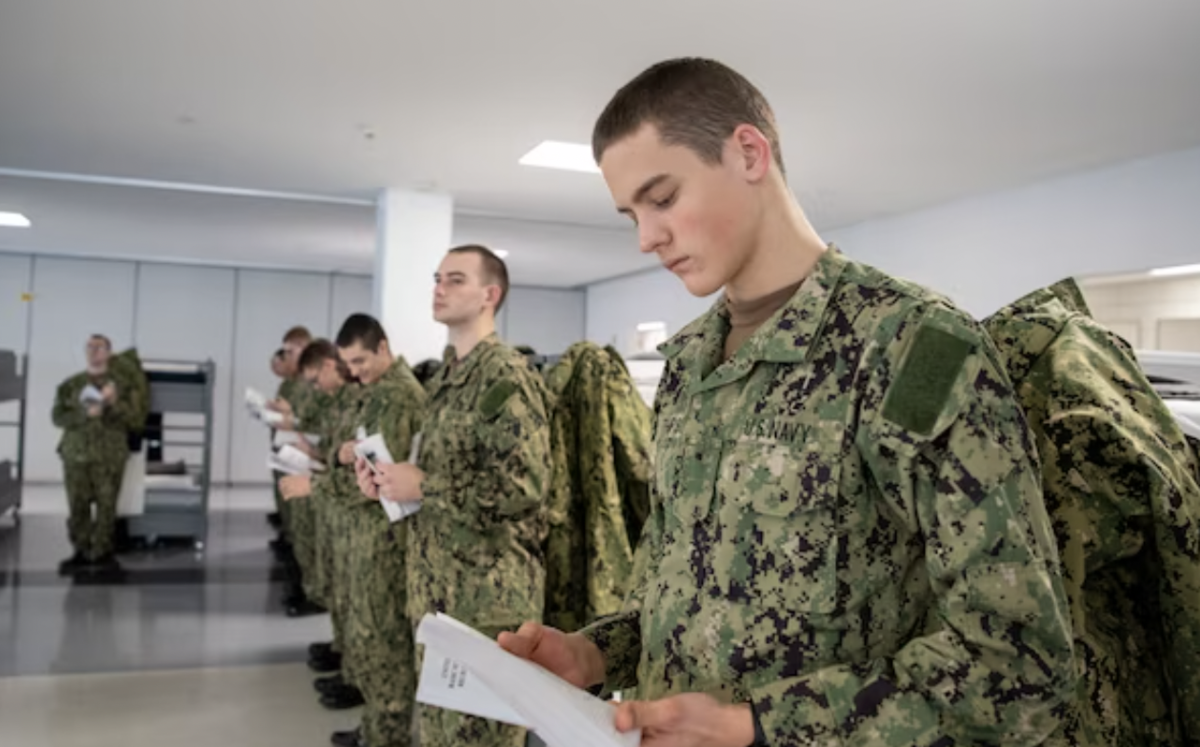
Most agree that the All-Volunteer Force (AVF) is facing historic and possibly unprecedented recruiting challenges. As the AVF turns 50 this July, military and congressional leaders are diagnosing the contributing causes and producing strategies to address them.
Sen. Kirsten Gillibrand, Democrat of New York, summarized the problem last fall at an oversight hearing she chaired as head of the Senate Armed Services Subcommittee on Personnel.
“By the end of 2022, the active U.S. military will be at its smallest size since the creation of the All-Volunteer Force for which we mark the 50th anniversary next year,” Gillibrand said in opening the Sept. 21 hearing, where service branch officials testified. “All four military services here today have signaled significant concerns about the strength of their recruiting operations and their prospects for success in 2023.”
Why is this the case? Department of Defense (DOD) officials and lawmakers debated some reasons and solutions at December’s Reagan National Defense Forum. The Washington, D.C., event featured comments from:
Gen. David Berger, commandant of the U.S. Marine Corps.
Gilbert Cisneros, under secretary of defense for Personnel and Readiness.
Sen. Tammy Duckworth, Democrat of Illinois and an Army reserves Veteran.
Rep. Mike Gallagher, Republican of Wisconsin and a Marine Corps Veteran.
Youth less interested in military service
Observers cite the lower interest among young people to serve in the military as one reason for the recruiting deficiencies.
The fifth annual National Defense Survey, which the Ronald Reagan Presidential Foundation and Institute released in late December 2022, found that just 13% of 18- to 29-year-olds are “highly willing” to join the military, 25% are somewhat willing, 20% are not very willing, and about 26% are not willing at all. These and other results are based on interviews of 2,500 Americans conducted Nov. 9-17, 2022.
Trust in the military down
Fewer Americans say they have faith in the military, the Reagan institute survey also found. Just 48% of surveyed respondents said they had a great deal of trust in the military, compared with 70% who said that four years ago. Majorities said they had less confidence in the performance and competence of commanders-in-chief and the civilian military leadership. Other pollsters such as Gallup have found similar erosions in trust in the military.
The military needs to be creative in addressing these and other structural issues driving shortfalls in recruiting, Berger said at the forum and in an article for the U.S. Naval Institute published in November. This includes a long-term decline in the pool of service-eligible Americans who meet physical fitness and health requirements and who can pass the ASVAB, the Armed Services Vocational Aptitude Battery test.
All of this is occurring in a society that’s more distant from the military, with fewer Americans having familial or community connections to military culture and careers, Berger wrote.
Negative news about an institution that Americans are less familiar with only saps confidence further, he said.
“If the only thing you know about (the military) is what you see on the news, it may not be good,” Berger said at the forum. In his article, he said other factors that have harmed public trust include the character of withdrawal from Afghanistan, military scandals, reports of military sexual assault, and a sense that military skills aren’t relevant to private-sector success.
Some of these perceptions can be shifted, especially now that recruiters can go back to meeting one-on-one with young people at schools, on campuses and in offices. But the old recruiter’s playbook won’t work, Berger and other panelists argued.
Service appeals that resonate with a new generation
Reversing trends in youths’ willingness to serve requires new recruiting strategies and messages that appeal to Generation Z, a cohort that Pew Research Center defines as those born between 1997-2012.
“Simply increasing the advertising budget to amplify existing narratives is unlikely to be effective in the future,” Berger wrote. “The services need new narratives and new vehicles for communicating those narratives.”
One way the military can break through to this generation is to showcase the benefits of military service. “We talk about service and what it does for the country,” Berger said, but less about “what it does for the individual.”
The military can do a better job communicating how even a few years of service can build skills that last a lifetime, he said. And it can demonstrate that service increases a person’s currency in the civilian job market.
Employers want to hire former service members, Berger said, because they know “they’re better citizens, they’re better employees.”
Duckworth said it’s also important to reach the parents of Gen Z, highlighting how service is a viable career path: Their kids “gain lots of experiences” in the military and “they’re going to be ahead of their peers when they come out in terms of a job.”
“That,” she said, is something “I don’t think we’re doing a good job of messaging to the American people.”
The senator noted that most people can understand how an Air Force pilot or medic has a path to a post-military career in aviation or health care. But the public may be less aware of other stepping stones that military service can provide.
Cisneros echoed this, arguing that potential recruits should know that the military can train them for other high-demand and well-paying jobs, including in trades such as in HVAC.
Make the AVF more permeable
The military needs to change how it operates to encourage more people to serve. Berger said it should be “easier to move between active duty and reserve in the civilian sector.”
“We have to make it a much more permeable All-Volunteer Force than we have (had) in the past,” he said. “People should be able to step out for two or three or four years, come back in.”
This would familiarize more people with the military, furthering heightening interest in service, he said.
Other ideas to boost recruiting
Other ideas for improving recruitment mentioned by panelists and in the article included:
Allowing the military to tap private-sector talent without requiring a full-fledged service commitment.
Replicating an Army “pre-boot-camp”-type pilot program that’s preparing young people physically and academically for military service.
Creating more opportunities for women and people of diverse backgrounds to succeed in the military.
Taking better care of service personnel and families by addressing food insecurity and other military quality-of-life issues.
Reforming leave policies to make it easier for women to serve.
Making sure the lower ranks can bring forth policy-change ideas.
Addressing generational gaps in recruitment planning so that strategies keep pace with social change and are relevant to the next generation of service members.
Learn more
Watch the forum discussion: https://www.reaganfoundation.org/reagan-institute/programs/reagan-national-defense-forum/rndf-2022
Read Berger’s piece: https://www.usni.org/magazines/proceedings/2022/november/recruiting-requires-bold-changes
Watch the Senate hearing: https://www.armed-services.senate.gov/hearings/to-receive-testimony-on-the-status-of-military-recruiting-and-retention-efforts-across-the-department-of-defense
Sen. Kirsten Gillibrand, Democrat of New York, summarized the problem last fall at an oversight hearing she chaired as head of the Senate Armed Services Subcommittee on Personnel.
“By the end of 2022, the active U.S. military will be at its smallest size since the creation of the All-Volunteer Force for which we mark the 50th anniversary next year,” Gillibrand said in opening the Sept. 21 hearing, where service branch officials testified. “All four military services here today have signaled significant concerns about the strength of their recruiting operations and their prospects for success in 2023.”
Why is this the case? Department of Defense (DOD) officials and lawmakers debated some reasons and solutions at December’s Reagan National Defense Forum. The Washington, D.C., event featured comments from:
Gen. David Berger, commandant of the U.S. Marine Corps.
Gilbert Cisneros, under secretary of defense for Personnel and Readiness.
Sen. Tammy Duckworth, Democrat of Illinois and an Army reserves Veteran.
Rep. Mike Gallagher, Republican of Wisconsin and a Marine Corps Veteran.
Youth less interested in military service
Observers cite the lower interest among young people to serve in the military as one reason for the recruiting deficiencies.
The fifth annual National Defense Survey, which the Ronald Reagan Presidential Foundation and Institute released in late December 2022, found that just 13% of 18- to 29-year-olds are “highly willing” to join the military, 25% are somewhat willing, 20% are not very willing, and about 26% are not willing at all. These and other results are based on interviews of 2,500 Americans conducted Nov. 9-17, 2022.
Trust in the military down
Fewer Americans say they have faith in the military, the Reagan institute survey also found. Just 48% of surveyed respondents said they had a great deal of trust in the military, compared with 70% who said that four years ago. Majorities said they had less confidence in the performance and competence of commanders-in-chief and the civilian military leadership. Other pollsters such as Gallup have found similar erosions in trust in the military.
The military needs to be creative in addressing these and other structural issues driving shortfalls in recruiting, Berger said at the forum and in an article for the U.S. Naval Institute published in November. This includes a long-term decline in the pool of service-eligible Americans who meet physical fitness and health requirements and who can pass the ASVAB, the Armed Services Vocational Aptitude Battery test.
All of this is occurring in a society that’s more distant from the military, with fewer Americans having familial or community connections to military culture and careers, Berger wrote.
Negative news about an institution that Americans are less familiar with only saps confidence further, he said.
“If the only thing you know about (the military) is what you see on the news, it may not be good,” Berger said at the forum. In his article, he said other factors that have harmed public trust include the character of withdrawal from Afghanistan, military scandals, reports of military sexual assault, and a sense that military skills aren’t relevant to private-sector success.
Some of these perceptions can be shifted, especially now that recruiters can go back to meeting one-on-one with young people at schools, on campuses and in offices. But the old recruiter’s playbook won’t work, Berger and other panelists argued.
Service appeals that resonate with a new generation
Reversing trends in youths’ willingness to serve requires new recruiting strategies and messages that appeal to Generation Z, a cohort that Pew Research Center defines as those born between 1997-2012.
“Simply increasing the advertising budget to amplify existing narratives is unlikely to be effective in the future,” Berger wrote. “The services need new narratives and new vehicles for communicating those narratives.”
One way the military can break through to this generation is to showcase the benefits of military service. “We talk about service and what it does for the country,” Berger said, but less about “what it does for the individual.”
The military can do a better job communicating how even a few years of service can build skills that last a lifetime, he said. And it can demonstrate that service increases a person’s currency in the civilian job market.
Employers want to hire former service members, Berger said, because they know “they’re better citizens, they’re better employees.”
Duckworth said it’s also important to reach the parents of Gen Z, highlighting how service is a viable career path: Their kids “gain lots of experiences” in the military and “they’re going to be ahead of their peers when they come out in terms of a job.”
“That,” she said, is something “I don’t think we’re doing a good job of messaging to the American people.”
The senator noted that most people can understand how an Air Force pilot or medic has a path to a post-military career in aviation or health care. But the public may be less aware of other stepping stones that military service can provide.
Cisneros echoed this, arguing that potential recruits should know that the military can train them for other high-demand and well-paying jobs, including in trades such as in HVAC.
Make the AVF more permeable
The military needs to change how it operates to encourage more people to serve. Berger said it should be “easier to move between active duty and reserve in the civilian sector.”
“We have to make it a much more permeable All-Volunteer Force than we have (had) in the past,” he said. “People should be able to step out for two or three or four years, come back in.”
This would familiarize more people with the military, furthering heightening interest in service, he said.
Other ideas to boost recruiting
Other ideas for improving recruitment mentioned by panelists and in the article included:
Allowing the military to tap private-sector talent without requiring a full-fledged service commitment.
Replicating an Army “pre-boot-camp”-type pilot program that’s preparing young people physically and academically for military service.
Creating more opportunities for women and people of diverse backgrounds to succeed in the military.
Taking better care of service personnel and families by addressing food insecurity and other military quality-of-life issues.
Reforming leave policies to make it easier for women to serve.
Making sure the lower ranks can bring forth policy-change ideas.
Addressing generational gaps in recruitment planning so that strategies keep pace with social change and are relevant to the next generation of service members.
Learn more
Watch the forum discussion: https://www.reaganfoundation.org/reagan-institute/programs/reagan-national-defense-forum/rndf-2022
Read Berger’s piece: https://www.usni.org/magazines/proceedings/2022/november/recruiting-requires-bold-changes
Watch the Senate hearing: https://www.armed-services.senate.gov/hearings/to-receive-testimony-on-the-status-of-military-recruiting-and-retention-efforts-across-the-department-of-defense
 DoD
DoD Recruit
 Recruiting
 Training
 United States Senate
Posted 3 y ago
Responses: 66
0
0
0

The Pentagon leadership is, in many cases, as dysfunctional and representative of American values as the university administrators in our country. The obvious, though unstated part is any similarly between the university system and our Constitution is purely a coincidence.
(0)
(0)
0
0
0

Not impressed at all with the recommendations to increase recruitment cited in this article!
Stepping in and out of service ( active to reserve) makes to sense !
Stepping in and out of service ( active to reserve) makes to sense !
(0)
(0)
0
0
0

First the recruiters need to stop promising jobs to the young men and women who are in that age group that they can’t fulfill. If it wasn’t for my service in the United States Navy my daughter would have fallen victim to this practice. I brought it up in one of the meetings with the recruiter and told him that he can’t guarantee the job my daughter wanted even though he tried to tell her it would be guaranteed. Once it was brought to his attention that I had prior experience and knowledge of this fallacy he then recanted his claim to the guarantee . Further more the men and women that we put in office need to get their heads out of their ass’s. How can you expect our youth to come together on a national security issue when the politicians are broadcasting their skirmishes for the whole world to see. Including future recruits. There should never be a civilian in charge of the greatest military on the face of this earth. How can they be even remotely capable of making military decisions without having the ability to know what they are ordering the troops to do. Everything looks good in theory, but when it comes down to the practicality they have no clue
(0)
(0)
0
0
0

Fire the current woke leadership and hold them accountable (starting at the top).
(0)
(0)
Suspended Profile
Tough to recruit new people when you fail to take care of the old people, who came before. Dealing with the Department of Veterans Affairs is extremely difficult even if you know what you're doing.
My LCSW (Licensed Clinical Social Worker) gave me a compliment "You know how to get things done, instead of just complaining about it." He was impressed that whenever I seemed to have an issue I was also able to get the VA to play ball.
But the problem is this takes time, and cutting through the proverbial red tape. And while it can be done - there has got to be a better way moving forward.
Looking ahead at the AVF (All Volunteer Force) that comprises military service in the USA it's tough to get people to sign on the dotted line when they can look at our withdrawal clusterfuck where our soldiers died - who wants to be a part of that?!
You guys left our military hardware for the enemy.
You have politicians who in most cases never served, wanting protection but are unwilling to have their own family members in on the fight. Instead they want you and yours to take care of and protect them.
And they want to tell you how to do your job - without ever having worn the uniform.
Politicians have entitlement, holding "oversight hearings" without insight!
My LCSW (Licensed Clinical Social Worker) gave me a compliment "You know how to get things done, instead of just complaining about it." He was impressed that whenever I seemed to have an issue I was also able to get the VA to play ball.
But the problem is this takes time, and cutting through the proverbial red tape. And while it can be done - there has got to be a better way moving forward.
Looking ahead at the AVF (All Volunteer Force) that comprises military service in the USA it's tough to get people to sign on the dotted line when they can look at our withdrawal clusterfuck where our soldiers died - who wants to be a part of that?!
You guys left our military hardware for the enemy.
You have politicians who in most cases never served, wanting protection but are unwilling to have their own family members in on the fight. Instead they want you and yours to take care of and protect them.
And they want to tell you how to do your job - without ever having worn the uniform.
Politicians have entitlement, holding "oversight hearings" without insight!
Suspended Profile
Veterans are speaking out, when you get out you will have to beg for the benefits that where promised!
Suspended Profile
Well about 50% kids graduating are over weight by military standards. Another big problem is they have arrest records already. Some are making more money than the military if they take a manufacture job straight out of high school. So if they can conquer those three things they might have a chance!
0
0
0

T he way the military treats veterans and activitie duty personal is so unreal..most of the leadership have no ideal what's going on and try to lead our teams into battles..
(0)
(0)
0
0
0

The main reason the Guard has manning problems is that the army treats them worse than active duty units. They deploy almost as much as an active unit but only have the benefits and pay when called up. This cuts the operating cost of a unit by almost half. The troops have problems getting and keeping decent jobs because they keep getting called up. The guys that don't mind deploying stay active or go reserve...
The guard still implies that they only go into combat in case of actual war or armed attack of our country, not dumb as "police" actions.
The guard still implies that they only go into combat in case of actual war or armed attack of our country, not dumb as "police" actions.
(0)
(0)
0
0
0

Read This Next


 Continue with Facebook
 Continue with Google