
Posted on Dec 27, 2024

'Like nothing we've seen before': James Webb telescope spies a mysterious asteroid-comet hybrid...

2.42K
22
1
18
18
0
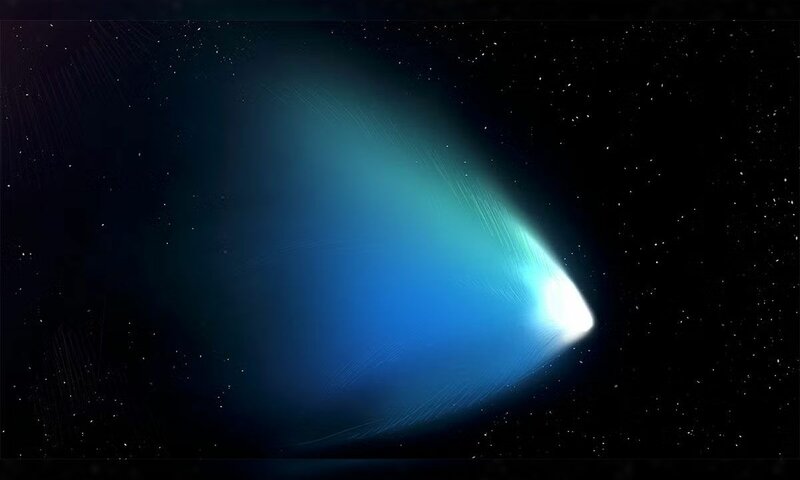
New James Webb Space Telescope (JWST) findings are giving scientists a fresh look at an "oddball" space rock that has features similar to both comets and asteroids.
Astronomers observing the hybrid, known as (2060) Chiron, detected frozen carbon dioxide and carbon monoxide in its icy nucleus, as well as carbon dioxide and methane in the surrounding gas cloud. The findings could help scientists better understand comets and centaurs — so named because they have properties of both asteroids and comets — and could offer a peek at the conditions in the early solar system.
Discovered in 1977, Chiron orbits the sun about once every 50 years, traveling in an oblong loop in the region between Jupiter and Neptune. In the new study, published Dec. 18 in the journal Astronomy and Astrophysics, researchers described their observation of the centaur on July 12, 2023 at a range of more than 18 times the distance from Earth to the sun.
Astronomers observing the hybrid, known as (2060) Chiron, detected frozen carbon dioxide and carbon monoxide in its icy nucleus, as well as carbon dioxide and methane in the surrounding gas cloud. The findings could help scientists better understand comets and centaurs — so named because they have properties of both asteroids and comets — and could offer a peek at the conditions in the early solar system.
Discovered in 1977, Chiron orbits the sun about once every 50 years, traveling in an oblong loop in the region between Jupiter and Neptune. In the new study, published Dec. 18 in the journal Astronomy and Astrophysics, researchers described their observation of the centaur on July 12, 2023 at a range of more than 18 times the distance from Earth to the sun.
'Like nothing we've seen before': James Webb telescope spies a mysterious asteroid-comet hybrid...
Posted from livescience.com Science
 Space
Space Astronomy
 Physics
Posted 1 y ago

Read This Next


 Continue with Facebook
 Continue with Google