
Posted on Jan 14, 2025

What will viruses do next? AI is helping scientists predict their evolution

1.36K
16
3
12
12
0
https://www.nature.com/articles/d4 [login to see] 5-3?utm_campaign=website&utm_medium=email&utm_source=nautilus-newsletter
The holy grail of pandemic preparedness is being able to predict how a virus will evolve just by looking at its genetic sequence. Those days are still a way off, but a growing number of research groups are using artificial intelligence (AI) to predict the evolution of SARS-CoV-2, influenza and other viruses.
Viruses — particularly RNA viruses such as SARS-CoV-2 — constantly evolve by accruing new mutations. Some of these changes are advantageous to the virus, allowing variants to evade host immunity and spread rapidly. By predicting how a virus will evolve, researchers could, in theory, design vaccines and antiviral treatments ahead of time.
So far, AI tools can predict which single mutations in a virus will be most successful, and which variants will ‘win’ out in the short term. But they are still far from being able to forecast combinations of mutations or variants that will occur a long time in the future.
It’s “a really exciting and very useful area for research”, says Brian Hie, a computational biologist at Stanford University in California, who was among the first researchers to apply large language models to the study of viral mutations1. But predicting viral evolution is still extremely challenging, he says.
The holy grail of pandemic preparedness is being able to predict how a virus will evolve just by looking at its genetic sequence. Those days are still a way off, but a growing number of research groups are using artificial intelligence (AI) to predict the evolution of SARS-CoV-2, influenza and other viruses.
Viruses — particularly RNA viruses such as SARS-CoV-2 — constantly evolve by accruing new mutations. Some of these changes are advantageous to the virus, allowing variants to evade host immunity and spread rapidly. By predicting how a virus will evolve, researchers could, in theory, design vaccines and antiviral treatments ahead of time.
So far, AI tools can predict which single mutations in a virus will be most successful, and which variants will ‘win’ out in the short term. But they are still far from being able to forecast combinations of mutations or variants that will occur a long time in the future.
It’s “a really exciting and very useful area for research”, says Brian Hie, a computational biologist at Stanford University in California, who was among the first researchers to apply large language models to the study of viral mutations1. But predicting viral evolution is still extremely challenging, he says.
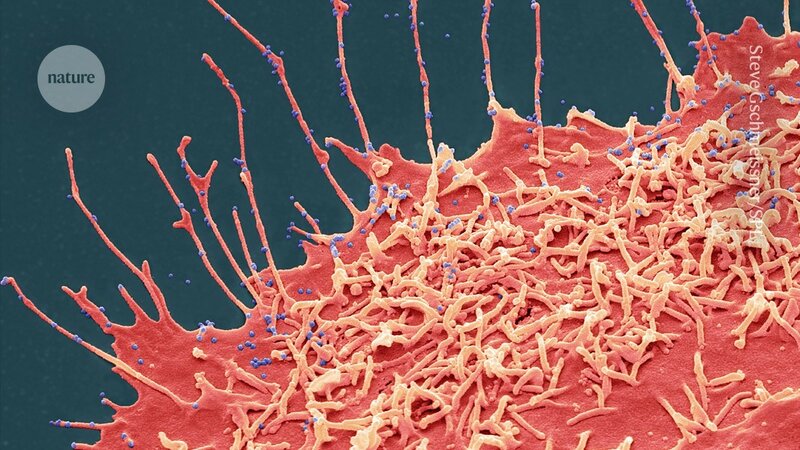
What will viruses do next? AI is helping scientists predict their evolution
Posted from nature.com Science
 Health
 Wellness
 Artificial Intelligence (AI)
Posted 1 y ago


Read This Next


 Continue with Facebook
 Continue with Google