
Posted on Apr 3, 2025

Stock market plunges at open on Trump's tariffs. Dow sheds 1,100 points; S&P 500 down 200

512
8
8
6
6
0
Time to buy! This stock market plunge isn't based on any weakness in the American economy. It is based rather in the weakness of Americans falling victim to the cries of Chicken Little. In truth, the "sky was falling" for a long time now. America was under attack from friends and adversaries alike, all assailing American exports with tariffs. It was a lot like the "Cold War" until President Reagan led US to fight back and the Soviet Union fell. Now, President Trump has called upon us to fight back and today's Americans aren't cut from the same cloth as those whom President Reagan led. Well, many of them. Hopefully, the majority will take courage and follow President Trump's lead. We must fight back or the end will be inevitable.
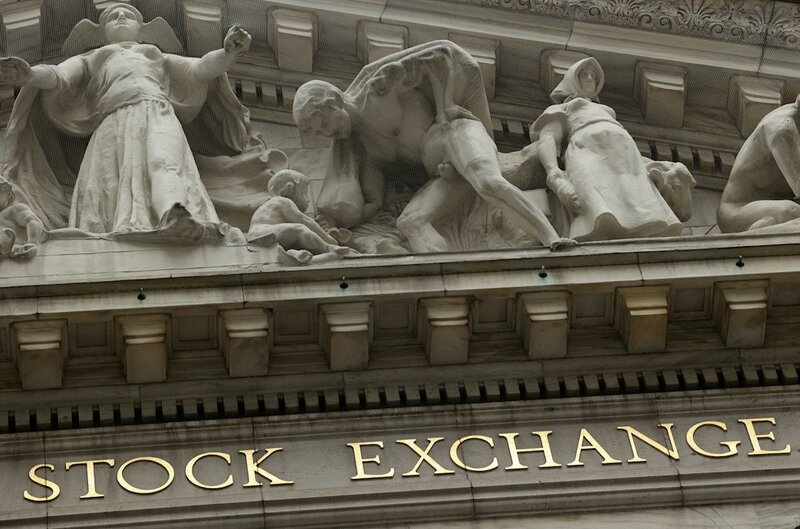
Stock market plunges at open on Trump's tariffs. Dow sheds 1,100 points; S&P 500 down 200
Posted from finance.yahoo.comPosted in these groups:  Political Opinions
Political Opinions
Posted 10 mo ago
Responses: 3
2
2
0


CPT Jack Durish
Of course I've heard of it. Actually, it is an extension of consumer behavior. Once upon a time purchasing decisions were categorized as impulsive (emotional) and considered (rational). In the 1950s, consumer behaviorists realized that no purchase is either wholly impulsive or considered, but rather fell on a scale blending both factors on a sliding scale. Today's losses were suffered only by those who were foolish enough (driven by fear) to sell low (while others snatched up the bargains). Keep in mind that fortunes were made during the Great Depression. Those with liquid assets purchased great bargains for pennies on the hundreds and thousands of dollars. As I mentioned in another response, not one stock lost value today. The organizational assets behind them remained strong. It was only fear that drove some to sell. I, for example, didn't lose a cent even though the market price of my stocks dropped significantly. Indeed, I was given great hope for future profits when I learned that one of my principal holdings, Blackstone, has expressed interest in purchasing Tick Tock. Even if their bid fails, investors (who make more considered purchases and who have never before heard of or considered Blackstone) have likely/or should have put it on their watchlists. Remember the two great rules of investing: (1) Buy low/Sell high and (2) If you can't stand the heat, stay out of the kitchen.
(0)
(0)
LTC Kevin B.
CPT Jack Durish - Actually, it's not an extension of consumer behavior (although individual investors can be considered consumers, although they're not actually consuming financial assets). It's an extension of basic economic and psychological theories applied to financial decision making (investors, corporate leaders, financial intermediaries, etc.). Behavioral finance relaxes the assumption that people are rational utility maximizers.
And, tons of stocks lost value today. If you didn't sell your stocks, you didn't realize those losses, but you certainly lost wealth. You can call it a paper loss if you want, but it's still a loss. Just as when your house (yet another asset) declines in value, you lose wealth. That impacts your ability to borrow against the equity in your house because banks will only loan you money based on the equity in your house (which is based off its market value). It also impacts the money you could get from a reverse mortgage (which is also based off its market value). Calling something a paper loss (or saying you "didn't lose a cent") doesn't make those losses irrelevant. Increases and decreases in wealth are real, and they are related to (but distinct from) profits and losses.
Lots of Americans lost wealth today, and some of them realized those losses when they sold into a depressed market. Political spin doesn't change that.
And, tons of stocks lost value today. If you didn't sell your stocks, you didn't realize those losses, but you certainly lost wealth. You can call it a paper loss if you want, but it's still a loss. Just as when your house (yet another asset) declines in value, you lose wealth. That impacts your ability to borrow against the equity in your house because banks will only loan you money based on the equity in your house (which is based off its market value). It also impacts the money you could get from a reverse mortgage (which is also based off its market value). Calling something a paper loss (or saying you "didn't lose a cent") doesn't make those losses irrelevant. Increases and decreases in wealth are real, and they are related to (but distinct from) profits and losses.
Lots of Americans lost wealth today, and some of them realized those losses when they sold into a depressed market. Political spin doesn't change that.
(0)
(0)
0
0
0

CPT Jack Durish
How much did you lose? I didn't lose a cent because I didn't sell anything today. Who would? The only rule in the game is "Buy Low/Sell High." Not one stock lost value today. The company's they represent are the same as they were yesterday. The only thing that happened is that people were willing to sell low because of fear. Just remember that other rule: "If you can't stand the heat, stay out of the kitchen."
(0)
(0)
SPC Joseph Kopac
CPT Jack Durish Not one stock lost value today ? Trying to make sense out of this response.
(0)
(0)
CPT Jack Durish
SPC Joseph Kopac - Did the companies go bankrupt? Did they lose significant business? Did sales drop? These are what give organizations value and stocks derive their value from that. What fell today was the price people were willing to sell their stocks at. Does that help? If you don't understand, maybe you should put your nest egg somewhere else...
(0)
(0)
Read This Next


 Continue with Facebook
 Continue with Google