
Posted on Apr 17, 2025

An ocean of magma formed early in Earth's history and it may still influence our planet today,...

2.26K
21
3
14
14
0
Earth held a deep ocean of magma beneath its surface in its early history, new research finds, potentially explaining odd anomalies seen in the mantle today.
This basal magma ocean has been hotly debated for years. Some geochemical evidence indicates that in the first few hundred million years of the planet's existence, a persistent sea of melt formed at the boundary between Earth's core and its middle layer, the mantle. But models of the planet's formation suggested that when Earth was new and molten, it solidified from the bottom up, making it hard to understand how a deep magma ocean could exist.
The new study, published March 26 in the journal Nature, found that not only could a magma ocean exist, but that its presence was inevitable. No matter the precise location where the molten newborn planet started to crystallize into a solid, a basal ocean still formed, the study revealed.
This basal magma ocean has been hotly debated for years. Some geochemical evidence indicates that in the first few hundred million years of the planet's existence, a persistent sea of melt formed at the boundary between Earth's core and its middle layer, the mantle. But models of the planet's formation suggested that when Earth was new and molten, it solidified from the bottom up, making it hard to understand how a deep magma ocean could exist.
The new study, published March 26 in the journal Nature, found that not only could a magma ocean exist, but that its presence was inevitable. No matter the precise location where the molten newborn planet started to crystallize into a solid, a basal ocean still formed, the study revealed.
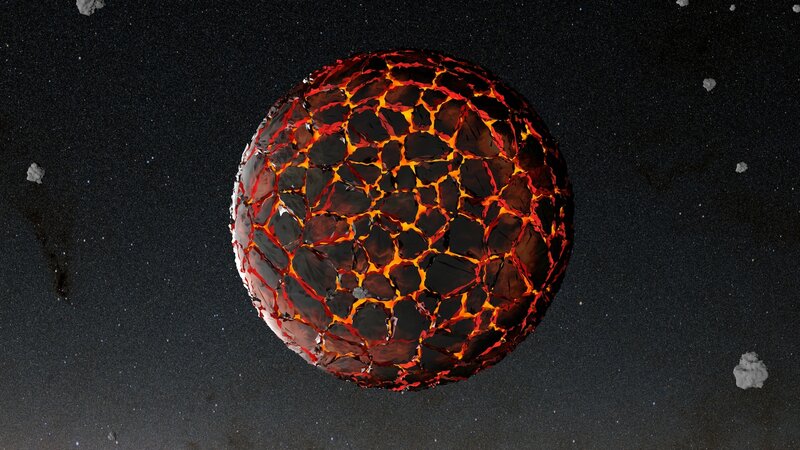
An ocean of magma formed early in Earth's history and it may still influence our planet today,...
Posted from livescience.com Geology
 Science
 Research
Posted 9 mo ago
Responses: 2


Read This Next


 Continue with Facebook
 Continue with Google