
Posted on Apr 23, 2025

This egg-shaped security robot is now roaming hospitals

902
18
1
11
11
0
Knightscope Chief Client Officer Stacy Stephens, who previously spent years in law enforcement, told Popular Science he co-founded the company in 2013 in part as a response to the shock of the Sandy Hook elementary school shooting that claimed the lives of 20 children and seven adults. Stephens speculates the robot could be the “eyes and ears” needed to help first responders act faster and safer. In theory, Stephens said, a robot could cut down on the amount of time officers spend standing outside a room with a gunman on the other side.
“We don’t know anything about the bad guy. We don’t know how they are armed, how much ammunition they have, or what other types of devices they may or may not have,” Stephens said. “At this stage of the game, the bad guy has a tactical advantage.”
That vision led to the creation of the K3 autonomous robot.
The unit, which is currently being deployed by security professionals in health care, law enforcement, and beyond, weighs in at 340 pounds and is about the height of a young teen. It features 360 degree eye-level video streaming and recording, thermal detection, a two-way voice intercom, and an emergency distress call button. Holmes, Watson and the rest of Knightscope’s models of robots aren’t capable of offensive maneuvers, so don’t expect to see them firing a gun or wielding a baton anytime soon. Instead, Stephens says they are intended to function as a “carrier device for sensors,” or essentially a camera on wheels. Public safety teams can use the roaming robots as a kind of additional mobile security camera which can “deter, detect, and report” suspicious behavior.
“We don’t know anything about the bad guy. We don’t know how they are armed, how much ammunition they have, or what other types of devices they may or may not have,” Stephens said. “At this stage of the game, the bad guy has a tactical advantage.”
That vision led to the creation of the K3 autonomous robot.
The unit, which is currently being deployed by security professionals in health care, law enforcement, and beyond, weighs in at 340 pounds and is about the height of a young teen. It features 360 degree eye-level video streaming and recording, thermal detection, a two-way voice intercom, and an emergency distress call button. Holmes, Watson and the rest of Knightscope’s models of robots aren’t capable of offensive maneuvers, so don’t expect to see them firing a gun or wielding a baton anytime soon. Instead, Stephens says they are intended to function as a “carrier device for sensors,” or essentially a camera on wheels. Public safety teams can use the roaming robots as a kind of additional mobile security camera which can “deter, detect, and report” suspicious behavior.
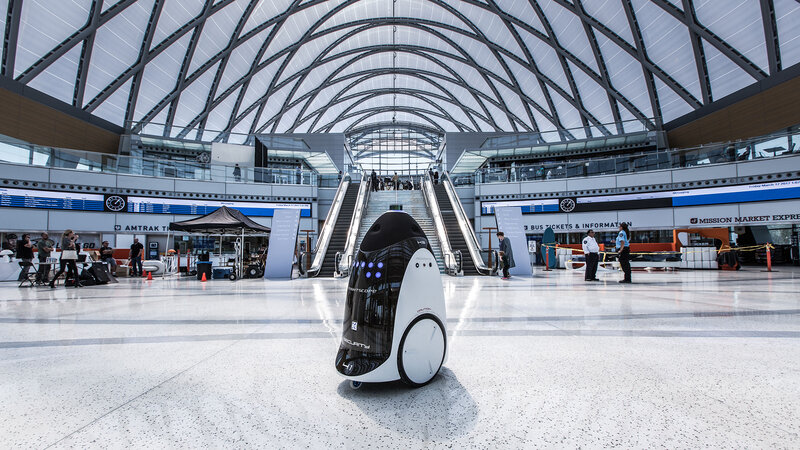
This egg-shaped security robot is now roaming hospitals
Posted from popsci.com Science
 Robots
 Security
Posted 9 mo ago

Read This Next


 Continue with Facebook
 Continue with Google