
Posted on Oct 17, 2025

Astrocyte Activity Linked to How Long-Term Memories Are Formed in Mice

1.21K
18
4
15
15
0
New research led by scientists from the RIKEN Center for Brain Science points to astrocytes as the brain cells responsible for long-term learning and memory. In a new Nature paper, they demonstrate how emotionally intense experiences like fear in mice make their mark on small groups of astrocytes for several days, allowing them to re-engage when the mice recall the experience. Full details are provided in the paper titled “The astrocytic ensemble acts as a multiday trace to stabilize memory.”
In the short term, this discovery could help scientists understand PTSD and related conditions in which emotionally intense memories persist abnormally or are activated by overgeneralized objects in the environment, Nagai said. “These findings could lead to new therapeutic approaches that target the astrocytic memory switch, leading to therapies that gently dampen traumatic memories while sparing others.”
In the short term, this discovery could help scientists understand PTSD and related conditions in which emotionally intense memories persist abnormally or are activated by overgeneralized objects in the environment, Nagai said. “These findings could lead to new therapeutic approaches that target the astrocytic memory switch, leading to therapies that gently dampen traumatic memories while sparing others.”
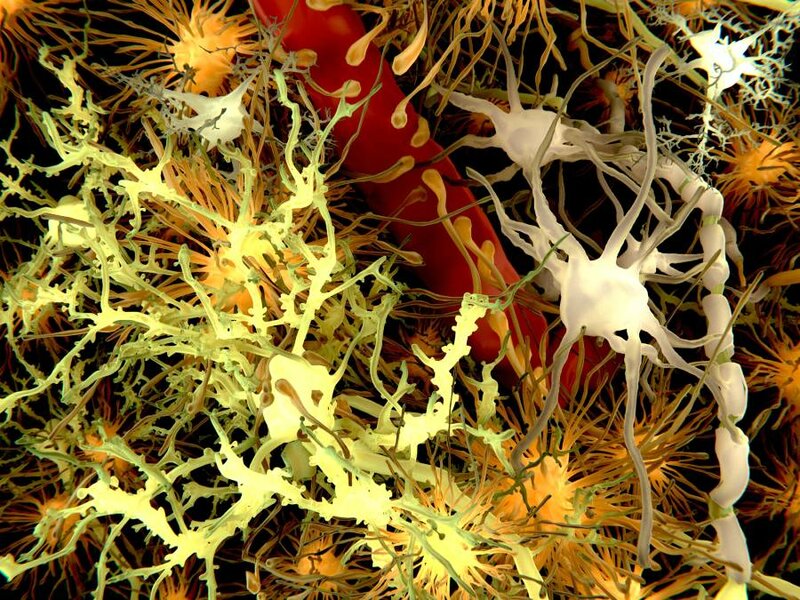
Astrocyte Activity Linked to How Long-Term Memories Are Formed in Mice
Posted from genengnews.com Health
 Science
 Research
 Medical
Posted 4 mo ago
Responses: 4


Read This Next


 Continue with Facebook
 Continue with Google