
Posted on Jan 7, 2020

APOD: 2020 January 7 - IC 405: The Flaming Star Nebula

1.17K
53
11
17
17
0
Good morning, Rallypoint. Today's Astronomy Picture of the Day (APOD) is titled "IC 405: The Flaming Star Nebula." Although the term "nebulae" may be more appropriate, as what we see today is both an emission and a reflection nebula. The orange and purple colors of the nebula are present in different regions and are created by different processes. The bright star visible toward the image left, emits light so energetic (depicted here as blue) it knocks electrons away from surrounding gas. When a proton recaptures an electron, a different frequency of light is emitted (depicted here in orange). The purple region's color is a mix of the two light sources but reflected to us by surrounding dust. IC 405 lies about 1500 light years distant and is about 5 light years across. It is visible with a small telescope toward the constellation Auriga (The Charioteer, located between the constellations Gemini and Perseus).
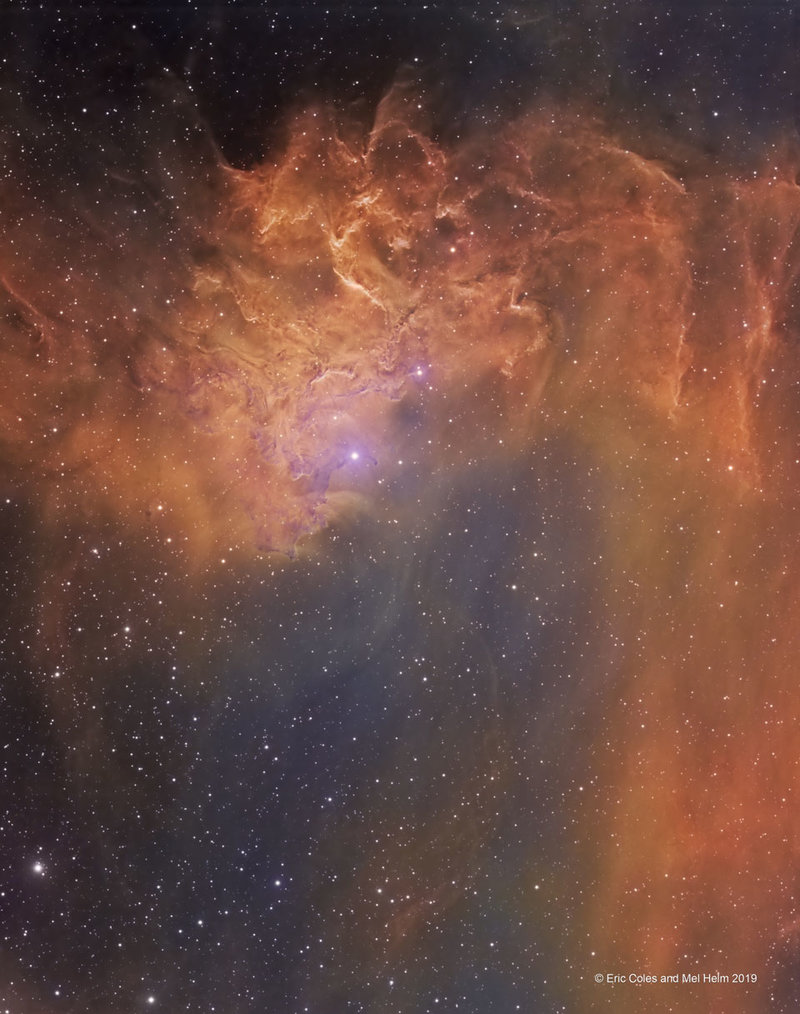
APOD: 2020 January 7 - IC 405: The Flaming Star Nebula
Posted from apod.nasa.gov NASA
NASA Space
Space Science
 Photography
 Astronomy
Posted 6 y ago
Responses: 9
6
6
0

Thanks for providing the great APOD titled "IC 405: The Flaming Star Nebula" this morning Bill. Have a great Tuesday Maj William W. 'Bill' Price
(6)
(0)
6
6
0

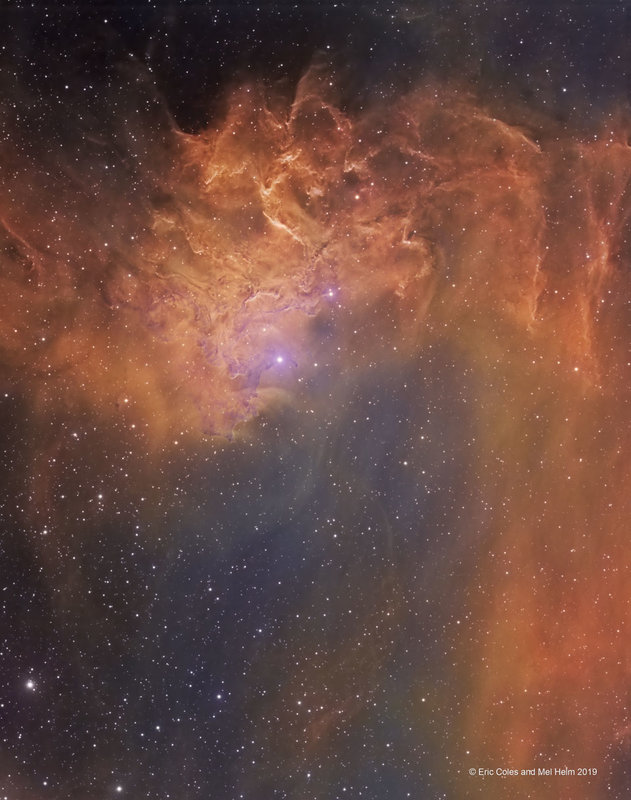
Good Tuesday morning, my friend Maj William W. 'Bill' Price and thank you for posting the NASA Astronomy Picture of the Day (APOD) for January 7, 2020 entitled "IC 405: The Flaming Star Nebula."
Image: IC 405 - The Flaming Star Nebula - Image Credit & Copyright - Eric Coles and Mel Helm
"Explanation: Rippling dust and gas lanes give the Flaming Star Nebula its name. The orange and purple colors of the nebula are present in different regions and are created by different processes. The bright star AE Aurigae, visible toward the image left, is so hot it is blue, emitting light so energetic it knocks electrons away from surrounding gas. When a proton recaptures an electron, red light is frequently emitted (depicted here in orange). The purple region's color is a mix of this red light and blue light emitted by AE Aurigae but reflected to us by surrounding dust. The two regions are referred to as emission nebula and reflection nebula, respectively. Pictured here in the Hubble color palette, the Flaming Star Nebula, officially known as IC 405, lies about 1500 light years distant, spans about 5 light years, and is visible with a small telescope toward the constellation of the Charioteer (Auriga)."
Image: IC 405 - The Flaming Star Nebula - Image Credit & Copyright - Eric Coles and Mel Helm
"Explanation: Rippling dust and gas lanes give the Flaming Star Nebula its name. The orange and purple colors of the nebula are present in different regions and are created by different processes. The bright star AE Aurigae, visible toward the image left, is so hot it is blue, emitting light so energetic it knocks electrons away from surrounding gas. When a proton recaptures an electron, red light is frequently emitted (depicted here in orange). The purple region's color is a mix of this red light and blue light emitted by AE Aurigae but reflected to us by surrounding dust. The two regions are referred to as emission nebula and reflection nebula, respectively. Pictured here in the Hubble color palette, the Flaming Star Nebula, officially known as IC 405, lies about 1500 light years distant, spans about 5 light years, and is visible with a small telescope toward the constellation of the Charioteer (Auriga)."
(6)
(0)
5
5
0

Read This Next


 Continue with Facebook
 Continue with Google