
Posted on Dec 3, 2025

How the dollar-store industry overcharges cash-strapped customers while promising low prices

876
14
8
6
6
0
75% of Americans live within 5 miles of a Dollar General. For too many of those folks, the next option is an hour away.
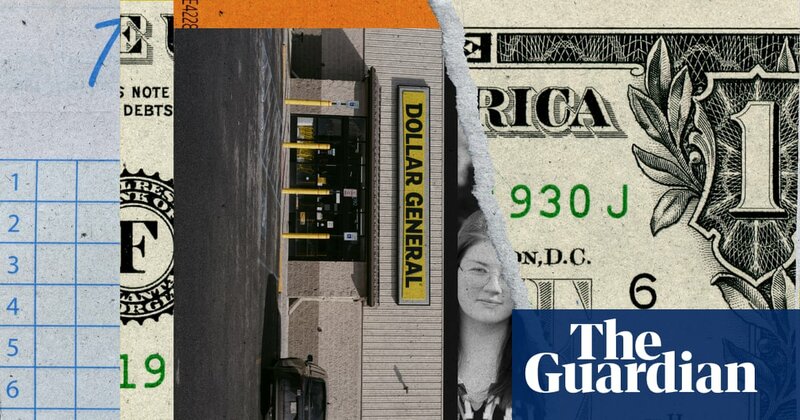
How the dollar-store industry overcharges cash-strapped customers while promising low prices
Posted from theguardian.com Economy
 Family
 Food/Chow
Edited 2 mo ago
Posted 2 mo ago
Responses: 4

This article makes me want to take a photograph of everything I buy in a store and compare it at checkout.
The biggest disconnect mentioned in the article seems to be a difference between the prices that are updated in the electronic database, which immediately updates it at the register, and the shelf tags for items. I wonder if the ~$100,000 price tag to convert the typical dollar store to electronic price tags would be worth it in light of the large lawsuits that are mentioned in the article.
FYI - here's NIST's National Conference on Weights and Measures annual National Price Verification Survey Report from 2024*
Lot of interesting info although only half of the states participated in feeding the information to NIST (maybe not a surprising coincidence that the Guardian's article reported that nearly half of the US states had limited or unavailable information on customers being overcharged). Overall, when looking at all stores across the board, there is only 77% of the 7,462 inspections were passing (had an error rate <2%). Additionally, only 57% of the inspections had no pricing errors.
------------------------------------------------ - * https://cdn.ncwm.com/userfiles/files/Resources/Price%20Verification%20Survey/National%20Price%20Verification%20Report-Final.pdf
The biggest disconnect mentioned in the article seems to be a difference between the prices that are updated in the electronic database, which immediately updates it at the register, and the shelf tags for items. I wonder if the ~$100,000 price tag to convert the typical dollar store to electronic price tags would be worth it in light of the large lawsuits that are mentioned in the article.
FYI - here's NIST's National Conference on Weights and Measures annual National Price Verification Survey Report from 2024*
Lot of interesting info although only half of the states participated in feeding the information to NIST (maybe not a surprising coincidence that the Guardian's article reported that nearly half of the US states had limited or unavailable information on customers being overcharged). Overall, when looking at all stores across the board, there is only 77% of the 7,462 inspections were passing (had an error rate <2%). Additionally, only 57% of the inspections had no pricing errors.
------------------------------------------------ - * https://cdn.ncwm.com/userfiles/files/Resources/Price%20Verification%20Survey/National%20Price%20Verification%20Report-Final.pdf
(1)
(0)
SGM Jeff Mccloud
I don't know. My local chain grocery stores (Raley's, Winco, Trader Joe's) still aren't on electronic price tags and they are always right. I'm not buying 300 items at a time, but I am there several times a month.
I'm still in the habit of keeping the prices in my head from shelf to checkout from the olden days in college and first few years at Benning, when I had a very tight grocery budget.
And maybe it's not all intentional fraud, some of it could be staff that don't care.
I'm still in the habit of keeping the prices in my head from shelf to checkout from the olden days in college and first few years at Benning, when I had a very tight grocery budget.
And maybe it's not all intentional fraud, some of it could be staff that don't care.
(2)
(0)
1
1
0

@jeff McCloud it is so disappointing to see resources that offered relief to hardworking people and the working poor become competitive market enterprise.
(1)
(0)
SGM Jeff Mccloud
It's worse when they know the customer's only other option is to drive another 50-75 miles to a Walmart.
(2)
(0)
(0)
(0)
1
1
0

Fortunately we have many options around here, but I have caught DG ringing up prices different from posted ones.
(1)
(0)
PO3 Phyllis Maynard
Lt Col John (Jack) Christensen so have I. But, because the prices are lower than Walmart people accept the kool-aid (the $1 price is for the cheaper range products).
(1)
(0)
Read This Next


 Continue with Facebook
 Continue with Google