

11
11
0
The "Colonel's" Military Pay Through History - Series of Military Pay through the various wars of the United States (World War I - 1914 - 1918)
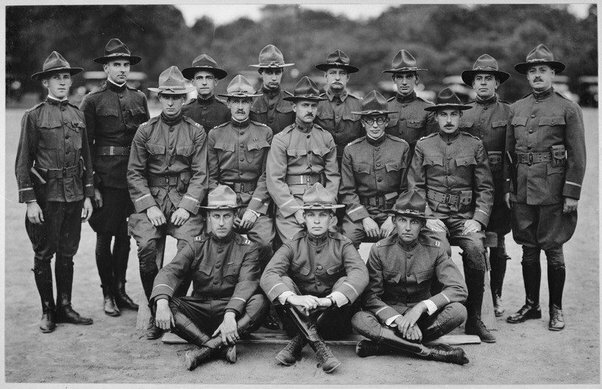
World War I (1st Picture) was a brutal conflict, featuring trench warfare, bloody battles and the introduction of poison gas. Troops serving in Europe received varied salaries based on the number of years they'd been enlisted. For example, a private in their first year of service earned $30.00 a month, while corporals received a salary of $36.00.
This is how much troops were paid in every major American war
World War I military pay for an American private started around $30 per month in 1917, with basic needs like food and clothing covered, but much of the pay was deferred in the field for later payout or savings, while higher ranks and specialized roles earned more, with rates increasing slightly with service time, but overall pay was low compared to modern voluntary forces, leading to the later "Bonus Army" movement for promised compensation.
Key Pay Details:
Starting Pay (Private): About $30 per month for a private in 1917, equivalent to roughly $550-$560 in today's money, but far less purchasing power than modern pay, as it was a conscripted force.
Deferred Pay: Soldiers didn't receive their full pay while actively fighting; a portion was kept by the government and paid later, often at discharge, to prevent large amounts of cash in combat zones.
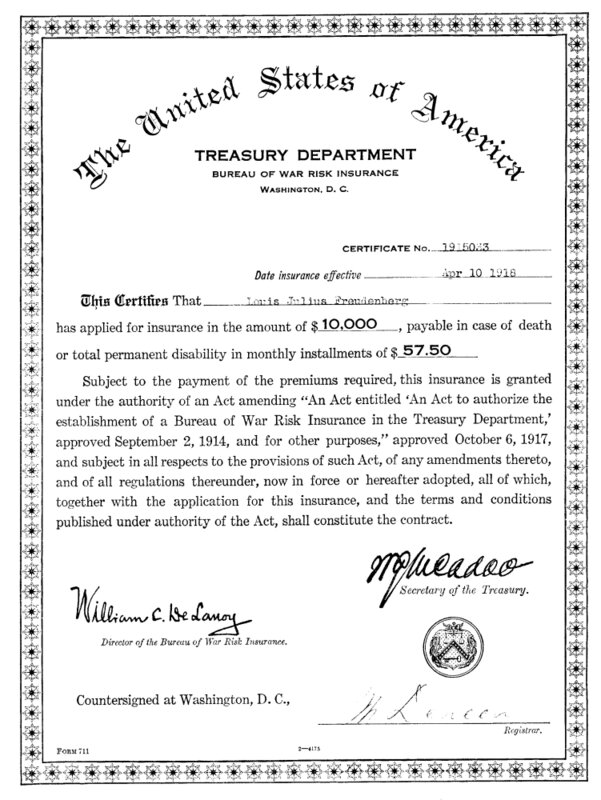
Deductions: Some pay was deducted for essentials like insurance (War Risk Insurance). (4th Picture - Actual Policy)
Rank & Service: Pay increased with rank and years of service, with pay charts showing higher figures for 4th, 5th, and 6th class soldiers (likely enlisted) over time.
Spending Money: Soldiers received periodic "pay parades" for small amounts of local currency to buy extras like tobacco or food.
Context:
Conscription vs. Volunteer: WWI was largely a conscripted force, so pay was lower than today's voluntary military, which uses higher incentives to attract recruits.
Post-War Compensation: The World War Adjusted Compensation Act of 1924 provided bonus certificates to veterans, redeemable later, which became the basis for the Bonus Army protests.
Example:
A soldier's record showed a total monthly wage of $33.00, with $7.00 deducted for insurance, leaving $26.00 net, with later pay increasing to around $40 total ($33.20 net).
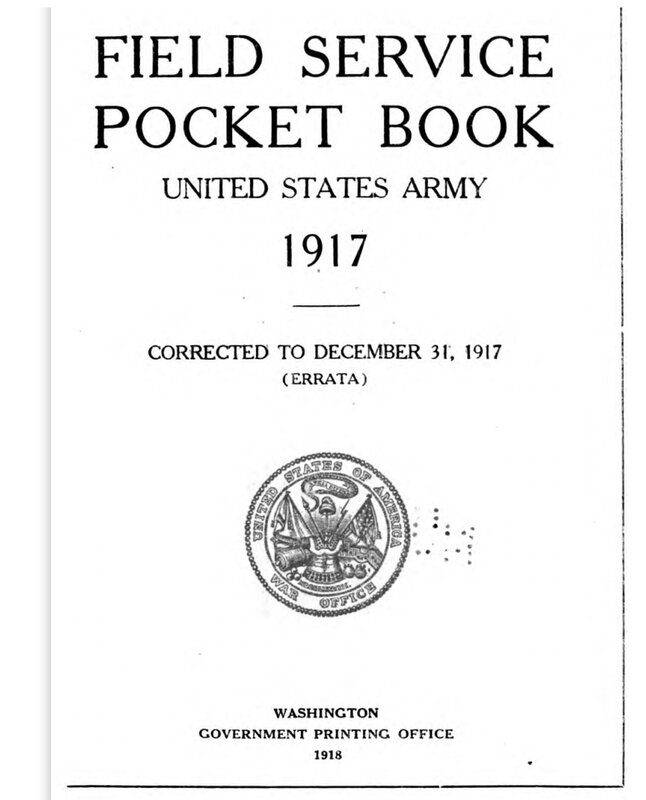
A full list of pay for each section of the Army, as well as the salary increases for each year of service, can be found in the 1917 Field Service Pocket Book (See Pictures Below in Comments for Pages 247 to 250) (3rd Picture - Cover)
On top of their monthly salaries, troops were also provided life insurance through the War Risk Insurance Program. This was due to commercial insurance companies either charging higher premiums for soldiers or excluding protection against the hazards of war.
United States Government Life Insurance
In 1917, America entered the war against Germany. Shortly thereafter, Congress approved issuance of Government life insurance to servicemembers under what was known as the War Risk Insurance program. Congress took this action because commercial life insurance companies either excluded protection against the hazards of war or charged premiums that were much higher than normal rates. During World War I, over 4 million policies were issued. In 1919, Congress established the United States Government Life Insurance (USGLI) program to manage World War I policies and new policies issued thereafter. The program was closed to all new issues on April 25, 1951. USGLI policies could be retained by the insured even after his or her military service ended. Today there is just 1 policy still in force. Policies were issued in a variety of permanent plans and as renewable term insurance. The maximum face amount of a USGLI policy is $10,000. All USGLI policies were declared paid-up as of January 1, 1983 meaning that no further premium payments were due. Annual dividends continue to be paid on these policies. (See Policy 4th Picture)
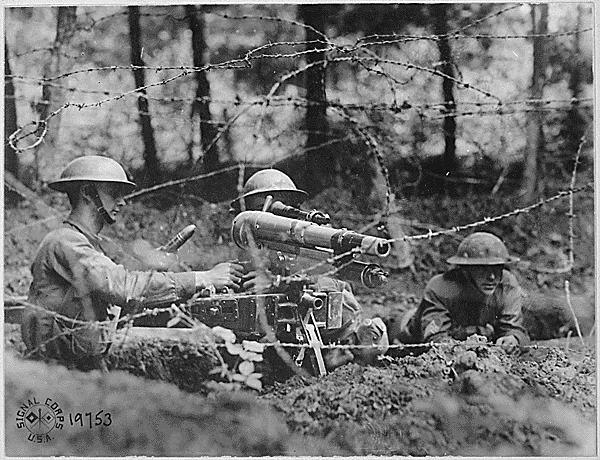
World War I (2nd Picture), or the First World War (28 July 1914 – 11 November 1918), also known as the Great War, was a global conflict between two coalitions: the Allies (or Entente) and the Central Powers. Major areas of conflict included Europe and the Middle East, as well as parts of Africa and the Asia-Pacific. The war saw important developments in weaponry including tanks, aircraft, artillery, machine guns, and chemical weapons. One of the deadliest conflicts in history, it resulted in an estimated 30 million military casualties, and 8 million civilian deaths from war-related causes and genocide. The movement of large numbers of people was a major factor in the deadly Spanish flu pandemic.
The causes of World War I included the rise of the German Empire and decline of the Ottoman Empire, which disturbed the long-standing balance of power in Europe, the exacerbation of imperial rivalries, and an arms race between the great powers. Growing tensions in the Balkans reached a breaking point on 28 June 1914 when Gavrilo Princip, a Bosnian Serb, assassinated Franz Ferdinand, the heir to the Austro-Hungarian throne. Austria-Hungary blamed Serbia, and declared war on 28 July. After Russia mobilised in Serbia's defence, Germany declared war on Russia and France, who had an alliance. The United Kingdom entered the war after Germany invaded Belgium, and the Ottoman Empire joined the Central Powers in November. Germany's strategy in 1914 was to quickly defeat France before transferring its forces to the east, but its advance was halted in September, and by the end of the year the Western Front consisted of a near-continuous line of trenches from the English Channel to Switzerland. The Eastern Front was more dynamic, but neither side gained a decisive advantage, despite costly offensives. Italy, Bulgaria, Romania, Greece and others entered the war from 1915 onward.
Major battles, including those at Verdun, the Somme, and Passchendaele, failed to break the stalemate on the Western Front. In April 1917, the United States joined the Allies after Germany resumed unrestricted submarine warfare against Atlantic shipping. Later that year, the Bolsheviks seized power in Russia in the October Revolution; Soviet Russia signed an armistice with the Central Powers in December, followed by a separate peace in March 1918. That month, Germany launched a spring offensive in the west, which despite initial successes left the German Army exhausted and demoralised. The Allied Hundred Days Offensive, beginning in August 1918, caused a collapse of the German front line. Following the Vardar Offensive, Bulgaria signed an armistice in late September. By early November, the Allies had signed armistices with the Ottomans and with Austria-Hungary, leaving Germany isolated. Facing a revolution at home, Kaiser Wilhelm II abdicated on 9 November, and the war ended with the Armistice of 11 November 1918.
The Paris Peace Conference of 1919–1920 imposed settlements on the defeated powers. Under the Treaty of Versailles, Germany lost significant territories, was disarmed, and was required to pay large war reparations to the Allies. The dissolution of the Russian, German, Austro-Hungarian, and Ottoman empires led to new national boundaries and the creation of new independent states including Poland, Finland, the Baltic states, Czechoslovakia, and Yugoslavia. The League of Nations was established to maintain world peace, but its failure to manage instability during the interwar period contributed to the outbreak of World War II in 1939.
World War I (1st Picture) was a brutal conflict, featuring trench warfare, bloody battles and the introduction of poison gas. Troops serving in Europe received varied salaries based on the number of years they'd been enlisted. For example, a private in their first year of service earned $30.00 a month, while corporals received a salary of $36.00.
This is how much troops were paid in every major American war
World War I military pay for an American private started around $30 per month in 1917, with basic needs like food and clothing covered, but much of the pay was deferred in the field for later payout or savings, while higher ranks and specialized roles earned more, with rates increasing slightly with service time, but overall pay was low compared to modern voluntary forces, leading to the later "Bonus Army" movement for promised compensation.
Key Pay Details:
Starting Pay (Private): About $30 per month for a private in 1917, equivalent to roughly $550-$560 in today's money, but far less purchasing power than modern pay, as it was a conscripted force.
Deferred Pay: Soldiers didn't receive their full pay while actively fighting; a portion was kept by the government and paid later, often at discharge, to prevent large amounts of cash in combat zones.
Deductions: Some pay was deducted for essentials like insurance (War Risk Insurance). (4th Picture - Actual Policy)
Rank & Service: Pay increased with rank and years of service, with pay charts showing higher figures for 4th, 5th, and 6th class soldiers (likely enlisted) over time.
Spending Money: Soldiers received periodic "pay parades" for small amounts of local currency to buy extras like tobacco or food.
Context:
Conscription vs. Volunteer: WWI was largely a conscripted force, so pay was lower than today's voluntary military, which uses higher incentives to attract recruits.
Post-War Compensation: The World War Adjusted Compensation Act of 1924 provided bonus certificates to veterans, redeemable later, which became the basis for the Bonus Army protests.
Example:
A soldier's record showed a total monthly wage of $33.00, with $7.00 deducted for insurance, leaving $26.00 net, with later pay increasing to around $40 total ($33.20 net).
A full list of pay for each section of the Army, as well as the salary increases for each year of service, can be found in the 1917 Field Service Pocket Book (See Pictures Below in Comments for Pages 247 to 250) (3rd Picture - Cover)
On top of their monthly salaries, troops were also provided life insurance through the War Risk Insurance Program. This was due to commercial insurance companies either charging higher premiums for soldiers or excluding protection against the hazards of war.
United States Government Life Insurance
In 1917, America entered the war against Germany. Shortly thereafter, Congress approved issuance of Government life insurance to servicemembers under what was known as the War Risk Insurance program. Congress took this action because commercial life insurance companies either excluded protection against the hazards of war or charged premiums that were much higher than normal rates. During World War I, over 4 million policies were issued. In 1919, Congress established the United States Government Life Insurance (USGLI) program to manage World War I policies and new policies issued thereafter. The program was closed to all new issues on April 25, 1951. USGLI policies could be retained by the insured even after his or her military service ended. Today there is just 1 policy still in force. Policies were issued in a variety of permanent plans and as renewable term insurance. The maximum face amount of a USGLI policy is $10,000. All USGLI policies were declared paid-up as of January 1, 1983 meaning that no further premium payments were due. Annual dividends continue to be paid on these policies. (See Policy 4th Picture)
World War I (2nd Picture), or the First World War (28 July 1914 – 11 November 1918), also known as the Great War, was a global conflict between two coalitions: the Allies (or Entente) and the Central Powers. Major areas of conflict included Europe and the Middle East, as well as parts of Africa and the Asia-Pacific. The war saw important developments in weaponry including tanks, aircraft, artillery, machine guns, and chemical weapons. One of the deadliest conflicts in history, it resulted in an estimated 30 million military casualties, and 8 million civilian deaths from war-related causes and genocide. The movement of large numbers of people was a major factor in the deadly Spanish flu pandemic.
The causes of World War I included the rise of the German Empire and decline of the Ottoman Empire, which disturbed the long-standing balance of power in Europe, the exacerbation of imperial rivalries, and an arms race between the great powers. Growing tensions in the Balkans reached a breaking point on 28 June 1914 when Gavrilo Princip, a Bosnian Serb, assassinated Franz Ferdinand, the heir to the Austro-Hungarian throne. Austria-Hungary blamed Serbia, and declared war on 28 July. After Russia mobilised in Serbia's defence, Germany declared war on Russia and France, who had an alliance. The United Kingdom entered the war after Germany invaded Belgium, and the Ottoman Empire joined the Central Powers in November. Germany's strategy in 1914 was to quickly defeat France before transferring its forces to the east, but its advance was halted in September, and by the end of the year the Western Front consisted of a near-continuous line of trenches from the English Channel to Switzerland. The Eastern Front was more dynamic, but neither side gained a decisive advantage, despite costly offensives. Italy, Bulgaria, Romania, Greece and others entered the war from 1915 onward.
Major battles, including those at Verdun, the Somme, and Passchendaele, failed to break the stalemate on the Western Front. In April 1917, the United States joined the Allies after Germany resumed unrestricted submarine warfare against Atlantic shipping. Later that year, the Bolsheviks seized power in Russia in the October Revolution; Soviet Russia signed an armistice with the Central Powers in December, followed by a separate peace in March 1918. That month, Germany launched a spring offensive in the west, which despite initial successes left the German Army exhausted and demoralised. The Allied Hundred Days Offensive, beginning in August 1918, caused a collapse of the German front line. Following the Vardar Offensive, Bulgaria signed an armistice in late September. By early November, the Allies had signed armistices with the Ottomans and with Austria-Hungary, leaving Germany isolated. Facing a revolution at home, Kaiser Wilhelm II abdicated on 9 November, and the war ended with the Armistice of 11 November 1918.
The Paris Peace Conference of 1919–1920 imposed settlements on the defeated powers. Under the Treaty of Versailles, Germany lost significant territories, was disarmed, and was required to pay large war reparations to the Allies. The dissolution of the Russian, German, Austro-Hungarian, and Ottoman empires led to new national boundaries and the creation of new independent states including Poland, Finland, the Baltic states, Czechoslovakia, and Yugoslavia. The League of Nations was established to maintain world peace, but its failure to manage instability during the interwar period contributed to the outbreak of World War II in 1939.
 WWI
WWI Military Pay
 Military History
Edited 8 d ago
Posted 10 d ago
Responses: 3

7
7
0

5
5
0

GySgt Jack Wallace
Yep, in ITS school for me.....A 2LT .handed out our cash as he was rude as Hell. We were all LCpl 's and below....
(2)
(0)
4
4
0
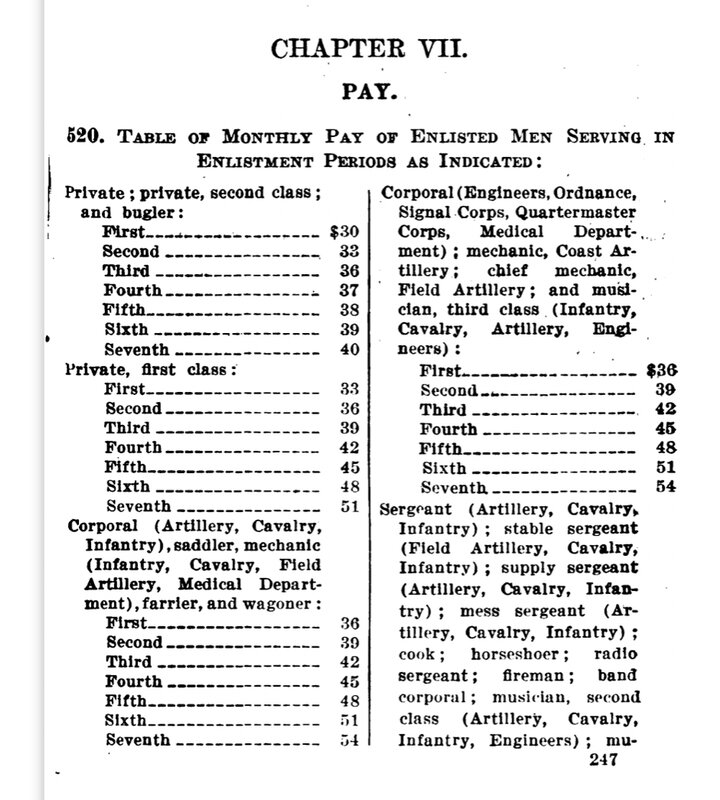
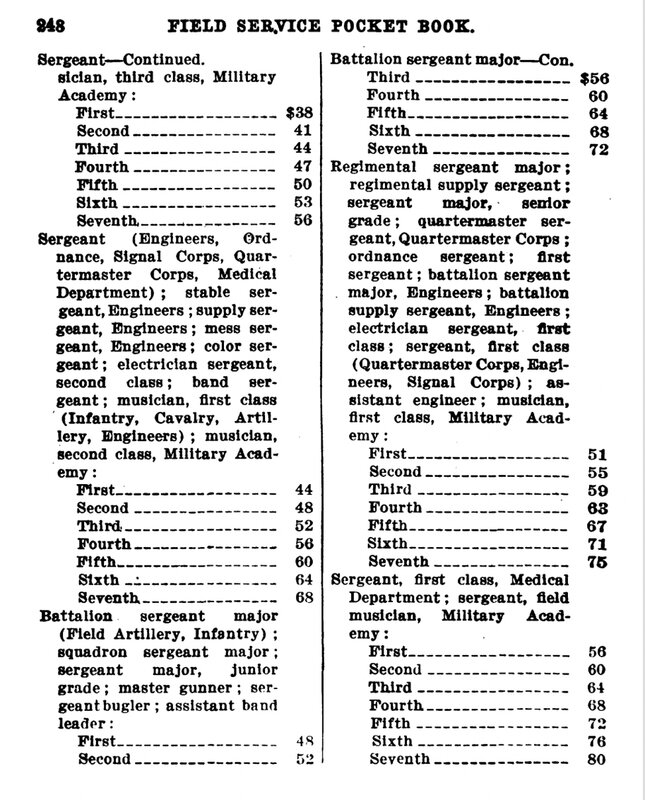
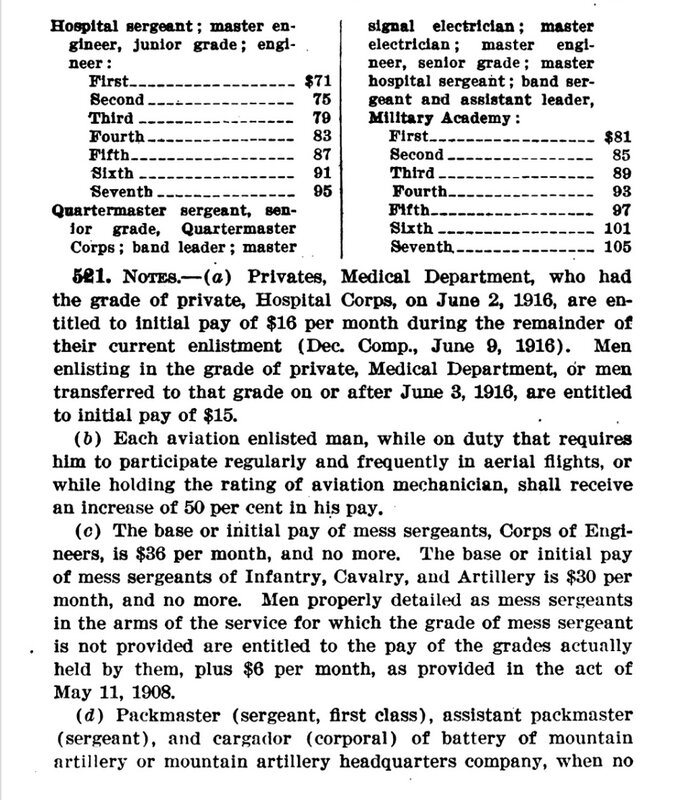
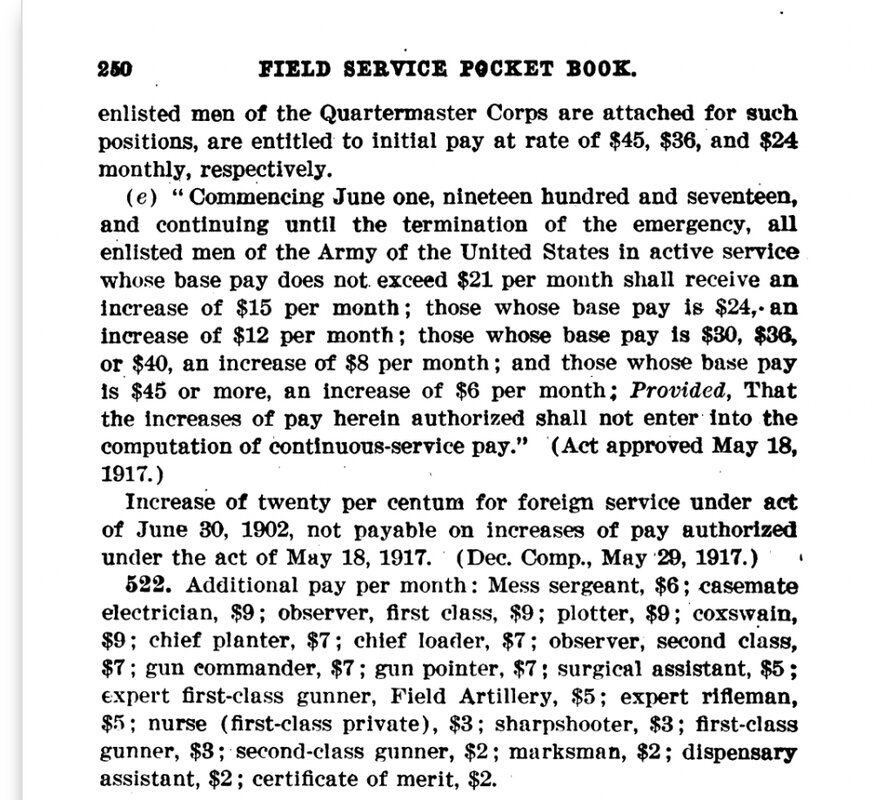
Here are picture and pay rate in the 1917 Field Service Pocket Book published during World War I
(4)
(0)
COL Mikel J. Burroughs
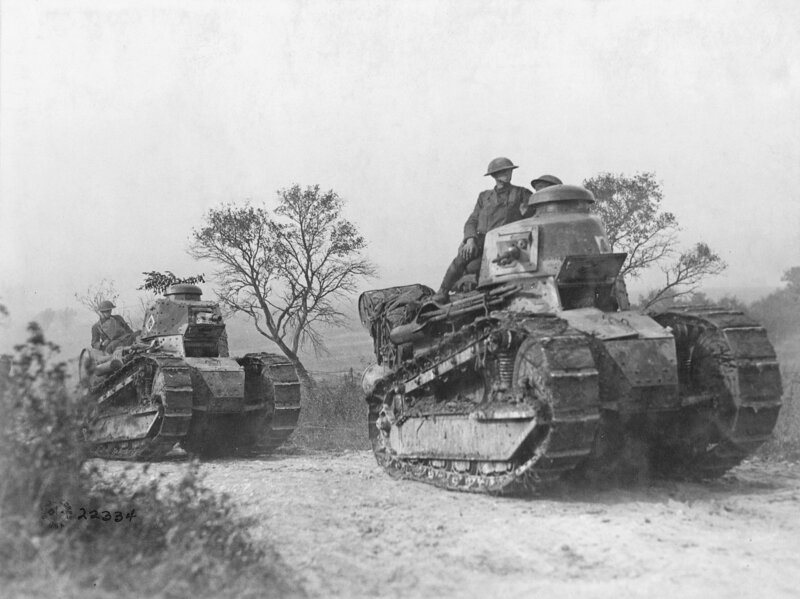
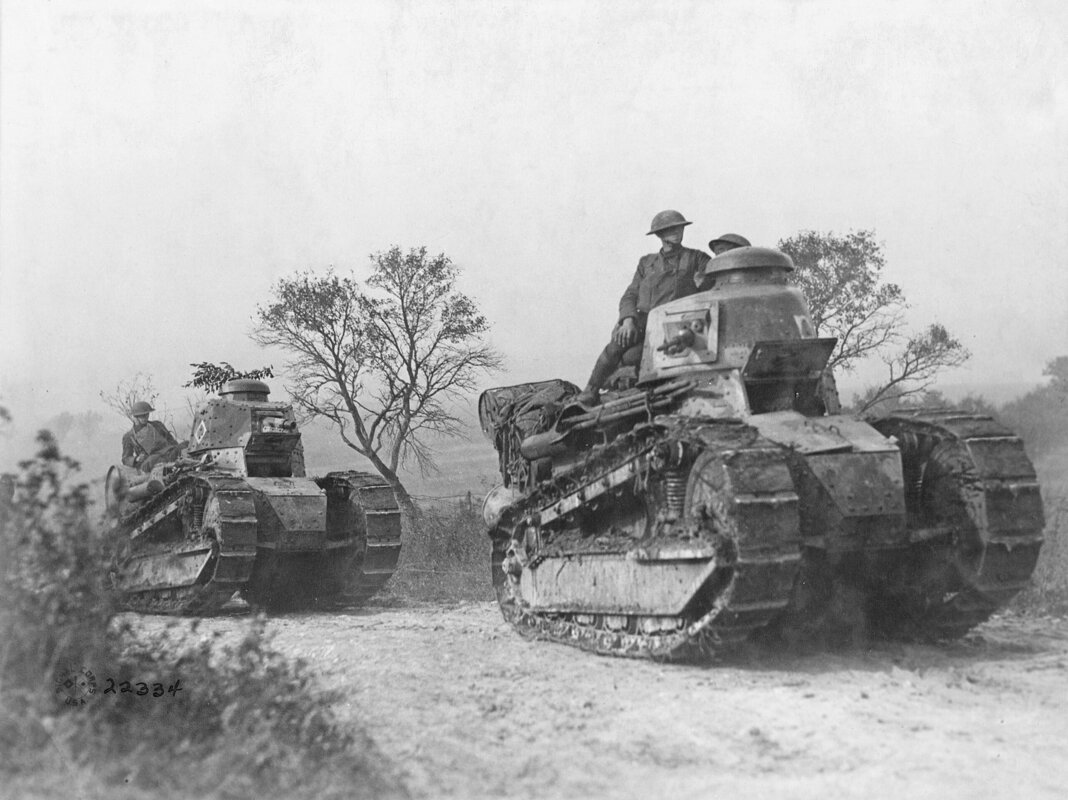
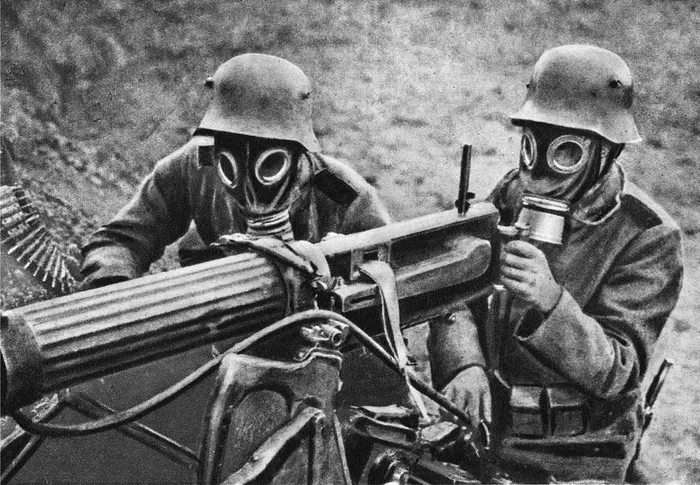
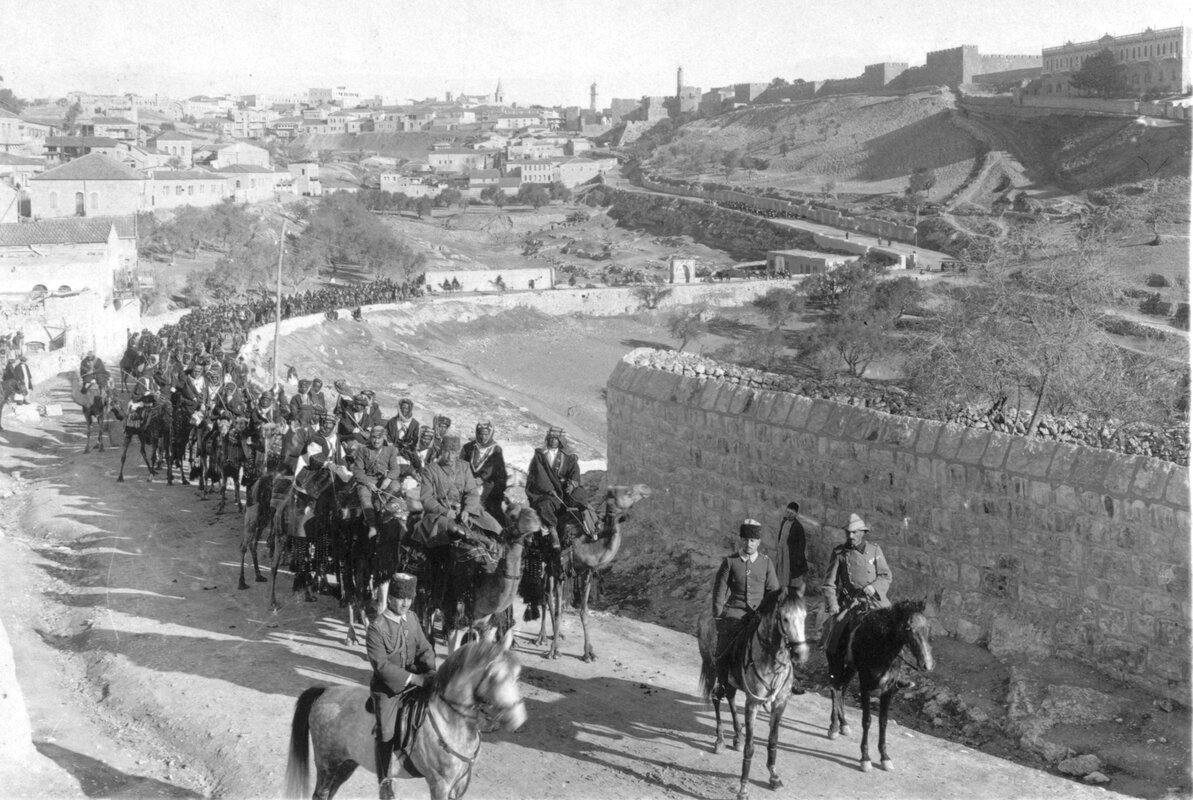
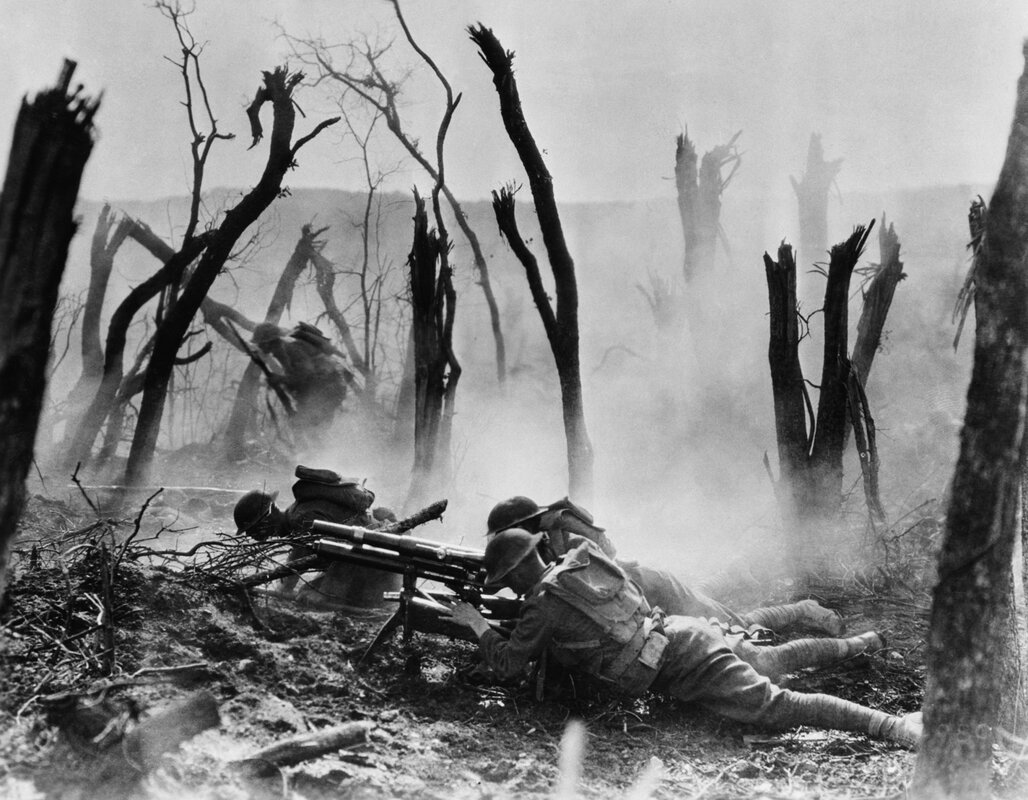
Here are a few more pictures of WWI (1st Picture - American Troops in Tanks); (2nd Picture (Germand Machine Crew); (3rd Picture Arab Camal Corps); & (4th Picture US 23rd Infantry 37 mm Machine Gun)
(2)
(0)
Read This Next


 Continue with Facebook
 Continue with Google