

11
11
0
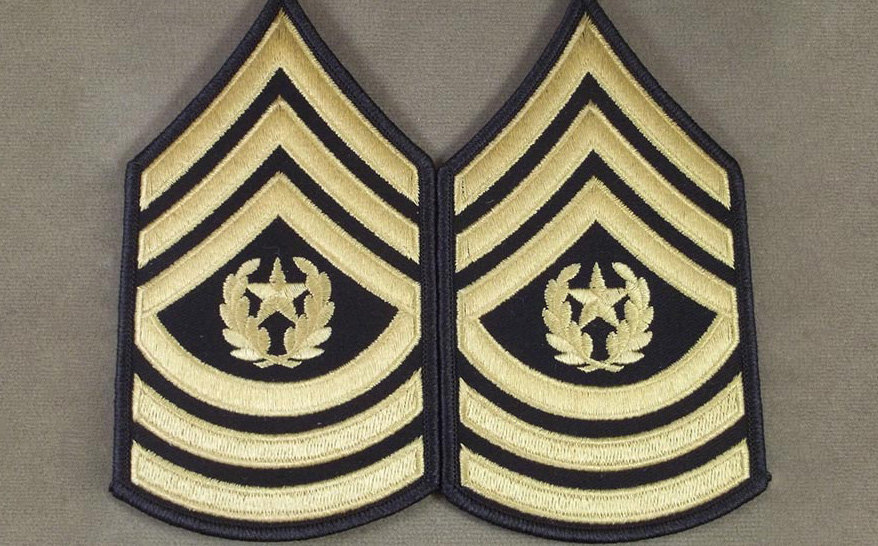
Anyone ever wonder where's the CSM?
CSM Holland does a great job of answering the age old question: The full article is in the DEC 2017 NCO Journal.
Presence Matters
The common sense answer to where the command sergeant major should be is, at or near the point of friction during critical moments in order to provide the commander with an unbiased assessment.
The command sergeant major shares the commander's mission by interacting with Soldiers by eliminating friction, sharing information, and providing feedback to the commander while leveraging organizational processes to facilitate control of the unit.
The command sergeant major must also understand the operations process and the commander's and staff's capabilities in order to confirm that the commander's intent for mission accomplishment is delivered and understood.
The command sergeant major needs to be present during mission analysis, providing input and feedback to the staff, which has been filtered through his or her combined experience, knowledge, and understanding of the commander's intent. It is here that the command sergeant major can have a positive effect on a mission's outcome.
Communication between staff primaries and the command sergeant major is essential. Obvious topics for discussion are personnel strength and requisitions with the S-1 (personnel), sustainment and battlefield replacement with the S-4 (logistics), medical evacuation and casualty assessments with the medical planner, and religious support with the chaplain. Equally important is communication and planning with the operations officer, sustainment with the headquarters and headquarters company first sergeant, and general staff operations and timeline enforcement with the executive officer.
By understanding and being present when the commander issues planning guidance, chairing the targeting board, issuing subordinate commander's guidance, and interacting with staff primaries to cultivate a shared understanding of current and future plans, a command sergeant major helps accomplish mission goals by pointing out potential pitfalls and removing areas of friction. These proactive actions will result in a command sergeant major never having to ask a commander what the focus area for the day should be.
Finally, a command sergeant major is distinguished by his or her attitude, mission dedication and desire to win in combat.
CSM Holland does a great job of answering the age old question: The full article is in the DEC 2017 NCO Journal.
Presence Matters
The common sense answer to where the command sergeant major should be is, at or near the point of friction during critical moments in order to provide the commander with an unbiased assessment.
The command sergeant major shares the commander's mission by interacting with Soldiers by eliminating friction, sharing information, and providing feedback to the commander while leveraging organizational processes to facilitate control of the unit.
The command sergeant major must also understand the operations process and the commander's and staff's capabilities in order to confirm that the commander's intent for mission accomplishment is delivered and understood.
The command sergeant major needs to be present during mission analysis, providing input and feedback to the staff, which has been filtered through his or her combined experience, knowledge, and understanding of the commander's intent. It is here that the command sergeant major can have a positive effect on a mission's outcome.
Communication between staff primaries and the command sergeant major is essential. Obvious topics for discussion are personnel strength and requisitions with the S-1 (personnel), sustainment and battlefield replacement with the S-4 (logistics), medical evacuation and casualty assessments with the medical planner, and religious support with the chaplain. Equally important is communication and planning with the operations officer, sustainment with the headquarters and headquarters company first sergeant, and general staff operations and timeline enforcement with the executive officer.
By understanding and being present when the commander issues planning guidance, chairing the targeting board, issuing subordinate commander's guidance, and interacting with staff primaries to cultivate a shared understanding of current and future plans, a command sergeant major helps accomplish mission goals by pointing out potential pitfalls and removing areas of friction. These proactive actions will result in a command sergeant major never having to ask a commander what the focus area for the day should be.
Finally, a command sergeant major is distinguished by his or her attitude, mission dedication and desire to win in combat.
Posted in these groups:  CSM
CSM
CSM
Posted 7 y ago
Responses: 6


2
2
0
The CSM needs to be where the Soldier's are especially during training and mission events. As well as ensuring that the CDR's intent is met, the CSM has to be sure the training or mission event is not inundated with any or as little distractor's as possible. His job is make the training or mission be completed safely, correctly by intent and mission guide lines. As a CSM I was always at home with my Soldier's where I felt I could do my best in helping the unit and the Soldiers'.
(2)
(0)

Read This Next


 Continue with Facebook
 Continue with Google