

Civil War

Civil War


19
19
0
The "Colonel's" Medal of Honor Series
Civil War
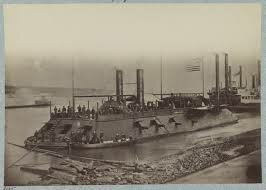
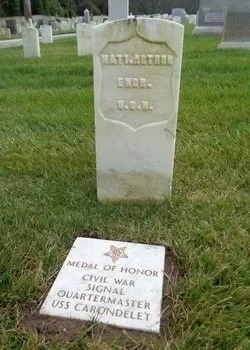
Signal Quartermaster Matthew Arther, U.S. Navy, USS Carondelet, Year of Action: 1862, Location of Action: Battles of Fort Henry and Fort Donelson.
Matthew Arther (or Arthur) (c. 1835—1890) was a Union Navy sailor in the American Civil War and a recipient of the U.S. military's highest decoration, the Medal of Honor, for his actions at the Battles of Fort Henry and Fort Donelson.
Arther was born in about 1835 in Scotland, and joined the US Navy from Boston, Massachusetts in August 1861. He served during the Civil War as a signal quartermaster on the USS Carondelet. During the Battles of Fort Henry and Fort Donelson in February 1862, he performed his duties as signal quartermaster and captain of the ship's bow gun "faithfully, effectively and valiantly". For these actions, he was awarded the Medal of Honor the next year, on July 10, 1863 and was discharged from the Navy two weeks later.
Arther's official Medal of Honor citation reads:
Served on board the U.S.S. Carondelet at the reduction of Forts Henry and Donelson, 6 and 14 February 1862 and other actions. Carrying out his duties as signal quartermaster and captain of the rifled bow gun, S/Q.M. Arther was conspicuous for valor and devotion, serving most faithfully, effectively and valiantly.
The Battle of Fort Henry was fought on February 6, 1862, in Stewart County, Tennessee, during the American Civil War. It was the first important victory for the Union and Brig. Gen. Ulysses S. Grant in the Western Theater.
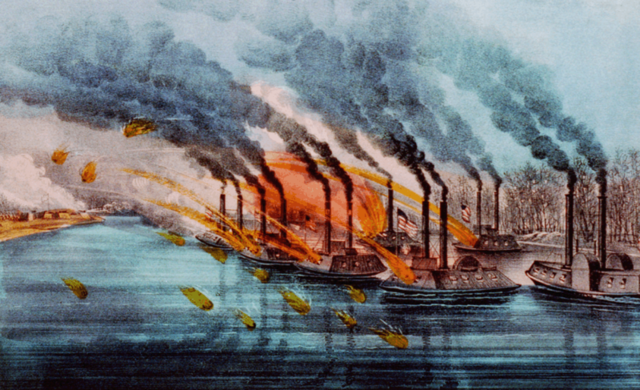
On February 4 and 5, Grant landed two divisions just north of Fort Henry on the Tennessee River. (The troops serving under Grant were the nucleus of the Union's successful Army of the Tennessee, although that name was not yet in use.) Grant's plan was to advance upon the fort on February 6 while it was being simultaneously attacked by Union gunboats commanded by Flag Officer Andrew Hull Foote. A combination of accurate and effective naval gunfire, heavy rain, and the poor siting of the fort, nearly inundated by rising river waters, caused its commander, Brig. Gen. Lloyd Tilghman, to surrender to Foote before the Union Army arrived.
The surrender of Fort Henry opened the Tennessee River to Union traffic upriver through and along West Tennessee to a point south of the Alabama border. In the days following the fort's surrender, from February 6 through February 12, Union raids used ironclad boats to destroy Confederate shipping and railroad bridges along the river. On February 12, Grant's army proceeded overland 12 miles (19 km) to engage with Confederate troops in the Battle of Fort Donelson.
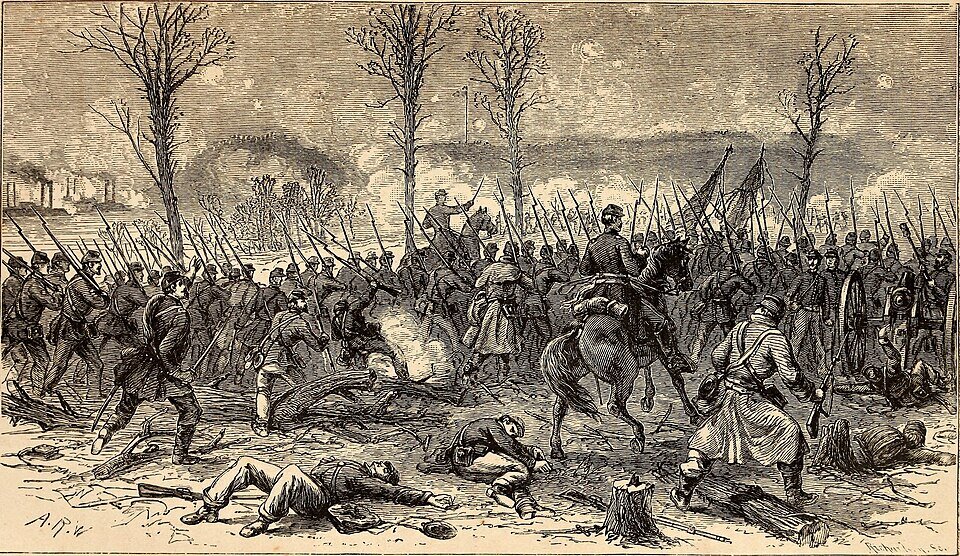
The Battle of Fort Donelson was fought from February 11–16, 1862, in the Western Theater of the American Civil War. The Union capture of the Confederate fort near the Tennessee–Kentucky border opened the Cumberland River, an important avenue for the invasion of the South. The Union's success also elevated Brig. Gen. Ulysses S. Grant from an obscure and largely unproven leader to the rank of major general, and earned him the nickname of "Unconditional Surrender" Grant.
Following his capture of Fort Henry on February 6, Grant moved his army (later to become the Union's Army of the Tennessee 12 miles (19 km) overland to Fort Donelson, from February 11 to 13, and conducted several small probing attacks. On February 14, Union gunboats under Flag Officer Andrew H. Foote attempted to reduce the fort with gunfire, but were forced to withdraw after sustaining heavy damage from the fort's water batteries.
On February 15, with the fort surrounded, the Confederates, commanded by Brig. Gen. John B. Floyd, launched a surprise attack, led by his second-in-command, Brig. Gen. Gideon Johnson Pillow, against the right flank of Grant's army. The intention was to open an escape route for retreat to Nashville, Tennessee. Grant was away from the battlefield at the start of the attack, but arrived to rally his men and counterattack. Pillow's attack succeeded in opening the route, but Floyd lost his nerve and ordered his men back to the fort. The following morning, Floyd and Pillow escaped with a small detachment of troops, relinquishing command to Brig. Gen. Simon Bolivar Buckner, who accepted Grant's demand of unconditional surrender later that evening. The battle resulted in virtually all of Kentucky as well as much of Tennessee, including Nashville, falling under Union control.
Civil War
Signal Quartermaster Matthew Arther, U.S. Navy, USS Carondelet, Year of Action: 1862, Location of Action: Battles of Fort Henry and Fort Donelson.
Matthew Arther (or Arthur) (c. 1835—1890) was a Union Navy sailor in the American Civil War and a recipient of the U.S. military's highest decoration, the Medal of Honor, for his actions at the Battles of Fort Henry and Fort Donelson.
Arther was born in about 1835 in Scotland, and joined the US Navy from Boston, Massachusetts in August 1861. He served during the Civil War as a signal quartermaster on the USS Carondelet. During the Battles of Fort Henry and Fort Donelson in February 1862, he performed his duties as signal quartermaster and captain of the ship's bow gun "faithfully, effectively and valiantly". For these actions, he was awarded the Medal of Honor the next year, on July 10, 1863 and was discharged from the Navy two weeks later.
Arther's official Medal of Honor citation reads:
Served on board the U.S.S. Carondelet at the reduction of Forts Henry and Donelson, 6 and 14 February 1862 and other actions. Carrying out his duties as signal quartermaster and captain of the rifled bow gun, S/Q.M. Arther was conspicuous for valor and devotion, serving most faithfully, effectively and valiantly.
The Battle of Fort Henry was fought on February 6, 1862, in Stewart County, Tennessee, during the American Civil War. It was the first important victory for the Union and Brig. Gen. Ulysses S. Grant in the Western Theater.
On February 4 and 5, Grant landed two divisions just north of Fort Henry on the Tennessee River. (The troops serving under Grant were the nucleus of the Union's successful Army of the Tennessee, although that name was not yet in use.) Grant's plan was to advance upon the fort on February 6 while it was being simultaneously attacked by Union gunboats commanded by Flag Officer Andrew Hull Foote. A combination of accurate and effective naval gunfire, heavy rain, and the poor siting of the fort, nearly inundated by rising river waters, caused its commander, Brig. Gen. Lloyd Tilghman, to surrender to Foote before the Union Army arrived.
The surrender of Fort Henry opened the Tennessee River to Union traffic upriver through and along West Tennessee to a point south of the Alabama border. In the days following the fort's surrender, from February 6 through February 12, Union raids used ironclad boats to destroy Confederate shipping and railroad bridges along the river. On February 12, Grant's army proceeded overland 12 miles (19 km) to engage with Confederate troops in the Battle of Fort Donelson.
The Battle of Fort Donelson was fought from February 11–16, 1862, in the Western Theater of the American Civil War. The Union capture of the Confederate fort near the Tennessee–Kentucky border opened the Cumberland River, an important avenue for the invasion of the South. The Union's success also elevated Brig. Gen. Ulysses S. Grant from an obscure and largely unproven leader to the rank of major general, and earned him the nickname of "Unconditional Surrender" Grant.
Following his capture of Fort Henry on February 6, Grant moved his army (later to become the Union's Army of the Tennessee 12 miles (19 km) overland to Fort Donelson, from February 11 to 13, and conducted several small probing attacks. On February 14, Union gunboats under Flag Officer Andrew H. Foote attempted to reduce the fort with gunfire, but were forced to withdraw after sustaining heavy damage from the fort's water batteries.
On February 15, with the fort surrounded, the Confederates, commanded by Brig. Gen. John B. Floyd, launched a surprise attack, led by his second-in-command, Brig. Gen. Gideon Johnson Pillow, against the right flank of Grant's army. The intention was to open an escape route for retreat to Nashville, Tennessee. Grant was away from the battlefield at the start of the attack, but arrived to rally his men and counterattack. Pillow's attack succeeded in opening the route, but Floyd lost his nerve and ordered his men back to the fort. The following morning, Floyd and Pillow escaped with a small detachment of troops, relinquishing command to Brig. Gen. Simon Bolivar Buckner, who accepted Grant's demand of unconditional surrender later that evening. The battle resulted in virtually all of Kentucky as well as much of Tennessee, including Nashville, falling under Union control.
 Medal of Honor
 Medals
 Civil War
 Military History
 Heroes
Edited 12 d ago
Posted 12 d ago
Responses: 3


Read This Next


 Continue with Facebook
 Continue with Google