
Posted on Feb 23, 2025

Space photo of the week: James Webb telescope shocks scientists with image of ancient galaxy...

4.55K
27
1
14
14
0
Large galaxies like our own Milky Way come from small "seed" galaxies, which grow, collide and merge over time, with each interaction causing more stars to form as gas and dust mix together. However, some of the original seed galaxies still exist in the universe, having remained unchanged for billions of years and containing few chemical elements besides hydrogen and helium.
One such galaxy is an irregular dwarf galaxy called Leo P (the "P" stands for "pristine"), which is far enough away from the Local Group of galaxies — the cluster of large galaxies including the Milky Way and Andromeda — to remain unaffected by their influence.
One such galaxy is an irregular dwarf galaxy called Leo P (the "P" stands for "pristine"), which is far enough away from the Local Group of galaxies — the cluster of large galaxies including the Milky Way and Andromeda — to remain unaffected by their influence.
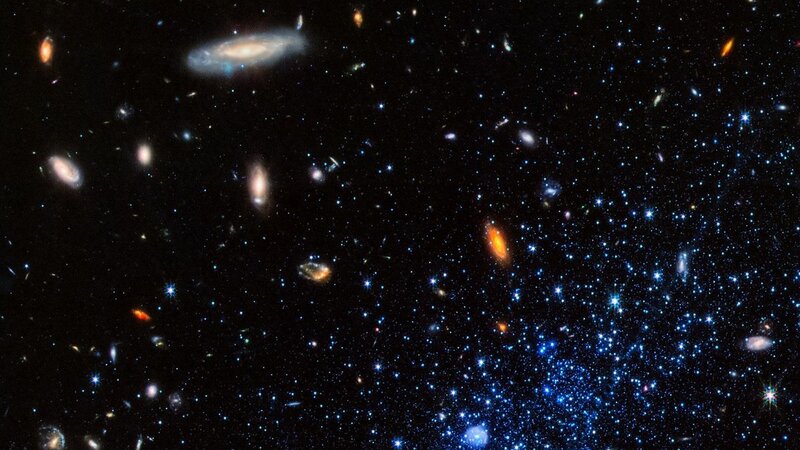
Space photo of the week: James Webb telescope shocks scientists with image of ancient galaxy...
Posted from livescience.com Space
Space Astronomy
 Physics
 Science
Posted 9 mo ago
Responses: 1

Read This Next


 Continue with Facebook
 Continue with Google