

War of Independence

War of Independence

3
3
0
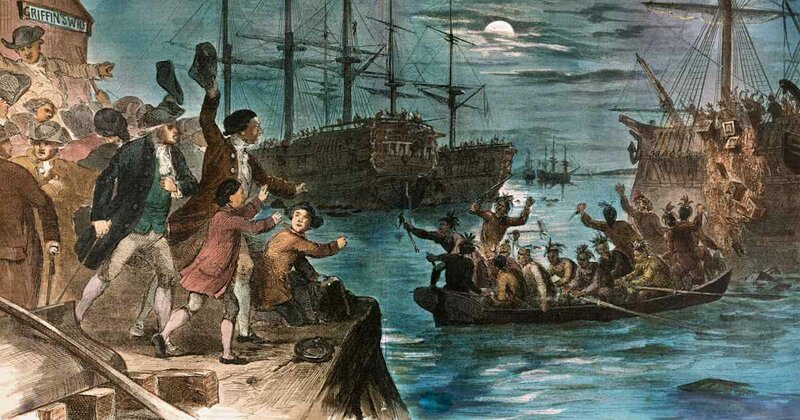
In Boston Harbor, a group of Massachusetts colonists disguised as Mohawk Indians board three tea ships and dump 342 chests of tea into the harbor.
The midnight raid, popularly known as the “Boston Tea Party,” was in protest of the British Parliament’s Tea Act of 1773, a bill designed to save the faltering East India Company by greatly lowering its tea tax and granting it a virtual monopoly on the American tea trade. The low tax allowed the East India Company to undercut even tea smuggled into America by Dutch traders, and many colonists viewed the act as another example of taxation tyranny.
The midnight raid, popularly known as the “Boston Tea Party,” was in protest of the British Parliament’s Tea Act of 1773, a bill designed to save the faltering East India Company by greatly lowering its tea tax and granting it a virtual monopoly on the American tea trade. The low tax allowed the East India Company to undercut even tea smuggled into America by Dutch traders, and many colonists viewed the act as another example of taxation tyranny.
The Boston Tea Party | December 16, 1773 | HISTORY
Posted from history.com War of Independence
 Boston
 American History
Posted 25 d ago
Responses: 2

2
2
0

Hmm . . . reading the article made me think it was more than a notorious "false flag op" that blamed the Mohawks, in response to no more independently smuggled tea.
The colonies were a rag tag operation in many ways, weren't they. That they coalesced and united to fight and win a war of independence seems near miraculous.
However, like the article says, the colonists were protesting "13 years of increasing British oppression" (at that time, since 1760). That means the British oppression was recognized as having started during the last three years of the French Indian Wars/Seven Years War. No doubt that war was disastrous to the economy in the colonies, plus apparently it left, and created, numerous associated issues that remained unresolved, still, in 1773. Seems like our Revolution was part two of that war.
The colonies were a rag tag operation in many ways, weren't they. That they coalesced and united to fight and win a war of independence seems near miraculous.
However, like the article says, the colonists were protesting "13 years of increasing British oppression" (at that time, since 1760). That means the British oppression was recognized as having started during the last three years of the French Indian Wars/Seven Years War. No doubt that war was disastrous to the economy in the colonies, plus apparently it left, and created, numerous associated issues that remained unresolved, still, in 1773. Seems like our Revolution was part two of that war.
(2)
(0)
1
1
0

Read This Next


 Continue with Facebook
 Continue with Google