
Posted on Oct 7, 2015

Do you agree (3) Things Leadership Is NOT?

43.2K
400
98
81
81
0

Do you agree (3) Things Leadership Is NOT?
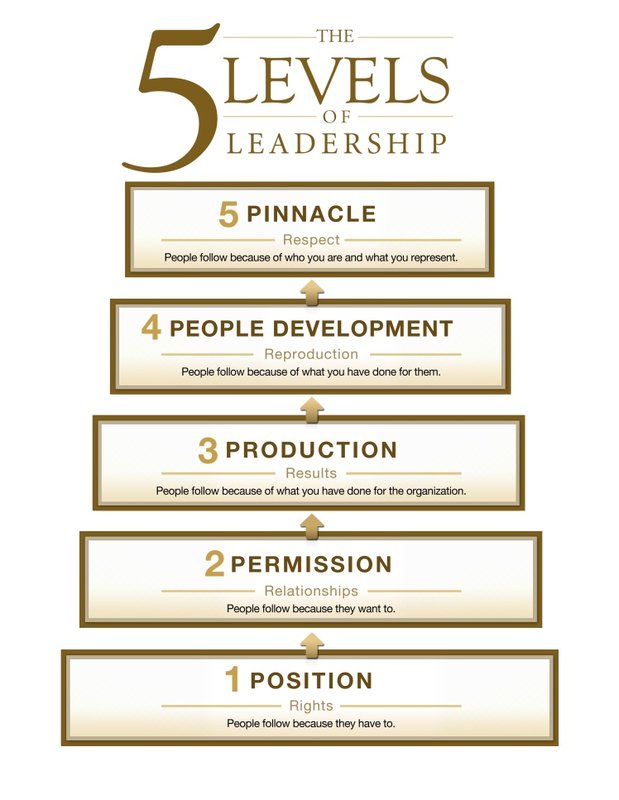
Leadership Is NOT a Position
Leadership Is NOT Power
Leadership Is NOT Pride
RP Members and Connections this is one of those lost Questions that was lost and It has been a while since I've posted something on Leadership, so here we go.
RP members do you agree or disagree with this author's assessment on the (3) things that leadership is NOT?
SEE ENTIRE ARTICLE BELOW
by Dianna Booher Author, speaker, consultant. Leadership communication, executive presence, presentations, CEO at http://www.BooherResearch.com
Leadership—or the lack of it—has been the theme of the last decade. From political pundits, to convention keynoters, to sports team coaches, everybody claims to want a cadre of leaders to carry out their mission.
So for all the talk, training techniques, and tips on the topic, you’d think everyone would have the concept down by now. But not so. A few carrying the title of leader are still off track.
Leadership Is NOT a Position
Real leadership requires personal influence—persuasion afforded by a long track record of strong relationships built by trust. That reserve of trust may have been built by any number of things:
Direct, clear communication without intention to deceive
Consistency ̶̶ ̶̶ actions that match your words
Transparency and openness
Explanations about goals and decisions
A private life that matches the public life
Competence
Concern and compassion for others
An upbeat, positive attitude about the future
When others observe these attitudes in a leader, the personal influence compels them to listen with an open mind—and often to accept the leader’s ideas and opinions as their own.
When the personal influence is missing, a positional title often demands little more than a “hearing”—often met with open skepticism.
Leadership Is NOT Power
Positional power comes from a title—to hire, fire, write a traffic ticket, dismiss from a sports team. But members in all levels of our society have such power. The cashier has “power” to stop buyers before they walk out of store without paying for an item. The librarian has “power” to charge for an overdue book. The night security guard in the building lobby has power to turn visitors away if they don’t have a proper ID to enter the building.
But people in these positions would not necessarily be showing leadership to stop the thief, fine the book borrower, or turn away the building visitor.
Leadership comes from a higher order of power—one not simply granted by the position or title someone holds.
Leadership has to be earned. Your followers grant it. To know if you are a leader, look behind you to see if there are followers.
Leadership Is NOT Pride
Whenever I go to a conference, I’m not surprised to see the most successful attendees in the group taking the most notes. They never stop learning, growing, reflecting, tweaking to make themselves and their businesses better. The less successful often lean back as if they know it all already.
The greatest leaders demonstrate deep humility. Not a false humility, but a genuine humility. Because of their wisdom, they know the vast potential for human growth, and the standards for themselves and their own achievements remain extremely high.
The humble leader listens—to new ideas, to feedback, to those lower “on the food chain” with a different perspective. The humble leader understands that their greatest accomplishment often comes as a result from intake, not outgo.
Effective leaders communicate a lot about position, power, and pride—without ever saying a word.
Dianna Booher is the bestselling author of more than 46 books, published in 26 languages. She consults, writes, and speaks on leadership communication, executive presence, productivity, and faith. Her latest books include What MORE Can I Say: Why Communication Fails and What to Do About It, Creating Personal Presence: Look, Talk, Think, and Act Like a Leader and Communicate With Confidence. National media such as Good Morning America, USA Today, the Wall Street Journal, Investor’s Business Daily, Bloomberg, Forbes.com, CNN International, NPR, Success, and Entrepreneur have interviewed her for opinions on critical workplace communication issues. http://www.booherresearch.com
Leadership Is NOT a Position
Leadership Is NOT Power
Leadership Is NOT Pride
RP Members and Connections this is one of those lost Questions that was lost and It has been a while since I've posted something on Leadership, so here we go.
RP members do you agree or disagree with this author's assessment on the (3) things that leadership is NOT?
SEE ENTIRE ARTICLE BELOW
by Dianna Booher Author, speaker, consultant. Leadership communication, executive presence, presentations, CEO at http://www.BooherResearch.com
Leadership—or the lack of it—has been the theme of the last decade. From political pundits, to convention keynoters, to sports team coaches, everybody claims to want a cadre of leaders to carry out their mission.
So for all the talk, training techniques, and tips on the topic, you’d think everyone would have the concept down by now. But not so. A few carrying the title of leader are still off track.
Leadership Is NOT a Position
Real leadership requires personal influence—persuasion afforded by a long track record of strong relationships built by trust. That reserve of trust may have been built by any number of things:
Direct, clear communication without intention to deceive
Consistency ̶̶ ̶̶ actions that match your words
Transparency and openness
Explanations about goals and decisions
A private life that matches the public life
Competence
Concern and compassion for others
An upbeat, positive attitude about the future
When others observe these attitudes in a leader, the personal influence compels them to listen with an open mind—and often to accept the leader’s ideas and opinions as their own.
When the personal influence is missing, a positional title often demands little more than a “hearing”—often met with open skepticism.
Leadership Is NOT Power
Positional power comes from a title—to hire, fire, write a traffic ticket, dismiss from a sports team. But members in all levels of our society have such power. The cashier has “power” to stop buyers before they walk out of store without paying for an item. The librarian has “power” to charge for an overdue book. The night security guard in the building lobby has power to turn visitors away if they don’t have a proper ID to enter the building.
But people in these positions would not necessarily be showing leadership to stop the thief, fine the book borrower, or turn away the building visitor.
Leadership comes from a higher order of power—one not simply granted by the position or title someone holds.
Leadership has to be earned. Your followers grant it. To know if you are a leader, look behind you to see if there are followers.
Leadership Is NOT Pride
Whenever I go to a conference, I’m not surprised to see the most successful attendees in the group taking the most notes. They never stop learning, growing, reflecting, tweaking to make themselves and their businesses better. The less successful often lean back as if they know it all already.
The greatest leaders demonstrate deep humility. Not a false humility, but a genuine humility. Because of their wisdom, they know the vast potential for human growth, and the standards for themselves and their own achievements remain extremely high.
The humble leader listens—to new ideas, to feedback, to those lower “on the food chain” with a different perspective. The humble leader understands that their greatest accomplishment often comes as a result from intake, not outgo.
Effective leaders communicate a lot about position, power, and pride—without ever saying a word.
Dianna Booher is the bestselling author of more than 46 books, published in 26 languages. She consults, writes, and speaks on leadership communication, executive presence, productivity, and faith. Her latest books include What MORE Can I Say: Why Communication Fails and What to Do About It, Creating Personal Presence: Look, Talk, Think, and Act Like a Leader and Communicate With Confidence. National media such as Good Morning America, USA Today, the Wall Street Journal, Investor’s Business Daily, Bloomberg, Forbes.com, CNN International, NPR, Success, and Entrepreneur have interviewed her for opinions on critical workplace communication issues. http://www.booherresearch.com
 Leader
 Leadership
 Leadership Development
 Professional Development
 Pride
Pride
Edited 8 y ago
Posted 10 y ago
Responses: 70
1
1
0

1
1
0

1
1
0
Leadership is never asking a subordinate to do something that that you are unable or unwilling to do. Good leaders lead by example! Col J Heller Inf USA-ret
(1)
(0)
1
1
0

On the surface I would agree with the statement. With that said I agree with LTC Stephen F. about what leadership is. If you are an effective leader your subordinates will want to follow you to where ever and back. By instilling confidence in your team they will perform at there highest level for a mission accomplished with pride.
(1)
(0)
1
1
0

Leadership is:
1. Recognition. People naturally focus on the leader. No announcement required, soldiers simply go to at ease, and await directives.
2. Presence. Soldiers see you, they instantaneously stand a little taller.
3. Compassion. There is the time to discipline and a time to lend a shoulder and your team knows it.
4. Welfare. Families are foremost and soldiers are given maximum time to be with them.
5. Proficiencies. You know your job, your soldiers know theirs, and when you say let’s go there is no hesitation.
You can tell your peers, that is the best unit on POST, they know it is yours, and they just hang their head. That is LEADERSHIP!
1. Recognition. People naturally focus on the leader. No announcement required, soldiers simply go to at ease, and await directives.
2. Presence. Soldiers see you, they instantaneously stand a little taller.
3. Compassion. There is the time to discipline and a time to lend a shoulder and your team knows it.
4. Welfare. Families are foremost and soldiers are given maximum time to be with them.
5. Proficiencies. You know your job, your soldiers know theirs, and when you say let’s go there is no hesitation.
You can tell your peers, that is the best unit on POST, they know it is yours, and they just hang their head. That is LEADERSHIP!
(1)
(0)
1
1
0

1
1
0

I will agree that leadership is not pride. However In a military sense NCO's and officers that are Squad Leaders, Platoon Sergeants, Platoon Leaders, etc, are said to be in leadership positions. Also the Army defines leadership as the power to influence others in accomplishing the mission by providing purpose, direction and motivation. That definition is also a question for a promotion board.
(1)
(0)
1
1
0

Leadership is an attitude....to do the right thing and teach and be supportive of your staff and your leaders. It only works if you all are going in the same direction.
(1)
(0)
1
1
0
1
1
0

I agree on all three points !!
Leadership and the ability to perform this function is not only something that should be cherished by those who have had this ability bestowed upon them, it should also be earned by your treatment of the very people that you have been designated to "Lead" !!
Leadership and the ability to perform this function is not only something that should be cherished by those who have had this ability bestowed upon them, it should also be earned by your treatment of the very people that you have been designated to "Lead" !!
(1)
(0)
Read This Next


 Continue with Facebook
 Continue with Google