


 Awards
 Antarctica


I would love to go to Antarctica because then I would truly be bipolar.
I think one of the stranger experiences would be looking at a completely new star field. Even half a world away in Afghanistan I could look at the same stars as back home. In Antarctica you can't see the North Star.
I hope you make it down there.

National Geographic photographer’s unbelievable encounter with vicious predator in Antarctica...
We've posted quite a few amazing underwater photography videos here before but this story might be the most unbelievable yet. In the clip (embedded below), National Geographic photographer Paul Nicklen talks about his encounter…

https://www.rallypoint.com/locations/mcmurdo-station-antarctica/current
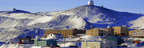
Servicemembers at McMurdo Station, Antarctica | RallyPoint
Connect with military members and veterans around McMurdo Station, Antarctica. Share advice and learn from others with your experience.
SrA Mosher, I will just have to settle for flying in Alaska again later.
https://www.rallypoint.com/answers/have-you-ever-seen-anyone-wearing-a-glider-badge

Have you ever seen anyone wearing a Glider badge? | RallyPoint
Have you ever seen anyone wearing a Glider badge? How many Soldiers could you ask before receiving the correct answer without the help of a search engine?

That all said my 3 deployments to the Ice was by far my best deployments. The people within the command became like family. I'm still in touch today with several I deployed with and in fact one of them I found on FB a few years ago lives just 4 miles away and we get together often and to this day still consider him one of my Best Friends.

While in Davisville, I was an Instructor and taught the Winter Over Electronics Technicians how to operate and maintain High Power High Frequency Radio Transmitters that operated at up to 40,000 KW output. These were the primary means of outgoing communications for the McMurdo Community.
Once we Deployed to McMurdo, I spend the first month at the transmitter site, up on the hill overlooking beautiful downtown McMurdo. I taught refresher courses in all aspects of communications maintenance and repair as well as getting ready for my primary duty in Antarctica, Electronics Field Team. As a Field Team Member I would travel to all of our outlying sites and repair the old and install any new gear. As a part of the Field Team I visited and worked at South Pole, Siple, Byrd, and Hallett. Palmer Station, although part of the Continent is not really South of 60 and was not on our list of Stations to visit. The techs we sent there went there via South America and had a totally different story.
Part of the "fun" of being in Antarctica was that it was open to all countries and there were NO classified areas. All communications and other areas could be inspected by any country at any time and sometimes were. The Navy was actually under contract to and paid by the National Science Foundation so even though our pay stayed the same, it was all reimbursed by NSF to the DOD.
My advice, go and have fun. I was Summer Support, but the Winter Over Personnel had a blast to and the two week turn around time at Christchurch, NZ (back then) was really a great time.
Seabee Museum & Memorial Park .. original home of the Seabees
These are examples of Seabee Battalion patches from the Museum's collection. They are embroidered on cloth, about 3-inches in diameter.
The link is VERY interesting. One fact I did not know,"On D Day on Normandy’s beaches, approximately 10,000 Seabees of Naval Construction Regiment 25 manhandled pontoon causeways onto the beach." This shows how much our Military Team worked together in WWII.

A senior NCO once advised me to "always be nice to the help."
It's good advice.

---
Short answer is that there is no "permanent" US military presence in Antarctica. The Navy handed over to the NSF in the mid-90s and it's been that way since. There are military support functions that come and go during the seasons. LC-130s out of the 109th Airlift Wing (NY ANG) provide flights to/from and around the continent during the summer months. C-17s out of McChord fly missions between Christchurch, NZ and McMurdo, primarily during the summer months. USCG (icebreakers) and USN (cargo handling and port services) are also involved, for short project periods during the summer seasons. The Corps of Engineers brought a portable causeway down one summer when our ice-pier was unusable. So - there's a lot of US military activity down here - but not really a "duty station" or "assignment"
http://www.lockheedmartin.com/us/products/antarctic-support-contract/jobs-in-antarctica/visit-partners.html
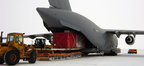
Lockheed Martin and its subcontractors hire approximately 1,000 positions annually to work contract jobs in Antarctica.


 Continue with Facebook
 Continue with Google