Posted on Nov 18, 2013
MG Peter Bosse
28.5K
263
108
23
23
0
One definition of leadership is anyone who has followers. Another definition is getting things done through others. When I think of leadership, I believe it's about providing vision and direction that causes others to pursue that vision and direction. What do you think? 
Avatar feed
Responses: 79
LTC Rob Hefner
17
17
0
Leaders develop other leaders. I used to think leadership was best defined as the ability to inspire others to do what they otherwise would not be willing to do.  After the last five years of study I've changed my mind. Now I would define it as the ability to be who they otherwise would not be capable of being. Leadership is developing others, achievements are nothing but a welcome byproduct of doing so. Once we fully understand that leadership is about them, not us, our perspective changes and we can actually become a Soldiers first, mission always kind of Army.
(17)
Comment
(0)
CMC Robert Young
CMC Robert Young
12 y


Sir, I concur completely. An often ignored facet of leadership is the necessity to prepare for our departure.


“What we have done for
ourselves alone dies with us. What we have done for others remains immortal.” -
Albert Pike


(7)
Reply
(0)
CH (CPT) Heather Davis
12 y
Respectfully Sir, Leaders also protect the next generation and provide them grace and direction to grow.
(3)
Reply
(0)
LTC Rob Hefner
LTC Rob Hefner
12 y
SCPO Young, I love that quote! I havent seen it before but guarantee I will use it in the near future. 
I was once in a  situation to be able to see a team that I built perform in my absence. It was sobering. I thought I was a leader, but seeing the team flounder without my constant (and in retrospect, intrusive) guidance demonstrated clearly that I was not leading, I was directing. They were not empowered to make tough decisions, I had made those for them, creating a culture that stroked my fragile ego but did not make my Soldiers better. I failed them and will never do that again. If I had been a leader they would have performed without my presence. Especially in the military, we are always training our replacement. If  we  fail to do so we  not only fail our  subordinates but fail our service. 
(4)
Reply
(0)
SFC Broker
SFC (Join to see)
12 y
Excellent comment.  I knew a senior NCO who told me that we have an obligation to make sure the Army we leave behind us is as good or better than the Army we served in.  Regardless of pay grade or duty position, we all have some sort of influence on the people and events surrounding us.
(3)
Reply
(0)
Avatar small
Healthcare Specialist (Combat Medic)
7
7
0
Sir,

I've come across this very thread a dozen times at least and each time, left it be thinking it is not my place to comment on it. However, I believe I have an answer to your question. It is an assessment of what leadership often is in many cases and what it should be.

Leadership is an umbrella term that encompasses thousands of different types of "leaders". It is comprised of people who for whatever reason have stepped up to the plate and have decided to take responsibility for accomplishment of a task through utilization of a team.

But there should be more to leadership than that. Many leaders in my limited experience are focused solely on accomplishment of the goal at hand. And to say that the goal at hand should not be the central focus is wrong, but to say it should be the only focus is equally wrong.

Leadership, in its truest form, is being able to motivate your subordinates to perform the goal at hand. It is also being the one who holds the career for which the death knell rings when failure should be at hand. Because leaders that is what leadership is; it is being the person to blame when failure is at hand and the person who points to his men for whom gratitude should be given to when success is at hand.

Leadership is knowing that you are the least important person on the team (whether it be Military or Private Sector), because the team can function without you. You can not function without the team. And it is for that reason that you should always place their welfare first, because they are the people who allow you to do your job. They assist you in accomplishment of your goals or completion of your mission which is why a good leader should never forget that the welfare of their subordinates should always come first.
(7)
Comment
(0)
MG Peter Bosse
MG Peter Bosse
>1 y
Outstanding!
(1)
Reply
(0)
Healthcare Specialist (Combat Medic)
(Join to see)
>1 y
Thank you for your thoughts, Sir.
(1)
Reply
(0)
SSG General Services Technician And State Vehicle Inspector
SSG (Join to see)
>1 y
(Join to see), I have to agree with the other compliments here. Very well stated. Keep your head up and continue to learn from your leaders, whether good or bad, for their actions and words will ultimately form YOUR leadership style. I hope you stay in for a while and continue to improve yourself as well as each unit you serve in.
(1)
Reply
(0)
Healthcare Specialist (Combat Medic)
(Join to see)
11 y
SSG, I wish I could say I would, but I'm currently finishing my outprocessing. I'm just happy to have learned what I have from those who have been willing to teach.
(0)
Reply
(0)
Avatar small
Col Regional Director, Whem/Ssa And Congressional Liaison
7
7
0

Sir, great question, for my input I'll have to concur with John C. Maxwell's thoughts on the subject, according to Maxwell... "Leadership is influence--nothing more, nothing less."


Although concise, I believe there is a lot to consider in those few words.  I have reflected on Dr. Maxwell's statement often over the years, and consistently go back to it when analyzing historical leadership examples, and use it as a lens to view my own leadership, as well as my growth as a mentor--on the subject of leadership. 


Excellent topic, thank you for posting, Sir; I look forward to seeing others' ideas on the subject! 

(7)
Comment
(0)
Col Regional Director, Whem/Ssa And Congressional Liaison
Col (Join to see)
12 y
Thank you for the response, I have to say that you have me thinking as well; we've taken a bit more of a philosophical definition, which serves as an excellent thought exercise.  When reading your reply, I started thinking about leadership qualities or attributes as an extension of defining leadership types. Napoleon Hill listed '11 leadership attributes' sometime around the late 1930s, I think it's safe to say that his principles have stood the test of time, and his concepts fit leadership in more than the purely philosophical definition. Thanks again for your thoughts and for expanding the discussion!
(2)
Reply
(0)
PO2 Alex M.
PO2 Alex M.
12 y
The key to leadership is to get people to follow you because they want to, not because they are afraid of you. Leadership in your sense of the definition will result in people wanting to follow you based on reason. Leadership based on fear only lasts so long. I work in law enforcement and I can tell you that the best cases relating to gangs come from angry ex-girlfriends that are no longer afraid of their gang member ex-boyfriend or the other way around. A leader should not have a time stamp on influence.
(3)
Reply
(0)
LTC Rob Hefner
LTC Rob Hefner
12 y
Crap! Mark, I was gonna leave this alone but I just   can't    do   it! Its only a matter of time before somebody brings out a list. Leadership attributes are important, but they come from somewhere. lists don't matter, who you are matters.. Trying to act according to a leadership checklist only muddies the reflection of who you are. The more clear the reflection the stronger the leader. We all see the world through the prism of our own experience,  and philosophical definitions will be different from practical definitions. All definitions of leadership will include influence or its synonym and I accept them all with one caveat: if the definition leaves out my Soldiers/your Airmen it is invalid. Even in the military we lead people, and we lead because they let us. Focus on them, it's all good. Focus on you and I'll tell a Cav Scout you insulted his mother.
(3)
Reply
(0)
SFC Fire Support Specialist
SFC (Join to see)
12 y
An interesting discussion gentlemen, you both have me thinking very hard about the topic. It seems like a simple question, but at the same time begs many of it's own. To define leadership, in my opinion, is to simply define it. I agree with both of you, what is done with it is what makes it good or bad. As MAJ Burns has said, we can ask ourselves what defines a good or bad or ethical, etc. leader and likely continue on with about 20 or so categories of leadership but, whether good or bad, does that change the fact that influence is the primary component of leadership? I don't think it does. So, as simplistic as it is, I think Dr. Maxwell got it right on the money.
(3)
Reply
(0)
Avatar small
Avatar feed
How do you define leadership?
SSgt Forensic Meteorological Consultant
7
7
0
Leadership as I see it,  is the ability to inspire.    Whatever that cause may be,  when you make a person feel welcome and part of something you bigger,  you have instilled pride and improved a person or unit.    And this does not end with active service.  We all know Veterans in need and it is up to figure some way out to help.    I plan on continuing to set a good example by my work in the community.   Things like Typhoon Yolanda,   homeless veterans and support of other veterans who are aging.

I see it at the VA all the time.   We can all be nice to veterans past and present and to exemplify the characteristics we want our kids to have.
(7)
Comment
(0)
Avatar small
1SG Michael Blount
6
6
0
1265940 439045716214158 1405047585 o
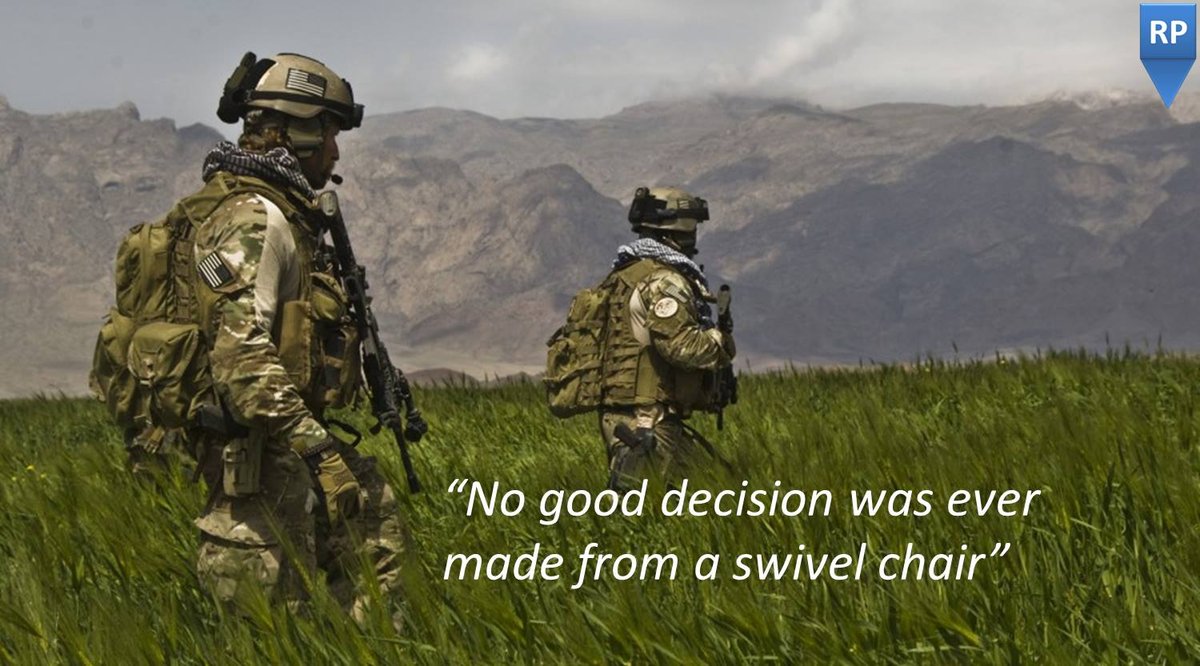
I'll follow anybody who is willing to chew the same dirt as me.  
(6)
Comment
(0)
Avatar small
CH (CPT) Heather Davis
6
6
0
Sir, respectfully I define Leadership by being the example, enlarging your subordinate's duties, challenging the comfort zone, and the ultimate ingredient is transparency for a Leader. Providing grace for lessons learned, pushing towards endurance and consistently developing junior subordinates by showing a passion for serving others. This starts from the top and down to the private. Leaders grow Leaders and protect their future, weed out the individuals who want to be served.
(6)
Comment
(0)
CMC Robert Young
CMC Robert Young
12 y

Ma'am, your point about challenging the comfort zone is something we often fail to address when leading. A leader must be willing not only to leave their own comfort zone, but to inspire their subordinates to do likewise. And at those moments of failure, not lose the lesson of having dared greatly,and failed. But instead use it as a chance to improve, not an excuse to seek a return to our comfort zone. Our greatest opportunity for growth and the growth of our subordinates is not when we are satisfied and secure, but when things are not as we would have them be.


My experience is that good leaders are rarely comfortable. Good post.

(4)
Reply
(0)
CH (CPT) Heather Davis
12 y
Respectfully Senor Chief: I have found that it was the cowboys in the Vietnam Era that defined the new norm. I would not have been able to transition from enlisted to Warrant to Chaplain if it wouldn't have been the passion and heart to push through obstacles. General Patton had an undying passion and he had heart and mettle. Leadership is caught and challenges are the platform for success.
(2)
Reply
(0)
Avatar small
CPT Human Resources Officer
6
6
0
Sir,

I think both are reasonable definitions. It depends on the circumstance. Sometimes I need my guys to become stakeholders in a mission, sometimes I just need them to get it done.

Either way,  I owe it to my men to be the follower to my leaders I expect them to be for me. Which would be my definition I guess.
(6)
Comment
(0)
CMC Robert Young
CMC Robert Young
12 y
Sir, I would offer for your consideration from my personal experience that people who take ownership of the mission not only do a better job, they become leaders in their own right.
(4)
Reply
(0)
SFC Fire Support Specialist
SFC (Join to see)
12 y
An outstanding view Sir.
(3)
Reply
(0)
Avatar small
SSG Robert Burns
5
5
0
To me besides all the philosophies, definitions, beliefs, etc...the one thing that makes you a leader is FOLLOWERS.  You can have all the training, character, skills, traits you want; if you turn around and there's no one behind you, you are NOT a leader.
So I think the MOST important quality of a good leader is his/her followers.  I believe the way you measure a leader is by the ability of his followers to accomplish the vision of the leader.
This goes all the way back to kindergarten.  You may think you are the line leader in your class, but if you turn around and see no kids behind you, your just a silly looking kid roaming the halls all alone.
(5)
Comment
(0)
Avatar small
BG Entomology
5
5
0
Leadership is the ability to be fair to the extent that you do the right thing for the right reasons that serve in the interest of the mission and those whom you lead.  You use your position of authority and station to improve the well being of Soldiers while adhering to the Army Values.  You mentor the junior leaders of today to be the senior leaders of tomorrow and the hardest environment in the Army to do this is in the Reserves where training time is limited, civilian obligations are a reality, family time is impacted and career advancement is a challenge.  No where else do I see these realities being more challenged than the TPU and DIMA programs.  

Question:  How do senior leaders develop and retain these junior leaders of tomorrow given the financial and personal expense to them.  The 2014 QDR address some of these challenges in regards to the ever evolving Reserve Operational Force and the need to have RC shift to BPC in order to utilize our highly talented Soldiers in the total operational force which in turn helps to retain these folks to be our future leaders.  Keeping RC engaged in solid training and mission helps to keep our RC not only ready but our Soldiers engaged and that results in productivity, pride of service and better leadership development.  

  
(5)
Comment
(0)
SSG Mike Angelo
SSG Mike Angelo
>1 y
gotta luv those acronyms.
(0)
Reply
(0)
Avatar small
COL Staff Judge Advocate
5
5
0
The Army textbook answer, which I think encapsulates the concept well is that “An Army leader is anyone who by virtue of assumed role or assigned responsibility inspires and influences people to accomplish organizational goals. Army leaders motivate people both inside and outside the chain of command to pursue actions, focus thinking, and shape decisions for the greater good of the organization.” FM 6-22, para. 1-2. However, sometimes, the “organizational goals” can be nebulous, especially at the higher rungs of leadership where leaders are expected to derive those goals from national priorities. It is especially at that stage that leaders need a vision nested in history, philosophy, and strategic thinking. This discussion reminds me of War College.
(5)
Comment
(0)
SSG Mike Angelo
SSG Mike Angelo
>1 y
Col, Would this style of leadership work in the civilian world? if so, how does personal leadership come into play with the army's leadership model? The reason why I ask is because we have military organizations such as the American Legion, VFW, Purple Heart association etc. which all have different standards of leadership.
(0)
Reply
(0)
Avatar small

Join nearly 2 million former and current members of the US military, just like you.

close