
Posted on Jun 2, 2015

How many military members actually see combat?

253K
2.77K
797
318
317
1
I am a recruiter for the Navy and I constantly have "battles" with people who are interested in the Marine Corps and Army and I tell them that not everyone will see combat and that in fact if you are infantry/medic/truck driver you pretty much don't leave the base you're at. Is that a true statement? I'm not a huge fan at all about being a liar just to get people to join. Just trying to get my facts straight. Thanks
 Combat
 Recruiter
Posted >1 y ago
Responses: 529
0
0
0

I was a Combat Medic (with CMB) in RVN attached to Charlie Company, 4/31, 196, Americal. My tour in Viet Nam was 13 months, 12 of which were spent in the bush chasing bad guys. Not true in my experience.
(0)
(0)
0
0
0
I was a Combat Medic in Vietnam and in my 13 month tour with the 4/31, 196th in I Corps, I was in the bush for 12 months. Not true ion my experience.
(0)
(0)
0
0
0

Check out the stats on 88m. Ever hear of IEDs, roadside bombs?
Yeah we are easy targets.
Yeah we are easy targets.
(0)
(0)
0
0
0

Not a true statement. Navy Corpsmen serving with the Marines go where the Marines go. You can't take care of you people from the rear. When they fall you are there come hell or high water.
(0)
(0)
0
0
0

The likelihood of seeing "combat" increases across a lot of MOS's the earlier the operation begins.
For instance, when we invaded Iraq, plenty of Combat Arms (Artillery, ADA, Infantry, etc.) MOS's were directly involved in combat or combat operations, as were plenty of "support" units (The 507th comes to mind, just off the top of my head.).
The reason for this, is that the advancing units, primarily combat arms, must be reinforced and supported by support units.
The Fedayeen and Republican Guard, for example, would often not directly engage combat arms units because they would be turned into hamburger.
So they would isolate and wait for support units advancing from the rear.
The reason so many combat arms units saw so much action,. however, is they are *directly tasked* with kicking down doors, holding COP's, convoy escorts, and various other operations directly expected and held by their MOS.
There is no "coddling" here, but I have immense respect for the "pipe-swinging door klckers" (Like "The Sheriff of Baghdad", who was growing in legend while I was actively there.) whose daily role was exactly that.
To kick in doors, and carry the biggest stick in the AO while I spent probably 70% of my time in an air conditioned engagement control van in an air defense unit, and the other 30% (because I was lowest in rank in commo) doing convoy escort, guard detail, and RSOP.
I tend to tie the likelihood of an individual seeing combat to two factors:
A.) Location in theater
and
B.) Period of time in theater
What you run into, for example, is the sheer fact that 88M's ("Truck Drivers") running MSR Tampa earlier in operations, or during specific surges, were far more privy to enemy contact or action, and at a minimum, exposed to the detritus of war; e.g. Dead, vivisected, rotting, burning, corpses of men, women, and children, as well as possible friendlies, or various other extreme-risk contacts. Anybody remember the kids running up to convoys with big bags of looted stuff to sell while we were on edge during Thunder Run? Talk about a bad idea!
I am not, nor was I, an 88M (I was attached to ADA as a 31R/25Q, then regular line units later).
I just find them a convenient example.
Someone like you, from a branch that frankly doesn't know it's Richard from a doorknob about the combat exposure of other branches, might turn and talk to one 88M who says, "Yeah we didn't do anything really, just ran supplies from Doha to Virginia and back.", (Was civilians if I remember correctly, though. Maybe a mix of both.) and then apply this to other 88M's inappropriately.
Then you sit down with one who ran convoys up MSR Tampa to Ramadi, BIAP, Fallujah, etc., or ran retrieval operations in some pretty dangerous areas, and treat them as if they are the former example, which is a huge mistake, and may diminish or disrespect their actual contributions or actions, which is a really scummy thing to do.
Unless you have intricate or fairly-informed knowledge of the complicated timeframes and specifics of a given operation, it's a very dangerous, and frankly narcissistic to pretend you do.
Oh, and I am extremely curious: What do you think infantry/combat medics/MP's etc. do?
I am truly baffled by your position on this.
For instance, when we invaded Iraq, plenty of Combat Arms (Artillery, ADA, Infantry, etc.) MOS's were directly involved in combat or combat operations, as were plenty of "support" units (The 507th comes to mind, just off the top of my head.).
The reason for this, is that the advancing units, primarily combat arms, must be reinforced and supported by support units.
The Fedayeen and Republican Guard, for example, would often not directly engage combat arms units because they would be turned into hamburger.
So they would isolate and wait for support units advancing from the rear.
The reason so many combat arms units saw so much action,. however, is they are *directly tasked* with kicking down doors, holding COP's, convoy escorts, and various other operations directly expected and held by their MOS.
There is no "coddling" here, but I have immense respect for the "pipe-swinging door klckers" (Like "The Sheriff of Baghdad", who was growing in legend while I was actively there.) whose daily role was exactly that.
To kick in doors, and carry the biggest stick in the AO while I spent probably 70% of my time in an air conditioned engagement control van in an air defense unit, and the other 30% (because I was lowest in rank in commo) doing convoy escort, guard detail, and RSOP.
I tend to tie the likelihood of an individual seeing combat to two factors:
A.) Location in theater
and
B.) Period of time in theater
What you run into, for example, is the sheer fact that 88M's ("Truck Drivers") running MSR Tampa earlier in operations, or during specific surges, were far more privy to enemy contact or action, and at a minimum, exposed to the detritus of war; e.g. Dead, vivisected, rotting, burning, corpses of men, women, and children, as well as possible friendlies, or various other extreme-risk contacts. Anybody remember the kids running up to convoys with big bags of looted stuff to sell while we were on edge during Thunder Run? Talk about a bad idea!
I am not, nor was I, an 88M (I was attached to ADA as a 31R/25Q, then regular line units later).
I just find them a convenient example.
Someone like you, from a branch that frankly doesn't know it's Richard from a doorknob about the combat exposure of other branches, might turn and talk to one 88M who says, "Yeah we didn't do anything really, just ran supplies from Doha to Virginia and back.", (Was civilians if I remember correctly, though. Maybe a mix of both.) and then apply this to other 88M's inappropriately.
Then you sit down with one who ran convoys up MSR Tampa to Ramadi, BIAP, Fallujah, etc., or ran retrieval operations in some pretty dangerous areas, and treat them as if they are the former example, which is a huge mistake, and may diminish or disrespect their actual contributions or actions, which is a really scummy thing to do.
Unless you have intricate or fairly-informed knowledge of the complicated timeframes and specifics of a given operation, it's a very dangerous, and frankly narcissistic to pretend you do.
Oh, and I am extremely curious: What do you think infantry/combat medics/MP's etc. do?
I am truly baffled by your position on this.
(0)
(0)
0
0
0

Maybe things have changed, never knew a marine unit that didn't have a Navy medic. Has it changed that much?
(0)
(0)
0
0
0

I honestly don't know because I was never in a combat zone, but it sounds backward to me. I always pictured Infantry as the ones on patrol and in action, and with a Medic in each group. Truck Drivers? Unless it's a really huge base, where would they drive the trucks to without leaving base? My uncle drove fuel trucks in Viet Nam, but he drove them between bases and outposts.
(0)
(0)
0
0
0

Wow just wow, I was a Human Resources that saw combat so it really s
Doesn’t matter what your job is but if you are infantry/medic/truck driver you will most likely see combat. And when they are not deployed from home they training to deploy
Doesn’t matter what your job is but if you are infantry/medic/truck driver you will most likely see combat. And when they are not deployed from home they training to deploy
(0)
(0)
0
0
0

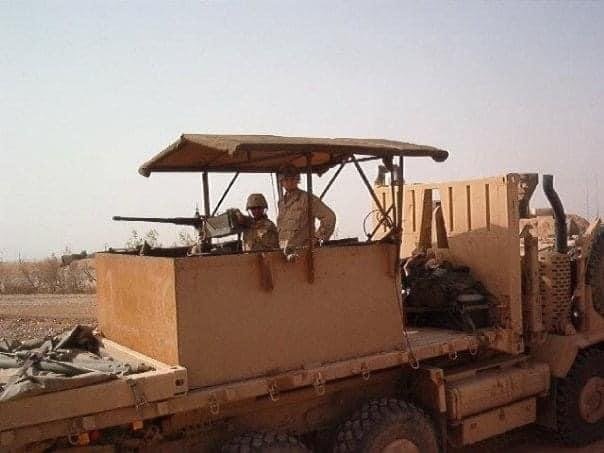
Sir you could not be more wrong. How do you think the Combat arms MOSs received their ammo, food or anything else. Truck drivers who had to pick up in say Kuwait and drive it up to Harbor Gates in Northern Iraq. We didn’t have thermal sights nor up to date weapon platforms.
(0)
(0)
0
0
0
Hello, a fellow veteran when you raise your right hand to join the military.
the mission is to prepare to go to war, in a combat zone or in support of one
we all could potentially end up in a combat zone. during Iraq and Afganistan. the national guard ended up fighting in the desert. So for your recruits that watch too many war movies if they stay in the rear, they should count themselves blessed..........................
the mission is to prepare to go to war, in a combat zone or in support of one
we all could potentially end up in a combat zone. during Iraq and Afganistan. the national guard ended up fighting in the desert. So for your recruits that watch too many war movies if they stay in the rear, they should count themselves blessed..........................
(0)
(0)
Read This Next


 Continue with Facebook
 Continue with Google