
Posted on May 19, 2015

Is it worth it to knock out someone who walks on the American flag and then secure the flag?
Suspended Profile
37.3K
639
234

 Patriotism
 Violence
 Crime
Crime American Flag
Posted >1 y ago
Responses: 93

I've done this. It was a singularly satisfying thing to stand there with the flag.

No. While I hate it, I also know full well I (we) have enabled peoples rights to be idiots within the confines of the Constitution and laws. I think I would definitely say something, but I try to temper when I resort to physical force.

So, disrespect should beget violence? That's what you're saying if you think it's alright to harm someone for insulting you. I can't condone that or even respect it

this past friday, a teacher in a local high school did this in front of his class....
http://wthitv.com/2015/05/19/upset-in-martinsville-involving-the-american-flag/
http://wthitv.com/2015/05/19/upset-in-martinsville-involving-the-american-flag/
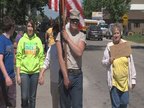
"It's just disgraceful," Martinsville in an uproar after teacher accused of stomping on American...
A controversial situation involving a teacher has thrown a community in an uproar.
SGT Anthony Bussing
there are some good comments...but if you chose to go there, please note that thi is a backwater small town in rural Illinois...lol...

A friend of mine put it best.
I was willing to give my life for that flag going to jail doesn't mean shit.
I was willing to give my life for that flag going to jail doesn't mean shit.
CDR Michael Goldschmidt
Really? It was the flag you were prepared to sacrifice your life for? Where in your oath, Airman, does it say anything about national symbols? It does, however, obligate you to support and defend the Constitution.
SrA (Join to see)
Cdr with all due respect you need to re-read the,first line of my comment satatimg that those are not my words even so... My oath does not,come into play on this... That flag stands for,this great country the myself and many others shed blood for... And before this gets into a argument I respect your opinion even thou it,differs from mine but that is my opinion after seeing family and friends coffins wrapped in that piece of cloth that we call our flag yes I would sacrifice my life for that flag as it stands for everything that I swore an path to protect... Just like the standard bearers in the civil war would protect,that standard with their very life if need be

Personally, I'd pull out my smartphone, open up the video feed, and start listing off the names of people that have died for their right to be stupid-while standing about 2 feet away from their face and looking them dead in the eyes.
One of the foundations of our nation is the right to criticize the government and trampling the symbol of that government is one of the loudest messages of criticism that one can engage in. We all took an oath to defend the Constitution which protects the right of the individual to express themselves. However, there is absolutely nothing preventing you from exercising your Constitutional right to express yourself in telling them how worthless they are.
SFC Robert Wheeler
1SG, I completely agree as a retired NCO but (and there is always a but) we did what we did out of a sense of love for the freedoms and the people we served to protect. There should never be a "wage" for that. The people owe me nothing. If you are honest with yourself, nobody in their right mind is never "willing" to die for their country. They are more interested in (to paraphrase Gen. Patton) in letting the enemy die for their country.
SGT Kevin Brown
The Flag may be used as a symbol by our government, but it is first and foremost a symbol our our Unity (as states) and of those who have died to defend it. If someone wants to protest the government, by all means, but you stomp on the honor of my brothers and sisters, you are liable to kissing pavement. I agree that no American is held above another and it is our duty (under our Oath) to defend everyone's rights whether we agree with how they exercise them or not, but to me defending the honor of my brothers and sisters is worth some time in jail. They can still protest however they want, they will just be doing it with a black eye.
SFC Robert Wheeler
Well, if you are in such a hurry to go to jail, come on up and visit me and I will help you get there. You need to pull your thinking organ out of your 4th point of contact and get it square that people have a RIGHT to use the flag in protest. It is not a nice to have opportunity but a First Amendment right. So, yeah, if you are in a hurry to go to jail, then come and visit me. Our local jail is a nice place to visit while you get your attitude squared away.
SGT Kevin Brown
SFC Wheeler, it is not about wanting to go to jail, nor is it about violating the rights of others. I understand their right to protest (whether I agree with them or not), but every action you take whether you have the right to do so or not, comes with a level of liability. I have the freedom of speech, but I wouldn't scream racial slurs at a black man, nor would I interrupt a sermon of any faith in protest of who they are or what they believe, because I would most likely get my ass kicked. If you do something that pisses off a lot of people, you do so with the liability negative response. That doesn't justify my willingness to knock them out, but my extreme anger over the desecration of what I hold sacred sure as hell does.
I could burn a cross outside your house, tear up a Quran on your block or do anything I want in the name of expression (whatever offends you most). At what point are you offended to the point you take action? At what point do you feel obligated to stop what is going on? At what point do you defend what you value and cherish the most?
I have given parts of me to that flag and I know to many that have given even more. That flag is more then a piece of cloth to me and so punching some guy for turning it into a floor mat is worth a few days in jail to me. I understand you don't see this as something that would be the right action, that is your choice. For me I choose to do what I think is right, even if it means standing alone and doing something others consider to be wrong.
I could burn a cross outside your house, tear up a Quran on your block or do anything I want in the name of expression (whatever offends you most). At what point are you offended to the point you take action? At what point do you feel obligated to stop what is going on? At what point do you defend what you value and cherish the most?
I have given parts of me to that flag and I know to many that have given even more. That flag is more then a piece of cloth to me and so punching some guy for turning it into a floor mat is worth a few days in jail to me. I understand you don't see this as something that would be the right action, that is your choice. For me I choose to do what I think is right, even if it means standing alone and doing something others consider to be wrong.

Walking on my flag doesn’t make you a protester. It just st makes you an asshole!!!!

My DS (Ninja), would tell me to do the right thing and not get caught.
Do with that what you will.
Do with that what you will.
Bearing in mind, I have not read anyone else's response to this, here is my opinion: Is it worth it? No, undoubtedly not. Violence is rarely worth the effort (ironic, coming from an Infantryman, right?). However, that being said, it certainly is satisfying to lay someone out for disrespecting what we fight so hard to defend.
Read This Next


 Continue with Facebook
 Continue with Google
The same thing goes when you hear someone make a racist, sexist or put-down of someone else. Here are the words leaders need to use, "I DON'T LIKE WHAT YOU JUST SAID TO him/her." Now if the idiot is bigger than you, keep walking past them as you say these words. If you are bigger and stronger, just stand your ground and listen for the asshole to reply. Then only repeat those words, "I DON'T LIKE WHAT YOU JUST SAID TO him/her."
If you are a leader say, "YOU ARE EXPECTED NOT TO (fill in the blank)." Don't waste you time sighting military regulations. Simply tell the subordinate what is expected of them. It is thereby understood that is what you don't want or dislike he/she to do again.
I would not say anything about someone disrespecting our flag. It is only a goddamn piece of cloth. I dislike all the angry people express over what other people do to our US flag.
Confederate statues in the National Statuary Hall in the U.S. Capitol
which was authorized by Congress over 150 years ago. Since then, each state has chosen two statues to represent two notable figures from their states. States like Mississippi, Florida, Georgia, and Virginia, have selected prominent Confederate leaders for their statues and they are on display for all visitors to the Capitol to see.
Jefferson Davis the president of the Confederate State of America
Alexander Hamilton Stephens, the Vice President of the Confederate States
Robert E. Lee
Charles Aycock, the former governor of North Carolina and a supporter of white supremacists.
John C. Calhoun, the seventh vice president of the United States who strongly supported slavery.
former North Carolina Gov. Charles Aycock https://www.circa.com/story/2017/08/17/politics/confederate-statues-in-the-us-capitol-part-of-national-statuary-hall-collection
Confederate Flags and Forts named after war criminals
US Fort Leonard Wood and Fort Chaffee were named in honor of General Leonard Wood and General Chaffee were war criminals during in the Philippine American War.
U.S. Army operates posts named for ten Confederate. Col. Steve Warren, a Pentagon spokesman, said there is no discussion underway about renaming the posts.
Fort Lee, Va., just south of Richmond, honors General Robert E. Lee the South’s commanding officer by the Civil War’s end. The War Department created Camp Lee within weeks of declaring war on Germany in 1917. The Pentagon promoted it to Fort Lee in 1950.
Fort Gordon, Ga., honors Lieut. General John Brown Gordon was one of Lee’s most-trusted officers. The post began as Camp Gordon in 1917; it became Fort Gordon in 1956. “Generally acknowledged as the head of the Ku Klux Klan in Georgia, he was elected to the U.S. Senate in 1872,” according to the New Georgia Encyclopedia (Gordon denied the charge). “By the time of his death in 1904, Gordon had capitalized on his war record to such an extent that he had become for many Georgians, and southerners in general, the living embodiment of the Confederacy.”
Fort Benning, Ga., honors Brigadier General Henry Benning. He was a Georgia lawyer, politician, judge and supporter of slavery. “In the wake of President Lincoln’s election, Benning became one of Georgia’s most vocal proponents of secession,” according to the New Georgia Encyclopedia. “On November 19, 1860, he delivered a speech before the state legislature urging immediate secession. The Army established Camp Benning in 1918; it became a fort four years later 1950.
Fort Bragg, N.C., honors General Braxton Bragg: When the War Between the States broke out, Confederate President Jefferson Davis made Bragg a brigadier general. He then took command of the Confederate Army of Tennessee from the summer of 1862 to the end of 1863. He was a full general commanding nearly 40,000 troops. His career is remembered by most historians as a series of continuous calamities and blunders; often resulting in disaster.
Fort Polk, La., honors Lieut. General Leonidas Polk. It was established in 1941. Polk’s immediate superior, General Braxton Bragg, of Fort Bragg fame. Before being killed in action in 1864 during the Atlanta campaign, Polk committed one of the biggest blunders of the war. He sent troops to occupy Columbus, Ky., which led the Kentucky legislature to appeal to Washington for help, ending the state’s brief try at neutrality.
Fort A.P. Hill, Va., honors Virginia native Lieut. Confederate General Ambrose Powell Hill commanded the Third Corps of Robert E. Lee's Army of Northern Virginia, which he led in the Gettysburg Campaign and the fall campaigns of 1863. The Army created the post six months before the Japanese bombed Pearl Harbor in 1941. A Union soldier from Pennsylvania shot and killed Hill in Petersburg, Va., a week before the end of the Civil War.
Fort Hood, Texas, honors native Confederate General John Bell Hood. The post began as Camp Hood in 1942, becoming a fort in 1950. In 1864, at the age of 33 was promoted to temporary full general and command of the Army of Tennessee at the outskirts of Atlanta. He was decisively defeated at the Battle of Nashville by his former West Point instructor, Maj. Gen. George H. Thomas. Hood was wounded at Gettysburg, losing the use of his left arm. During the Battle of Chickamauga, suffering wounds that led to the loss of his right leg.
Fort Pickett, Va., honors Confederate Major General George Pickett. Pickett’s 1863 charge at Gettysburg has been called “the high-water mark of the Confederacy” before ending up a Union victory. It became a fort in 1974 and now is a Virginia Army National Guard installation.
Fort Rucker, Alabama, honors Confederate Colonel Edmund Rucker. At Nashville Rucker lost his left arm. He was commissioned a brigadier general but the commission did not arrive before the war ended. Fort Rucker was originally the Division Camp before being renamed Camp Rucker in 1942. It became Fort Rucker in 1955.
Camp Beauregard, La., honors Louisiana native and Confederate General Pierre Gustave Toutant Beauregard. It is a major training site for the Louisiana National Guard. Beauregard was the first brigadier general in the Confederate army. Dispatched to defend Charleston, S.C., his troops began shelling Fort Sumter on April 12, 1861, launching the Civil War.
Fort Bragg, N.C., honors General Braxton Bragg: When the War Between the States broke out, Confederate President Jefferson Davis made Bragg a brigadier general.
US Navy ships
USS Robert E Lee
USS Stonewall Jackson
http://time.com/3932914/army-bases-confederate/
Richard McManus
Chief Warrant Officer-3/counterintelligence special agent (more like an FBI agent than CIA officer) and combat paramedic/LPN, Vietnam US Army retired, BS psychology and nursing, ,former 911 telephone guy Seattle police department and King County Police officer, Everett, WA, USA (near Seattle).
Home | STIRR
watch this way.