
Posted on Jul 16, 2017

Should the Army allow training when there is a danger of wildfire?

22.8K
85
43
3
3
0

I'm at AT in California. Yesterday something or someone started a wildfire. Should the Army allow training if there is a severe danger of wildfire?
 Natural Disaster
 Fire Fighter
 Camp Roberts
 Annual Training
Posted >1 y ago
Responses: 26
12
12
0


9
9
0

This is a risk that must be evaluated, controlled, mitigated and engaged (Composite Risk Management anyone?), but it should not stop training. It may alter training. It may dictate prohibition of certain munitions under certain conditions. This should all be in the Range SOP from Range Control. This is what is part of the Range OIC/NCO class you usually have to have to sign for a training area/Range. You can have a range fire when no one is out training at all. Range fires are an aspect of military training.
(9)
(0)
SSG Robert Perrotto
absolutely sir - risk assesments, RSO/RSI, range and unit SOP's, all these things deal with situations that may arise on a range, and how to mitigate them - range fires are common, most ranges have fire equipment to quickly put out a brush fire, there is also direct radio contact with range control to call in the situation and to request a cold status when dealing with a wild fire.
(0)
(0)
9
9
0
Decades ago, I was stationed at Ft Ord, CA and we trained a lot at FtHunter Ligget further south. CA was going through a severe years long drought, and the training areas were covered with long, dry brown grass. But training was indeed severely curtailed due to the fire hazards. No pyrotechnics of any kind. At one point they even prohibited firing blanks.
But OTOH, often at Ft Bragg it would get dry, and fires would start up regularly within the live fire range impact areas. They would just let them burn out as long as they didn't appear to be able to jump over into the regular training areas. In fact, Ft Bragg now has a flower that is on the endangered species list that is found only at Ft Bragg in the impact areas. It is some weird thing that only puts out seeds after a forest fire would burn over it. That's how it evolved. But now that forest fires are controlled, the plants gradually died out. Except at Ft Bragg, where the fires in the impact areas allowed it to keep regenerating.
But OTOH, often at Ft Bragg it would get dry, and fires would start up regularly within the live fire range impact areas. They would just let them burn out as long as they didn't appear to be able to jump over into the regular training areas. In fact, Ft Bragg now has a flower that is on the endangered species list that is found only at Ft Bragg in the impact areas. It is some weird thing that only puts out seeds after a forest fire would burn over it. That's how it evolved. But now that forest fires are controlled, the plants gradually died out. Except at Ft Bragg, where the fires in the impact areas allowed it to keep regenerating.
(9)
(0)
SSG Joseph VanDyck
Don't forget the prescribed burns that take place at Bragg every summer and fall.
(0)
(0)
8
8
0
You will have to deal with fires in combat so why not in training? As long as the fire is part of the operation and a unit has a task to observe it there should be no problem. Weather has an affect on operations. Should we train in the rain? Will there be a flash flood risk? It's good to have a staff run through these drills now.
Be Safe.
Be Safe.
(8)
(0)
SPC (Join to see)
I'd have to agree Sir, so long as the situation is being monitored and communicated it shouldn't be an issue. If they have to bug out that's good training too.
(3)
(0)
MAJ Byron Oyler
We have become so risk adverse and focused on promotion billets that it is limiting us from accomplishing the mission, whether it be combat arms or medical. I would much rather first make a mistake in peacetime in a location where I have assets to bail me out that in a combat zone taking assets from the mission because of a poor decision never trained.
(1)
(0)
LTC (Join to see)
MAJ Byron Oyler - I agree. I guess unit leadership does not conduct Risk Assessments anymore. I was stationed at Fort Carson in 1998-2001. We were in the field conducting a Brigade level FTX, lets say 20 day exercise. Well it started to snow on D+2. Who knew it snowed in Colorado? We had set up our BSA, we had everything there, food, water, fuel, everything and I get the call from Division G3 to leave a team of Soldiers to secure the site, no more that 10 Soldiers, and then prepare all Soldiers to return to post for a possible Blizzard. Good thing we had all our winter kit and chains for vehicles, but we did not need them. DIV G4 had school busses pick us up off a tank trail and take us back to garrison. We waited 2 days for a Blizzard that never came. It snowed 2 inches. I still have PTSD from that horror. Thank you LTG Sorrano.
(1)
(0)
LTC Jason Mackay
LTC (Join to see) - the same guy who marched the division in a blizzard in a Veterans Day parade.
The rational calculus this boils down to: does the unit on the range have the ability without restriction to extinguish a range fire or control a range fire until help arrives without it spreading out of control. Key factors: wind velocity, wind direction, dry conditions, UXO situation, availability of fuel, and nature of training. Mitigators: range detail member with sufficient rank and authority to deploy teams and pause/stop training, designated and trained fire fighting teams; proximity of professional fire fighting teams and equipment; munitions restrictions and modification of training; stop/pause training events when weather thresholds present. This can get pretty complex, so it is common to have more senior and specialized people (like range control and G3) make more sweeping controls and mitigation measure to relieve the lower formation of that judgement call.
The rational calculus this boils down to: does the unit on the range have the ability without restriction to extinguish a range fire or control a range fire until help arrives without it spreading out of control. Key factors: wind velocity, wind direction, dry conditions, UXO situation, availability of fuel, and nature of training. Mitigators: range detail member with sufficient rank and authority to deploy teams and pause/stop training, designated and trained fire fighting teams; proximity of professional fire fighting teams and equipment; munitions restrictions and modification of training; stop/pause training events when weather thresholds present. This can get pretty complex, so it is common to have more senior and specialized people (like range control and G3) make more sweeping controls and mitigation measure to relieve the lower formation of that judgement call.
(0)
(0)
6
6
0

Remember many a time in Graf, Hohenfels and Baumholder being a member of the fire brigade, Wars don't stop because it's dry. You train as you fight
(6)
(0)
5
5
0

My response is perhaps. Rational is being in an environment having high risk of a wildfire being started are conditions that can be and are encountered in the field for reasons being there other than for training. The potential in being such a high risk environment is perhaps greater than being in an area at high risk of avalanches, mud slides, flash floods and other environmental dangers such as tornados.
Further, since WWII military units such as the 555 Parachute Company have been utilized to fight wild fires. The battalion answered some 36 fire calls with more than 1,200 individual jumps during the summer of 1945, operating from Pendleton and Chico, Calif. The operation covered all of the north-western states including Montana. Ref: https://btx3.wordpress.com/2010/03/26/black-soldiers-the-triple-nickle-the-555th-parachute-company-in-wwii/
More recently, BOISE, Idaho, Aug. 17m 2015 (UPI) -- Some 200 active duty military members are being deployed to help battle dozens of wildfires burning throughout the western United States, fire officials said Monday.
The Department of Defense approved a request to send personnel from the 17th Field Artillery Brigage, 7th Infantry Division, Army from Joint Base Lewis-McChord in Washington to battle the blazes. The National Interagency Fire Center in Boise, Idaho, said it's the first time the military has assisted wildfire suppression efforts since 2006.
Further, since WWII military units such as the 555 Parachute Company have been utilized to fight wild fires. The battalion answered some 36 fire calls with more than 1,200 individual jumps during the summer of 1945, operating from Pendleton and Chico, Calif. The operation covered all of the north-western states including Montana. Ref: https://btx3.wordpress.com/2010/03/26/black-soldiers-the-triple-nickle-the-555th-parachute-company-in-wwii/
More recently, BOISE, Idaho, Aug. 17m 2015 (UPI) -- Some 200 active duty military members are being deployed to help battle dozens of wildfires burning throughout the western United States, fire officials said Monday.
The Department of Defense approved a request to send personnel from the 17th Field Artillery Brigage, 7th Infantry Division, Army from Joint Base Lewis-McChord in Washington to battle the blazes. The National Interagency Fire Center in Boise, Idaho, said it's the first time the military has assisted wildfire suppression efforts since 2006.
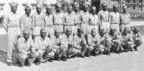
Black Soldiers – “The Triple Nickle”, the 555th Parachute Company in WWII
Trailblazing paratrooper broke color barrier in secret Thurgood Marshall, Hattie McDaniel, the Tuskegee Airmen and Walter Morris — all African-Americans who made history breaking the color ba…
(5)
(0)
SMSgt Lawrence McCarter
The other units I had heard about, the 55th I hadn't, what a great unit History !
(1)
(0)
SGT Eric Knutson
Good men, got to meet them at their reunion in 94' I think, I was very impressed by what I saw and learned form them,
(1)
(0)
2
2
0

This is a huge issue. I work at Camp Parks and it is always a major concern for the Soldiers that are training in the field here. As to whether or not the Army should allow training, well the answer is yes, the Army should. This is what makes our Army strong. NCO's are the ones that should be out monitoring Soldiers and training. We should be developing risk mitigation techniques to combat hazards such as wildfires. This is paramount to our success in combat.
(2)
(0)
2
2
0
I do hope since I retired that they did away with the nonsense of Range Officer, NCO and Safety Officer for weapons firing. An old, wise General, General House came to the pistol range and I was the OIC, we were following FORSCOM Range regulations, He called me over and asked, "What is all this Ready on the left, ready on the right BS, is that how you would do it in combat, HELL No, So why do it here, I told him it was FORSCOM regulation, he told me I didn't work for FORSCOM, I worked for him, we spent the rest of the range time just letting Team Leaders and Squad Leaders control their troops and fire, It worked out great!
(2)
(0)
SFC (Join to see)
This is the best advice you can give to a group of Soldiers on a range. However I would not make this equal advice. Some units need training and mentorship on a range to make sure it is conducted properly and safely.
(0)
(0)
SSG Robert Perrotto
Chief. while I understand your reasoning, I would have to say - it depends on the type of range you are running - if you are running team/squad STX lanes - absolutely, let the TL/SL do their thing - running BRM/ARM lanes, the tried and true methos of range safety make practical sense.
(0)
(0)
2
2
0
Three words; "Composite Risk Management"
As a comment above stated, the risk of wildfire should NOT stop training. Having faced the risk of fires in almost every place I've been stationed or deployed, the risk is part of the deal. Wherever measures were put into effect, and followed, the training usually carried on without many serious incidents. Where the mitigation measures were disregarded, bad things usually happened. I've even seen military careers literally ended for individuals who consciously "blew off" fire prevention measures in training exercises. Watched a perfectly good Blackhawk get damn near burned to the ground once at Sill because training cadre deliberately refused to use barrels that were placed at a training site for arty simulators because they weren't "loud" enough for their liking.... the bird was eventually repaired enough to be flown out but the entire training site, including existing structures was burned to ashes and and it took three days to contain it..... in that particular case, training actually was shut down, but only long enough to contain the fire. In the end though, whole incident could have been avoided by simply following safety protocol and utilizing the preventive measures we'd put in place...
As a comment above stated, the risk of wildfire should NOT stop training. Having faced the risk of fires in almost every place I've been stationed or deployed, the risk is part of the deal. Wherever measures were put into effect, and followed, the training usually carried on without many serious incidents. Where the mitigation measures were disregarded, bad things usually happened. I've even seen military careers literally ended for individuals who consciously "blew off" fire prevention measures in training exercises. Watched a perfectly good Blackhawk get damn near burned to the ground once at Sill because training cadre deliberately refused to use barrels that were placed at a training site for arty simulators because they weren't "loud" enough for their liking.... the bird was eventually repaired enough to be flown out but the entire training site, including existing structures was burned to ashes and and it took three days to contain it..... in that particular case, training actually was shut down, but only long enough to contain the fire. In the end though, whole incident could have been avoided by simply following safety protocol and utilizing the preventive measures we'd put in place...
(2)
(0)
1
1
0

Not only should we train in this condition but should always be pushing the envelope. We had a soldier at Ft Hood doing air assault that was made to drink water and lots of it. He became hyponatremic and had to be intubated and on a breathing machine. Whomever got into trouble over that now knows the importance of electrolyte balance and won't make that mistake in combat. If this mistake had been made in combat, we probably would have lost that soldier and tied several others up trying to save him. it is my opinion we need to take risks in peacetime where we have the resources to bail people out from bad decisions than add it to a combat mission.
(1)
(0)
Read This Next


 Continue with Facebook
 Continue with Google