
Posted on Dec 31, 2018
The vast majority of people who deploy to a combat zone end up in no real danger during their tour -- do you agree or disagree?

12K
143
47
30
30
0

I was debating this topic with an old friend who was in the Navy -- we both deployed at various times in support of OIF. He made the argument that basically, a tiny fraction of people who deployed (Iraq/Afgh) end up in situations that are legitimately dangerous. He wasn't criticizing specific MOS's or people who don't leave the wire -- he was just arguing the point that he didn't think there was any real danger for most people over there. For example, if you are on a huge FOB and never leave, he was asking..."What's the actual danger you are in?" -- and we know there's subjectivity with this. For example, if you are on that huge FOB that's basically the size of a city, and it gets hit one time per year by 1 mortar round, does that really constitute being in danger? The issue also isn't MOS-specific, because there are plenty of combat branch people who get put on battalion/brigade staffs that never left the wire either. So I was curious to ask the RP community what everyone's thoughts on this topic are, and how you would think about that.
Posted in these groups:  Deployment
 Iraq
Iraq Afghanistan
 Operation Iraqi Freedom (OIF)
 Operation Enduring Freedom (OEF) - Afghanistan
Deployment Iraq Afghanistan Operation Iraqi Freedom (OIF) Operation Enduring Freedom (OEF) - Afghanistan
Posted 7 y ago
Responses: 29

13
13
0

Having operated on COPs for two deployments and FOBs for two others, I can say that the danger is "different." On a COP, the enemy danger is obvious and Soldiers have to deal with it on a daily basis. On a FOB, external danger is less likely, but the internal threat is significantly higher; however most personnel will get too remain oblivious to this danger, because friendly internal intelligence services are always at work ensuring servicemembers don't have to worry about getting killed in their sleep by a local or third country national they thought were their friends.
That is not at all to downplay the very clear danger and loss of life that the minority of forces face in remote combat locations. I'm just offering the difference between the perception of danger while deployed.
That is not at all to downplay the very clear danger and loss of life that the minority of forces face in remote combat locations. I'm just offering the difference between the perception of danger while deployed.
(13)
(0)
(0)
(0)
COL Jon Lopey
SFC: While all warriors are exposed to the dangers of terrorist attacks overseas, I agree with you that generally, the dangers are different at COPs vs. FOBs. However, I was in a large FOB for OEF and we ventured outside the wire almost daily. While in Iraq, warriors, often combat support and service support Soldiers and other servicemen and women ventured outside the wire on convoys and at times sustained more casualties due to IEDs than combat arms' units. You bring up some valuable and well-informed distinctions and you know because you were there. Thank you for your courageous service in some challenging and often dangerous assignments. COL L
(0)
(0)
11
11
0

There's an old adage. "The safest place you can be is surrounded by a company of fellow Marines."
The thing with deployments is you are skirting the line between levels of threat. Think about how we carry our rifles depending on whether we are expecting combat or not. The Alert (pointed to the dirt) for imminent (Severe or Critical threat levels) all the way to the traditional carry for low or moderate levels.
It's not that any single member is in danger.... but collectively our combined risk pushes up way up the charts. Kind of like buying a really crappy lottery ticket. Quantitatively, the chances of "something" going bad is just ever present. We're working with firearms, explosives, fuel, vehicles, heat (weather)... all things things just exacerbate our overall danger level.
You mentioned this discussion was between you and a Navy cohort. Ask him how safe a ship is. Just think about that for a moment. Ships are floating office buildings which we launch airplanes off of. But we train constantly on them for when things go wrong. And that's in "peace" time.
So to answer your question, I generally never felt in real danger (I come from a different era though), however there was LOTS of dangerous things happening around me.
The thing with deployments is you are skirting the line between levels of threat. Think about how we carry our rifles depending on whether we are expecting combat or not. The Alert (pointed to the dirt) for imminent (Severe or Critical threat levels) all the way to the traditional carry for low or moderate levels.
It's not that any single member is in danger.... but collectively our combined risk pushes up way up the charts. Kind of like buying a really crappy lottery ticket. Quantitatively, the chances of "something" going bad is just ever present. We're working with firearms, explosives, fuel, vehicles, heat (weather)... all things things just exacerbate our overall danger level.
You mentioned this discussion was between you and a Navy cohort. Ask him how safe a ship is. Just think about that for a moment. Ships are floating office buildings which we launch airplanes off of. But we train constantly on them for when things go wrong. And that's in "peace" time.
So to answer your question, I generally never felt in real danger (I come from a different era though), however there was LOTS of dangerous things happening around me.
(11)
(0)
SCPO Morris Ramsey
Excellent comments. I remember all of the training we did on board ship. One of our training films was titled “115 Volts, Your deadly Shipmate”. Think about it surrounded by water on a steel ship moving at maximum speed 13 miles off the coast of North Vietnam firing “all guns” to port with enemy shells exploding, waiting for the task force commander to give the order “TF 77.7, hard to starboard,......”. Sgt Aaron Kennedy, MS
(4)
(0)
COL Jon Lopey
SGT: As a former Marine sergeant and retired Army colonel, I have to agree with you. In unconventional warfare, there is no real safe place but there is a lot going on around a warrior assigned overseas in a FOB, COP or larger base even if you don't venture outside the wire. I was assigned to a large FOB on two occasions, and especially during OEF, we frequently ventured outside secure FOBs on missions outside the wire. Great comment. Thank you for your service. Semper Fi, Marine! COL L
(1)
(0)
COL Jon Lopey
As service members serving in a combat zone, regardless of branch or MOS, we all face potential dangers overseas from the enemy and sadly, while in Iraq, the war was pretty much won and we sustained more casualties in tragic accidents opposed to enemy action on some days. From experience, vehicles of any kind, aircraft, and ships definitely can be dangerous whether in combat or outside those zones of action. COL L
(0)
(0)
7
7
0

I don't know about "vast majority," I think it depends on the location, and what kinds of operations are going on during a particular tour and when in the campaign it happened. But if your point is that there are many people who deploy who are not kicking down doors or conducting route clearance, or otherwise exposed regularly to direct enemy contact... then yes, that's probably true. However - any deployment has inherent risks, as does simply being in the military. And historically, most casualties are not "direct battle" wounds but rather DNBI - Disease & Non-Battle Injuries. FOBs & COBs do get attacked; and at the same time, people get hit by forklifts, or have vehicle accidents in difficult weather/environmental conditions - all manner of safety hazards. It would be interesting to see the %s on these in today's Post-911 conflicts.
(7)
(0)
7
7
0

5
5
0

Personally, I factor in time of deployment as well. There was a massive difference between my 2003 deployment to Iraq and my 2006 deployment were night and day different. It also has to do with the unit you're in. In 2003, I was with the 101st Airborne Division as we took part in the initial invasion. FOBs and COBs were not even a thing. We set up camp where we needed to and each location had it's one type of danger. In 2006 I was with the 86th Signal Battalion and assigned to Tali Air Force Base. We had Burger King, Pizza Hut, showers and 3 hot meals a day. We had a few rockets launched towards us but the danger came more so from the inside. It came from the local Nationals working on base as well as bored Soldier's who would get complacent.
(5)
(0)
4
4
0
Does it really make a difference? The risk is always there and anyone who takes the oath, wears the uniform and deploys to a combat theater has my thanks and appreciation.
(4)
(0)
3
3
0
Your buddy has a point..... it takes 5-6 support & service support soldiers per patrol member.....
But, that support staff's MOS definition of fear, is far different than that of an Team Guy; who lives outside the wire......
So, who are we to judge the support staff's perception of how much danger they were in.......and this is a realization that comes with time, and the perspective of working with vets who were support, and others who were the tip of the spear.....
Some of us laughed and told jokes in the bunkers, during rocket & mortar attacks; while others, with less training, less experience and less resiliency were crying in the same bunkers.
Were any of us, in "danger"?
For the advisor teams who were out every day, we said no, because the enemy couldn't shoot for shit, and they forgot to arm the rockets. We were more nervous of a green on blue, than a lucky rocket shot.
To those support & service support soldiers, sailors and Airmen, to whom the FOB was a boat that they never left..... it was the scariest and most dangerous night of their life.
We are all different.....and our thresholds to trauma and fear, are different.
But, that support staff's MOS definition of fear, is far different than that of an Team Guy; who lives outside the wire......
So, who are we to judge the support staff's perception of how much danger they were in.......and this is a realization that comes with time, and the perspective of working with vets who were support, and others who were the tip of the spear.....
Some of us laughed and told jokes in the bunkers, during rocket & mortar attacks; while others, with less training, less experience and less resiliency were crying in the same bunkers.
Were any of us, in "danger"?
For the advisor teams who were out every day, we said no, because the enemy couldn't shoot for shit, and they forgot to arm the rockets. We were more nervous of a green on blue, than a lucky rocket shot.
To those support & service support soldiers, sailors and Airmen, to whom the FOB was a boat that they never left..... it was the scariest and most dangerous night of their life.
We are all different.....and our thresholds to trauma and fear, are different.
(3)
(0)
SGT (Join to see)
Working with our Afghan ‘partners’ was the worst. The green on blue nonsense still gives me headaches.
(1)
(0)
CPT Ray Gilmore
SGT (Join to see) sadly that is the danger of the FID mission. We had a green on blue...
And we had a string of 3 days with hits, in a row, because someone in the ANP was talking.
After 10 months, I learned that my counterpart knew our target, as an old friend..... amazingly, we always just missed him.
We need to assess what "Success in Afghanistan" looks like....
But, it sure as hell, doesn't look like a green on blue.
That one, messed a lot of us up.
And we had a string of 3 days with hits, in a row, because someone in the ANP was talking.
After 10 months, I learned that my counterpart knew our target, as an old friend..... amazingly, we always just missed him.
We need to assess what "Success in Afghanistan" looks like....
But, it sure as hell, doesn't look like a green on blue.
That one, messed a lot of us up.
(1)
(0)
SGT (Join to see)
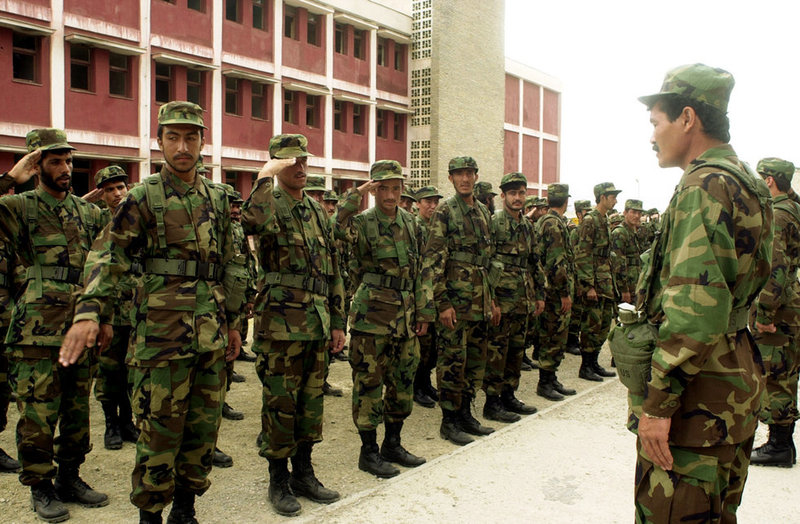
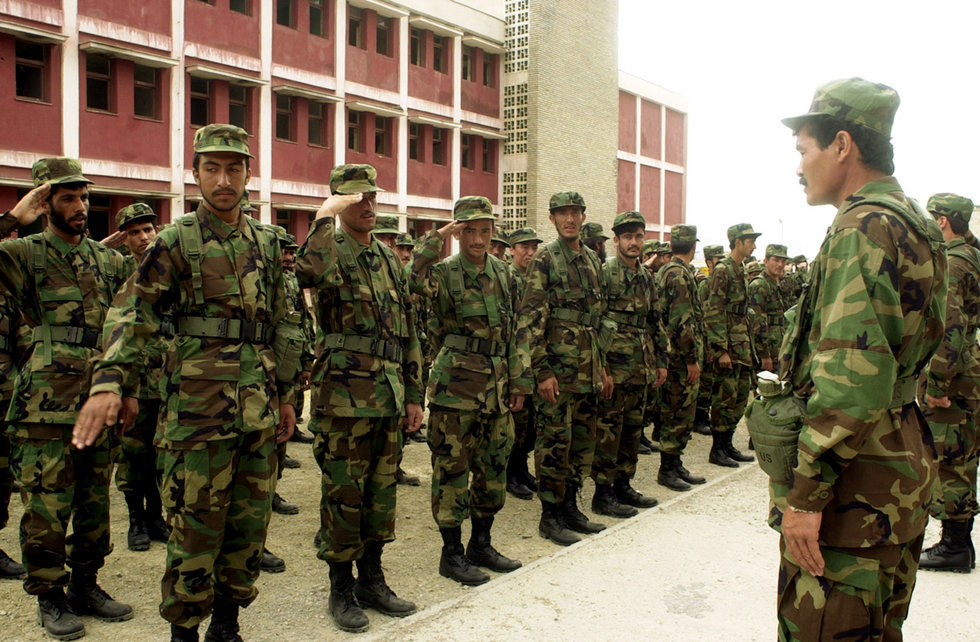
CPT Ray Gilmore - unfortunately, too many of us have f*cked off stories like this, myself included.
ANA/ANP/ANSF, etc...for the most part, they run around like a group of drunk muppets. Working with them was just a complete sh*t show, on multiple levels, ranging from the boring and mundane to lethal.
The sad thing is, the ones that actually weren’t that bad were so savagely undermined by their peers on every level. Selling their own gear, killing their allies, desertions, etc. But as a whole, our joes on the ground don’t (And really have no reason to at this point) trust them at all.
ANA/ANP/ANSF, etc...for the most part, they run around like a group of drunk muppets. Working with them was just a complete sh*t show, on multiple levels, ranging from the boring and mundane to lethal.
The sad thing is, the ones that actually weren’t that bad were so savagely undermined by their peers on every level. Selling their own gear, killing their allies, desertions, etc. But as a whole, our joes on the ground don’t (And really have no reason to at this point) trust them at all.
(0)
(0)
CPT Ray Gilmore
SGT (Join to see) selling the fuel, from their trucks, for the convoy rolling out the next morning.....so, when SP comes and goes you're still filling up half empty trucks.
Not a lot has changed in 10+ years by the sound of it.
Not a lot has changed in 10+ years by the sound of it.
(1)
(0)

I would say it's matter boiling down to personal experience, fate and luck. When I was stationed in Iraq on Basra from 2010-2011, I was in relative safety....until the bad boys decided to lob rockets and mortars at us....A LOT. We got rocketed and mortared anywhere from once a week to twice a month. All just really depended on their schedule and where they aimed. We did have only one death of a Service Member from rocket attacks while I was there when a rocket hit his CHU...which was probably about 200 meters from mine. His time was up. Mine wasn't. So, in reality, the "being in danger" was all relative based on your particular mission and OPTEMPO.
(3)
(0)

Read This Next


 Continue with Facebook
 Continue with Google