
Posted on Apr 19, 2017

Why are officers recognized with awards more than enlisted?

276K
3.96K
1.21K
478
478
0
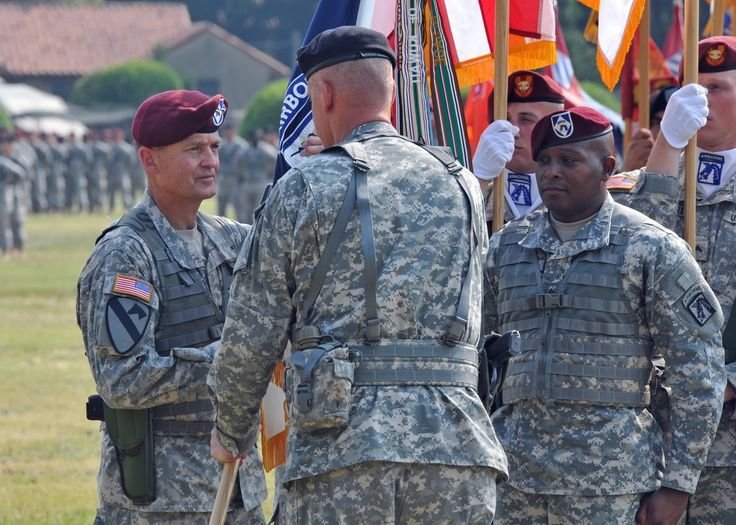
It seems to me that officers are recogized far more often then enlisted soldiers. I mean an officer and junior enlisted could do the same exact thing, or an enlisted could do more then an officer and chances are the officer will be given a higher award. Why? I have been in for almost 8 years and only have 1 AAM which is my only actual award.
 Awards
 Officers
 Enlisted
 Recognition
 Fairness
Posted >1 y ago
Responses: 577
0
0
0

On of my good friends I have known for well over thirty years joined the military after college and I went into finance and insurance (about 1993).... When I first saw him after his basic stint, then his AIT he told me about how much "salad" the military threw around now compared to when our fathers and grandfathers were active duty (Both Full Birds, except his father was a Navy guy....Jk of course). He can't believe how many medals are handed out now and one of the things that bothered him years ago was when two individuals in 2012 were awarded Bronze Stars to two finance NCOICs in medical units........ I have no dog in the fight, but I can imagine what Colonel Lyle would be saying about it.... When you had soldiers all over Europe fighting a true "World War" and just trying to survive the day, a freaking colorful piece of ribbon on your damned uniform means horse shit. He also always despised the "flag officers" who turned into politicians over soldiers.......
(0)
(0)
0
0
0

Many of you might not know that the original DA Form 638 was a painfully long and slow process to initiate an award recommendation, even for an Army Achievement Medal (IIRC, that medal came out in 1981). In addition to the name of the intended recipient and the proposed citation for the award certificate, it was accompanied by a two-page double-spaced justification for the award. After the award was approved, the soldier would receive the decoration set, the citation certificate and a set of the permanent orders announcing the award. In many cases, several orders were grouped together on the same sheet, so that on the same date, a number of individuals' awards would be printed on the same paper. In 1990, DA Form 638-1 was created to streamline the process for peacetime awards of the Army Achievement Medal, Army Commendation Medal and the Meritorious Service Medal. It could be filled by hand in ink, use bullet justification sentences and was restricted to five lines of laudatory text for the award certificate. Once signed by the approving authority, the S-1/G-1 assigned a permanent award number and forwarded copies to the relevant agencies. One copy was supplied to the decorated soldier for his/her safekeeping. Apparently, the "dash-one" superceded the old DA Form 638 in 2006. Now the same form is used to process both peacetime and wartime recommendations. Wartime medals for valor still require an enclosed narrative justification, witness statements and operational maps describing the battle conditions that led to the award recommendation.
In my time, I have seen the AAM used mainly to recognize junior enlisted soldiers, the ARCOM awarded to non-commissioned officers and the MSM to retiring senior NCOs and Officers. I was tasked to prepare a Legion of Merit for a retiring sergeant-major, but this was later approved as an MSM. In my time, a battalion commander could earn "brownie points" by awarding a goodly number of AAMs for his personnel. DA Form 638-1 made it very easy to do. When I was a battalion operations officer in a recruiting battalion, we made our quarterly mission one year (1991?). The Battalion Commander signed off on AAMs for all of the NCOs in the headquarters: operations sergeants, recruiter trainers, guidance counselors and support personnel. Officers were supposed to be above such inducements.
In my time, I have seen the AAM used mainly to recognize junior enlisted soldiers, the ARCOM awarded to non-commissioned officers and the MSM to retiring senior NCOs and Officers. I was tasked to prepare a Legion of Merit for a retiring sergeant-major, but this was later approved as an MSM. In my time, a battalion commander could earn "brownie points" by awarding a goodly number of AAMs for his personnel. DA Form 638-1 made it very easy to do. When I was a battalion operations officer in a recruiting battalion, we made our quarterly mission one year (1991?). The Battalion Commander signed off on AAMs for all of the NCOs in the headquarters: operations sergeants, recruiter trainers, guidance counselors and support personnel. Officers were supposed to be above such inducements.
(0)
(0)
0
0
0

A Lt I worked with received an award for his actions preceding Vigilant Warrior in 1995. The reality: I was on duty when intelligence events warranted greater attention. I was an E-6 with experience in theater. I briefed the Lt when he arrived for shift change, he looked like a deer in the headlights. He asked me "What do I do?" So I explained he should contact the IN at home station and brief him on the current situation. At the award ceremony he made no mention of me and avoided looking at me. I worked with some damn fine officers. he wasn't one of them.
(0)
(0)
0
0
0

All too often the first line leaders is to lazy to write up a recommendation. I constantly would tell my NCO’s to get me recommendations to forward. I was proud to recommend good NCO’s for awards. Insuring you Tripp’s receive awards they deserve is part of being a good leaders.
(0)
(0)
0
0
0

I've heard that if an officer and an enlisted person were to be standing side by side in a situation that justified an award, the officer would get one grade higher award than the enlisted person for doing exactly the same thing at the same moment. Any thoughts?
(0)
(0)
0
0
0

While I agree that it is a valid complaint that officers get higher awards for the same actions that an enlisted performs, I also noticed during my time in service that enlisted get medals for things that an officer is expected to do on a daily basis. I speak from the experience of having been both enlisted and officer. I had to put up with more insults as an enlisted but I worked harder, and was expected to work harder, as an officer. I finished my career as an 0-4 in an 0-5 department head billet in charge of 180 people. That convinced me that I didn't want to go any farther, as I was putting in 15 hour days, 6 to 7 days a week. And no, I didn't even get a medal for that period of my service!
(0)
(0)
0
0
0

Read the last statement in my response, if nothing else...
I recommended quite a few impact awards (AAM, ARCOM, JCOM, MSM) during my full career to enlisted soldiers, including other services such as the US Navy on joint operations. This included a few combat BSM/v when the time came. Plenty of awards for combat tours and such as well. It really comes down to the diligence and the quality of the officers in the command. If a service member deserves the award and it is very well written, the award was often approved, although I did have a few downgrades of BSM/v to ARCOM/v for those less than E-5. As a "mustang" NCO it took me a couple years to get anything as enlisted first (first AAM as an E-4), and then an equal amount of time before I saw any awards as a 2LT (another AAM, but I don't remember which one) during the peace between the First Gulf War and the Second Gulf War. I remember one specific combat tour in Afghanistan where my Brigade Commander wanted to award a Legion of Merit (LoM) for my meritorious achievement providing life support, construction, survivability across the region for not only his BDE, but coalition forces and contractors, which no matter how hard it was attempted was never going to be approved because of the requirements that LoM were approved at the four star command level at the time and I was an O-4. It was downgraded to a BSM, and I just went along my next overseas assignment. Today, the approval authority was reduced one grade to O-9 (3 star, Army CORPS level), which is still extremely high.
What people need to recognize it is not just responsibility, achievement, and rank of the individual, BUT THE APPROVAL AUTHORITY which sets the precedence for ALL military decorations. It is not an "officer thing" it is more a "culture thing" which goes along with all sorts of unwritten rules.
I recommended quite a few impact awards (AAM, ARCOM, JCOM, MSM) during my full career to enlisted soldiers, including other services such as the US Navy on joint operations. This included a few combat BSM/v when the time came. Plenty of awards for combat tours and such as well. It really comes down to the diligence and the quality of the officers in the command. If a service member deserves the award and it is very well written, the award was often approved, although I did have a few downgrades of BSM/v to ARCOM/v for those less than E-5. As a "mustang" NCO it took me a couple years to get anything as enlisted first (first AAM as an E-4), and then an equal amount of time before I saw any awards as a 2LT (another AAM, but I don't remember which one) during the peace between the First Gulf War and the Second Gulf War. I remember one specific combat tour in Afghanistan where my Brigade Commander wanted to award a Legion of Merit (LoM) for my meritorious achievement providing life support, construction, survivability across the region for not only his BDE, but coalition forces and contractors, which no matter how hard it was attempted was never going to be approved because of the requirements that LoM were approved at the four star command level at the time and I was an O-4. It was downgraded to a BSM, and I just went along my next overseas assignment. Today, the approval authority was reduced one grade to O-9 (3 star, Army CORPS level), which is still extremely high.
What people need to recognize it is not just responsibility, achievement, and rank of the individual, BUT THE APPROVAL AUTHORITY which sets the precedence for ALL military decorations. It is not an "officer thing" it is more a "culture thing" which goes along with all sorts of unwritten rules.
(0)
(0)
0
0
0
My answer is based on a what I experienced in combat in Vietnam. A Platoon Leader, no name as he was KIA later, was given an impact award of a Silver Star because his platoon captured an NVA Hospital unit trying to evade capture. He was sleeping at the time. I was Sr. Aideman and had to cross several hundred meters of open field to care for multiple wounded. The CO put me in for a Silver Star but when told only one was being given our unit he gave it to the LT. He told me it was because the award would have an impact on his career.
(0)
(0)
0
0
0

Capt Durish's response pretty well hits the nail on the head. For there to be an award, the immediate supervision/leadership has to witness it, has to write it up, and submit it up the chain of command. Higher level awards it will normally go to the MAJCOM for review and approval. Since the unit commander will not witness all award worthy events, it is up to the immediate leadership to get the ball rolling. Since recognition is vital for unit morale, the leadership of an organization however needs to set the proper tone; needs to make recognition a priority for individuals to receive their just due. Good commanders make this a priority. Sadly recognition falls through the cracks many times.
(0)
(0)
0
0
0

Read This Next


 Continue with Facebook
 Continue with Google