


 Health
 Readiness
 South Korea
 Italy
Italy

However what about considering how that was handled - more or less forcing people to remain in in a contaminated environment. Feel that titters on the side of unethical.
https://www.sciencemag.org/news/2020/02/coronavirus-infections-keep-mounting-after-cruise-ship-fiasco-japan

Coronavirus infections keep mounting after cruise ship fiasco in Japan
Eight public servants who visited the ship to support the quarantine contracted the virus
If there aren’t enough masks or ventilation machines available, what is an ethically defensible way to allocate them? Might it be ethically acceptable to remove one patient from a ventilator so another could use it? Should clinicians who are forced to make such choices be legally protected? And who should get priority access to vaccines if and when they become available?
Lets say US produces a vaccine not so easily mass produced who's getting the vaccine?
More or less 2% of people with diagnosed Covid-19 have died, and between 5% and 10% have required intensive care. But if even a small fraction of a very large number of infected people might benefit from critical care resources like mechanical ventilation or extra-corporeal membrane oxygenation to help them breathe, difficult triage decisions could be required. Just thinking if this gets to a critical mass point a control infection would mitigate some of the previous ethical consideration mentioned.
Its the old if you know that by killing one person thousands will live - however that ethical debate takes on a different meaning when you are the one in question.

https://www.pharmaceutical-technology.com/news/israel-migal-covid-19-vaccine/

Covid-19 vaccine development close by Israeli researchers
MIGAL Research Institute in Israel expect to start producing a Covid-19 vaccine in the next eight-ten weeks, based on their avian coronavirus IBV vaccine.

Mefloquine, developed by the U.S. Army at the Walter Reed Army Institute of Research in the 1970s, was commercially introduced in 1989. The FDA ended up placing its strongest warning on mefloquine, saying the drug can cause ongoing or permanent neurological and psychiatric conditions, including dizziness, loss of balance, tinnitus, anxiety, depression, paranoia and hallucinations, even after discontinuing use.
Science is indeed the answer to the problem but I have concerns about pushing out a vaccine in such short order.
https://www.militarytimes.com/news/your-military/2020/03/10/army-signs-agreement-with-drug-giant-gilead-on-experimental-covid-19-treatment/

Army signs agreement with drug giant Gilead on experimental COVID-19 treatment
U.S. troops with confirmed cases of COVID-19 could get an investigational drug treatment for the virus.
As for mefloquine, it still worked and that's better than infecting people, some of whom will die. As for speed, if you infected 0,01% like you said, you would have to do that to the target population 10,000 times to hit everyone. That would be a long and expensive process. It's a thousand times cheaper to prevent an illness than treat it.

While the belief is that we will all (or the vast majority of us will) contract this virus, those outside of the fatal infection range will only suffer mild - normal flu-like symptoms. Those most at risk are the elderly and/or those with immuno-deficiencies underlying.
We have already seen that self-quanrantining does not work. The lady who came back from Italy and was the first reported case here in MO flew in to O'Hare, rode the Amtrak from Chicago to St. Louis, all before getting tested. She was told to self-quarantine in her house, along w/ her family, since they would then be infected. Her family promptly went out to a daddy/daughter dance at an elementary school, causing that school to have to shut down.


Might help the airline industry though, as there'd likely be a huge demand for tickets to Canada.


https://www.nytimes.com/2020/02/29/us/american-military-coronavirus.html
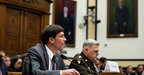
For American Military, Coronavirus Is an Enemy to Be Fought
The military’s first active-duty case, in South Korea, has commanders preparing a battle plan. But steps meant to stave off the virus may also compromise training and readiness.


 Continue with Facebook
 Continue with Google