

Posted on Jul 18, 2018

SEAL CMDCM Tuschen, CEO of Randori, INC, here for a live Q&A 7/25 @ 4pm ET to discuss leadership development and problem solving. Questions?

86.1K
171
52

Jason recently retired after a 27-year career as a U.S. Navy SEAL, with the last decade of his career spent as a Command Master Chief. His final assignment saw him as the CMC of Naval Special Warfare Group ONE; a 2000 person organization of SEALs, Sailor, and Government employees responsible for executing U.S. National Security Strategy in Iraq, Afghanistan, the Middle East, Korea and the Pacific. His crowning achievement over that time-frame was remaining happily married over 20 years and having a family, despite the endless demands put on Naval Special Warfare. Through RANDORI INC, Jason is continuing his service by pursuing his desire to bring out the best in individuals, leaders, and organizations and ensuring that they reach their full potential.
Jason has a Bachelor of Science in Administration and Management for Excelsior College and is currently on a full scholarship for a Masters of Science in Management from the American College of Financial Services.
Jason has a Bachelor of Science in Administration and Management for Excelsior College and is currently on a full scholarship for a Masters of Science in Management from the American College of Financial Services.
 Networking
 Leadership Development
 Mentorship
 Operation Iraqi Freedom (OIF)
 Operation Enduring Freedom (OEF) - Afghanistan
Posted >1 y ago
Responses: 18

CMDCM Jason Tuschen Thank you for your outstanding career. The only question I have for you is what is the pin your are wearing on your lapel? Keep up the good work.


SGT Everett M. Cheney
I echo what all are thinking and what the comments above me have said. Without a doubt it’s ok. Thank you for doing so.


Was honored to have spent a day with Dave Cooper in May of 2016 when we were attending the FDNY All Hazards IMT annual training summit and dinner . That access to his advice and leadership input was truly a gift .
CMDCM Jason Tuschen
Coop is an amazing individual. One of the smartest, most articulate guys I have every encountered. He is the poster child for the intelligence and educational background of today's enlisted force.
SGT Everett M. Cheney
Absolutely Sir, And what a gracious professional having spent the day with us and was engaged and completely approachable the entire time . As I said , a true honor
After serving in the 3/75 Ranger Bn I’ve spent my past 26 years as a firefighter and now Bn Chief and Rad Nuc RND team member . I’m in the hunt to move on to DHS in Emergency Planning however the pay class tops out considerably less than what would make sense for me to move forward with. Do you have any insight you could give on helping me call to light my skill set and experience in attempting to negotiate a more equitable pay schedule . I’m on the short list for this spot no other veterans , civilian public safety guys 3 of them and then me .
CMDCM Jason Tuschen
Everett,
Definitely do not sell yourself short. By that I mean, you have been leading in some of the highest performing teams on earth between the 3/75th and as a first responder. You have been surrounded by exceptional performers who have been screened extensively and you have been leading them. You have way more practical experience leading then 99% of the work force. The key is two fold: Realize that then find a way to articulate that to the civilian force. I am not sure how many civilian / business leadership books you have read, but pick up any one of them. You will recognize all the key traits for success they are talking about are what you had to do to lead in the military or fire department. Those books just give you a new vernacular to translate that experience into.
Definitely do not sell yourself short. By that I mean, you have been leading in some of the highest performing teams on earth between the 3/75th and as a first responder. You have been surrounded by exceptional performers who have been screened extensively and you have been leading them. You have way more practical experience leading then 99% of the work force. The key is two fold: Realize that then find a way to articulate that to the civilian force. I am not sure how many civilian / business leadership books you have read, but pick up any one of them. You will recognize all the key traits for success they are talking about are what you had to do to lead in the military or fire department. Those books just give you a new vernacular to translate that experience into.
SGT Everett M. Cheney
I am ready to move to this potentially “new chapter “ in serving and I am confident I can own the room in the upcoming final interview. I was looking for the path through the pay scale subject without offending those that are interviewing me. I thank you for the advice and for calling back into focus for me , what I’ve experienced and made into my skill set over the years.
My Best Regards ,
My Best Regards ,
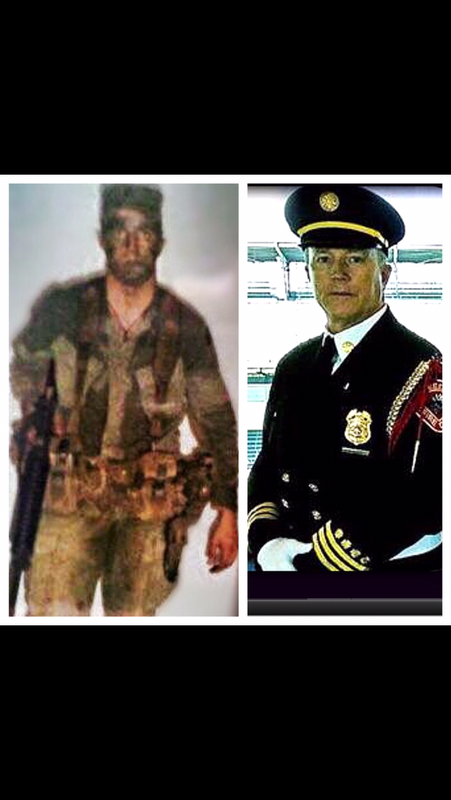

Jason, having witnessed firsthand your leadership and managerial skills at NSWG1, I was very happy when I learned that you were embarking on this new chapter in your life to help corporate leaders reach their maximum potential. I have always felt that Special Operations training, which emphasizes (among other things) in the use of teamwork, critical thinking, and doing more with less, directly correlates with business management in a competitive environment. How do you see your experiences learned as a member of the Special Operations community being a factor in business success and how do you teach those skills to those who have never served?
God Speed my brother and and I wish you continued success.
William "Frank" Villanueva, PhD, MBA
SCPO (RET).
God Speed my brother and and I wish you continued success.
William "Frank" Villanueva, PhD, MBA
SCPO (RET).
Read This Next


 Continue with Facebook
 Continue with Google
I touched on above in Ben's question, but to add to it:
I really try to hammer home the point that military members are not robotic, order-following lemmings. Military members and veterans, more than any other demographic, think critically and want to have a thorough understanding of what it is and why they are doing something. That doesn't mean they need to agree with it but rather want to have a deeper understanding. To me, that makes sense. If I have to lead a team in combat on some hairy target that could potentially lead to casualties, I owe them an explanation of why it is important and how it fits into an overarching strategy.