


243
243
0
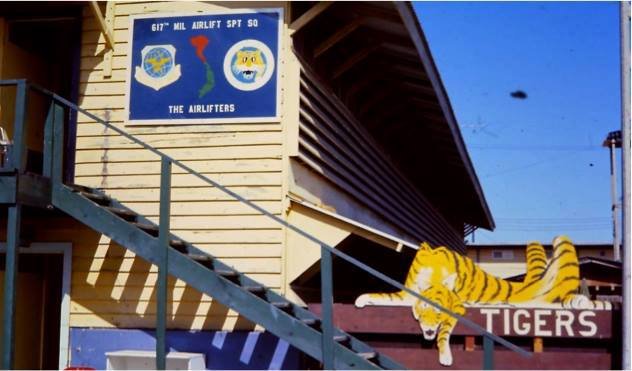
By this time in 1972, the war in Vietnam had been going on for over ten years. Tens of thousands had been killed, even more wounded and a few thousand POWs and unaccounted for MIAs.
Looking back on this time of year, specifically December 18, 1972, most of us know where we were. Most of you younger troops were not yet the twinkle in your Daddy’s eyes.
For me, I was on my second remote/isolated tour in Southeast Asia. In March of 1971, I was assigned to the 307th FMS (Field Maintenance Squadron) Aero Repair or A/R shop at U-Tapao AB, Thailand. We carried the same AFSC or MOS if you will as those who were the primary crew chief on the heavy jets. Those being the C-141A, C-5A, KC-135 and variants and the Queen of the Air, the Mighty B-52. I mention this because the A/R shop caught all the jobs that no one else wanted or would do. We all know sh*t runs downhill. Well, we were the bottom of the hill. But I digress.
During my year we worked 12/12/6 and 7, meaning 12 hours on, off 12 and 6 and often 7 days a week. It was hot, dirty, sweaty work but we did what we had to do. We did it in spite of many not wanting to be there. We launched planes about every 90 minutes around the clock 24/7/365 except when the head shed slowed things down or even ceased flying for the holidays.
After my year at U-Tapao I asked for and received a COT – consecutive overseas tour. This time headed for Vietnam. In March 1972, I headed for DaNang. My tour there was to be short-lived. In September, my unit closed up shop. Those with over 180 days in country on the close date would go home while the rest of us would be reassigned. I was one of the lucky ones, I got to stay…well sort of lucky. After about 60 days, in November 1972 I was selected to go TDY to of all places, Clark AB, Philippines. That story is fodder for another time.
After returning from Clark, I was like a new man. Even though working 12/12/5 I returned relaxed and rejuvenated. The guys in the squadron never let me live that down either. The morning of December 19th is what will always remain, The Morning After the Night Before. It wasn’t because the town got painted red or any such frivolity but we walked into the maintenance shack to discover that the entire B-52 fleet in both Thailand and Guam went downtown to pay “Chuck” a visit. At first we were in disbelief, thinking that Radio Lone Star was jerking our chains with some kind of holiday gag. It turned out to be true. We were ecstatic. All of us were now filled with a new sense of resolve and purpose. This was the beginning of Operation Linebacker II.
While those of us in Vietnam were cheering, our brothers in Thailand and Guam were busting some serious hump. The next 11 days would prove to be a turning point in the war on so many levels.
First off, we lost more B-52s in those 11 days of Christmas* than we had lost in the entire war. We lost many good men on those missions. We had many more end up in the hands of “Chuck” and his accommodations at the Hanoi Hilton. Then after 11 days the deluge of BUFFS stopped. We shut down for Christmas. It wasn’t until years later we learned that had we just kept up the bombing for 2 more days, the North would have surrendered. We all know now how that turned out.
I have a number of friends who were aircrew participants in Linebacker II. I have the greatest admiration and respect for what they did in spite of the head shed screwing the pooch.
Never will I forget where I was in 1972 during “The Eleven Days of Christmas.” With that, I wish you all a Merry Christmas and a Happy New Year!
* ‘The Eleven Days of Christmas’ is a book written by Marshall Michel
Looking back on this time of year, specifically December 18, 1972, most of us know where we were. Most of you younger troops were not yet the twinkle in your Daddy’s eyes.
For me, I was on my second remote/isolated tour in Southeast Asia. In March of 1971, I was assigned to the 307th FMS (Field Maintenance Squadron) Aero Repair or A/R shop at U-Tapao AB, Thailand. We carried the same AFSC or MOS if you will as those who were the primary crew chief on the heavy jets. Those being the C-141A, C-5A, KC-135 and variants and the Queen of the Air, the Mighty B-52. I mention this because the A/R shop caught all the jobs that no one else wanted or would do. We all know sh*t runs downhill. Well, we were the bottom of the hill. But I digress.
During my year we worked 12/12/6 and 7, meaning 12 hours on, off 12 and 6 and often 7 days a week. It was hot, dirty, sweaty work but we did what we had to do. We did it in spite of many not wanting to be there. We launched planes about every 90 minutes around the clock 24/7/365 except when the head shed slowed things down or even ceased flying for the holidays.
After my year at U-Tapao I asked for and received a COT – consecutive overseas tour. This time headed for Vietnam. In March 1972, I headed for DaNang. My tour there was to be short-lived. In September, my unit closed up shop. Those with over 180 days in country on the close date would go home while the rest of us would be reassigned. I was one of the lucky ones, I got to stay…well sort of lucky. After about 60 days, in November 1972 I was selected to go TDY to of all places, Clark AB, Philippines. That story is fodder for another time.
After returning from Clark, I was like a new man. Even though working 12/12/5 I returned relaxed and rejuvenated. The guys in the squadron never let me live that down either. The morning of December 19th is what will always remain, The Morning After the Night Before. It wasn’t because the town got painted red or any such frivolity but we walked into the maintenance shack to discover that the entire B-52 fleet in both Thailand and Guam went downtown to pay “Chuck” a visit. At first we were in disbelief, thinking that Radio Lone Star was jerking our chains with some kind of holiday gag. It turned out to be true. We were ecstatic. All of us were now filled with a new sense of resolve and purpose. This was the beginning of Operation Linebacker II.
While those of us in Vietnam were cheering, our brothers in Thailand and Guam were busting some serious hump. The next 11 days would prove to be a turning point in the war on so many levels.
First off, we lost more B-52s in those 11 days of Christmas* than we had lost in the entire war. We lost many good men on those missions. We had many more end up in the hands of “Chuck” and his accommodations at the Hanoi Hilton. Then after 11 days the deluge of BUFFS stopped. We shut down for Christmas. It wasn’t until years later we learned that had we just kept up the bombing for 2 more days, the North would have surrendered. We all know now how that turned out.
I have a number of friends who were aircrew participants in Linebacker II. I have the greatest admiration and respect for what they did in spite of the head shed screwing the pooch.
Never will I forget where I was in 1972 during “The Eleven Days of Christmas.” With that, I wish you all a Merry Christmas and a Happy New Year!
* ‘The Eleven Days of Christmas’ is a book written by Marshall Michel
 Command Post
 Vietnam War
 JBSA - Joint Base San Antonio
 Military History
Posted 8 y ago
Responses: 270

5
5
0

In 1972 I was just leaving Ft Hood on my 2nd tour to Germany. My wife and I had just lost our 2nd Son 2 mos after he was born. I was in Germany in Erlangen with the 1st Armored Div.
(5)
(0)
5
5
0

Finished up my second tour in VN in Nov. 69--had been reassigned back to Bragg. Was 1st. Sgt of B Co. 307th Ned Bn.
(5)
(0)
5
5
0

5
5
0

5
5
0

5
5
0

I was in Phu Loi, RVN at the 520th Batallion, 605th Trans. Co. from March '67 to Nov. of '69, then to Hotel 3 in Tan Son Nhut, Saigon until May of '71. I then went to Coleman Barracks in Sandhofen, Germany until August of '72. Then went stateside to McClellan AFB in Sacramento, Calif. until end of December of '72. In January of '73 I went back to Vietnam to Tan Son Nhut, Saigon.
(5)
(0)
5
5
0

5
5
0

SSgt Jim Gilmore 1972 was an interesting year. I was serving on USS EVERETT F. LARSON (DD-830). Spent 6 months on my fifth WesPac Cruise. Spent most of it north of the DMZ. During that time we were on Condition Three which meant 8 on and 8 off.
Fired bullets all night, refueled, rearmed, and took on stores all day.
Fired bullets all night, refueled, rearmed, and took on stores all day.
(5)
(0)
CWO3 Dennis M.
I was onboard the USS Kearsarge CV-33, the Larson was one of our Escorts in our 1969 deployment to Nam and if I remember the Tin cans in our battle group were in the Little Beavers Squadron out of Long Beach, one of which was the Larson. We also lost one of our tin cans over in Nam, the USS Frank E. Evens (DD-754), she was cut in half by the HMAS Melbourne and the bow section sunk in less than 2 minutes taking 74 sailors to meet King Neptune not a single body was recovered. The Larson tied the aft section of the Evens to herself to keep it afloat.
(0)
(0)
5
5
0

From Jan 72 to Jan 73 I was with the 1st Bn, 9th Marines, much of it in the Gulf of Tonkin.
I maintain a “1972 with the 1st Battalion, 9th Marines” page on Facebook, detailing all that took place that memorable year. The personal info is gleaned from letters I sent home, which my mother saved. Other info was gathered from official records, www, and hard copy resources.
I maintain a “1972 with the 1st Battalion, 9th Marines” page on Facebook, detailing all that took place that memorable year. The personal info is gleaned from letters I sent home, which my mother saved. Other info was gathered from official records, www, and hard copy resources.
(5)
(0)
Sgt Wayne Wienke
April 21, 1972: Pacific Stars and Stripes: In the first such action of the war, North Vietnamese MIGs attacked U.S. warships off North Vietnam. Communist torpedo boats also swarmed out from shore as U.S. vessels were shelling coastal targets.
The destroyer Higbee was damaged and four of her crew injured. The guided missile frigate Sterett downed one MIG and sank two patrol boats.
The U.S. Marine Public Affairs Office on Okinawa refused to comment on reports that American Marine combat units have left Okinawa by ship for Vietnam. Anti-war groups claim to have information that Marines were being deployed to Vietnam for ground warfare.
The destroyer Higbee was damaged and four of her crew injured. The guided missile frigate Sterett downed one MIG and sank two patrol boats.
The U.S. Marine Public Affairs Office on Okinawa refused to comment on reports that American Marine combat units have left Okinawa by ship for Vietnam. Anti-war groups claim to have information that Marines were being deployed to Vietnam for ground warfare.
(0)
(0)
Sgt Wayne Wienke
April 1972: A CIA analyst on Ambassador Ellsworth Bunker’s staff in Saigon, Edwin W. Besch, observes that an amphibious landing in North Vietnam to the rear of the NVA forces would have a greater operational effect than tactical landings conducted in the South.
Vice Admiral William Mack of the Seventh Fleet proposes an amphibious assault directly on the North Vietnamese mainland. The operation is canceled prior to a proposed D-Day of April 24.
Prompted by the need to relieve pressure on South Vietnamese forces, and by the possibilities of having to rescue stranded aircrews, Brigadier General Edward Miller and Rear Admiral Walter Gaddis develop plans to land Marines by surface and air assault on several points in North Vietnam.
Courses of action included a two BLT demonstration at Dong Hoi (50 miles north of the DMZ), a two BLT raid at Quang Khe (75 miles north of the DMZ) and one BLT raid on Hon Mat (an island 150 miles north of the DMZ), a two BLT demonstration at Vihn (150 miles north of the DMZ), and a raid or feint at Quang Khe with up to two BLTs.
Vice Admiral William Mack of the Seventh Fleet proposes an amphibious assault directly on the North Vietnamese mainland. The operation is canceled prior to a proposed D-Day of April 24.
Prompted by the need to relieve pressure on South Vietnamese forces, and by the possibilities of having to rescue stranded aircrews, Brigadier General Edward Miller and Rear Admiral Walter Gaddis develop plans to land Marines by surface and air assault on several points in North Vietnam.
Courses of action included a two BLT demonstration at Dong Hoi (50 miles north of the DMZ), a two BLT raid at Quang Khe (75 miles north of the DMZ) and one BLT raid on Hon Mat (an island 150 miles north of the DMZ), a two BLT demonstration at Vihn (150 miles north of the DMZ), and a raid or feint at Quang Khe with up to two BLTs.
(0)
(0)
Sgt Wayne Wienke
My Mother saved most, if not all, of the letters I mailed to her and my Dad, and my Brother Don. The bulk of the information presented is pulled from my extensive, yet sometimes whiny and juvenile, letters home.
Once I had the letters in order and had pulled the information I wanted to keep, I researched the Internet, book, and newspaper sources, and inserted the news and resources that overlapped my letters. I added the units, ships, and Marine actions that were specific to 1972. Two people who served with me in 1/9 (but only one who I recall) provided a few tidbits. I’ve inserted a few after-the-fact remembrances of what transpired in 1972, and continue to update this account with supplementary information as I receive it.
In the constantly changing and confusing first few months of the Easter Invasion, we were told seven separate times we were landing in either the Republic of Vietnam or North Vietnam. Twice, that I recall, we went so far as to start the actual planning and preparation for a landing.
In the immediate vicinity, a number of notable occurrences took place. The largest offensive of the Vietnam War, the largest rescue operation in USAF history, the first time MIGs attacked U.S. warships, the first fighter ace of the war, the largest concentration of amphibious forces since the Korean War, and the most intensive bombing campaign of the war.
Around the World, there were an equally large number of big news events. The Watergate break-in, the last two Apollo missions to the moon, Jane Fonda in Hanoi, Bloody Sunday in Northern Ireland, Nixon visited China, and Palestinian terrorists kidnapped and killed eleven Israeli athletes at the Munich Olympics.
While I can certainly say I’ve had other years and periods that were memorable, my time with the 1st Battalion, 9th Marine Regiment stands out. A day doesn’t go by that I don’t think of that one year, and its significance to me and the world.
Once I had the letters in order and had pulled the information I wanted to keep, I researched the Internet, book, and newspaper sources, and inserted the news and resources that overlapped my letters. I added the units, ships, and Marine actions that were specific to 1972. Two people who served with me in 1/9 (but only one who I recall) provided a few tidbits. I’ve inserted a few after-the-fact remembrances of what transpired in 1972, and continue to update this account with supplementary information as I receive it.
In the constantly changing and confusing first few months of the Easter Invasion, we were told seven separate times we were landing in either the Republic of Vietnam or North Vietnam. Twice, that I recall, we went so far as to start the actual planning and preparation for a landing.
In the immediate vicinity, a number of notable occurrences took place. The largest offensive of the Vietnam War, the largest rescue operation in USAF history, the first time MIGs attacked U.S. warships, the first fighter ace of the war, the largest concentration of amphibious forces since the Korean War, and the most intensive bombing campaign of the war.
Around the World, there were an equally large number of big news events. The Watergate break-in, the last two Apollo missions to the moon, Jane Fonda in Hanoi, Bloody Sunday in Northern Ireland, Nixon visited China, and Palestinian terrorists kidnapped and killed eleven Israeli athletes at the Munich Olympics.
While I can certainly say I’ve had other years and periods that were memorable, my time with the 1st Battalion, 9th Marine Regiment stands out. A day doesn’t go by that I don’t think of that one year, and its significance to me and the world.
(0)
(0)
Sgt Wayne Wienke
Excerpts from “The War That Would Not End”
The 9th Amphibious Brigade, Marine Aircraft Group 12, and Marine Aircraft Group 15 were destined to serve in anonymity, their efforts not considered newsworthy at the time.
III MAF’s Lt.General Metzger later asserted that this period of the Vietnam War “repeatedly demonstrated the many functions that only amphibious forces can perform”.
In 1972, five possible courses of action arose for the 9th MAB, evacuations, landings, demonstrations, support to the Seventh Fleet, and support to the South Vietnamese.
Marine Corps response in 1972 reflected the changing security requirements of the decade, as much as continuing the previous era of fighting in Vietnam. When considered in the context of maritime strategy, the demands placed upon III MAF Marines can be viewed as post-war deployments that set a pattern for the next decade of contingencies in the Far East and elsewhere. As each crisis occurred, the first U.S. units to respond were amphibious ready groups with embarked Marines.
The 9th Amphibious Brigade, Marine Aircraft Group 12, and Marine Aircraft Group 15 were destined to serve in anonymity, their efforts not considered newsworthy at the time.
III MAF’s Lt.General Metzger later asserted that this period of the Vietnam War “repeatedly demonstrated the many functions that only amphibious forces can perform”.
In 1972, five possible courses of action arose for the 9th MAB, evacuations, landings, demonstrations, support to the Seventh Fleet, and support to the South Vietnamese.
Marine Corps response in 1972 reflected the changing security requirements of the decade, as much as continuing the previous era of fighting in Vietnam. When considered in the context of maritime strategy, the demands placed upon III MAF Marines can be viewed as post-war deployments that set a pattern for the next decade of contingencies in the Far East and elsewhere. As each crisis occurred, the first U.S. units to respond were amphibious ready groups with embarked Marines.
(0)
(0)
Read This Next


 Continue with Facebook
 Continue with Google