
Posted on Jan 28, 2022

Russia’s Military, Once Creaky, Is Modern and Lethal

1.25K
8
1
7
7
0
In the early years of Vladimir V. Putin’s tenure as Russia’s leader, the country’s military was a hollowed-out but nuclear-armed shell.
It struggled to keep submarines afloat in the Arctic and an outgunned insurgency at bay in Chechnya. Senior officers sometimes lived in moldy, rat-infested tenements. And instead of socks, poorly trained soldiers often wrapped their feet in swaths of cloth, the way their Soviet and Tsarist predecessors had.
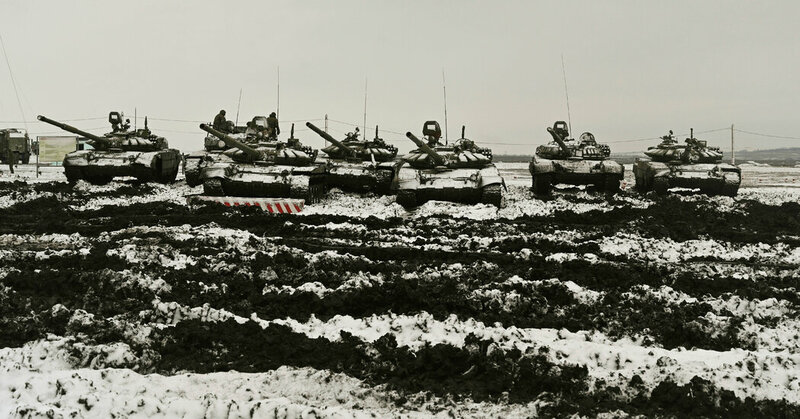
Two decades later, it is a far different fighting force that has massed near the border with Ukraine. Under Mr. Putin’s leadership, it has been overhauled into a modern sophisticated army, able to deploy quickly and with lethal effect in conventional conflicts, military analysts said. It features precision-guided weaponry, a newly streamlined command structure and well-fed and professional soldiers. And they still have the nuclear weapons.
The modernized military has emerged as a key tool of Mr. Putin’s foreign policy: capturing Crimea, intervening in Syria, keeping the peace between Armenia and Azerbaijan and, just this month, propping up a Russia-friendly leader in Kazakhstan. Now it is in the middle of its most ambitious — and most ominous — operation yet: using threats and potentially, many fear, force, to bring Ukraine back into Moscow’s sphere of influence.
It struggled to keep submarines afloat in the Arctic and an outgunned insurgency at bay in Chechnya. Senior officers sometimes lived in moldy, rat-infested tenements. And instead of socks, poorly trained soldiers often wrapped their feet in swaths of cloth, the way their Soviet and Tsarist predecessors had.
Two decades later, it is a far different fighting force that has massed near the border with Ukraine. Under Mr. Putin’s leadership, it has been overhauled into a modern sophisticated army, able to deploy quickly and with lethal effect in conventional conflicts, military analysts said. It features precision-guided weaponry, a newly streamlined command structure and well-fed and professional soldiers. And they still have the nuclear weapons.
The modernized military has emerged as a key tool of Mr. Putin’s foreign policy: capturing Crimea, intervening in Syria, keeping the peace between Armenia and Azerbaijan and, just this month, propping up a Russia-friendly leader in Kazakhstan. Now it is in the middle of its most ambitious — and most ominous — operation yet: using threats and potentially, many fear, force, to bring Ukraine back into Moscow’s sphere of influence.
Russia’s Military, Once Creaky, Is Modern and Lethal
Posted from nytimes.com Vladimir Putin
 Russia
 Ukraine
Posted 4 y ago

Read This Next


 Continue with Facebook
 Continue with Google