
Posted on Sep 15, 2023

Tracking the elusive chukar through Oregon’s desert grasslands

1.53K
9
2
6
6
0
Eric Thompson steps out of his truck and scans the horizon — rolling shrub-steppe dusted with snow as far as the eye can see, a typical scene for the Oregon desert in late fall. Another vehicle pulls up behind him and two people get out: his nephew Kyle Thompson and Lyndsay Ober, Kyle’s girlfriend. A feisty puppy hops out after them and begins darting around playfully.
They are searching for the best location to begin their daylong journey. Eric takes one last glance at the barren grassland before turning to his nephew.
“I’m just trying to see which way the wind is blowing,” he says.
Kyle waves his hand toward the east.
“I think it’s blowing that way,” he says.
Eric prefers being downwind from the animals he’s tracking. The group is braving the December climate in this remote landscape for one reason: chukar hunting.
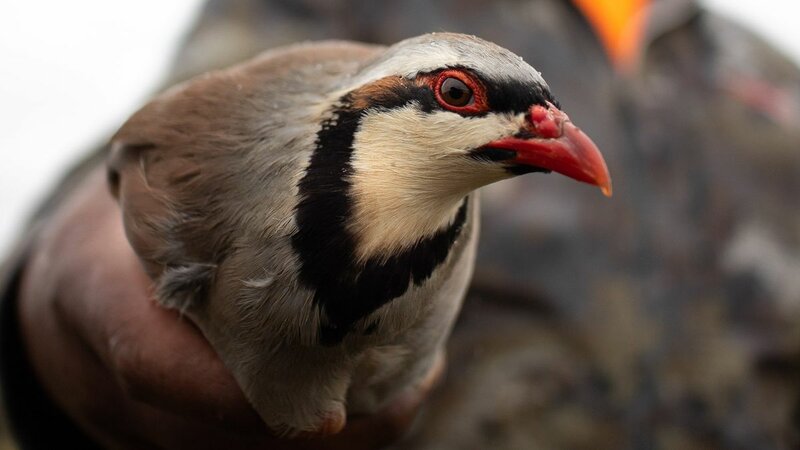
Chukars are small partridges common in the desert regions of the Columbia Plateau. Native to Eurasia, they were introduced as a game bird to the United States in the early 1900s. Chukars prefer to roost on sloped, rocky terrain, which makes them notoriously difficult to hunt, and most hunters won’t even try without a dog.
“I enjoy chukar hunting because of the challenge,” Eric says. “It’s not an easy thing to do.”
The puppy assisting this crew is a German wirehaired pointer named Sky. Wirehairs are specifically bred for hunting, but Sky is still learning the intricacies of the sport. Even so, her presence will be invaluable.
They are searching for the best location to begin their daylong journey. Eric takes one last glance at the barren grassland before turning to his nephew.
“I’m just trying to see which way the wind is blowing,” he says.
Kyle waves his hand toward the east.
“I think it’s blowing that way,” he says.
Eric prefers being downwind from the animals he’s tracking. The group is braving the December climate in this remote landscape for one reason: chukar hunting.
Chukars are small partridges common in the desert regions of the Columbia Plateau. Native to Eurasia, they were introduced as a game bird to the United States in the early 1900s. Chukars prefer to roost on sloped, rocky terrain, which makes them notoriously difficult to hunt, and most hunters won’t even try without a dog.
“I enjoy chukar hunting because of the challenge,” Eric says. “It’s not an easy thing to do.”
The puppy assisting this crew is a German wirehaired pointer named Sky. Wirehairs are specifically bred for hunting, but Sky is still learning the intricacies of the sport. Even so, her presence will be invaluable.
Tracking the elusive chukar through Oregon’s desert grasslands
Posted from opb.orgPosted in these groups:  WildlifeState of Oregon
WildlifeState of Oregon
Posted >1 y ago
Responses: 2
2
2
0

0
0
0

PO1 William "Chip" Nagel good day Brother William, always informational and of the most interesting. Thanks for sharing, have a blessed day!
(0)
(0)
Read This Next


 Continue with Facebook
 Continue with Google