
Posted on Jun 16, 2019

Tracing The Expanding Definition Of Fatherhood

884
26
4
12
12
0
In 2012, Brooklyn, N.Y.-based photographer Dirk Anschütz became a father. The shift in his life was enormous.
Anschütz was raised by a single mother. "I had never met my father, which was never a big deal," he says. But after his son Ray's birth, Anschütz says he didn't have a male parenting role model.
This led to a curiosity about how other dads were raising their kids; curiosity that resulted in a six-year portrait project called Fathers and Sons.
Anschütz was raised by a single mother. "I had never met my father, which was never a big deal," he says. But after his son Ray's birth, Anschütz says he didn't have a male parenting role model.
This led to a curiosity about how other dads were raising their kids; curiosity that resulted in a six-year portrait project called Fathers and Sons.
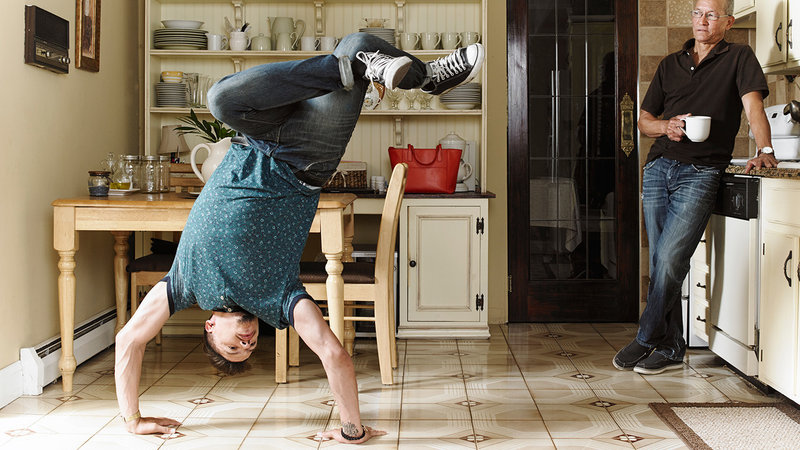
Tracing The Expanding Definition Of Fatherhood
Posted from npr.orgPosted in these groups:  Photography
Photography
Posted >1 y ago
Responses: 4
6
6
0

Thank you, my friend PO1 William "Chip" Nagel for posting a great article filled with photographs Tracing The Expanding Definition Of Fatherhood based on photographer Dirk Anschütz after he became a father.
I certainly changed my share of diapers of my sons in the late 1980's and early 1990's [1988-1992]
Here are 4 pictures from the article which I appreciate the most.
Images
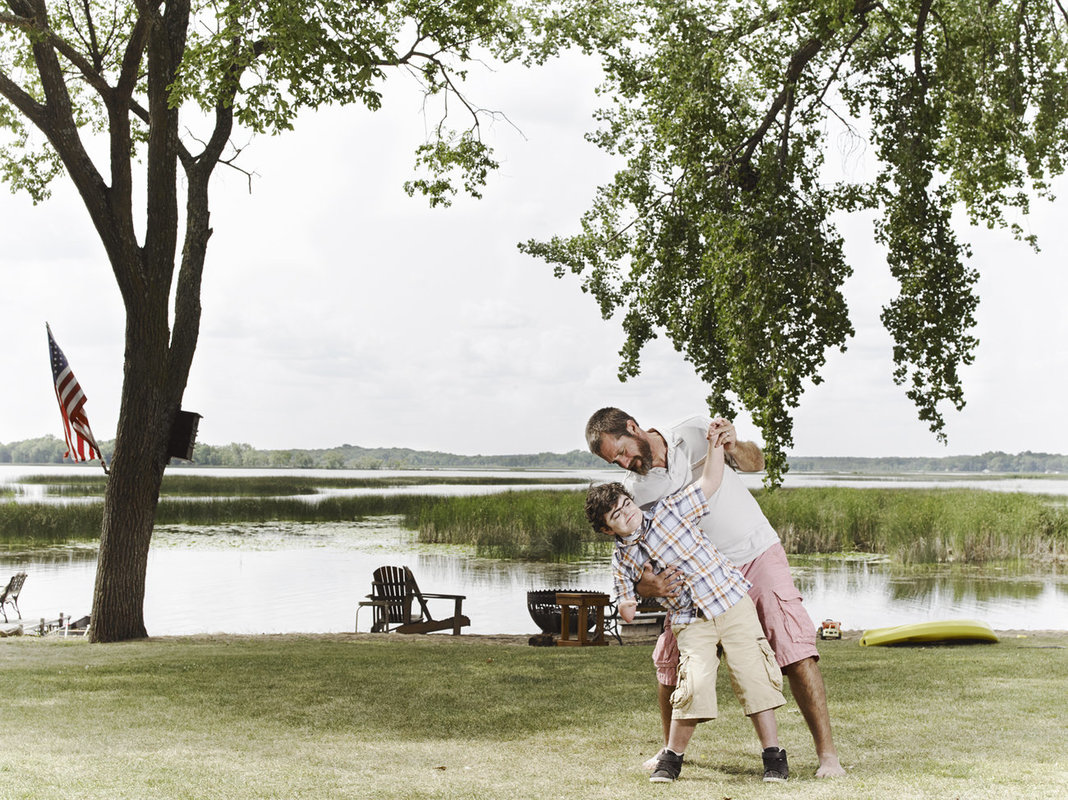
1. Caleb has a developmental disability and is largely nonverbal. When Matt, an actor in Annandale, Minn., did his movement and acting exercises, he noticed that Caleb reacted strongly to them. They started doing them together, opening up a new way for father and son to communicate.
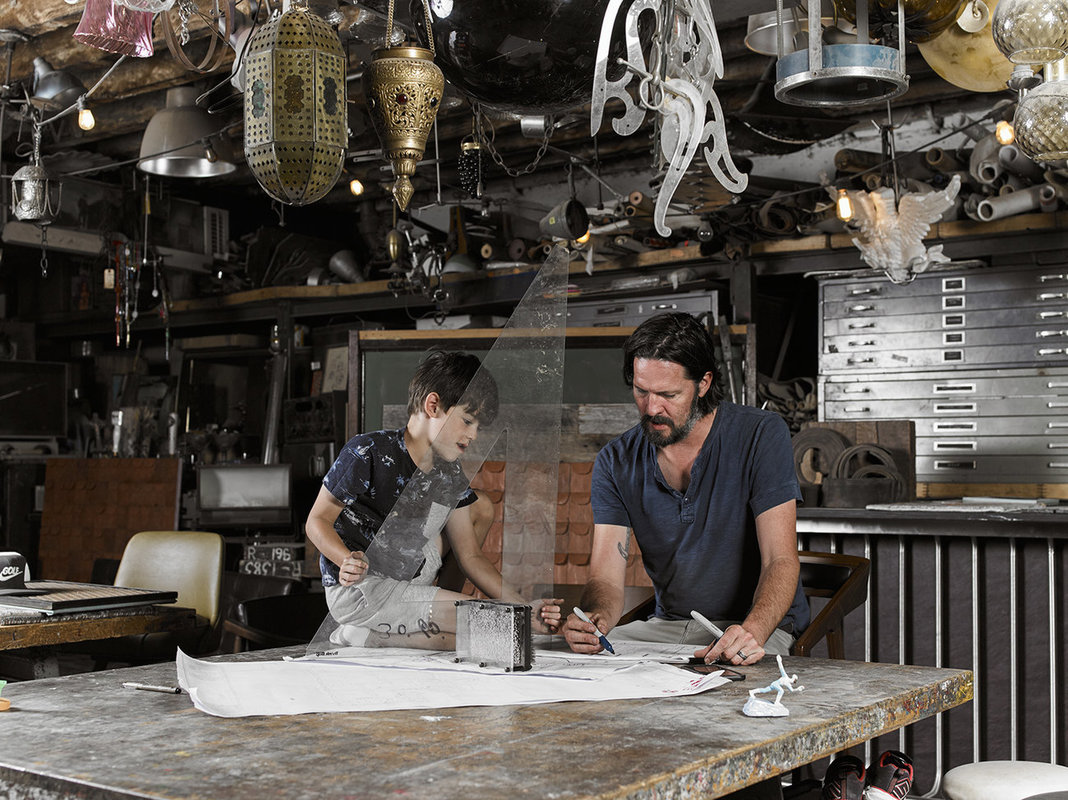
2. John designs bars and restaurants and has a big workshop. When Roman has days off from school, he often joins his dad at the shop. They live in Brooklyn.
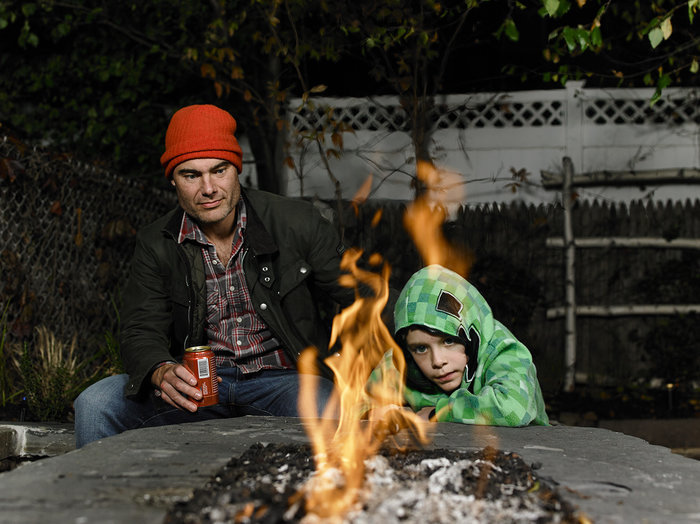
3. George works in the financial sector and lives with his two kids in Brooklyn. His wife, Lyle's mom, died suddenly when Lyle was 5. George had to guide his kids through the tragedy while dealing with his own grief.
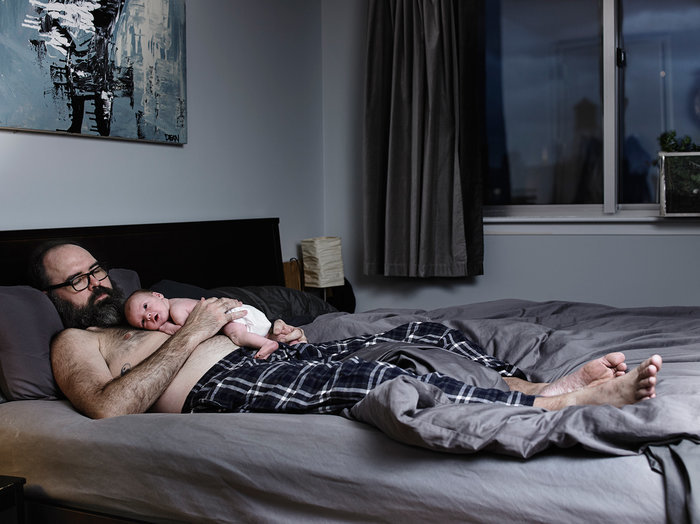
4. Andrew and his wife work on film and TV productions in Brooklyn. Because they have extremely long workdays, it's hard for them to be home at the same time. As such, Andrew spends a lot of time alone with Homer.
"In 2012, Brooklyn, N.Y.-based photographer Dirk Anschütz became a father. The shift in his life was enormous.
Anschütz was raised by a single mother. "I had never met my father, which was never a big deal," he says. But after his son Ray's birth, Anschütz says he didn't have a male parenting role model.
This led to a curiosity about how other dads were raising their kids; curiosity that resulted in a six-year portrait project called Fathers and Sons.
Anschütz began the project by photographing family members and close friends. It was important to Anschütz to show the personal relationships between the fathers and sons. As a result, he decided to only use first names. He intended for the project to be more art than journalism.
The first photo he made, and his favorite of the project, was of his girlfriend's brother-in-law and his son at a family reunion. The father, Matt, is an actor, and his son, Caleb, has a developmental disability. They connect through Matt's acting and movement exercises. As Caleb grew up in Annandale, Minn., and as they connected more, Matt started a nonprofit that provides art and acting education for people with developmental and cognitive disabilities.
The impact the son had on the father's life, and vice versa, was immediately striking to Anschütz. "I realized there was a lot of meat in that one picture," he says. "Just a lot of stuff you can think about."
Over the next six years, the project took Anschütz all over the United States. As he traveled, he sought out pairs of fathers and sons that expanded the idea of what the relationship can look like. "The project really got me looking at a lot of different aspects of society," he says. "There's a lot of change going on right now regarding what fatherhood means, what masculinity means."
Anschütz's portraits, taken together, help personify those expanding ideas of masculinity and fatherhood. On the more stereotypically masculine end of the spectrum, he photographed a professional wrestler wrestling with his son, to exemplify wrestling as a common father-son interaction. On the other end, he photographed a pair in which the father transitioned from male to female at 61 years old, to show how the relationship can still endure.
He photographed a father changing his infant son's diaper. "Now that's really not a big deal," Anschütz says. "Every dad I know does that. But when I think back to my childhood, very few dads would change their kids' diapers. And if they did, they probably wouldn't have allowed a photographer in the room."
Anschütz makes the images with a digital medium-format camera that contains a larger-than-normal image sensor. He lights them with natural light and auxiliary strobe lights. "I don't want to be a fly on the wall," he says. "It should be obvious that everybody works together on one of these portraits."
Some of the portraits are more formal, while others feature tender moments between the two subjects. "If you just have your equipment set up for a while, after a while the pair will just do their thing even with you and the camera present," he says.
In addition to producing a compelling body of work that helps showcase the expanding bounds of what fatherhood can look like, Anschütz says Fathers and Sons made him a more understanding dad. He describes his parenting style as "relaxed." He discovered that what constitutes good fatherhood can vary widely.
"How people grow up or raise their kids is often a consequence of their socioeconomic background or their cultural background," he says. "Some kids will have advantages that aren't there for kids that grew up under different circumstances."
FYI LTC Wayne Brandon LTC (Join to see) MSgt Robert C Aldi CPT Scott Sharon CMSgt (Join to see) SMSgt Tom Burns SSG Donald H "Don" Bates SSG Jeffrey Leake Sgt (Join to see) SGT Randal Groover SGT Rick Colburn SPC Mike Lake PO3 William Hetrick PO3 Lynn Spalding SPC Mark Huddleston Rhonda Hanson SPC Jordan Sutich PO3 Craig Phillips PVT Mark Zehner
I certainly changed my share of diapers of my sons in the late 1980's and early 1990's [1988-1992]
Here are 4 pictures from the article which I appreciate the most.
Images
1. Caleb has a developmental disability and is largely nonverbal. When Matt, an actor in Annandale, Minn., did his movement and acting exercises, he noticed that Caleb reacted strongly to them. They started doing them together, opening up a new way for father and son to communicate.
2. John designs bars and restaurants and has a big workshop. When Roman has days off from school, he often joins his dad at the shop. They live in Brooklyn.
3. George works in the financial sector and lives with his two kids in Brooklyn. His wife, Lyle's mom, died suddenly when Lyle was 5. George had to guide his kids through the tragedy while dealing with his own grief.
4. Andrew and his wife work on film and TV productions in Brooklyn. Because they have extremely long workdays, it's hard for them to be home at the same time. As such, Andrew spends a lot of time alone with Homer.
"In 2012, Brooklyn, N.Y.-based photographer Dirk Anschütz became a father. The shift in his life was enormous.
Anschütz was raised by a single mother. "I had never met my father, which was never a big deal," he says. But after his son Ray's birth, Anschütz says he didn't have a male parenting role model.
This led to a curiosity about how other dads were raising their kids; curiosity that resulted in a six-year portrait project called Fathers and Sons.
Anschütz began the project by photographing family members and close friends. It was important to Anschütz to show the personal relationships between the fathers and sons. As a result, he decided to only use first names. He intended for the project to be more art than journalism.
The first photo he made, and his favorite of the project, was of his girlfriend's brother-in-law and his son at a family reunion. The father, Matt, is an actor, and his son, Caleb, has a developmental disability. They connect through Matt's acting and movement exercises. As Caleb grew up in Annandale, Minn., and as they connected more, Matt started a nonprofit that provides art and acting education for people with developmental and cognitive disabilities.
The impact the son had on the father's life, and vice versa, was immediately striking to Anschütz. "I realized there was a lot of meat in that one picture," he says. "Just a lot of stuff you can think about."
Over the next six years, the project took Anschütz all over the United States. As he traveled, he sought out pairs of fathers and sons that expanded the idea of what the relationship can look like. "The project really got me looking at a lot of different aspects of society," he says. "There's a lot of change going on right now regarding what fatherhood means, what masculinity means."
Anschütz's portraits, taken together, help personify those expanding ideas of masculinity and fatherhood. On the more stereotypically masculine end of the spectrum, he photographed a professional wrestler wrestling with his son, to exemplify wrestling as a common father-son interaction. On the other end, he photographed a pair in which the father transitioned from male to female at 61 years old, to show how the relationship can still endure.
He photographed a father changing his infant son's diaper. "Now that's really not a big deal," Anschütz says. "Every dad I know does that. But when I think back to my childhood, very few dads would change their kids' diapers. And if they did, they probably wouldn't have allowed a photographer in the room."
Anschütz makes the images with a digital medium-format camera that contains a larger-than-normal image sensor. He lights them with natural light and auxiliary strobe lights. "I don't want to be a fly on the wall," he says. "It should be obvious that everybody works together on one of these portraits."
Some of the portraits are more formal, while others feature tender moments between the two subjects. "If you just have your equipment set up for a while, after a while the pair will just do their thing even with you and the camera present," he says.
In addition to producing a compelling body of work that helps showcase the expanding bounds of what fatherhood can look like, Anschütz says Fathers and Sons made him a more understanding dad. He describes his parenting style as "relaxed." He discovered that what constitutes good fatherhood can vary widely.
"How people grow up or raise their kids is often a consequence of their socioeconomic background or their cultural background," he says. "Some kids will have advantages that aren't there for kids that grew up under different circumstances."
FYI LTC Wayne Brandon LTC (Join to see) MSgt Robert C Aldi CPT Scott Sharon CMSgt (Join to see) SMSgt Tom Burns SSG Donald H "Don" Bates SSG Jeffrey Leake Sgt (Join to see) SGT Randal Groover SGT Rick Colburn SPC Mike Lake PO3 William Hetrick PO3 Lynn Spalding SPC Mark Huddleston Rhonda Hanson SPC Jordan Sutich PO3 Craig Phillips PVT Mark Zehner
(6)
(0)
4
4
0

3
3
0

Read This Next


 Continue with Facebook
 Continue with Google