

Communism

Communism

6
6
0
When we talk about "China" we must call them what they are: COMMUNISTS.
Not "CCP" or "China," but COMMUNIST China. They hate being called what they are, and it's time again to expose COMMUNISM for what it truly is:
A system where the state controls property, speech, courts, and political life; dissent is punished; independent institutions are eliminated; and a ruling elite governs in the name of “the people” without their consent.
Criticizing Communist China is not attacking the Chinese people.
It is naming a one-party regime sustained by coercion, surveillance, censorship—and widespread enforced compliance, including party membership that rewards loyalty and punishes resistance.
Not "CCP" or "China," but COMMUNIST China. They hate being called what they are, and it's time again to expose COMMUNISM for what it truly is:
A system where the state controls property, speech, courts, and political life; dissent is punished; independent institutions are eliminated; and a ruling elite governs in the name of “the people” without their consent.
Criticizing Communist China is not attacking the Chinese people.
It is naming a one-party regime sustained by coercion, surveillance, censorship—and widespread enforced compliance, including party membership that rewards loyalty and punishes resistance.
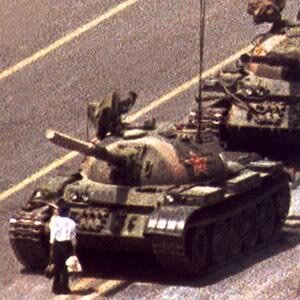
 China
China Communism
Posted 12 d ago
Responses: 4

2
2
0

The revolution that installed the so called Communist government in China, and Russia, was nothing more than the replacement of one monarchy/nobility with another. Those in power control the wealth. They subjugate the people. They live in splendour, while the lesser populace wants. There are no true communist states, as envisioned by Marx. Karl was philosopher, not a realist. Communism will never succeed because it overlooks one essential factor, human nature.
(2)
(0)
2
2
0

So true and those who refuse to speak the truth about it, support the expansion of Communism.
(2)
(0)
1
1
0

I must disagree with the labeling. IMO, there is no true "communist" country. There ARE authoritarian/dictator countries under the label of communism.
Having a wealthy leadership while many others are paupers is NOT communism.
Having to use force to stay in power is NOT communism.
However, I guess we need to label others, so we use that.
Having a wealthy leadership while many others are paupers is NOT communism.
Having to use force to stay in power is NOT communism.
However, I guess we need to label others, so we use that.
(1)
(0)
Maj John Bell
Pardon the sarcasm. We don't want to harm their self-esteem.
Elements of communism:
_State ownership: The state owns all capital, including land, machines, buildings, and infrastructure.
_Abolition of private property: Personal property is abolished or limited to personal items.
_Central planning: The state sets production targets for all goods and services, replacing market-driven production.
_Bureaucratic elite: A bureaucratic elite emerges, replacing competition with positions within the government.
_Class struggle: The proletariat comes to dominate, with competition shifting from producing value to competing for government positions.
_Single party system
State Ownership
China does allow "private" ownership of the means of production. However, the state has the authority to impose business decisions to ensure that the enterprise serves the needs of the state. That isn't private ownership in the western understanding of the words.
“Opinion on Strengthening the United Front Work of the Private Economy in the New Era,” recently released by the Central Committee of the Chinese Communist Party (and further elaborated on by President Xi Jinping himself). This document tells us in no uncertain terms that Chinese private companies will be increasingly called upon to conduct their operations in tight coordination with governmental policy objectives and ideologies.
Source; The Diplomat - "Private Chinese Companies Really Private?
Private Property (land)
In China, individuals cannot privately own land but can obtain transferrable land-use rights for a number of years for a fee. The maximum term for urban land-use rights granted for residential purposes is seventy years. All land is either subject to government ownership or collective ownership. …
Central Planning:
China’s economic model exhibits strong elements of state capitalism: the state uses centrally administered state-owned enterprises (SOEs), five-year plans, and directed investment to pursue strategic industries and profitability goals.
Bureaucratic elite:
At every level of government, party rank takes precedence over government rank and government regulation.
Class struggle:
Class struggle was a central part of communist Chinese dogma and doctrine... until the CCP established complete political dominance and authoritarian rule. Then some individuals (communist party officials at every level) became more equal than others.
Single Party System: The on-party system is enshrined in the Chinese Constitution, and no party member may run for or hold office without membership in and approval of the CCP.
What broad stroke label is more accurate than calling China communist?
The old line that there is no true "communist" country is a cover for those who cannot provide an example of a communist or socialist state that has produced prosperity and liberty for its citizens.
https://thediplomat.com/2020/09/are-private-chinese-companies-really-private/
Elements of communism:
_State ownership: The state owns all capital, including land, machines, buildings, and infrastructure.
_Abolition of private property: Personal property is abolished or limited to personal items.
_Central planning: The state sets production targets for all goods and services, replacing market-driven production.
_Bureaucratic elite: A bureaucratic elite emerges, replacing competition with positions within the government.
_Class struggle: The proletariat comes to dominate, with competition shifting from producing value to competing for government positions.
_Single party system
State Ownership
China does allow "private" ownership of the means of production. However, the state has the authority to impose business decisions to ensure that the enterprise serves the needs of the state. That isn't private ownership in the western understanding of the words.
“Opinion on Strengthening the United Front Work of the Private Economy in the New Era,” recently released by the Central Committee of the Chinese Communist Party (and further elaborated on by President Xi Jinping himself). This document tells us in no uncertain terms that Chinese private companies will be increasingly called upon to conduct their operations in tight coordination with governmental policy objectives and ideologies.
Source; The Diplomat - "Private Chinese Companies Really Private?
Private Property (land)
In China, individuals cannot privately own land but can obtain transferrable land-use rights for a number of years for a fee. The maximum term for urban land-use rights granted for residential purposes is seventy years. All land is either subject to government ownership or collective ownership. …
Central Planning:
China’s economic model exhibits strong elements of state capitalism: the state uses centrally administered state-owned enterprises (SOEs), five-year plans, and directed investment to pursue strategic industries and profitability goals.
Bureaucratic elite:
At every level of government, party rank takes precedence over government rank and government regulation.
Class struggle:
Class struggle was a central part of communist Chinese dogma and doctrine... until the CCP established complete political dominance and authoritarian rule. Then some individuals (communist party officials at every level) became more equal than others.
Single Party System: The on-party system is enshrined in the Chinese Constitution, and no party member may run for or hold office without membership in and approval of the CCP.
What broad stroke label is more accurate than calling China communist?
The old line that there is no true "communist" country is a cover for those who cannot provide an example of a communist or socialist state that has produced prosperity and liberty for its citizens.
https://thediplomat.com/2020/09/are-private-chinese-companies-really-private/
(2)
(0)
MSG Stan Hutchison
Maj John Bell - 1. There are almost 6.2 million millionaires in China according to a 2022 report. In true communism, there would be no millionaires unless every citizen was a millionaire,
2. "The old line that there is no true "communist" country is a cover for those who cannot provide an example of a communist or socialist state that has produced prosperity and liberty for its citizens."
That is because there are no true communist states and even the socialist states are not completely socialist.
2. "The old line that there is no true "communist" country is a cover for those who cannot provide an example of a communist or socialist state that has produced prosperity and liberty for its citizens."
That is because there are no true communist states and even the socialist states are not completely socialist.
(1)
(0)
Maj John Bell
MSG Stan Hutchison - The net worth of China's elite party members, particularly the CCP's billionaires, is estimated to be over £400 billion. This wealth is attributed to their access to valuable housing and other resources, as well as their positions within the party and government. Additionally, the wealthiest 209 parliament delegates are each worth more than 2 billion yuan ($300 million), indicating a significant concentration of wealth among CCP members.
There is no true communist country because communism doesn't work. Every attempt to impose communism has resulted in mass poverty, mass oppression and mass murder of the nation's population. The state is elevated above the individual. That doesn't mean the CCP, has given up on communism for the average Joe.
There is no true communist country because communism doesn't work. Every attempt to impose communism has resulted in mass poverty, mass oppression and mass murder of the nation's population. The state is elevated above the individual. That doesn't mean the CCP, has given up on communism for the average Joe.
(2)
(0)
Read This Next


 Continue with Facebook
 Continue with Google