

WWI

WWI
Posted on Jan 18, 2026

Post-World War I peace conference begins in Paris | January 18, 1919 | HISTORY

342
20
2
9
9
0
On January 18, 1919, in Paris, France, some of the most powerful people in the world meet to begin the long, complicated negotiations that would officially mark the end of the First World War.
Leaders of the victorious Allied powers—France, Great Britain, the United States and Italy—would make most of the crucial decisions in Paris over the next six months. For most of the conference, U.S. President Woodrow Wilson struggled to support his idea of a “peace without victory” and make sure that Germany, the leader of the Central Powers and the major loser of the war, was not treated too harshly. On the other hand, Prime Ministers Georges Clemenceau of France and David Lloyd George of Britain argued that punishing Germany adequately and ensuring its weakness was the only way to justify the immense costs of the war. In the end, Wilson compromised on the treatment of Germany in order to push through the creation of his pet project, an international peacekeeping organization called the League of Nations.
Leaders of the victorious Allied powers—France, Great Britain, the United States and Italy—would make most of the crucial decisions in Paris over the next six months. For most of the conference, U.S. President Woodrow Wilson struggled to support his idea of a “peace without victory” and make sure that Germany, the leader of the Central Powers and the major loser of the war, was not treated too harshly. On the other hand, Prime Ministers Georges Clemenceau of France and David Lloyd George of Britain argued that punishing Germany adequately and ensuring its weakness was the only way to justify the immense costs of the war. In the end, Wilson compromised on the treatment of Germany in order to push through the creation of his pet project, an international peacekeeping organization called the League of Nations.
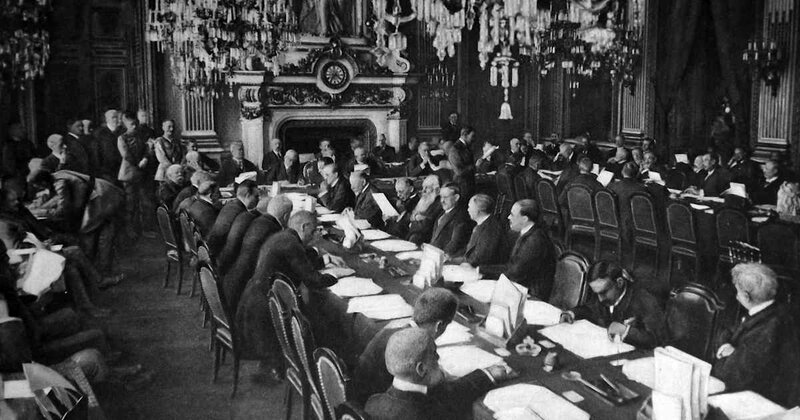
Post-World War I peace conference begins in Paris | January 18, 1919 | HISTORY
Posted from history.com WWI
WWI Paris
Paris World Affairs
 World History
Posted 26 d ago
Responses: 2
7
7
0

4
4
0

History is so hard to recognize while it is being made. And at the time it is being made, well, everyone thinks they are doing the "right thing." Only later, with the clear eyes of "hindsight" do we see what we should have done, might have done, or could have done.
And it never ceases to Amaze me, that a handful of people make the decisions that millions, and even billions of people have to pay the consequences for. In every era , or epoch, there are never more than that handful of players pulling the strings. And rarely does that number reach double digits. Three to five guys - with a few exceptions of Queens for a bit- and the World Changes.
And it never ceases to Amaze me, that a handful of people make the decisions that millions, and even billions of people have to pay the consequences for. In every era , or epoch, there are never more than that handful of players pulling the strings. And rarely does that number reach double digits. Three to five guys - with a few exceptions of Queens for a bit- and the World Changes.
(4)
(0)
Read This Next


 Continue with Facebook
 Continue with Google