
Posted on Nov 7, 2014

Disrespected while correcting a Soldier, how would you handle this situation?

284K
1.74K
630
77
77
0
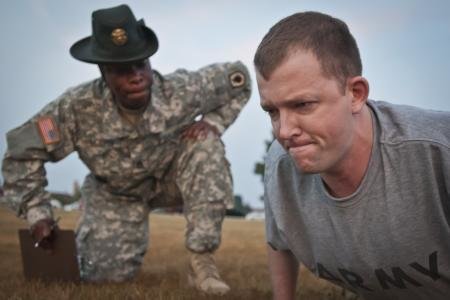
Ok so there I was at a court-martial asking a Soldier why he was wearing ACUs and not ASUs. He started to catch an attitude, so I told him to go to parade rest. He turned away from me looking at my paralegal, putting his hands in his pockets.
My paralegal tells him that he does not need to be looking at him, but at me, because I was the one addressing him, and that he needs to show respect. As the Soldier continues to stare out at my paralegal with his hands in his pockets, I continue to correct him when a civilian comes out to where I was correcting the Soldier stating that she had work to do and I could "yell" at him some other time.
I was so mind boggled and dumbfounded because said civilian used to be in the military. I'm sorry, but the last time I checked the Soldier was given a direct order by a CPT and myself that the duty uniform for the court-martial was ASUs and an alternate uniform had to be approved by the judge, so I was doing my job by asking him why he was in the wrong uniform and then correcting him when he began to disrespect me.
I felt so disrespected I just walked away and sat in a room to cool off.
How would you have handled the situation?
My paralegal tells him that he does not need to be looking at him, but at me, because I was the one addressing him, and that he needs to show respect. As the Soldier continues to stare out at my paralegal with his hands in his pockets, I continue to correct him when a civilian comes out to where I was correcting the Soldier stating that she had work to do and I could "yell" at him some other time.
I was so mind boggled and dumbfounded because said civilian used to be in the military. I'm sorry, but the last time I checked the Soldier was given a direct order by a CPT and myself that the duty uniform for the court-martial was ASUs and an alternate uniform had to be approved by the judge, so I was doing my job by asking him why he was in the wrong uniform and then correcting him when he began to disrespect me.
I felt so disrespected I just walked away and sat in a room to cool off.
How would you have handled the situation?
 Disrespect
 Civilians
 Counseling
Edited 11 y ago
Posted 11 y ago
Responses: 380
0
0
0
Don't waste your energy on him. Unless he has not been issued the proper uniform, wearing the wrong uniform should be regrarded as a will fill act, and clearly has no desire for leniency.
(0)
(0)
0
0
0

Unfortunately, this is an increasing issue. a much larger discussion than we have space here. You were doing the right thing. After three attempts I think the attitude of disrespect is established and the 4856 come in to play. If nothing else, this sets the point for the JAG to include it as a lesser included offense.
This is an unfortunate position, and may need to go back to the Soldier's command and a separate ART15 if they support it. I was present when my BN CSM was called to the Garrison SGMs office for making stop corrections on two AIT Soldiers and my CSM was told he was wrong for not going through the chain of command for the two students. WTF!! When did it become an offense for anyone, especially an E-9 to make a spot correction?
I'm sorry ot say that I'm partly happy my time is coming to an end to get away from the dropping standards.
This is an unfortunate position, and may need to go back to the Soldier's command and a separate ART15 if they support it. I was present when my BN CSM was called to the Garrison SGMs office for making stop corrections on two AIT Soldiers and my CSM was told he was wrong for not going through the chain of command for the two students. WTF!! When did it become an offense for anyone, especially an E-9 to make a spot correction?
I'm sorry ot say that I'm partly happy my time is coming to an end to get away from the dropping standards.
(0)
(0)
0
0
0
0
0
0

Well I'm old school, the picture shows a female drill sergeant training a Male recruit, to do what?
The USA has used the military as a social equality club with equal opportunity, it was never meant to be! but mark my words we will all pay a price in one way or another.
The USA has used the military as a social equality club with equal opportunity, it was never meant to be! but mark my words we will all pay a price in one way or another.
(0)
(0)
0
0
0
0
0
0

We'll that'all depend , If ya good leader , strip your Blouse havem strip His see what happens ! all this Political Correctness roe's are for jackwagon peckerwoods . SFMF.
(0)
(0)
0
0
0

Right or wrong...this would be "my" response......
as the "civilian" chose to interrupt.....
I would turn to him and tell him that he needed to "be quiet as I addressed the soldier".
I would then re-address the soldier
and tell him to return to his quarters, and get into "Proper Uniform".
(adding that this was an "order")
Being late due to his negligence
will not look good for him in the eyes of the "Officers of the Court"
Plus, being "disrespectful" would only add to the charges he is already facing.
The fact that said civilian used to be in the military,
and acted that way tells me that he had no respect for rank while he was in.
And that he was trying to Undermine the authority "you" had as an Officer,
and you gave him what he wanted.
as the "civilian" chose to interrupt.....
I would turn to him and tell him that he needed to "be quiet as I addressed the soldier".
I would then re-address the soldier
and tell him to return to his quarters, and get into "Proper Uniform".
(adding that this was an "order")
Being late due to his negligence
will not look good for him in the eyes of the "Officers of the Court"
Plus, being "disrespectful" would only add to the charges he is already facing.
The fact that said civilian used to be in the military,
and acted that way tells me that he had no respect for rank while he was in.
And that he was trying to Undermine the authority "you" had as an Officer,
and you gave him what he wanted.
(0)
(0)
0
0
0

Every story has a beginning but many times we only hear the end of the story. If the reprimanding officer called the soldiers attention with an attitude. This can automatically create an attitude for the soldier. I am not giving an excuse for this soldier. We have lost the sense of respect, authority and values. This soldier needs to have a consequence for his disrespect. If not, this can be a damaged apple for the rest of soldiers. He should be written up three write ups and he is out. When we have disciplined of enforced regulations we act straighter. Every action has a consequence in this case his action should have a consequence if not. The Staff Seargant will have a dominoe effect problem on his hands
(0)
(0)
0
0
0

0
0
0

Frankly, I have reviewed a number of the statements made in this post and it seems simple. Civilians, especially those that have never served, at a non-command level, often think they have a "right" to comment of matters of "military discipline" and "proper respect" between military members. They do not! The only exception is reporting to the chain of command witnessed (by other than themselves alone) bad behaviors consistent with the parameters of the UCMJ! If the civilian had a concern, she should have called her HR, and asked for guidance. Stating "she had work to do" is lame. The person being disciplined was choosing to get others involved by their disrespectful behavior and knew the potential for disrupting the work place and was perhaps hoping to cause an incident. Immaturity often takes this approach.
Civilians are not accountable under the UCMJ and while they may be culpable under general civilian law for everything from negligence to theft, they are not tried under the per view of the UCMJ. Federal and other laws apply, but the UCMJ does not, or at least did not when I was on active duty, apply to civilians. Therefore, unless you are physically abusing a person or are simply unprofessional (endangering people's lives or forcing people to take unlawful acts) civilians need to stay the hec out!
Esprit de corps and unit cohesion are difficult enough to manage without civilians injecting what they think is typical for them upon a military environment. In many cases civilians are often unprepared to understand why appropriate discipline must be achieved and maintained within the standards of the UCMJ, and more often than not do more harm to the chain of command than they do help it, when they inject comments or actions that disrupt the very reasons military discipline and personal responsibility are so important.
Not knowing some other factors I will go out on a limb here just make a couple of more comments:
1st - I might have said e.g. - "Mam, I appreciate this is disrupting you, in fact it is disrupting a great number of things. I apologize for (the person's name and rank here) behavior, which is in violation of good order and discipline and if not corrected will endanger those he could find himself with in a combat zone or other life threatening situation. I value that this is disrupting to you, but think of it this way, if (the person's name and rank here) believes they are not accountable for following protocol, how reliable will they be when those who will count on them will not be able to count on him. What if a friend of yours or a family member were killed or hurt because of (the person's name and rank here) undisciplined actions, would you accept this lack of simple discipline on their part as Ok, especially if their improper actions costs your friend or family member their life? Is that OK with you? Again, I apologize that this incident has disrupted your work. But, I need you allow me to do my job in accordance with the UCMJ, which you are not held to account to comply with, but (the person's name and rank here) is accountable to. Again, thank you!"
2nd - Ignoring the solider (briefly) to address the civilian and using language that speaks to consequences of actions for both the civilian and offending solider that is public, allows you to make a very strong statement. I have on the couple of occasions this happened to me to a lesser degree found that taking such an approach can often get increased buy-in from civilians who work in the same co-locations, and send the message that you are unflappable. None of this is simple or comfortable, but it does present an opportunity to teach. After all, as Senior Enlisted and Officers we have a duty to teach.
In closing, lets look at a couple of UCMJ articles:
Article 89 - “Any person subject to this chapter who behaves with disrespect toward his superior commissioned officer shall be punished as a court-martial may direct.”
Article 91 - “Any warrant officer or enlisted member who—
(1) strikes or assaults a warrant officer, non-commissioned officer, or petty officer, while that officer is in the execution of his office;
(2) willfully disobeys the lawful order of a warrant officer, noncommissioned officer, or petty officer; or
(3) treats with contempt or is disrespectful in language or deportment toward a warrant officer, noncommissioned officer, or petty officer while that officer is in the execution of his office; shall be punished as a court-martial may direct.”
Article 92 - “Any person subject to this chapter who—
(1) violates or fails to obey any lawful general order or regulation;
(2) having knowledge of any other lawful order issued by a member of the armed forces, which it is his duty to obey, fails to obey the order; or
(3) is derelict in the performance of his duties; shall be punished as a court-martial may direct.”
Article 117 - “Any person subject to this chapter who uses provoking or reproachful words or gestures towards any other person subject to this chapter shall be punished as a court-martial may direct.”
The solider, at least as explained, is in violation of one or more of these UCMJ articles. Again, this is an interesting discussion, but I think takes up too much valuable time. Frankly, I might have taken him into to the court and let the JAG prefer added charges, perhaps Article 88 - “(a) An act, done with specific intent to commit an offense under this chapter, amounting to more than mere preparation and tending, even though failing, to effect its commission, is an attempt to commit that offense.
(b) Any person subject to this chapter who attempts to commit any offense punishable by this chapter shall be punished as a court-martial may direct, unless otherwise specifically prescribed.
(c) Any person subject to this chapter may be convicted of an attempt to commit an offense although it appears on the trial that the offense was consummated.”
As the solider was "attempting to commit an offense" by not being in the proper uniform when they knew otherwise or should have known otherwise.
Again, just a few comments from someone that has been retired >20 years, but who continues to wonder why such issues continue to plague or military. Also, like some of you, I retired (mid-90s) when "political correctness" was beginning to gain its sea legs. When we cannot be frank (honest) we create and environment of distrust. For warriors, this can never be! Too much is riding on keeping faith with our fellow service members regardless of branch or rank.
Civilians are not accountable under the UCMJ and while they may be culpable under general civilian law for everything from negligence to theft, they are not tried under the per view of the UCMJ. Federal and other laws apply, but the UCMJ does not, or at least did not when I was on active duty, apply to civilians. Therefore, unless you are physically abusing a person or are simply unprofessional (endangering people's lives or forcing people to take unlawful acts) civilians need to stay the hec out!
Esprit de corps and unit cohesion are difficult enough to manage without civilians injecting what they think is typical for them upon a military environment. In many cases civilians are often unprepared to understand why appropriate discipline must be achieved and maintained within the standards of the UCMJ, and more often than not do more harm to the chain of command than they do help it, when they inject comments or actions that disrupt the very reasons military discipline and personal responsibility are so important.
Not knowing some other factors I will go out on a limb here just make a couple of more comments:
1st - I might have said e.g. - "Mam, I appreciate this is disrupting you, in fact it is disrupting a great number of things. I apologize for (the person's name and rank here) behavior, which is in violation of good order and discipline and if not corrected will endanger those he could find himself with in a combat zone or other life threatening situation. I value that this is disrupting to you, but think of it this way, if (the person's name and rank here) believes they are not accountable for following protocol, how reliable will they be when those who will count on them will not be able to count on him. What if a friend of yours or a family member were killed or hurt because of (the person's name and rank here) undisciplined actions, would you accept this lack of simple discipline on their part as Ok, especially if their improper actions costs your friend or family member their life? Is that OK with you? Again, I apologize that this incident has disrupted your work. But, I need you allow me to do my job in accordance with the UCMJ, which you are not held to account to comply with, but (the person's name and rank here) is accountable to. Again, thank you!"
2nd - Ignoring the solider (briefly) to address the civilian and using language that speaks to consequences of actions for both the civilian and offending solider that is public, allows you to make a very strong statement. I have on the couple of occasions this happened to me to a lesser degree found that taking such an approach can often get increased buy-in from civilians who work in the same co-locations, and send the message that you are unflappable. None of this is simple or comfortable, but it does present an opportunity to teach. After all, as Senior Enlisted and Officers we have a duty to teach.
In closing, lets look at a couple of UCMJ articles:
Article 89 - “Any person subject to this chapter who behaves with disrespect toward his superior commissioned officer shall be punished as a court-martial may direct.”
Article 91 - “Any warrant officer or enlisted member who—
(1) strikes or assaults a warrant officer, non-commissioned officer, or petty officer, while that officer is in the execution of his office;
(2) willfully disobeys the lawful order of a warrant officer, noncommissioned officer, or petty officer; or
(3) treats with contempt or is disrespectful in language or deportment toward a warrant officer, noncommissioned officer, or petty officer while that officer is in the execution of his office; shall be punished as a court-martial may direct.”
Article 92 - “Any person subject to this chapter who—
(1) violates or fails to obey any lawful general order or regulation;
(2) having knowledge of any other lawful order issued by a member of the armed forces, which it is his duty to obey, fails to obey the order; or
(3) is derelict in the performance of his duties; shall be punished as a court-martial may direct.”
Article 117 - “Any person subject to this chapter who uses provoking or reproachful words or gestures towards any other person subject to this chapter shall be punished as a court-martial may direct.”
The solider, at least as explained, is in violation of one or more of these UCMJ articles. Again, this is an interesting discussion, but I think takes up too much valuable time. Frankly, I might have taken him into to the court and let the JAG prefer added charges, perhaps Article 88 - “(a) An act, done with specific intent to commit an offense under this chapter, amounting to more than mere preparation and tending, even though failing, to effect its commission, is an attempt to commit that offense.
(b) Any person subject to this chapter who attempts to commit any offense punishable by this chapter shall be punished as a court-martial may direct, unless otherwise specifically prescribed.
(c) Any person subject to this chapter may be convicted of an attempt to commit an offense although it appears on the trial that the offense was consummated.”
As the solider was "attempting to commit an offense" by not being in the proper uniform when they knew otherwise or should have known otherwise.
Again, just a few comments from someone that has been retired >20 years, but who continues to wonder why such issues continue to plague or military. Also, like some of you, I retired (mid-90s) when "political correctness" was beginning to gain its sea legs. When we cannot be frank (honest) we create and environment of distrust. For warriors, this can never be! Too much is riding on keeping faith with our fellow service members regardless of branch or rank.
(0)
(0)
Read This Next


 Continue with Facebook
 Continue with Google