
Posted on Feb 23, 2018

Does rank play a part in how you view individuals after you have left the service?

167K
424
127
113
113
0

Whether it be on social media or in person at the local Veteran Service Organization (VSO), does the rank that you left the service with and the ranks that other veterans left the service with play into how you view, associate with, or speak to other veterans? The highest rank that I ever had was Sergeant and I still find that I address those that I know were officers as "sir" or "ma'am". (I also address all generations of older veterans as "sir" or "ma'am".) I still hold a certain level of respect for all those who attained a rank higher than I did, but I do speak to them as if we could have been old friends. I consider us all on almost a completely even field after leaving the service. Does anyone believe any different?
 Rank
Rank Officers
 Enlisted
 Warrant Officers
Posted 8 y ago
Responses: 112
40
40
0

No. I like to view everyone as a human being, get to know them for who they are as a person and not by some position they held years ago.
(40)
(0)
MCPO (Join to see)
A retired Marine CSM told me, "My name is Jim. 'James' if you're pissed at me. Sergeant Major is just a rank - and Used-to-bees don't make no honey."
When someone tries to call me by rate (rank), I correct them. My title now is "Dude." My wife has dibs on calling me, "Asshole." ;)
When someone tries to call me by rate (rank), I correct them. My title now is "Dude." My wife has dibs on calling me, "Asshole." ;)
(17)
(0)

Suspended Profile
The only time the thought of rank enters my mind is if the conversation is steered in such a way as to relate to their service; for instance, if someone was to speak as an authority on the internal operations of a squadron's front office (CO/XO/Senior E) or how flawed the evaluations system is, but the highest rank/rate they achieved was E-3 (no contact with CO/XO, never wrote an evaluation), I'd be unlikely to put much stock in their stance on that one particular subject. Same goes for the career officers who never directly led junior Es when they try to speak with authority on the door-kicker E-3s out there. Otherwise, they're just people like everybody else. Hell, they're probably smarter than those of us who stay in and embrace the suck every day - they got out and enjoyed their lives, after all.
SN Greg Wright
I take your point, LT, but that's not black and white. I got out as an E-3, but I would comfortably (and competently) put myself up against any Naval officer when it comes to driving ships. And I don't mean turning the helm. I mean ship-handling, rules of the road, navigation...all of it. <-- That's what I would have said a year ago. After this last year has blown holes wide open on the shortfalls the Navy has created in bridge crew training, I wouldn't be too uncomfortable saying that I can do it better than most in the current climate. This is only because, of course, I continued on at sea after getting out. Point is, learning doesn't stop when you get out. (Potentially sounds condescending in text, I don't mean it that way at all.)
(5)
(0)
Suspended Profile
I didn't take it as being condescending at all. It's a good point.
13
13
0

I occasionally call folks by their rank, but more often Sir or Ma'am- I will answer to Top, SGM, but that is normally for folks who have known me a long time. I am much more comfortable with just Bill since my rank is in my shadow box and not on my sleeve anymore.
(13)
(0)
MAJ Byron Oyler
I’ll call you Bill when you stay in bed past 0700 on three consecutive days, until then SGM is more than just in your shadow box...:)
(0)
(0)
13
13
0

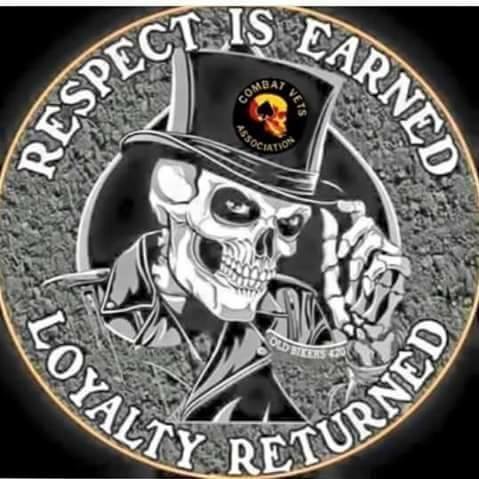
Good question, SGT Joseph Gunderson. I guess it depends on the environment and the topic. As a general rule I treat everyone as if they outranked me until I know different. That said, it doesn't change how I interact with most ex/retired military though. I feel that until they cross me they earned and deserve my respect, regardless of rank. E-9s and Colonels and above always deserve the courtesy and respect that they earned while active, but everyone likes to be treated with respect. Rank is a title or position, the person is what counts for me.
As a member the CVMA (Combat Vets Motorcycle Association) I always run into folks that are ex/retired, and unless they have some rank indicating patch or pin I treat them as brothers and sisters, and it's usually mutual. I have a special place in my heart for WWII-Vietnam Vets because they blazed the trail we followed. It feels right as well.
Kind of a long answer to your question I guess. Respect earned, loyalty returned.
As a member the CVMA (Combat Vets Motorcycle Association) I always run into folks that are ex/retired, and unless they have some rank indicating patch or pin I treat them as brothers and sisters, and it's usually mutual. I have a special place in my heart for WWII-Vietnam Vets because they blazed the trail we followed. It feels right as well.
Kind of a long answer to your question I guess. Respect earned, loyalty returned.
(13)
(0)
12
12
0
12
12
0

Go do some work at your local VA. You get the quiet old vets who were PVTs at the Chosin Valley or a LCPL at the battle of Hue. Then you get the loud, demanding ones, I was a Senior Master Chief or Colonel & I need to get my cookies first first. I'd always ask if they saw any combat. No but they spent 26 years in & got a high rank. Sorry folks. I have more respect for the junior enlisted guy who went thru sheer hell than the senior ranking person who had a cushy job for their entire careers. When I run into former officers & worked with, I still call them "sir" & especially when I run into active people of higher rank than me, I still give them the courtesy though.
(12)
(0)
9
9
0

I am proud of my service, and on my ballcap, I have my rank and branch embroideried. I also have my rank on those books of mine that deal with the military. However, I sign things with my first name, and when others call me "sir," I tell them I am Jonathan. On the other hand, I call older vets than me "sir." I paid for a WWII vet's lunch a while back, and I was happy to call him sir.
At my VFW post, we never refer to anyone other than by their first name.
To me, "sir" does not mean someone is better than someone else. I never let my subordinates call me a "superior" office. No one is superior. I was a "senior" officer, nothing more. I never referred to my senior officers as "superior officers," either.
At my VFW post, we never refer to anyone other than by their first name.
To me, "sir" does not mean someone is better than someone else. I never let my subordinates call me a "superior" office. No one is superior. I was a "senior" officer, nothing more. I never referred to my senior officers as "superior officers," either.
(9)
(0)
5
5
0

I think time matters.
For example, I work with a retired Marine O6-- he retired about 2 years ago, and I knew him before he retired. He is still 'COL' to me. He doesn't like it (because he doesn't want to be 'intimidating' around the office such as to squelch the free flow of ideas), so I go with 'sir'. Maybe I'll be able to back-off once I am retired as well, but so long as I am in a uniform-- I still see his whether or not he wears it, and it drives me absolutely bats**t CRAZY to see the young LT's address him as if he is one of the 'boys from the block'. (They all know he's a recently retired COL, and think it is 'cool' that they get to be so casual with him... makes them feel more important or something.) Per his preference-- I don't say anything, but it drives me freaking nuts.
I think there is potential for 'undue influence' if you are too close to the problem timewise. Once you've been out for a while and all the contacts you had are now also retired or enough time has passed that you wouldn't appear to a junior person as someone who might be able to 'influence' someone in their chain of command on their behalf type scenario-- then you're fine dropping all semblance of rank. I would remain cognizant of rank while you are still plugged in to the matrix, so to speak.
Just my thoughts.
For example, I work with a retired Marine O6-- he retired about 2 years ago, and I knew him before he retired. He is still 'COL' to me. He doesn't like it (because he doesn't want to be 'intimidating' around the office such as to squelch the free flow of ideas), so I go with 'sir'. Maybe I'll be able to back-off once I am retired as well, but so long as I am in a uniform-- I still see his whether or not he wears it, and it drives me absolutely bats**t CRAZY to see the young LT's address him as if he is one of the 'boys from the block'. (They all know he's a recently retired COL, and think it is 'cool' that they get to be so casual with him... makes them feel more important or something.) Per his preference-- I don't say anything, but it drives me freaking nuts.
I think there is potential for 'undue influence' if you are too close to the problem timewise. Once you've been out for a while and all the contacts you had are now also retired or enough time has passed that you wouldn't appear to a junior person as someone who might be able to 'influence' someone in their chain of command on their behalf type scenario-- then you're fine dropping all semblance of rank. I would remain cognizant of rank while you are still plugged in to the matrix, so to speak.
Just my thoughts.
(5)
(0)
LTC Ronald Stephens
Your retired marine 06 is likely a little uncomfortable with it also but also recognizes that they may be pulling his chain to get a rise from him. I'd look for it to eventually get old and stop. He understands that they are ifl's.
(2)
(0)
4
4
0
I still do it just because I believe if it wasn’t for the men and women before me I would never have had the chance to join and follow their legacy.
(4)
(0)
Read This Next


 Continue with Facebook
 Continue with Google