Posted on Jun 30, 2022

What are some tips on how to be a good Private?

13.8K
182
53
13
13
0
So I’m at my first duty station, just arrived a week ago. I’m obviously the new private that doesn’t know much. I struggle with retaining information if it’s not hands on learning, I really do try though. Im just frustrated these last few days looking like a jerk because I don’t know anything in front of my team. I don’t wanna look weak, I wanna get bigger and stronger/smarter. I haven’t been home in 7 months and about to go on deployment in a few months, life is crazy right now. Do you have any tips? I really want to be here but these last few days just have been a mental toll more than anything. I know it’s not supposed to be easy.
 Infantry
 11B: Infantryman
 Military Career
 Motivation
Posted >1 y ago
Responses: 36

Of course you don't know anything in front of your team. All you know is doctrine. You have yet to learn operational/real world. Slow down. Breath. Eyes and ears open, mouth shut other than to ask questions IOT learn. It takes time to get bigger, better and smarter. Patience, young Padawan.
(21)
(0)
SGT Ruben Lozada
SFC Livingston, I concur. He's still ypung and new. The Military is about learning as much as You can and taking notes. And, not everybody learns at the same rate. Another good option would be to carry around a note pad.
(1)
(0)
17
17
0

Nothing is easy when you're the FNG. Don't over stress your situation. Listen to your leaders, take notes, ask questions. Talk with your squad and team leader. You'll learn a lot on your deployment. Don't rush things.
(17)
(0)
15
15
0


You did the right thing to ask for advice.
1.It is ok to be your own worst critic but forgive yourself and Just go with the flow.
2. Just listen to your corporals and Sergeants.
3. I remember corresponding online with an active duty Sergeant out of Fort hood. His biggest problems with Junior enlisted was dealing with those who drank too much, dealing with those who didn't pay their bills and dealing with those with personal problems. Do not open up candidly to those in your unit until you know who they really are because you may not like them and they may not be your battle buddy.
4. Talking candidly to your squad leader or your team leader is a different story. Just be careful with your Junior enlisted until you really get to know them.
5. Even if you are not religious, talk to a chaplain if you have issues.
6. Always do more than the minimum.
7. A full-time active duty Lieutenant Colonel had this on his wall. If you live by this, you will be successful.
I was enlisted before becoming an Officer.
I was the oldest E-4 in my training Battalion. I felt strange. People mocked me. I was in the ARNG so after basic and AIT was over, I went home.
Each and every unit that I went to had good people and not so good people.
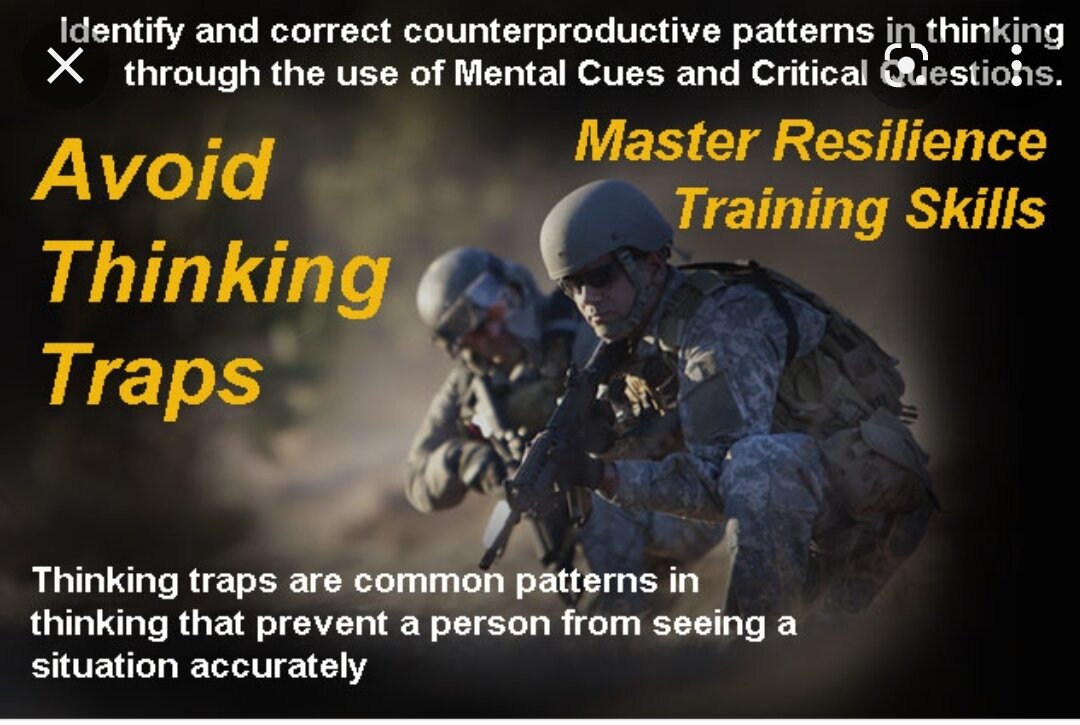
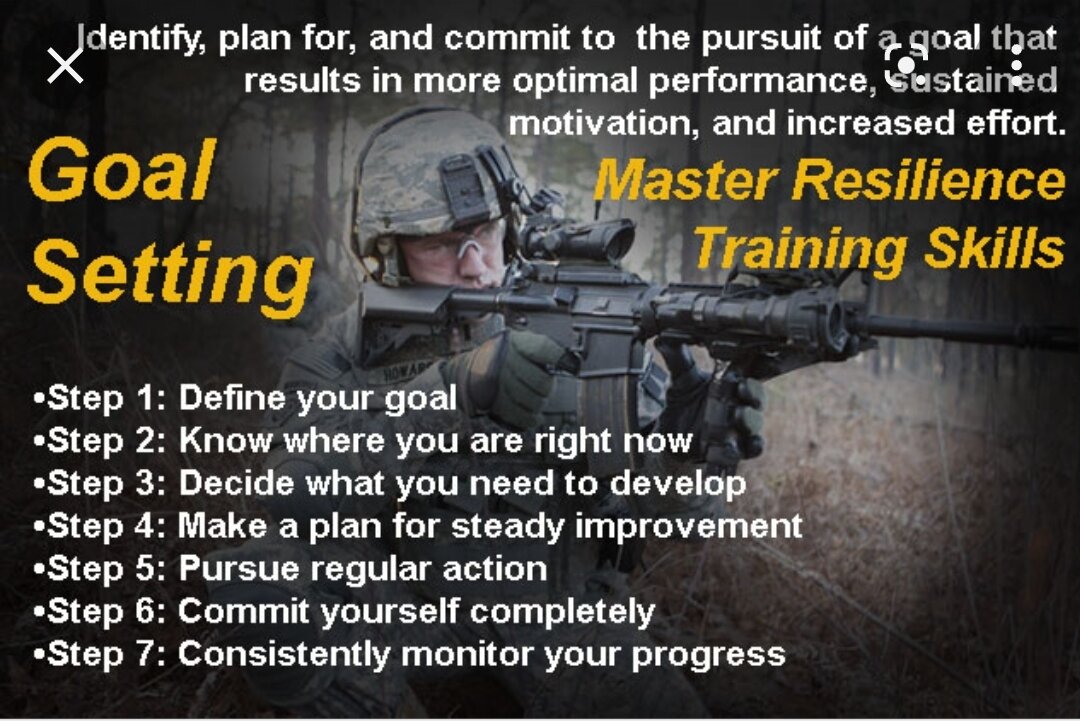
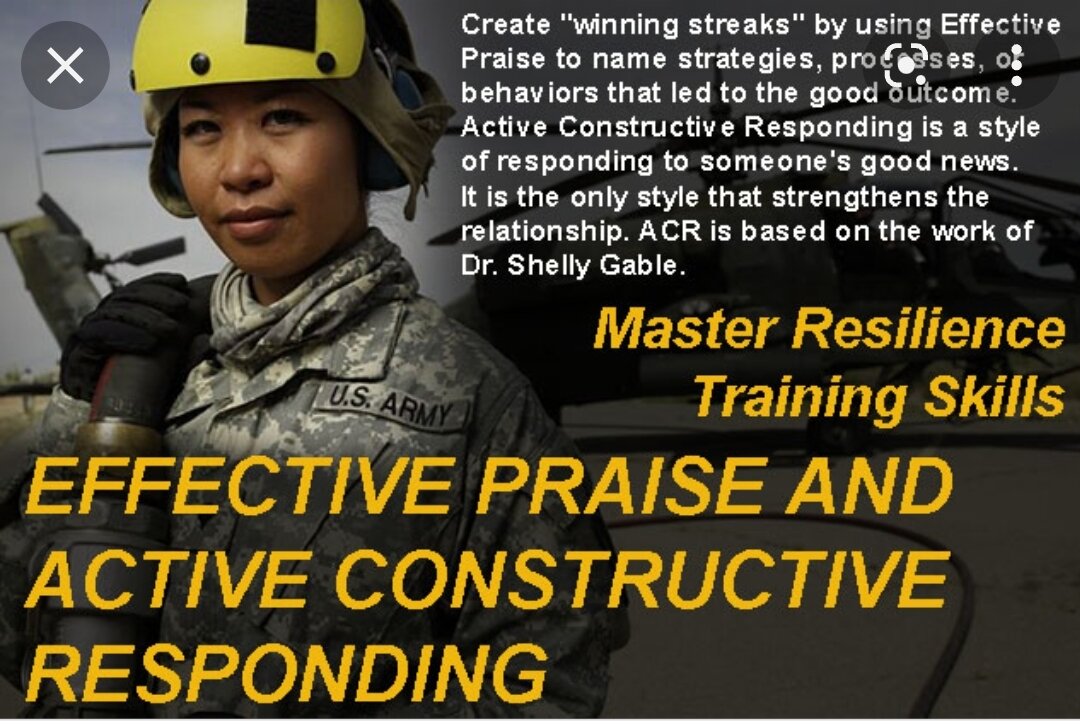
Here are some resiliency training slides. The Army has issues with people not being able to cope or sometimes they feel down or don't feel confident. To minimize this, they give classes on resiliency training and I'm sure you will get them sooner or later at your first Duty station.
Just save these slides on your smartphone or laptop for future reference.
Thank you for reaching out to us here at RP
MAJ (Join to see) MSG (Join to see) SSG Jeffrey Leake Capt Brandon Charters
1.It is ok to be your own worst critic but forgive yourself and Just go with the flow.
2. Just listen to your corporals and Sergeants.
3. I remember corresponding online with an active duty Sergeant out of Fort hood. His biggest problems with Junior enlisted was dealing with those who drank too much, dealing with those who didn't pay their bills and dealing with those with personal problems. Do not open up candidly to those in your unit until you know who they really are because you may not like them and they may not be your battle buddy.
4. Talking candidly to your squad leader or your team leader is a different story. Just be careful with your Junior enlisted until you really get to know them.
5. Even if you are not religious, talk to a chaplain if you have issues.
6. Always do more than the minimum.
7. A full-time active duty Lieutenant Colonel had this on his wall. If you live by this, you will be successful.
I was enlisted before becoming an Officer.
I was the oldest E-4 in my training Battalion. I felt strange. People mocked me. I was in the ARNG so after basic and AIT was over, I went home.
Each and every unit that I went to had good people and not so good people.
Here are some resiliency training slides. The Army has issues with people not being able to cope or sometimes they feel down or don't feel confident. To minimize this, they give classes on resiliency training and I'm sure you will get them sooner or later at your first Duty station.
Just save these slides on your smartphone or laptop for future reference.
Thank you for reaching out to us here at RP
MAJ (Join to see) MSG (Join to see) SSG Jeffrey Leake Capt Brandon Charters
(15)
(0)
12
12
0

When I got soldiers and NCOs into my scout teams, crews, sections and platoons, I would brief them with these words:
Obedience to Orders -
Follow the orders given to you by your chain of command no matter if its a PFC appointed to a detail, an NCO or Officer giving it to you.
Performance -
Perform each task assigned by those in authority over you to the best of your ability.
Teamwork -
Work as a part of the team to accomplish all assigned tasks. Be willing to assume new responsibilities for the things you know and surely will learn as you progress. Soon you will be the PFC showing the new PV2 "How-To-Do-It".
Appearance -
Maintain your uniforms and equipment while learning them thoroughly, focus on keeping calm, be physically fit.
Truthfulness -
Be up-front as to what you know and don't wiggle around when asked a question when you don't know the answer. If I don't know where you are in your skills then it will be harder to bring you up to snuff.
Attitude - I followed two rules that got me to the other side of some bad situations:
1. Don't Quit.
2, Keep your Sense of Humor.
Good Luck Brother. You are not alone.
Obedience to Orders -
Follow the orders given to you by your chain of command no matter if its a PFC appointed to a detail, an NCO or Officer giving it to you.
Performance -
Perform each task assigned by those in authority over you to the best of your ability.
Teamwork -
Work as a part of the team to accomplish all assigned tasks. Be willing to assume new responsibilities for the things you know and surely will learn as you progress. Soon you will be the PFC showing the new PV2 "How-To-Do-It".
Appearance -
Maintain your uniforms and equipment while learning them thoroughly, focus on keeping calm, be physically fit.
Truthfulness -
Be up-front as to what you know and don't wiggle around when asked a question when you don't know the answer. If I don't know where you are in your skills then it will be harder to bring you up to snuff.
Attitude - I followed two rules that got me to the other side of some bad situations:
1. Don't Quit.
2, Keep your Sense of Humor.
Good Luck Brother. You are not alone.
(12)
(0)
10
10
0
Don't be afraid to look like you don't know anything. Doing that will keep you from learning. People who are afraid to look dumb, are afraid to take chances, and that leads to missed opportunities and learning. Nothing is worse than a leader who's more interested in looking good.
Every time I have PCSed, the new unit I arrived to seemed like a completely different Army. Completely different planning models, acronyms and terms, different and newer equipment, or sometimes really old equipment. One unit uses a SharePoint portal to process all admin actions, another uses operations orders for everything, one does everything last minute through word of mouth and another does nothing outside the long range calendar. Your next squad when you move may use completely different call signs, reports, trip tickets, movement briefs, etc. You're always the new guy when you show up, so don't be afraid to look weak or dumb - nobody looks dumber than the guy who refuses to ask questions
Every time I have PCSed, the new unit I arrived to seemed like a completely different Army. Completely different planning models, acronyms and terms, different and newer equipment, or sometimes really old equipment. One unit uses a SharePoint portal to process all admin actions, another uses operations orders for everything, one does everything last minute through word of mouth and another does nothing outside the long range calendar. Your next squad when you move may use completely different call signs, reports, trip tickets, movement briefs, etc. You're always the new guy when you show up, so don't be afraid to look weak or dumb - nobody looks dumber than the guy who refuses to ask questions
(10)
(0)
SGT John Briseno
Excellent advice. My last deployment was as an augmentee to a National Guard unit called back to duty as a member of the IRR. I felt lost but asked questions when I didn't know how that particular unit operated. Sometimes a PFC gave me the answer I needed and sometimes a higher up had the answer. As an infantryman there are no stupid questions. Not asking could get someone seriously injured or worse.
(0)
(0)
9
9
0

You’re doing well, Chase. I wasn’t a Private, but being away from home for the first time is hard…especially when the stress of a new job (and being the new guy) is making it harder. Don’t feel like you have to learn everything tomorrow. Just soak in as much as you can and put in the best effort you can. Help other teammates around you if there are things you excel at. It all comes down learning your team, your new job, command, and putting in the best effort possible. You’ll find the people in your unit that you can count on for advice and support…and you’ll learn who you want to avoid. It just takes time. Really wish you the best. Please keep us posted on how things go.
(9)
(0)
8
8
0

You aint the Lone Ranger, every Private goes through what you are going through. Rome wasn't built in a day, it takes time to learn. Like everyone else said, eye, ears open, mouth shut, listen, and if you got a question, ask. Yea, sometimes you might get a raft of sh!t, but that is being a FNG. Drive on.
(8)
(0)
7
7
0

You aren't expected to know everything at this point. The best thing you can do is be a sponge. Absorb all you can and get note taking gear on you at all times to help you. Stay humble and focus on the basics. Everything else will come with time. I also recommend doing some mindful and breathing exercises. They will help you manage the stress.
(7)
(0)
PV2 (Join to see)
Thank you sgt, yeah I’m super anxious everyday at work now, just don’t wanna get smoked
(0)
(0)
6
6
0

1. Check your ego.
2. Refer to #1.
3. Listen(!) to what you are told; don't "interpret" what you are told.
4. Treat the "barracks lawyers" advice with a grain of salt.
5. Refer to #1.
6. Be the example of "what right looks like" in all you do.
7. Be a sponge and soak up all you see and hear.
8. Refer to #1.
9. Go easy on yourself, you are new to the job ("lifestyle" is a better word).
10. Roll with the punches; and you'll get a lot of them.
11. Seek guidance from those who have been around a while.
12. Take notes and observe carefully-this relates to Point #7.
13. Find the time to mentally relax...however you do that.
14. Be an Army Knowledge Knower. Aside from Army Regulations, I recommend the Ranger Handbook for any Grunt.
15. Please don't fall for the ol' "Get me a box of grid squares" gag.
Oh, and...
16. Refer to #1
2. Refer to #1.
3. Listen(!) to what you are told; don't "interpret" what you are told.
4. Treat the "barracks lawyers" advice with a grain of salt.
5. Refer to #1.
6. Be the example of "what right looks like" in all you do.
7. Be a sponge and soak up all you see and hear.
8. Refer to #1.
9. Go easy on yourself, you are new to the job ("lifestyle" is a better word).
10. Roll with the punches; and you'll get a lot of them.
11. Seek guidance from those who have been around a while.
12. Take notes and observe carefully-this relates to Point #7.
13. Find the time to mentally relax...however you do that.
14. Be an Army Knowledge Knower. Aside from Army Regulations, I recommend the Ranger Handbook for any Grunt.
15. Please don't fall for the ol' "Get me a box of grid squares" gag.
Oh, and...
16. Refer to #1
(6)
(0)

PV2 (Join to see) Chase, listen and observe the actions of other soldiers that are squared away. You will make mistakes, so learn from them so that you do not make the same mistake twice. What you are feeling has been felt by the rest of us so do not let the frustration get to you. Best wishes on a great career!
(6)
(0)
Read This Next


 Continue with Facebook
 Continue with Google