
Posted on Jan 30, 2015

"I will always place their needs above my own..." NCO Creed. Can you take care of your Soldiers best without taking care of yourself first?

58.6K
62
18
8
8
0
I'm looking for arguments either way. Do you support this phrase in the creed? Can you care for your Soldiers better if you take care of yourself better? What say you?
Posted in these groups:  NCO Creed
NCO Creed
Edited 11 y ago
Posted 11 y ago
Responses: 13
6
6
0

There's a mental exercise we used to use for young Marines long ago. Don't know if they still do.
It's you (Senior man) and two other Marines (junior to you). You have 1x MRE (only food), and plenty of water. You are stranded, and you need to get all of you to safety.
How do you split the food?
I've heard a lot of answers to this scenario before.
a) Split it 3 ways. You are after all a team, and the weakest link is the strongest link.
b) Split it 2 ways. Give it to the junior Marines.
c) Give it to the junior most Marine. You always make sure the junior Marines are fed first.
One of the best ones, and the one I tend to like the best however is:
d) Break up the meal. Main meal (Protein) goes to you. It will help you think and make decisions. Everything else (Carbs) goes to the junior Marines, which will give them energy. The overall calories should be 'about' evenly divided.
So what has this got to do with the NCO Creed?
Your needs are THEIR needs. They need you thinking clearly. They need you strong. If you make yourself a weak link, you hurt them.
Take too much on, and you take yourself out of the fight. The beauty of a chain of command, and the military structure is that we can delegate. You don't have to do everything. The entire command structure is actually built on that concept.
It's you (Senior man) and two other Marines (junior to you). You have 1x MRE (only food), and plenty of water. You are stranded, and you need to get all of you to safety.
How do you split the food?
I've heard a lot of answers to this scenario before.
a) Split it 3 ways. You are after all a team, and the weakest link is the strongest link.
b) Split it 2 ways. Give it to the junior Marines.
c) Give it to the junior most Marine. You always make sure the junior Marines are fed first.
One of the best ones, and the one I tend to like the best however is:
d) Break up the meal. Main meal (Protein) goes to you. It will help you think and make decisions. Everything else (Carbs) goes to the junior Marines, which will give them energy. The overall calories should be 'about' evenly divided.
So what has this got to do with the NCO Creed?
Your needs are THEIR needs. They need you thinking clearly. They need you strong. If you make yourself a weak link, you hurt them.
Take too much on, and you take yourself out of the fight. The beauty of a chain of command, and the military structure is that we can delegate. You don't have to do everything. The entire command structure is actually built on that concept.
(6)
(0)
4
4
0

I think you can take care of yourself AFTER taking care of your Soldiers, SSG Robert Burns. Of course you have to take care of yourself, and there are times when you will come before your Soldiers, but for the most part and for most needs, I think Soldiers can come first and you can take care of your own needs afterwards.
(4)
(0)

I voted for the first option -- but just to clarify, I looked at this in an absolute sense. If a leader's professional and personal life is all messed up, then in my opinion that leader is less likely to be able to take the BEST care possible of his/her subordinates. The leader should have his (or her) life squared away. Otherwise, that leader is prone to have his mind elsewhere at times -- not necessarily all the time, but frequently enough to where it would take away from providing the BEST leadership possible for those subordinates.
(3)
(0)
Lt Col (Join to see)
If you keep putting off your own problems and needs, sooner or later it will catch up with you and that's when your ability to take care of your subordinates effectively gets compromised. Little case in point - one of the sad things about our pay and personnel systems is that after all these years, it's still set up to treat transitioning from extended active duty back to guard or reserve status as a "separation or retirement" action in the pay and personnel system. People being people, this almost always ends up in the member not being paid for an extended period of time, dropping out of DEERS, things like that. The last time I went from a Title 10 extended active duty tour back to Title 32 AGR status, it took over a month and a half to get paid - working full the time the entire time too, and also getting into it with Tricare and the local MTF whether or not my family was covered or not. I had to decide how much of my time was going to be split between trying to correct these problems and working issues for the airmen I led. There was a point in that month and a half where I had to put the airmen second - why? "God and country" is what calls us to duty, but you can't run an ATM card at the supermarket called "God and Country" same thing when your kid needs shots. What happens during this kind of period, is that distractions increase, you get angry (and it wasn't my unit, or the losing unit, it really pinpointed back to AFPC, ARPC and especially DFAS for a series of mistakes) and that affects your ability to lead effectively - you try to put keep it out of view, you try to put on the poker face, but after a while it wears on you, if you can't fix the issue at least fairly quickly.
A lesson I learned from a friend when she was in a command tour was "try to always take about 30 minutes a day to work on your own stuff" - for one thing, this seems to prevent small paperwork issues from snowballing into complex ones - i.e, starting out as something your S1 shop can fix but ends up requiring HRC (AFPC in AF-speak) or something like that. And, it will give you peace of mind - it calms you down. But yes, overall, if you let personal issues fester as a leader, it will affect your ability to lead and command, even if you can mask it for weeks, months, years, it will catch up to you - when it does, the biggest problem is that everyone else will be able to see it, if they couldn't see it building all along. Soldiers, Airmen, whomever - they're not dumb, they're not blind. You're better off fixing yourself which maybe means giving them only 75-80% for a while, but it's a solid 85% and not a half-@$$ed 100% where you ignore your own problems and they get worse.
A lesson I learned from a friend when she was in a command tour was "try to always take about 30 minutes a day to work on your own stuff" - for one thing, this seems to prevent small paperwork issues from snowballing into complex ones - i.e, starting out as something your S1 shop can fix but ends up requiring HRC (AFPC in AF-speak) or something like that. And, it will give you peace of mind - it calms you down. But yes, overall, if you let personal issues fester as a leader, it will affect your ability to lead and command, even if you can mask it for weeks, months, years, it will catch up to you - when it does, the biggest problem is that everyone else will be able to see it, if they couldn't see it building all along. Soldiers, Airmen, whomever - they're not dumb, they're not blind. You're better off fixing yourself which maybe means giving them only 75-80% for a while, but it's a solid 85% and not a half-@$$ed 100% where you ignore your own problems and they get worse.
(2)
(0)
(0)
(0)
2
2
0
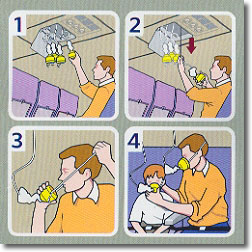
Secure your own mask before securing that of the child.
You have to have your own house clean before you can feasibly help others.
You have to have your own house clean before you can feasibly help others.
(2)
(0)
2
2
0

Interesting question SSG Robert Burns. I make it a habit to forego voting, but I enjoy responding. Placing the needs of my Soldiers above my own is a charge that is near and dear to my heart as a Noncommissioned Officer. I think that it is important to understand that there is a difference between "needs" and "wants or likes or nice to haves." I strive to do always to what I can to make sure that my Soldiers have what they need. That may be in the form of opportunities, knowledge, a POC, or to be quite frank, the hard truth when needed.
When it comes to taking care of yourself, I think it is equally important. However, it should not be at the expense of the needs of your Soldiers. We as Leaders often have opportunities or abilities to take care of ourselves that our Soldiers do not have. This does not mean that we do not provide for the needs of our Soldiers. This simply means that we take care of ourselves through different avenues than we may provide for the needs of our Soldiers.
A simple example would be that if my Soldier is financially irresponsible, their immediate need is to provide them the means to be fiscally responsible. That may come in the form of a consultation with their bank, a budget class, or maybe an AER loan. Taking care of yourself first is applying the experience that you already possess in financial management to ensure that you are sound in your decisions. Did taking care of yourself take away from providing for your Soldiers needs? No. It complimented them.
When it comes to taking care of yourself, I think it is equally important. However, it should not be at the expense of the needs of your Soldiers. We as Leaders often have opportunities or abilities to take care of ourselves that our Soldiers do not have. This does not mean that we do not provide for the needs of our Soldiers. This simply means that we take care of ourselves through different avenues than we may provide for the needs of our Soldiers.
A simple example would be that if my Soldier is financially irresponsible, their immediate need is to provide them the means to be fiscally responsible. That may come in the form of a consultation with their bank, a budget class, or maybe an AER loan. Taking care of yourself first is applying the experience that you already possess in financial management to ensure that you are sound in your decisions. Did taking care of yourself take away from providing for your Soldiers needs? No. It complimented them.
(2)
(0)
1
1
0

My belief is that if you take care of your Soldier's needs, overall your problems are less. There are a couple of reasons for this. If it is an issue that can be solved by attending a simple class because they've never had experience in the issue (i.e. budgeting,) you can ensure they are signed up for a class at ACS to resolve the issue. This saves problems for you overall. If they don't go to the class or learn the skill, they are likely to overspend, and that leads to phone calls from higher commands.
(1)
(0)
1
1
0

If I'm cold or hungry or tired I know damn well my troops are. So at that point you take care of them...and you eat, sleep and get cold weather gear issued last (or whatever the need is). After they're good to go you can relax. Because ultimately if you put people before yourself you got a whole group looking out for you know. If you don't your likely going to have one or two individuals who didn't get squared away (for whatever reason) and then their problems and attitudes can start to effect moral very quickly. So yes, it's important not to be self serving and quite obvious when you are.
(1)
(0)
1
1
0

1
1
0

First there's basic needs--and seeing to yours should not inhibit seeing to theirs--getting enough food and sleep, for example, but if its a question between them getting it or you, then its theirs.
Then there's career matters. Who would, as an example, pester their rater about their own NCOER without first making certain that your troops' weren't overdue first?
I think, if it's important to you, it's important to them is the maxim to keep in mind.
Then there's career matters. Who would, as an example, pester their rater about their own NCOER without first making certain that your troops' weren't overdue first?
I think, if it's important to you, it's important to them is the maxim to keep in mind.
(1)
(0)
1
1
0

Great question SSG Robert Burns!!! I know that when I was going through my separation with my first wife, I was brain dead and worthless. It didn't last long and thankfully I had a great 1st class and an even better Chief. Once I got my shit in order I went right back to be a good leader, trying to become a great leader.
(1)
(0)
Read This Next


 Continue with Facebook
 Continue with Google